Little River Canyon Public Land Access
The rugged beauty of Little River Canyon is undeniable, drawing countless visitors to its stunning overlooks and hiking trails. But for many Alabama hunters, the sheer majesty of this area also sparks a question: where can I actually hunt here? It’s a common frustration, trying to decipher which parts of such a prominent natural feature are open to public hunting and which are strictly off-limits. This guide will walk you through understanding public land access in the Little River Canyon area, helping you navigate the rules, find those huntable spots, and prepare for a rewarding outdoor experience.
Understanding the Unique Landscape: Little River Canyon National Preserve and its Hunting Context
When we talk about "Little River Canyon," it’s easy to think of one monolithic entity. In reality, the landscape is a patchwork of different land designations, each with its own set of rules and management. This distinction is absolutely crucial for hunters, as what might be permitted in one area could lead to a stiff penalty just a few hundred yards away. The core of what most people picture as Little River Canyon is the Little River Canyon National Preserve, managed by the National Park Service.
National Park Service Regulations Versus State Wildlife Areas
Unlike state-managed Wildlife Management Areas (WMAs) or even portions of National Forests that are specifically designated for hunting, National Parks and Preserves often have very different regulations regarding recreational activities. Generally speaking, direct hunting within the Little River Canyon National Preserve itself is prohibited. This is a common rule for units of the National Park System, which prioritize conservation, preservation, and non-consumptive recreation like hiking, sightseeing, and kayaking. Many a hunter has driven through, admiring the scenery, and wondered about the potential, only to discover the core canyon lands are not open to their pursuit. It can be a real letdown when you first discover this, but it’s important to respect those boundaries to protect the resource for everyone.
However, the "Little River Canyon area" is broader than just the National Preserve. The canyon itself carves through a landscape that also includes adjacent public lands managed by other agencies, particularly the U.S. Forest Service or the State of Alabama, which do allow hunting. This is where the informed hunter needs to focus their attention. Understanding that distinction—National Preserve vs. adjacent public lands—is the first, most important step in planning a hunt in this region. You're not looking to hunt in the canyon, but often around it.
The Landscape: Terrain and Habitat
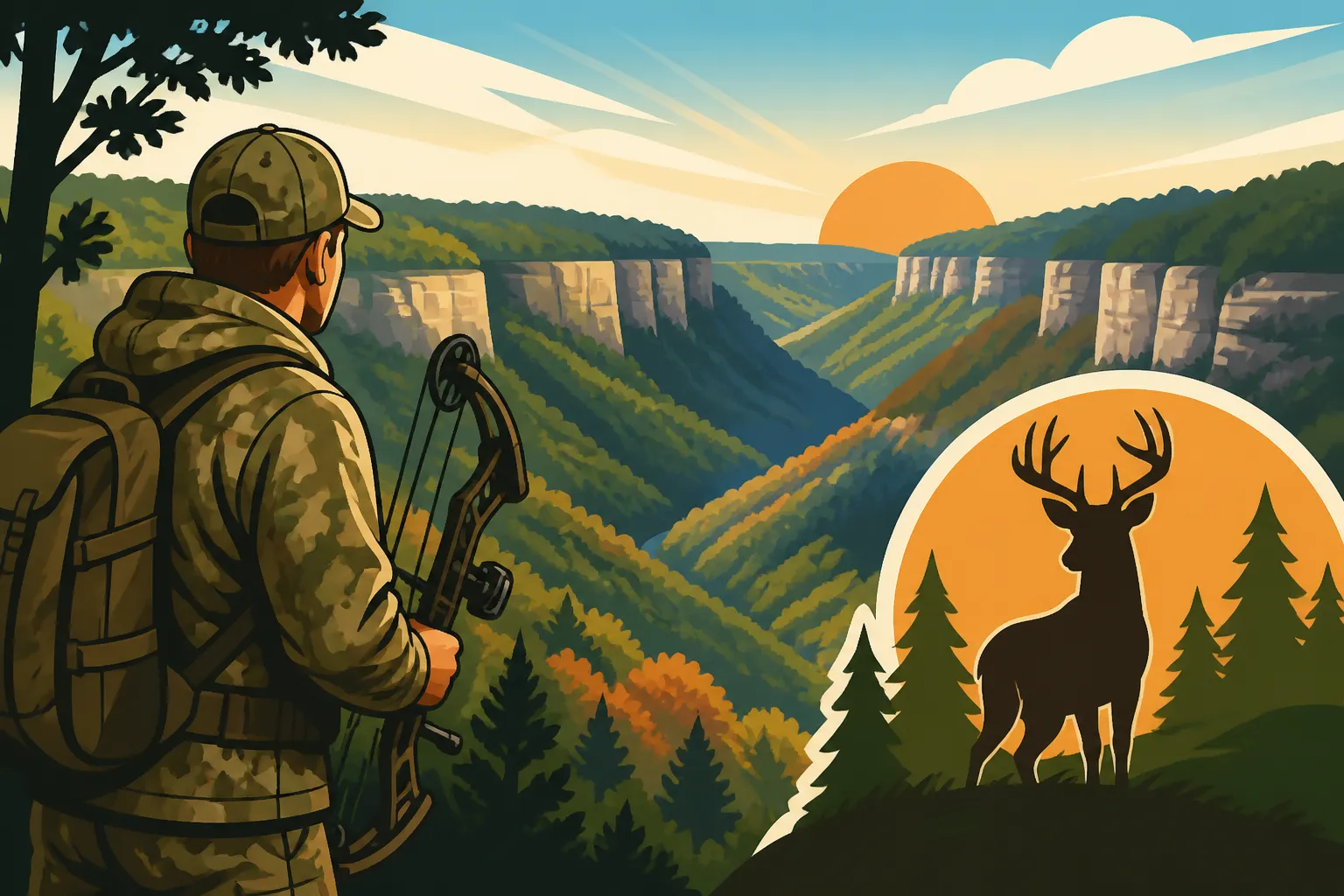
The terrain in and around Little River Canyon is characteristic of Alabama's Appalachian foothills and Cumberland Plateau region. You'll find a mix of steep ravines, rocky bluffs, mature hardwood forests, and pine stands. The river itself is one of the few in the country that flows almost entirely on top of a mountain, cutting a spectacular gorge. This varied landscape creates diverse habitats for a range of game species. For hunters, this means you can expect challenging, often steep walks, thick cover, and areas that can feel truly wild and remote, even relatively close to roads. It's not flat Black Belt farmland, that's for sure. The sheer elevation changes and the presence of numerous small drainages feeding into the main canyon can create natural funnels and bedding areas that, once found, can be incredibly productive. Reading Aerial Photos for Piedmont Deer can be particularly helpful here, as the topography plays such a significant role.
Identifying Huntable Public Lands Near Little River Canyon
While the National Preserve itself typically isn't open to hunting, the good news is that there are still public hunting opportunities in the broader Little River Canyon region. These often include specific Wildlife Management Areas (WMAs) or sections of National Forest that are adjacent to or near the preserve boundaries. Your task as a hunter is to pinpoint these areas and understand their specific regulations.
Key Wildlife Management Areas in the Vicinity
Several WMAs and National Forest lands fall within a reasonable driving distance of the Little River Canyon area, offering legal hunting opportunities. These are the places where you'll want to focus your scouting and planning. For instance, the Little River WMA (which is not the National Preserve, despite the similar name) often includes tracts of land that provide hunting access. It’s managed by the Alabama Wildlife and Freshwater Fisheries Division and operates under Alabama's statewide hunting regulations, along with specific WMA rules. These WMA lands can be fragmented, so detailed map work is essential.
Other WMAs that might be considered "in the vicinity" depending on how far you're willing to travel could include areas like Choccolocco WMA or even parts of Skyline WMA further north, though those are not directly adjacent to the canyon. Each WMA will have its own specific season dates, bag limits, and hunter sign-in requirements. Always, always check the current Alabama Department of Conservation and Natural Resources (ADCNR) regulations for the specific WMA you plan to hunt. Alabama Deer Season Structure Explained and Alabama Spring Turkey Zones and Dates will be vital resources.
National Forest Lands Offering Access
Beyond the state WMAs, portions of the Talladega National Forest are located in the broader region, and certain sections of it can be found within a reasonable distance of Little River Canyon. While the Preserve is a National Park Service unit, the U.S. Forest Service lands nearby are generally open to hunting according to national forest rules and Alabama's statewide regulations. This often means more expansive, less restricted access compared to WMAs, though specific areas within the National Forest might have special designations.
These forest lands can offer excellent deer, turkey, and small game hunting. They provide vast tracts of timber, varying terrain, and plenty of room to roam, which is perfect for Scouting Alabama Public Land Before Season. Remember that even on National Forest land, you'll need to possess the appropriate Alabama hunting licenses, including any WMA permits if you're venturing into a designated WMA within the forest. Public Hunting Land in Alabama provides a broader overview of these opportunities.
| Land Type | Primary Management Agency | Hunting Generally Permitted? | Key Characteristics |
|---|---|---|---|
| Little River Canyon National Preserve | National Park Service (NPS) | No | Focus on conservation, scenic enjoyment, hiking. Strict rules. |
| Little River Wildlife Management Area | AL Wildlife & Freshwater Fisheries | Yes | State-managed, specific WMA rules, diverse habitat, often fragmented. |
| Talladega National Forest (adjacent areas) | U.S. Forest Service (USFS) | Yes | Large tracts of federal land, more general rules, challenging terrain. |
Essential Scouting and Preparation for the Region
Hunting around Little River Canyon demands a different approach than hunting open agricultural fields or managed pine plantations. The steep terrain, dense cover, and often remote nature of these public lands require thorough preparation and smart scouting. You can't just show up on opening day and expect success without some serious homework.
Digital Mapping and Satellite Imagery
Before you even set foot on the ground, your most powerful scouting tool will be digital mapping applications. Services like onX Hunt or GoHunt are invaluable for identifying property lines, understanding topography, and spotting potential hunting hot spots from your armchair. You can overlay satellite imagery with public land boundaries, parcel data, and topographic maps to:
- Identify Legal Access Points: Crucial for knowing where you can legally enter and exit public land.
- Locate Funnels and Pinch Points: Look for saddles between ridges, creek crossings, or breaks in thick cover that naturally direct animal movement.
- Discern Habitat Types: Differentiate between hardwood ridges, pine thickets, and creek bottoms, all of which attract different game at different times of the season.
- Mark Potential Bedding and Feeding Areas: Look for south-facing slopes for bedding, or areas with mast trees (oaks, hickories) for feeding.
I can't stress enough how much time and frustration a good mapping app can save you. It allows you to virtually "walk" the property, identify potential stand sites, and plan your entry and exit routes long before you pack your gear. It’s like having a local guide in your pocket, especially helpful when tackling unfamiliar, rugged territory.
Boots-on-the-Ground Reconnaissance
As helpful as digital tools are, nothing beats getting boots on the ground. Pre-season scouting in the Little River Canyon area is paramount. During the off-season or even a few weeks before your hunt, dedicate time to physically explore the areas you've identified on your maps. Look for:
- Fresh Sign: Deer tracks, rub lines, scrape activity, turkey scratching, or hog rooting. Remember, sign can be older, so focus on fresh activity.
- Food Sources: Hardwood trees dropping acorns in the fall, green browse in clearings, or water sources.
- Bedding Areas: Thick cover on ridge tops or benches where deer might feel secure.
- Travel Corridors: Trails, old logging roads, or natural breaks in the undergrowth that animals use to move between food and cover.
Walking the ground helps you understand the true elevation changes, the density of the undergrowth, and how sound travels (or doesn't) in the terrain. You might find a hidden spring or a forgotten food plot that doesn't show up clearly on satellite images. This hands-on experience is vital for developing a solid hunting plan and improving your chances of success.
Gear Considerations for Rugged Terrain
Hunting the Little River Canyon region often means traversing challenging terrain, sometimes miles from the nearest road. Your gear choices need to reflect this.
- Footwear: Invest in comfortable, waterproof, high-quality hiking boots with excellent ankle support. Blisters or a twisted ankle can end a hunt quickly.
- Layered Clothing: The weather in Alabama can change rapidly, especially in varied topography. Dress in layers that can be easily added or removed to adapt to temperature fluctuations.
- Navigation Tools: While your phone app is great, a handheld GPS unit or a physical compass and map can be a lifesaver if your phone battery dies or you lose signal.
- First-Aid Kit: Always carry a basic first-aid kit. Minor cuts, scrapes, or sprains are more likely when navigating rough terrain.
- Water and Snacks: Carry more water than you think you'll need. Dehydration can be a serious issue, especially during early season hunts.
- Game Retrieval Gear: A good quality game cart or a strong pack frame can make a huge difference if you harvest an animal in a remote, steep area. Dragging a deer uphill for a mile is no joke.
- Flashlight/Headlamp: Essential for early morning walks in or late evening walks out, even if you plan to be back before dark. Accidents happen.
These small preparations can significantly impact your safety and comfort, allowing you to focus on the hunt rather than battling the elements or unforeseen challenges.
Game Species and Specific Challenges
The Little River Canyon area, particularly the adjacent WMAs and National Forest lands, offers opportunities to pursue a variety of popular Alabama game species. However, the unique topography and ecological conditions present distinct challenges that hunters must be prepared for.
Deer Hunting in the Canyon's Shadow
White-tailed deer are abundant in the hardwood forests and mixed pine-hardwood stands surrounding Little River Canyon. The steep ravines and benches provide excellent cover and bedding areas. Deer here tend to be more spread out than in intensely managed agricultural zones, requiring hunters to cover more ground or scout meticulously to locate their preferred travel corridors. The thick canopy means visibility can be limited, so still-hunting slowly and deliberately or setting up on well-scouted travel routes is often more effective than trying to glass open fields.
Hunting after a good acorn crop can be particularly productive. Look for white oaks and red oaks on benches and ridges. Deer will often migrate between these food sources and thick cover in the bottoms of the hollows or dense pine thickets. Understanding Wind and Thermals on a Piedmont Ridge will be crucial here; thermals can be tricky in steep terrain, often pulling air uphill in the morning and downhill in the evening, sometimes overriding the prevailing wind. You'll need to pay close attention to ensure your scent doesn't betray you.
Wild Turkeys in the Mountainous Woods
The rugged, timbered landscape of the Little River Canyon region also provides excellent habitat for wild turkeys. Hearing a gobbler thunder across a deep hollow on a crisp spring morning is an unforgettable experience. However, hunting these birds in such terrain requires patience and often some serious legwork. Turkeys will roost on the highest points, often near water, and then fly down into the draws or along the benches to feed.
Calling can be tricky; the undulating terrain can make it hard to pinpoint a bird's location accurately, and a gobbler might hang up on the opposite side of a steep ravine, unwilling to cross. Run-and-Gun Turkey Tactics on Public Land can be effective here, as it allows you to cover ground and locate birds, then set up quickly. Early season hunts, especially during the Alabama Zone 1 Turkey Season Rules opener, often provide the best gobbling activity before birds become more call-shy. Be prepared to hike, scout for fresh tracks and droppings, and be very patient, as these birds can be difficult to close the distance on in such country.
Feral Hogs: A Year-Round Opportunity
Feral hogs are present in many parts of Alabama's public lands, and the Little River Canyon area is no exception. Their destructive rooting habits and rapid reproduction make them a persistent challenge for wildlife managers, but a year-round hunting opportunity for sportsmen. Hogs prefer dense cover, often in creek bottoms or thickets, and can be found near water sources. Look for fresh rooting, wallows, and tracks.
Hunting hogs can be done opportunistically while deer or turkey hunting, or specifically targeted. Stalking hogs in thick cover requires stealth and a keen eye. Since Alabama Feral Hog Regulations allow for year-round hunting on private land and often liberal seasons on public land (always check specific WMA rules), you can pursue them even outside of traditional deer and turkey seasons. Night Hunting Hogs With Lights on Private Land is also an option on private land, though public land rules for night hunting vary and must be strictly adhered to. The meat from a wild hog can be fantastic, offering a unique table fare after a challenging hunt.
Disclaimer
This article is for general informational purposes only and does not constitute professional advice. Laws, prices and regulations vary by location and change over time. Consult a qualified professional for guidance on your specific situation.