Alabama Suburban Archery-Only Zones
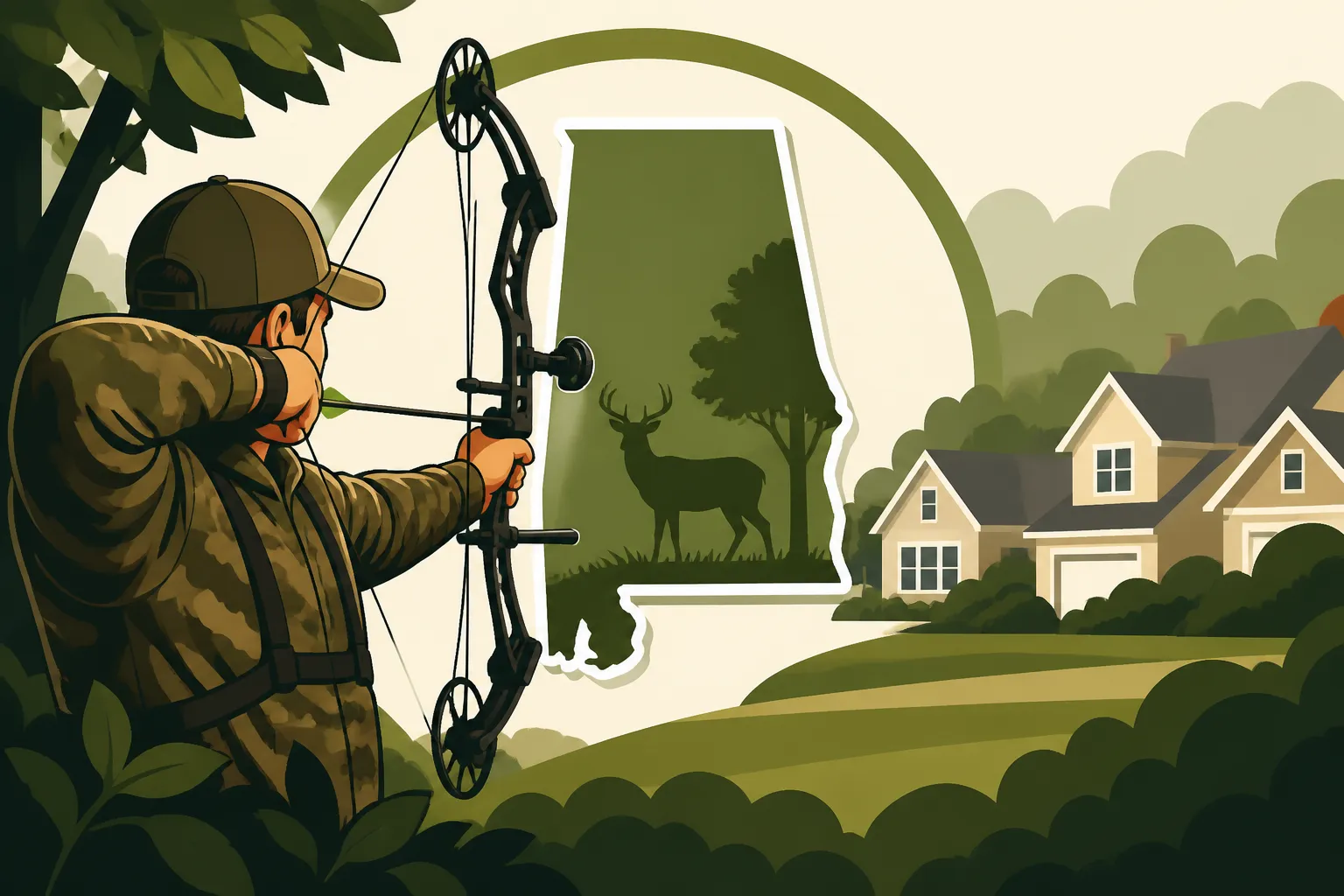
It's a familiar tale across Alabama: you live in a beautiful area, surrounded by lush green spaces, but the deer population seems to be exploding right in your neighborhood. Car insurance claims go up, your prize-winning hostas disappear overnight, and the thought of safely hunting in such a populated area feels impossible. Yet, many communities are finding a smart, effective solution through what we call Alabama Suburban Archery-Only Zones. This guide is all about understanding these unique hunting opportunities, how they work, and how you, as a responsible hunter, can be part of the solution.
Understanding Alabama's Suburban Archery-Only Zones
When suburban sprawl meets thriving wildlife, especially deer, things can get complicated fast. Traditional firearm hunting, while effective, simply isn't safe or practical in neighborhoods with houses, schools, and busy roads. This is where the concept of suburban archery-only zones comes into play. These aren't just random patches of woods; they are carefully designated areas, often within city limits or closely bordering them, where local ordinances, in conjunction with state wildlife agencies, permit deer hunting exclusively with archery equipment. The primary goal is herd management – reducing deer populations to mitigate property damage, decrease deer-vehicle collisions, and minimize the risk of disease spread, all while prioritizing public safety.
Why Archery-Only Zones Are Necessary
Think about it: in many of Alabama's growing cities and towns, development pushes further and further into what was once prime wildlife habitat. Deer, being incredibly adaptable creatures, don't just disappear; they learn to live alongside us. They find refuge in greenbelts, undeveloped parcels, large backyards, and city parks. Without natural predators to keep their numbers in check, their populations can quickly outgrow the available resources and become a nuisance, or even a danger. A healthy deer population needs to be balanced with its environment, and when that environment includes suburban homes, a different kind of management is needed. Archery equipment, with its shorter effective range and lack of projectile noise and extreme travel, offers a much safer alternative to firearms in these sensitive areas.
This isn't just about deer eating your garden, though that's a very real frustration for many homeowners. High deer densities also contribute to ecological damage, impacting native plant communities, and increase the risk of wildlife-borne diseases like Chronic Wasting Disease (CWD), which Alabama is diligently working to manage, particularly in areas like the northwest counties. By implementing these zones, local authorities are trying to strike a balance – allowing hunters to play a crucial role in conservation while ensuring the safety and peace of mind of residents.
How These Zones Are Established
Establishing an archery-only zone isn't a spur-of-the-moment decision; it's usually a collaborative effort between municipal governments, local law enforcement, and the Alabama Department of Conservation and Natural Resources (ADCNR). Cities like Mountain Brook, Vestavia Hills, Homewood, and Hoover, all within the greater Birmingham metropolitan area, have pioneered effective programs. Often, these programs begin with public meetings, community input, and detailed studies of deer population densities and problem areas. The municipality then passes an ordinance, outlining the specific boundaries, legal equipment, and often requiring special permits or certifications beyond a standard state hunting license.
For hunters looking to get involved, staying informed about local government initiatives is key. Sometimes, the ADCNR will work with a city to designate a specific area as a "Special Opportunity Area" or a "Community Archery Deer Hunt" within existing parks or green spaces. These programs typically require applications and adherence to very strict rules, but they offer incredible opportunities to hunt deer close to home. Keep an eye on local news and municipal websites for announcements, as these opportunities can be limited and highly sought after.
Where to Find Suburban Archery Opportunities
Finding these specialized hunting areas often requires a bit more digging than just looking at a statewide WMA map. Because they are typically governed by local ordinances, the rules and specific locations can vary significantly from one city or county to another. However, there are common patterns and places where these opportunities frequently arise.
City-Specific Programs and Ordinances
Many cities in Alabama have taken the lead in establishing formal deer management programs that incorporate archery hunting. These programs are designed not only to control deer populations but also to ensure public safety and manage hunter access responsibly. For example, some municipalities might partner with landowners who have deer problems, creating a pool of available private land parcels for permitted archers. Others might open designated city park areas or extensive greenways to bowhunting under strict conditions.
It's vital to remember that a state hunting license is just the first step. You'll almost certainly need additional city-issued permits, proof of insurance, or even a proficiency test to participate. A quick search on your city or county's official website, often under departments like "Parks and Recreation" or "Police Department" (due to public safety aspects), will usually yield information on any current deer management programs. Some cities might even have dedicated staff to coordinate these efforts, providing maps of legal hunting areas, contact information, and specific program rules. For instance, the Hoover area has had varying programs over the years, often focusing on allowing landowners within city limits to permit archery hunting on their property under specific guidelines.
Private Land Access in Populated Areas
Beyond formal city programs, a significant portion of suburban archery hunting happens on private land. Many homeowners with larger lots, or those bordering undeveloped tracts, experience the impact of high deer numbers firsthand. If you're a responsible bowhunter, gaining permission from these landowners can be a fantastic way to access suburban deer. This isn't just about finding a place to hunt; it's about providing a service to property owners who are looking for a solution to their deer problems.
Approaching landowners requires professionalism and a clear understanding of safety protocols. Always present yourself well, explain your intentions clearly, and be ready to discuss your safety practices, such as shooting from a treestand to ensure arrows are directed downward, and your plan for deer retrieval. Some hunters even offer to help with processing or donate venison to local food banks. This kind of relationship-building can be incredibly rewarding. Remember, even on private land, you still need to adhere to all local city ordinances regarding discharge of bows and arrows, as well as state hunting regulations like Alabama Archery Season Dates. Make sure to get Do You Need Written Permission in Alabama? to hunt, as this is crucial for protecting yourself and the landowner.
Table: Common Characteristics of Suburban Archery Zones
| Feature | Description | Typical Restrictions |
|---|---|---|
| Location | Within city limits, green spaces, private lots, undeveloped parcels, utility corridors. | Specific designated boundaries. May exclude areas near schools, playgrounds, or dense residential. |
| Equipment | Archery equipment only (compound, recurve bows, crossbows). | No firearms allowed. Broadhead requirements (often minimum width) and draw weight restrictions (though typically standard state minimums apply). |
| Hunter Eligibility | Valid state hunting license, often city-specific permits, proof of insurance, hunter education. | Possible proficiency test, background checks, mandatory orientation meetings. May have a limited number of permits. |
| Safety | Strict setback distances from dwellings, roads, public areas. Arrows must be shot from elevated stands. | No ground blinds typically permitted unless specifically allowed by local ordinance and from a safe, contained position. Blaze orange may be required or highly recommended, even for archery. |
| Bag Limits | Follows state regulations, but may have additional antlerless opportunities to reduce herd density. | Often encourages harvesting antlerless deer to manage population growth. Reporting requirements are usually very strict and may involve city and state game check. |
| Season Dates | Typically aligns with Alabama Archery Season Dates, but city programs may have slightly adjusted windows. | Some programs might have an earlier start or later end to maximize effectiveness, but always within state regulatory frameworks. |
Regulations and Best Practices for Suburban Archery
Hunting in suburban archery-only zones demands a heightened level of responsibility and adherence to regulations. It's not just about following state game laws; it's about respecting local ordinances, ensuring public safety, and maintaining a positive image for all hunters. Mishaps in these sensitive areas can quickly lead to stricter regulations or even the loss of these valuable hunting opportunities.
Navigating Local Ordinances and State Law
The biggest hurdle for many hunters is understanding that you're operating under two layers of law: state hunting regulations and specific city or county ordinances. While the state dictates general seasons, bag limits, and hunter education, the local municipality dictates where and how archery hunting can occur within its boundaries. For instance, Crossbow Rules During Alabama Archery Season still apply, but a city ordinance might add further restrictions on their use in certain zones.
Before you ever step foot into a suburban archery zone, even on private land with permission, you must research the local ordinances. Check the municipal website, call the city clerk's office, or contact the local police department (not 911, of course, but their administrative line). Ask about any specific deer management programs, discharge of projectile weapons (which includes bows), safety setbacks, and retrieval protocols. Some cities require you to notify local law enforcement before and after a hunt, or even before retrieving a downed deer. Always carry your state hunting license and any city-issued permits on your person.
Essential Safety Considerations
Safety is paramount, and it’s why these zones exist in the first place. You are hunting in close proximity to non-hunters, homes, and public spaces. Every shot must be ethical and safe. This means:
- Elevated Stands Only: Most suburban archery zones explicitly require hunting from an elevated stand. This ensures that any shot taken is downward, with the arrow impacting the ground almost immediately after passing through the deer. This drastically reduces the risk of an arrow traveling beyond the intended target or ricocheting dangerously.
- Clear Backstops: Always ensure you have a clear and safe backstop beyond your target, even when hunting from an elevated position. Dense woods or a natural berm are ideal. Never shoot towards open fields, roads, or residential areas.
- Know Your Range: Only take shots you are 100% confident in. Practice extensively at various distances, under pressure, and from elevated positions. In a suburban setting, a quick, clean kill is not just ethical; it's critical for public perception and quick retrieval.
- Blaze Orange: While not always mandated for archery during archery-only periods, wearing blaze orange or blaze pink, especially when entering, exiting, or tracking, is a smart and responsible choice. It increases your visibility to other hunters and to non-hunters who may be using green spaces.
- Retrieval Plan: Have a clear plan for retrieving a downed deer. This often involves notifying the landowner and potentially local authorities. You might need to carry your bow and quiver in a case when walking through public areas, and certainly when transporting a harvested deer.
Responsible hunters understand that their actions reflect on the entire hunting community. A company like GoHunt provides resources that emphasize ethical hunting practices and game recovery, which are particularly crucial in these urban-adjacent settings.
Ethical Hunting and Game Recovery
Beyond safety, ethical hunting practices are non-negotiable. This includes proper shot placement, quick game recovery, and respectful field dressing. The goal is to make a clean, humane kill and recover the animal efficiently.
- Shot Placement: Aim for the vitals (heart/lungs) to ensure a swift, ethical kill. Avoid risky shots that might wound an animal, leading to a difficult, lengthy, or unrecoverable track.
- Tracking and Recovery: A wounded animal that ventures onto adjacent private property without permission can cause significant issues. Before you even draw your bow, mentally map out potential escape routes and consider if you have permission to retrieve a deer from those areas. If a deer runs onto property where you don't have permission, you must contact the landowner immediately to request access. If you cannot reach them, notify local law enforcement. Companies like GoHunt offer digital mapping tools that can help with property line identification, making these situations easier to navigate.
- Field Dressing and Transport: In suburban areas, discretion is key. Field dress your deer quickly and cleanly. Consider using scent-control measures and having a clean game bag ready. Transport the deer as discreetly as possible, often covered, to avoid alarming residents. Be prepared to explain your actions calmly and professionally if approached by curious or concerned citizens. All harvested deer must be reported via The Alabama Deer Reporting Deadline.
Strategies for Success in Suburban Zones
Hunting in suburban archery-only zones presents unique challenges and rewards. Deer behavior can be different, influenced by human activity, fragmented habitat, and often a lack of hunting pressure. Adapting your strategy to these specific conditions is crucial for success.
Scouting and Understanding Deer Movement
Forget wide-open agricultural fields; suburban deer often move through narrow corridors, brushy fencerows, small woodlots, and even landscaped backyards. Your scouting needs to be hyper-focused and often done discreetly.
- Aerial Maps and On-the-Ground Reconnaissance: Utilize online mapping tools to identify green spaces, creek bottoms, power lines, and dense cover that connect larger tracts of land. Look for natural funnels between homes or subdivisions. Then, get out on foot (where permitted and appropriate) to find actual sign: rubs, scrapes, tracks, and droppings. Since hunting pressure is low, deer might not be as nocturnal as their public land counterparts.
- Food and Water Sources: Suburban deer have an abundance of food from both natural and artificial sources. Landscaped shrubs, gardens, and fruit trees can be major attractants, alongside natural acorns, honeysuckle, and other browse. Water sources, even small creeks or drainage ditches, can be travel corridors. Understanding these patterns is key. Observing how deer cross roads or move along property lines can reveal prime ambush points. Remember, legal baiting practices on private land follow state rules, but local ordinances might prohibit them, so always check.
- Discreet Scouting: When scouting in suburban areas, be mindful of your presence. Avoid alarming residents. Dress in neutral clothing, carry minimal gear, and always be polite if approached. You're not just scouting for deer; you're also building goodwill within the community.
Stand Placement and Stealth
Given the close proximity to human activity, stealth and smart stand placement are paramount.
- Elevated Treestands are King: As mentioned, elevated stands are often mandated and always recommended. They provide a better vantage point, enhance safety, and allow your scent to disperse above deer-level. Focus on areas where deer movement is concentrated, such as pinch points, creek crossings, or funnels between different cover types. Consider setting up a mobile stand, if allowed, to adapt to changing deer patterns. Treestand Setups in Talladega National Forest might give you ideas for secure and effective placements, adapting them to smaller, more confined spaces.
- Access Routes: Plan your entry and exit routes meticulously. You want to move silently and without being detected by deer or alarming residents. Early morning and late evening entries/exits are often best. Park discreetly and walk in, avoiding bright lights or loud noises. Think about how Entry Routes Through Standing Peanuts apply to sneaking into a brushy urban woodlot.
- Scent Control: Deer in suburban areas are accustomed to human smells, but strong hunting-related odors can still spook them. Practice meticulous scent control, showering with unscented soap, washing clothes in scent-free detergent, and storing them properly. Use cover scents or ozone generators if you're comfortable with them.
- Patience and Adaptability: Suburban deer can be unpredictable. They might bed close to homes during the day and only move significantly at night, or they might follow surprisingly consistent patterns. Being patient, adaptable, and willing to move your stand if necessary will increase your odds. Sometimes, Using a Ground Blind on Alabama Public Land principles can be adapted for dense, almost impenetrable suburban thickets, if local rules permit ground-level hunting.
Leveraging Technology and Resources
Technology can be a huge asset when hunting these unique zones.
- Mapping Apps: Tools like GoHunt's mapping features can be invaluable. They allow you to overlay property lines, topo maps, and satellite imagery to identify key travel corridors, bedding areas, and potential stand sites. You can mark specific trees, entry routes, and even track the path of a downed deer. Knowing precise property boundaries is critical for staying legal and avoiding trespass, which is especially important in densely owned areas.
- Trail Cameras: If permitted, trail cameras can provide crucial intelligence on deer movement patterns, times of activity, and herd composition without requiring your physical presence. Place them discreetly and check them infrequently to minimize disturbance.
- Community Engagement: Don't underestimate the power of positive community engagement. When interacting with non-hunters, be an ambassador for hunting. Educate them on the benefits of deer management and the safety precautions you take. A well-informed public is more likely to support these vital programs.
- ADCNR Resources: The Alabama Department of Conservation and Natural Resources offers a wealth of information on deer management and hunter education. Their website is a great place to stay updated on regulations and harvest reporting. They also have general resources about White-Tailed Deer Across Alabama and the Alabama Deer Population Estimate which provide useful context for local management efforts.
By combining careful planning, a deep understanding of local rules, and a commitment to ethical, safe hunting, you can find success and contribute positively to wildlife management in Alabama's suburban archery-only zones.
Disclaimer
Please remember that hunting regulations and local ordinances can change. It is your responsibility as a hunter to always check the most current regulations with the Alabama Department of Conservation and Natural Resources (ADCNR) and any relevant local municipal authorities before planning or engaging in any hunting activity. This guide is for informational purposes only and should not be considered legal advice.