Alabama Cottonmouth Range in Swamp Country
When you're out enjoying Alabama's incredible outdoors, especially in those lush, wet bottomlands or along murky river edges, the thought of encountering a venomous snake can definitely put a damper on your peace of mind. Many folks immediately picture a cottonmouth, or water moccasin, and worry about where they might be lurking. This guide is here to help you understand exactly where these snakes typically live in Alabama's swamp country, how to identify them, and most importantly, how to safely share their habitat while hunting, fishing, or simply exploring.
The Lowdown on Alabama's Cottonmouth Country: Where They Live
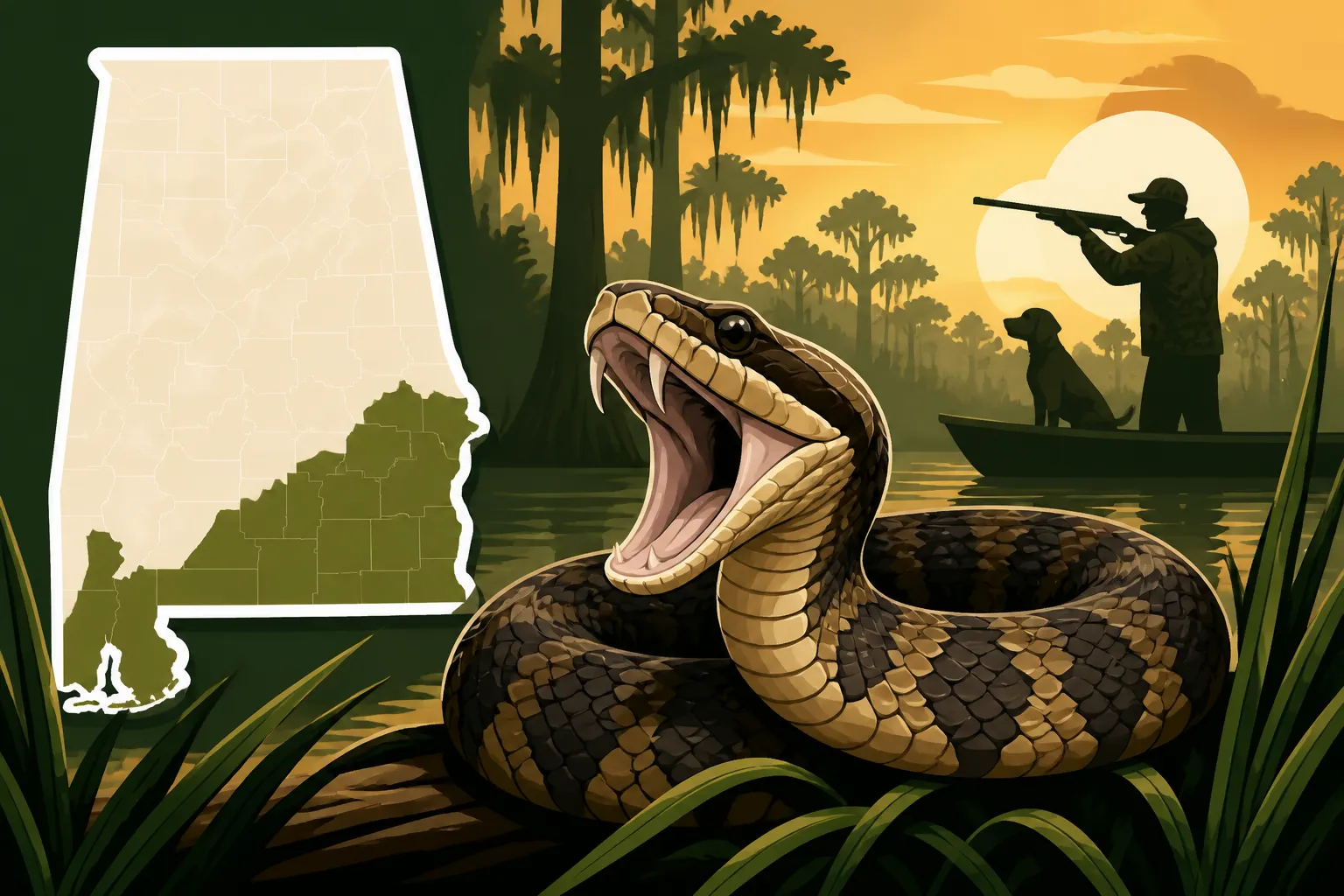
Alabama is blessed with an abundance of diverse aquatic environments, from winding rivers to vast deltas, and much of this rich habitat is exactly where the cottonmouth thrives. It's not just "anywhere wet," though. These snakes have specific preferences, and knowing them can help you predict where you're most likely to cross paths.
Defining "Swamp Country" in Alabama
When we talk about "swamp country" in Alabama, we're not just thinking of stagnant, dark water (though they certainly live there too!). It encompasses a broad range of habitats. This includes the incredibly rich Mobile-Tensaw Delta, the cypress-lined sloughs and oxbow lakes along major river systems like the Tombigbee, Alabama, and Conecuh, and even the dense vegetation around beaver ponds and slow-moving creeks further north. These areas are characterized by abundant water, often murky, with plenty of cover in the form of emergent vegetation, fallen logs, and dense canopy. It’s the kind of place where the air hangs thick and humid, and the ground is almost always soft underfoot.
For a hunter, this means places like the extensive floodplains of the Black Belt region, where fields meet dense river bottoms, or the coastal river swamps in counties like Washington and Clarke. These are often prime areas for deer, hogs, and waterfowl, making them places where hunters spend significant time. Understanding the specific nuances of these environments, perhaps by reviewing detailed topographical maps on an app like GoHunt, can give you a better idea of where the water transitions into more upland terrain and where snakes might congregate.
Specific Aquatic Habitats They Call Home
Cottonmouths are semi-aquatic, meaning they spend a lot of their time in or very near water. They're not just visitors; they're residents. Their preferred aquatic environments include slow-moving or still bodies of water. Think cypress sloughs, murky ponds, overgrown ditches, and the edges of larger lakes and rivers. They particularly favor areas with dense vegetation—water hyacinth, lily pads, cattails, and thick brush along the banks—which provides both cover from predators and ambush points for their prey.
You'll often find them coiled on logs that have fallen into the water, draped over low-hanging branches, or basking on sunny banks right next to the water's edge. They're also quite adept at swimming, often with their heads held high above the surface. These are the very places where ducks feed, where feral hogs wallow, and where a big buck might cross a creek bottom. If you're Hunting Coastal Alabama River Swamps or navigating the backwaters of the Mobile-Tensaw Delta for waterfowl, you're squarely in cottonmouth country. Pay close attention to logs, stumps, and any thick mats of vegetation that seem to be floating – those are prime resting spots.
Overlap with Prime Hunting & Fishing Grounds
It's no secret that some of Alabama's most productive hunting and fishing grounds are also prime cottonmouth habitat. Think about chasing squirrels in Squirrel Hunting Alabama Bottomland Hardwoods, where ancient oaks and cypress stand knee-deep in water for part of the year. Or imagine working a river bank during a late-season deer hunt, trying to get to a secluded stand spot. The dense cover and abundant prey in these swampy areas attract deer, hogs, turkeys, and countless small game species, making them irresistible to hunters.
This overlap means that hunters and anglers need to be particularly aware. For example, if you're Recovering a Deer From a River Bottom, especially after dark, the potential for encountering a cottonmouth significantly increases. They are more active in warmer temperatures, so during Alabama's long hunting season, which often has warm spells even into late fall, they can be out and about. Similarly, fishing in oxbow lakes or casting near fallen timber means you're operating directly in their domain. This isn't meant to deter you, but to encourage a healthy respect and constant vigilance when enjoying these incredibly rich natural areas.
How to Spot a Cottonmouth: Identification Without Panic
One of the biggest anxieties people have about cottonmouths is misidentification. Alabama is home to many harmless water snakes that look somewhat similar, and knowing the key differences can literally save you from unnecessary panic or, worse, harming a non-venomous snake.
Key Physical Traits and Distinctive Behaviors
Cottonmouths, also known as water moccasins, have several distinctive features. Their heads are notably broader than their necks, giving them a somewhat triangular appearance, especially when viewed from above. They possess prominent "heat-sensing pits" located between their eyes and nostrils, a characteristic shared with other pit vipers like rattlesnakes and copperheads. Their pupils are vertical, like a cat's, though you'd need to be uncomfortably close to see this clearly. The coloration varies widely, from dark olive or black to lighter brown with faint crossbands, which can be almost invisible on darker individuals. Young cottonmouths are often lighter, with more pronounced crossbands and a vibrant yellow tail tip, which they wiggle to lure prey.
Behaviorally, cottonmouths often swim with most of their body floating on the surface, keeping their head held high, unlike most non-venomous water snakes that swim with only their head visible. When threatened, they are known for their defensive display: they coil their body, open their mouth wide to reveal the startling white interior (hence "cottonmouth"), and may vibrate their tail. They are not typically aggressive; this display is a warning, a "stay away" message before they resort to biting. If you see this, you've definitely gotten too close.
Common Look-Alikes and How Not to Confuse Them
Alabama's waterways are teeming with non-venomous water snakes (genus Nerodia), which are often mistaken for cottonmouths. Northern water snakes, brown water snakes, and green water snakes are common. These harmless snakes are also patterned, aquatic, and can be quite large. They'll also bite if cornered, but their venom isn't dangerous to humans.
The critical differences: non-venomous water snakes generally have narrower heads that blend more smoothly with their bodies. Their pupils are round, and they lack the heat-sensing pits. When swimming, they typically keep only their head above water, with the rest of their body submerged. While they may flatten their heads when threatened to mimic a cottonmouth's triangular shape, you'll still notice the absence of the deep pits and the rounder pupils. The classic "cottonmouth" display of a wide, white mouth is unique to the cottonmouth.
Here's a quick comparison to help differentiate them:
| Feature | Cottonmouth (Venomous) | Non-Venomous Water Snakes (e.g., Nerodia) |
|---|---|---|
| Head Shape | Broad, triangular, distinct neck | Narrower, often blends with body |
| Pupils | Vertical (cat-like) | Round |
| Facial Pits | Present (between eye & nostril) | Absent |
| Swimming | Most of body floats on surface | Only head typically above water |
| Defensive Display | Coils, opens mouth to show white lining | May flatten head, bite, but no white mouth display |
| Tail Tip (Juveniles) | Yellow or greenish-yellow | Usually same color as body |
| Body Build | Heavy-bodied, robust | More slender, especially near head |
When and Where Encounters Are Most Likely
Cottonmouths are most active during warmer months and throughout the hunting season in Alabama, especially on sunny days. You're most likely to encounter them when they are basking in the sun to regulate their body temperature. This means logs, rocks, stumps, and dense vegetation along the water's edge are prime spots. After heavy rains, they may be on the move, crossing roads or seeking higher ground.
Hunters and anglers often stumble upon them accidentally. When you're retrieving a duck from dense cover, reaching into a brush pile, or stepping over a fallen tree, you're venturing into their space. They are often less inclined to move when approached slowly and will hold their ground, relying on camouflage. This is why vigilance is key. Always look where you step and where you place your hands. If you're wading, shuffle your feet to stir up the bottom, giving any snake a chance to move away. Reading Alabama Mud for Fresh Deer Movement is a great skill, but remember to also read the ground for potential snake encounters, especially in thick, wet areas.
Staying Safe in Cottonmouth Territory: Practical Prevention
Knowing where cottonmouths live and how to identify them is critical, but preventing an encounter and knowing how to react if one occurs are paramount for safety in Alabama's wild places.
Gear and Habits for Navigating Wet Areas
When venturing into known cottonmouth habitat, your gear can make a big difference. High-quality snake boots or gaiters are an excellent investment, offering a physical barrier against potential bites. Long pants made of durable material, even if not snake-proof, provide some level of protection. Carry a walking stick or shooting stick to probe dense vegetation ahead of you, especially when you can't see where you're stepping. This also gives a snake a chance to react and move away without a direct confrontation.
Developing cautious habits is equally important. Never reach into blind spots like hollow logs, dense brush piles, or under rocks without first probing them with a stick or carefully inspecting them. Always look before you step, and lift your feet high over obstacles rather than dragging them. When crossing a creek or wading, shuffle your feet; this creates vibrations and gives any snake in the water a warning to move off. Using a mapping tool like GoHunt to mark known soggy areas or dense creek bottoms could also serve as a reminder to be extra vigilant in those specific spots. Remember that Hunting the Tennessee River Delta for Waterfowl often means navigating thick, flooded timber, where such habits are crucial.
What to Do During an Encounter
If you do encounter a cottonmouth, the most important thing is to remain calm and give the snake its space. Cottonmouths are not inherently aggressive; they prefer to avoid confrontation. Most bites occur when people try to harass, handle, or kill them.
Here’s what to do:
- Do Not Approach: Keep a safe distance. A cottonmouth can strike quickly, usually about half its body length.
- Observe Their Behavior: If it's coiled and showing its white mouth, it's a clear warning. Respect it.
- Back Away Slowly: Give the snake a wide berth. Change your path to go around it. Do not run or make sudden movements that might startle it.
- Do Not Harass or Try to Move It: Leave the snake alone. It's simply trying to exist in its natural environment.
Remember, you are a visitor in their home. A healthy respect for wildlife, including venomous snakes, is a cornerstone of responsible hunting and outdoor ethics. This respect extends to knowing what to do if you encounter a potential hazard, whether it's a snake or a territorial hog while Running Dogs on Alabama Feral Hogs.
Understanding Risk vs. Myth
There are a lot of old wives' tales and exaggerations about cottonmouths. They are often portrayed as aggressive snakes that will chase you down or drop from trees. This is largely untrue. While they do occasionally climb into low-hanging branches, they are primarily ground dwellers and aren't typically "dropping" on unsuspecting people. Their defensive display is a clear signal to stay away, not an invitation to a fight. They'd much rather retreat if given the opportunity.
The risk of a cottonmouth bite, while serious, is relatively low for those who are aware and practice caution. Most bites occur in situations where people are trying to capture, kill, or otherwise interact with the snake. By simply being aware of your surroundings, especially in their preferred habitats, and giving them the space they deserve, you can significantly mitigate the risk. Alabama's outdoors is incredible, and a little knowledge goes a long way in ensuring everyone, including the wildlife, stays safe.
Beyond the Bite: Cottonmouths in Alabama's Ecosystem
It's easy to view cottonmouths solely through the lens of potential danger, but these reptiles play a vital role in Alabama's rich wetland ecosystems. Understanding their place can foster a greater appreciation for their presence.
Their Role in the Food Web
Cottonmouths are important predators within their aquatic and semi-aquatic habitats. They primarily feed on fish, frogs, other snakes (including venomous ones), small mammals, and even birds. By preying on these animals, they help control populations and maintain a healthy balance in their environment. For instance, they help keep rodent populations in check, which can have ripple effects throughout the ecosystem.
Conversely, cottonmouths themselves can become prey for larger animals like alligators, wading birds (such as herons and egrets), and some birds of prey. This intricate web of predator and prey relationships is what keeps an ecosystem functioning effectively. Without them, there could be an overabundance of certain species, leading to imbalances that affect everything from vegetation to water quality. They are a natural and necessary component of the wild places we love to explore and hunt in Alabama.
Conservation and Coexistence
While cottonmouths are not currently considered endangered in Alabama, habitat loss and degradation, particularly the draining of wetlands, can impact their populations. They are also often killed out of fear or misunderstanding, which further stresses local populations. Responsible outdoor recreation involves understanding and respecting all wildlife, not just game animals.
Coexistence is about practicing awareness and prevention, as discussed, and leaving them alone. If you encounter one, the best approach is to simply let it be. They are part of the natural heritage of Alabama, and their presence indicates a healthy wetland environment. As hunters, we spend more time than most in these wild places, and embracing this coexistence is part of being good stewards of the land and its creatures. This extends to understanding other wildlife challenges, such as Alabama Wildlife Disease Monitoring, which helps ensure the health of all species.
Reporting Sightings and Disease Concerns
While you don't need to report every cottonmouth sighting, if you observe a snake that appears injured, sick, or behaving unusually, it can be helpful to report it to the Alabama Department of Conservation and Natural Resources (ADCNR). This kind of information contributes to broader wildlife monitoring efforts. For instance, sometimes certain diseases or parasites can affect snake populations, and observations from the public can be valuable to biologists.
It’s crucial not to try and handle a sick or injured venomous snake yourself. Always contact wildlife officials who are trained to safely manage such situations. Your role as an observant outdoors enthusiast is invaluable for helping manage and understand the health of Alabama's diverse wildlife, including its often-misunderstood reptilian inhabitants.
Disclaimer
This article is for general informational purposes only and does not constitute professional advice. Laws, prices and regulations vary by location and change over time. Consult a qualified professional for guidance on your specific situation.