Alabama Deer Weight Averages by Region
The anticipation leading up to deer season in Alabama is palpable, but once you've successfully harvested an animal, a common question often pops up: "How much does it weigh?" You might be surprised to find that deer from one corner of our state can look and feel vastly different from those taken just a few hours away. This isn't just anecdotal; it's a reflection of Alabama's incredibly diverse landscapes and the direct impact those environments have on the growth and overall health of our White-Tailed Deer Across Alabama. This guide is here to unravel those regional differences, giving you a realistic picture of what to expect when you finally get a deer on the scale, helping you understand why some areas consistently produce heavier deer than others.
Understanding Alabama's Diverse Landscape and Its Impact on Deer Weight
Alabama isn't just one type of deer habitat; it's a patchwork of varied ecosystems, from the rich, dark soils of the Black Belt to the rugged, timbered mountains of the north and the sandy plains closer to the coast. This incredible diversity is absolutely critical when you start thinking about deer weights. A deer is, after all, a profound product of its environment, and that environment dictates everything from the nutrient content of the browse they consume to the presence of mature timber versus sprawling agriculture. These geographical nuances contribute significantly to the overall health and body mass of individual deer.
Consider the foundational differences. In the incredibly fertile Black Belt region, the soil is renowned for its high calcium and phosphorus content. These essential minerals are crucial building blocks for bone growth and overall body development in deer. What does this mean for the deer? It translates directly into incredibly rich, nutrient-dense forage year-round. Deer in these areas often have access to abundant, high-quality food sources – things like lush clovers, native legumes, and waste grains from agricultural fields. This isn't just about deer having more to eat; it's about them having better food that supports stronger bone structure, more muscle mass, and improved overall body condition, which directly impacts their weight.
Contrast this with deer existing in areas with less fertile, sandier soils, like parts of the Coastal Plain or Wiregrass regions, or in the heavily forested mountainous regions of North Alabama where browse might be less diverse and inherently lower in nutritional value. In these areas, deer might have to work harder to find adequate nutrition, and the available forage simply may not offer the same concentrated mineral and protein content. These environmental disparities mean that a 150-pound field-dressed buck from the Black Belt might be considered average for that area, while a 150-pound buck from a more challenging mountainous region could easily be a true trophy, a testament to its survival and growth in a less abundant environment.
Beyond just soil quality, the structure and type of habitat play a huge role. Areas with a mosaic of mature hardwoods, young clear-cuts, thick bedding areas, and interspersed agricultural fields (such as soybeans, corn, or peanuts) offer deer a comprehensive buffet of options for food, security, and bedding throughout the year. Deer living in these varied, well-managed landscapes generally thrive, allowing them to put on more weight and maintain better condition through the demanding rut and winter months.
On the other hand, vast expanses of monoculture pine plantations, while offering some thermal cover, often lack the diverse nutritional offerings and species richness needed for deer to consistently reach their full genetic potential in terms of body size. These areas can often feel like food deserts for deer, forcing them to travel greater distances for sustenance or rely on less optimal forage. It's a complex puzzle, but understanding these fundamental regional differences is the very first step to setting realistic expectations for the size and weight of the deer you encounter, preparing you for the hunt ahead.
Average Deer Weights Across Key Alabama Hunting Regions
Now, let's get down to the numbers, because this is what most hunters are really wondering. While it's impossible to give an exact, universal number for every single deer you'll ever harvest – after all, they're individuals with unique lives! – we can certainly talk in averages and typical ranges based on the general characteristics of Alabama's main hunting regions. What you weigh on the scale at your deer camp, typically the field-dressed weight, is often a direct reflection of where that deer spent its life foraging and what kind of groceries it had access to. This data isn't just interesting; it helps you gauge the health of your local herd and adjust your expectations.
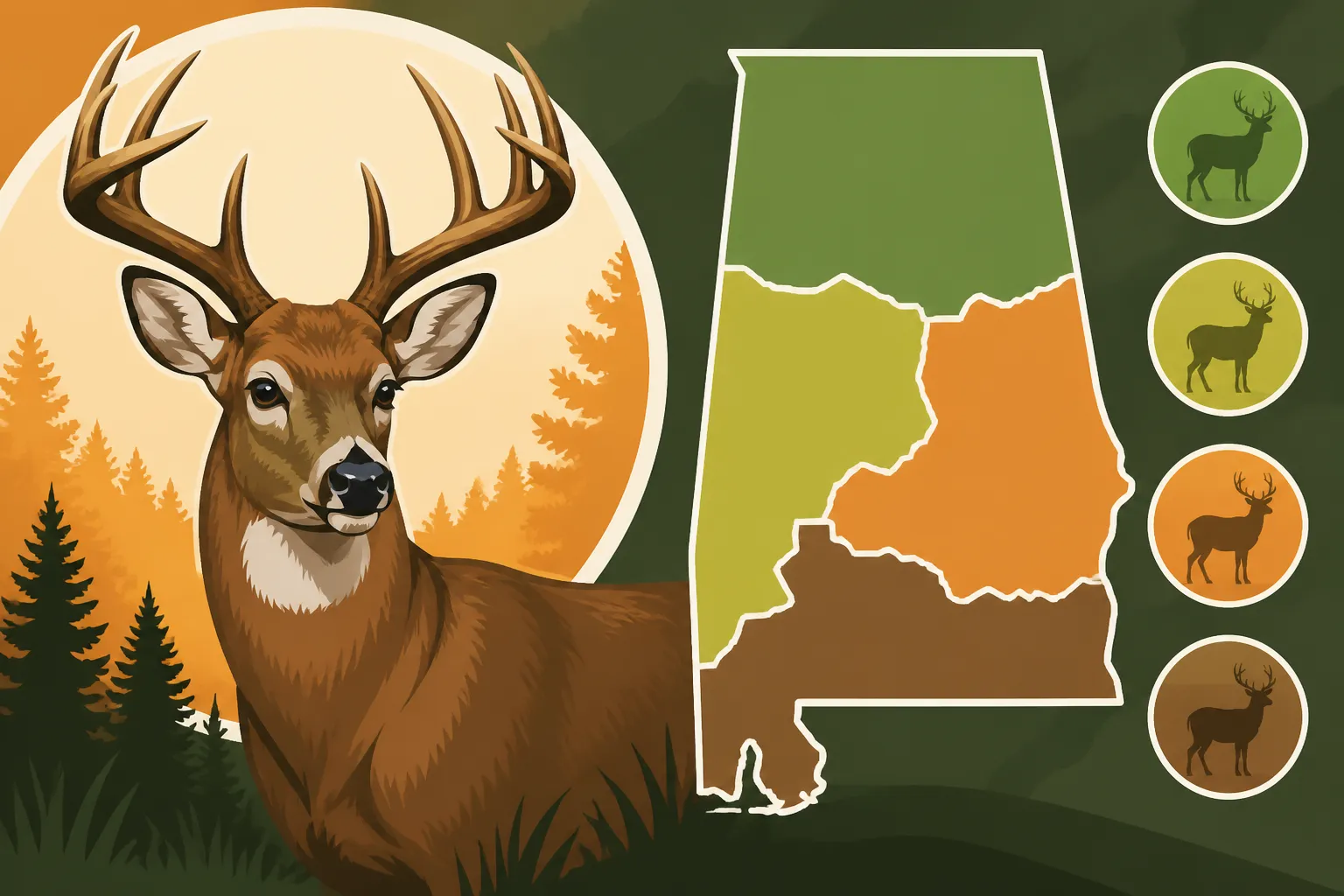
Let's begin with the famous Black Belt region, a true powerhouse for deer. Specifically, in the counties known for their prime Black Belt soils and agricultural influence, it’s not at all uncommon to see mature bucks (those 3.5 years old and older) dress out between 160-200 pounds, and sometimes even pushing well beyond that, particularly with older, exceptionally well-fed individuals. Does in this area can easily hit 100-140 pounds field dressed. The incredible forage diversity, the consistency of high-protein agricultural crops, and those nutrient-rich soils we just talked about are the main drivers here, leading to consistently heavier, healthier deer. It's truly a special place, often discussed as Why the Black Belt Grows Big Bucks.
Moving northward into the Piedmont region, which features a captivating mix of rolling hills, diverse timber types, and some agricultural pockets, deer weights are generally still very respectable. Here, mature bucks might average 140-170 pounds field dressed, with does typically falling into the 90-120 pound range. The habitat in the Piedmont is still quite good, supporting strong deer populations, but it generally doesn't offer the same consistent, concentrated richness of the prime Black Belt agricultural areas. Hunters in these counties still encounter robust deer, but the extreme upper end of the weight spectrum is less frequent.
As you venture into the more rugged, mountainous, and heavily timbered regions of North Alabama, like parts of the Cumberland Plateau or the Appalachian foothills, the average weights tend to dip slightly. The terrain is tougher, and while there's abundant cover, the forage might be less concentrated or diverse in its nutritional profile. Here, bucks might typically average 120-150 pounds field dressed, and does 80-110 pounds. Don't mistake this for a lack of quality; these deer are incredibly hardy and often have denser muscle structure from navigating difficult terrain. They just might not carry the sheer bulk of their Black Belt cousins.
Finally, let's head south, into the expansive Coastal Plain and Wiregrass regions. These areas, characterized by extensive pine forests, sandier soils, and often more fragmented agricultural land, can produce deer of similar average weights to the northern mountains. Mature bucks usually range in the 120-150 pound range field dressed, and does 80-110 pounds. Again, there are always exceptions, particularly in localized areas where agriculture intersperses more heavily with timber, creating pockets of high-quality food. It's why doing your scouting, perhaps even with tools like GoHunt to analyze terrain, soil types, and potential food sources from satellite imagery, is so crucial no matter where you hunt. Understanding these regional benchmarks, whether you're chasing Alabama Deer Population Estimate or just your next meal, will greatly enhance your hunting experience.
Here’s a quick overview of typical field-dressed weights by region:
| Region | Average Mature Buck (Field Dressed) | Average Mature Doe (Field Dressed) | Key Influences |
|---|---|---|---|
| Black Belt | 160-200+ lbs | 100-140 lbs | Fertile soil, diverse agriculture, rich browse |
| Piedmont | 140-170 lbs | 90-120 lbs | Mixed forests, rolling hills, good forage |
| North Alabama Mountains | 120-150 lbs | 80-110 lbs | Rugged terrain, timber, less diverse browse |
| Coastal Plain/Wiregrass | 120-150 lbs | 80-110 lbs | Pine forests, sandier soils, scattered ag |
Factors Influencing Deer Weight Beyond Geography
While the regional characteristics of Alabama's landscape set a broad baseline for deer weights, it's certainly not the only thing determining the heft of a specific deer you might harvest. Think of it like this: a high-quality environment provides the potential for larger deer, but a myriad of other factors dictate whether an individual deer actually reaches that potential and how much it weighs at any given moment. Recognizing these additional influences is key to becoming a more observant and effective hunter.
One of the most significant, and often overlooked, factors is simply the age of the deer. A young, year-and-a-half-old buck, even in the absolute best Black Belt habitat, simply hasn't had the years to fully develop its body mass. Their energy is still largely going into structural growth. Older bucks, especially those 3.5 years and up, have usually focused their energy on body growth for several seasons before dedicating substantial resources to antler development. So, a heavy deer often directly correlates with an older deer, regardless of where it came from. This is a critical point when evaluating potential trophies; sometimes a "smaller" deer from a challenging mountainous area is actually a very old, wise animal that has maximized its potential in that environment. Understanding Alabama Buck Age Structure helps immensely here.
Nutrition, beyond just the inherent quality of the land, also plays a profound, localized role. Even in incredibly fertile areas, a localized poor acorn crop, an unusual period of drought, or even a late spring frost can impact a deer herd's overall condition and weight for that particular season. Deer rely heavily on consistent, high-quality food sources. Conversely, landowners who actively manage their properties with supplemental food plots (like clover or brassicas), provide mineral stations, or engage in timber stand improvement practices that enhance natural browse, can see their local deer herd's weights climb well above the regional average. This kind of intensive management is more common and feasible on private land.
Herd density is another enormous factor that can dramatically influence individual deer weights. When a deer population exceeds the carrying capacity of its habitat – meaning there are simply too many mouths to feed for the available resources – competition for food and nutrients skyrockets. This leads to all the deer in that area being smaller, less healthy, and lighter, regardless of the inherent richness of the soil. Deer Density by Alabama Region can vary wildly across the state, and consistently high densities often correlate with smaller-bodied deer and reduced antler growth. Effective harvest strategies, including adequate antlerless harvest, are crucial for maintaining a healthy balance.
Lastly, genetics, though less controllable for the average hunter, certainly play a part in determining maximum potential. Some deer are simply predisposed to be larger or smaller than others, even with identical food sources. However, it's widely accepted that quality habitat and age tend to trump genetic predisposition in most real-world hunting scenarios; even a genetically superior deer won't thrive in poor conditions. Health issues, like chronic illness, severe injury, or parasitic loads, can also drastically reduce an individual deer's weight and overall condition. Furthermore, the timing of the rut can impact a buck's weight dramatically; a buck that expends significant energy chasing does and fighting rivals during the breeding season will lose a lot of body mass. So, an early-season buck taken before the rut peaks will almost always weigh more than the same buck taken post-rut. This nuance can be critical for hunters evaluating their harvest.
Practical Implications for Hunters: What to Expect and How to Adapt
Knowing these regional weight averages isn't just a fun fact for campfire banter; it's a vital piece of information that can directly impact your hunting strategy, your preparation, and even your mental game. First and foremost, understanding what's typical helps you set realistic expectations for your hunt. If you're heading to public land in a rugged, mountainous region of North Alabama, expecting to routinely drag out 180-pound field-dressed bucks might lead to considerable frustration. Instead, understanding that a 130-pound buck there is a fine, mature animal helps you appreciate the challenges and rewards inherent to that specific habitat and the animal itself. This regional awareness, whether gleaned from years of boots-on-the-ground experience or by looking at scientific data and hunter harvest reports, perhaps even through platforms like GoHunt, allows you to truly celebrate success within the realistic context of your hunting grounds. It fundamentally shapes your personal definition of a "good" deer for that specific area.
This knowledge also profoundly influences how you prepare for a hunt and manage your harvest. If you're heading to a known area for bigger-bodied deer, like a prime Black Belt spot, you might wisely pack a much sturdier game cart, plan for additional assistance with extraction (because dragging a 200-pound animal solo is no joke!), and certainly make sure you have ample ice chests ready for processing that significant amount of venison. Conversely, in areas known for typically smaller deer, while still offering a great challenge, the recovery process might be less physically demanding, perhaps allowing for a simpler carry-out. For example, if you're Hunting the Rut in the Southern Zones or Hunting the Rut in the Northern Zones, be acutely prepared for bucks to be significantly lighter than their pre-rut counterparts due to the massive energy they've expended chasing does and fighting rivals. Understanding this physiological reality can prevent disappointment when you put a nice buck on the scale only to find it's a bit lighter than you anticipated.
Furthermore, understanding these weight trends can be an incredibly valuable tool for making more informed decisions about herd management, especially if you're a part of a hunting club, manage private land, or simply care about the health of the local deer population. If your region should be producing heavier, healthier deer according to historical data and habitat quality, but your club is consistently seeing smaller animals, it might signal an underlying issue with herd density, overall nutrition, or the age structure of the buck population. Perhaps you need to strategically increase antlerless harvest to reduce competition for food, or investigate habitat improvements like creating Late-Season Food Sources for Alabama Whitetails or implementing prescribed burns to enhance natural browse.
Finally, always remember the importance of reporting your harvest through the Alabama Game Check system. While it's easy to forget in the excitement of a successful hunt, this data is incredibly important for wildlife biologists to continue monitoring Alabama Deer Harvest Records and regional health trends. The Alabama Deer Reporting Deadline is also important to remember for every harvest. These small individual actions contribute to the larger picture that helps manage the state's deer herd effectively for everyone. Whether you're using a sophisticated tool to analyze land features or simply relying on your own observations from years afield, being informed about what an average deer weighs in your chosen hunting area helps you become a more skilled, adaptable, and ultimately, more successful Alabama hunter, no matter what part of our beautiful state you're exploring.
Disclaimer
This article is for general informational purposes only and does not constitute professional advice. Laws, prices and regulations vary by location and change over time. Consult a qualified professional for guidance on your specific situation.