The Little River Canyon Bear Population
For many folks who've lived in Alabama their whole lives, the idea of black bears roaming our woods might seem like something out of a storybook, not real life. It's true that for a long time, black bears were pretty scarce in our state, almost forgotten. But things are changing, and there's a surprising and resilient population making a comeback, especially in the rugged, beautiful landscapes of our northeastern corner. If you've ever heard whispers of bears around Little River Canyon, you're on the right track – they're definitely there! This guide is going to dive deep into where these elusive creatures call home, how they got there, and what it means for us to share the Alabama wilderness with them.
A Surprising Presence: Black Bears in Little River Canyon
It can be a genuine surprise for many Alabamians to learn that we actually have a recovering black bear population. For generations, the idea of a wild bear in our state felt like an old tale, something that happened "back in the day" before most of us were even born. But the truth is, while they were nearly extirpated from Alabama, these incredible animals are making a quiet return. And one of the most significant strongholds for their resurgence is the stunning, dramatic landscape of Little River Canyon National Preserve.
Where the Bears Roam
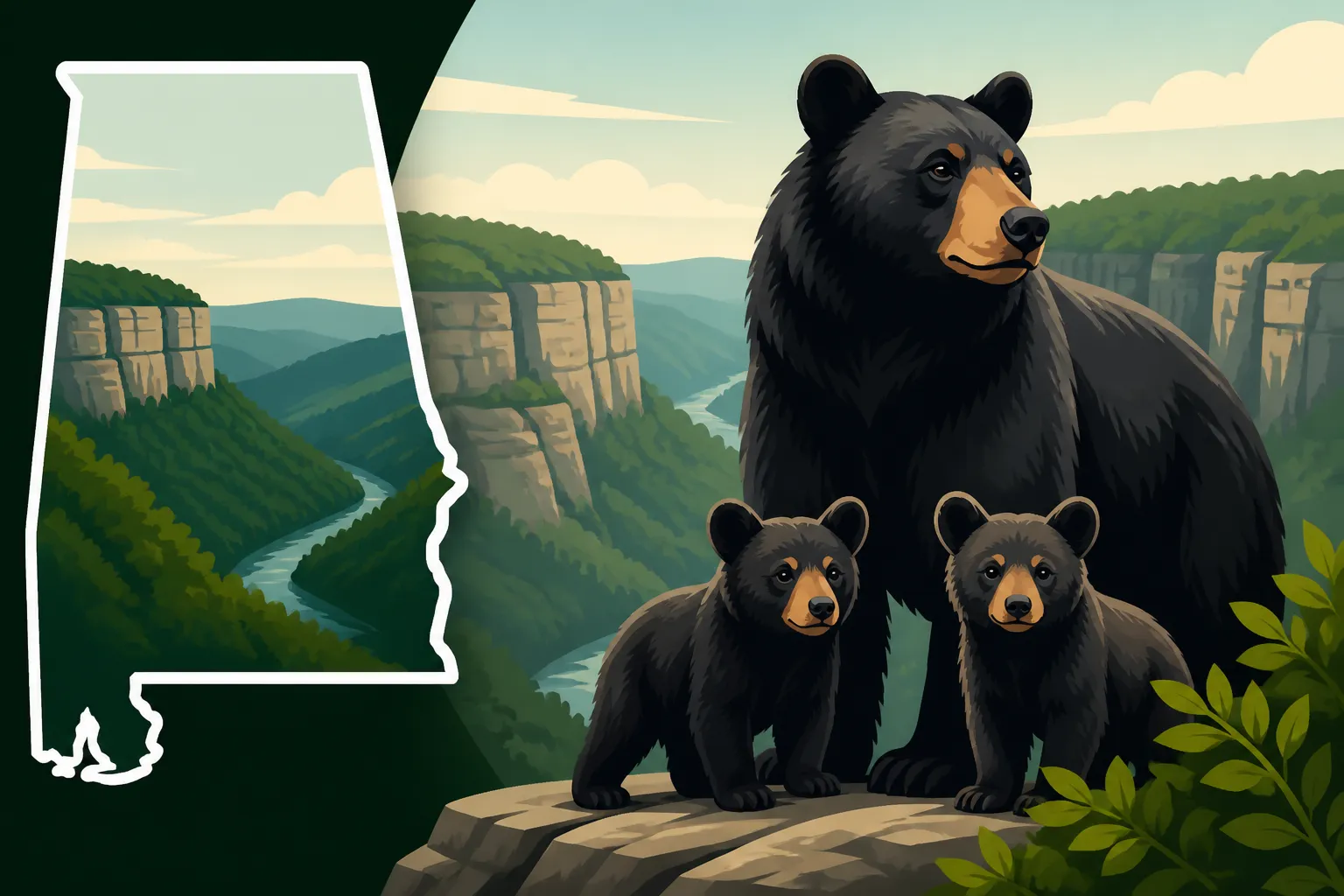
Little River Canyon National Preserve, nestled in the northeastern part of Alabama, is a truly unique geological feature. It boasts one of the deepest canyons east of the Mississippi River, with sheer rock walls, cascading waterfalls, and dense, mature forests. This rugged terrain, with its countless nooks, crannies, caves, and thick vegetation, provides an ideal, secluded sanctuary for black bears. They thrive in areas where human disturbance is minimal, and the challenging topography of the canyon certainly offers that. The preserve itself, along with surrounding public and private lands in Cherokee, DeKalb, and Etowah counties, forms the core of their territory.
These bears aren't just confined to the immediate canyon rim; they utilize the broader forested areas, river bottoms, and mountain slopes that provide continuous cover and food sources. Think about those vast stretches of unbroken woodland you see when you're driving through that part of the state – that's prime bear habitat. They need extensive tracts of land to forage, establish territories, and raise their young away from people. The diverse plant life, from mast-producing hardwoods like oaks to berry bushes and cane thickets, provides a natural pantry that sustains them throughout the seasons.
The History of Their Return
To understand the bears of Little River Canyon, we have to look back a bit. Black bears were once common across all of Alabama, but extensive logging, habitat loss, and unregulated hunting pushed them to the brink by the early 20th century. For decades, sightings were extremely rare, largely limited to isolated pockets in the Mobile River Basin. The Little River Canyon population is a testament to nature's resilience and, in part, the success of conservation efforts across state lines.
Unlike some wildlife populations that have been actively reintroduced, the bears in Little River Canyon are generally believed to be a natural recolonization. As bear populations in neighboring Georgia, particularly in the Appalachian foothills, began to recover and expand, some adventurous individuals started dispersing into suitable habitat in Alabama. The dense forests and protective canyon of Little River presented an inviting frontier. Slowly but surely, a small breeding population established itself, finding the resources and solitude needed to thrive. This slow, natural spread highlights the importance of connected landscapes and the ability of wildlife to reclaim lost territories when conditions improve. It's a truly remarkable story of nature finding a way.
Understanding the Little River Canyon Bear Population
When we talk about the Little River Canyon bear population, it's not just about a few stray bears wandering through; it's a recognized subpopulation within Alabama, distinct yet connected to the broader recovery of black bears in the Southeast. Understanding their specific characteristics, from how many there might be to what they eat, helps us appreciate their place in our ecosystem and how we can better coexist. If you're using a tool like GoHunt to analyze habitat, you'll see how critical undisturbed forest cover is for these animals.
Estimating Population Numbers
Counting bears in dense, rugged terrain like Little River Canyon is no easy feat. These animals are naturally secretive, have large home ranges, and prefer to avoid humans. Biologists don't have a precise, year-to-year census number like you might for a deer herd. Instead, they rely on various scientific methods to estimate population trends and density. This includes techniques such as hair snare surveys, where barbed wire is strung around bait to collect hair samples for DNA analysis, allowing individual bears to be identified. Camera traps are also deployed extensively, capturing images and video that help track movement patterns and individual recognition. Scat analysis, tracking, and reported sightings (when verified) also contribute to the overall picture.
While exact figures remain elusive, the consensus among wildlife biologists is that the Little River Canyon bear population is small but stable, and possibly even slowly growing. It's a testament to the quality of the habitat and the increasing awareness among the public. However, it's crucial to remember that "small but stable" still means these bears are vulnerable and need all the space and protection we can give them. The goal isn't necessarily to have a massive population, but a healthy, self-sustaining one that is integrated into the local ecology.
Genetics and Connection to Other Populations
The genetic makeup of the Little River Canyon bears provides fascinating clues about their origins and their role in regional bear conservation. Research has shown that these bears are genetically linked to the Appalachian mountain population, primarily those found in northwest Georgia. This connection confirms the hypothesis that they are descendants of bears that naturally dispersed from recovering populations in adjacent states. This natural movement is vital for maintaining genetic diversity, preventing inbreeding, and ensuring the long-term health and adaptability of the population.
This linkage means that the Little River Canyon bears aren't isolated; they represent an important western extension of a larger, healthier regional population. Efforts to protect habitat corridors and manage land across state lines benefit not only the bears in Alabama but also contribute to the robustness of the broader Southern Appalachian bear population. Alabama's Two Bear Subpopulations are fascinating, and the Little River Canyon group's genetic background makes them particularly unique within our state, separate from the Mobile River Basin bears which have a different lineage.
Behavioral Patterns and Diet
Black bears in Little River Canyon, like most black bears, are opportunistic omnivores. Their diet largely revolves around what's seasonally available in their environment. In spring, they emerge from their dens and seek out tender green vegetation, insects, and carrion. As summer progresses, they feast on a wide array of berries – blackberries, blueberries, and muscadines are all high on their menu. They'll also turn over rocks and logs looking for grubs and other invertebrates.
The fall is a critical time for them to "fatten up" for winter hibernation. This means a heavy reliance on mast crops, particularly acorns from the abundant oak trees in the canyon and surrounding forests. They can also be found foraging for wild grapes, persimmons, and other nuts. While they primarily consume plant matter and insects, they are capable hunters of small mammals and will occasionally take fawns or consume deer carcasses if they find them. Understanding their natural diet is key to preventing human-bear conflicts, as a bear that associates humans with food (like unsecured trash or pet food) can quickly become a nuisance, or worse. They are incredibly intelligent animals, and their behaviors are deeply tied to the rhythms of the forest.
Coexisting with Black Bears in Little River Canyon
As black bears continue their comeback in Little River Canyon, it’s more important than ever for residents, hikers, campers, and anyone who enjoys the outdoors in that region to understand how to safely coexist with them. While a bear sighting is thrilling, it's crucial to remember these are wild animals that deserve our respect and space.
What to Do if You Encounter a Bear
Encountering a black bear in the wild is a rare but possible experience in Little River Canyon. The most important rule is to remain calm. Do not run, as this can trigger a chase instinct in the bear. Instead, make yourself look as large as possible by standing tall and waving your arms. Make noise – talk loudly, clap, or yell. Most black bears are more scared of you than you are of them and will quickly leave the area once they realize you're there. Give the bear an escape route and slowly back away, always facing the bear.
Never approach a bear, especially cubs. A mother bear will be very protective of her young. If a bear stands on its hind legs, it’s usually just trying to get a better look or smell, not preparing to charge. If a bear does approach you, continue to make noise and act aggressively. If the bear makes contact, fight back. These instances are exceedingly rare, but preparedness is key. Remember that What to Do If You See an Alabama Black Bear should always prioritize both your safety and the bear's well-being.
Preventing Bear Encounters
The best way to handle a bear encounter is to prevent it in the first place. The majority of conflicts arise when bears associate humans with easy food sources. If you're camping, hiking, or living in or near bear country, proper food storage is paramount. Always store food, garbage, and anything with a scent (like toiletries) in bear-resistant containers, locked vehicles, or hung from a tree branch at least 10 feet off the ground and 4 feet from the trunk. Never leave food unattended, even for a short time.
For residents, this means securing trash cans in garages or bear-proof bins, bringing in pet food at night, and cleaning outdoor grills after every use. Bird feeders can also be a significant attractant; consider bringing them in, especially during spring and fall when bears are most actively foraging. Avoiding feeding wildlife altogether helps prevent bears from becoming habituated to human presence and food, which can lead to tragic outcomes for the bear. Using resources like GoHunt to understand seasonal foraging patterns can also help you be more vigilant.
Conservation Efforts and Challenges
Protecting the Little River Canyon bear population requires ongoing conservation efforts and addressing various challenges. Habitat preservation is at the forefront. As development presses on, maintaining large, contiguous blocks of forested land is critical for bears to forage, disperse, and breed without constant human disturbance. Organizations and state agencies work to acquire and manage lands to ensure this connectivity, and Alabama Wildlife Management Areas play a significant role in providing protected spaces.
Road mortality is another significant threat. As bears expand their range and cross roads, they become vulnerable to vehicle collisions. Public education campaigns, like those often supported by state wildlife agencies, aim to raise awareness among drivers in known bear areas. Ultimately, the biggest challenge is fostering a culture of coexistence where humans understand the value of these magnificent creatures and take the necessary steps to prevent conflicts. The "why" behind Why Alabama Bears Stay Fully Protected is directly tied to these conservation needs.
Broader Context of Alabama's Black Bear Population
While the Little River Canyon bears are a special and celebrated part of Alabama's wildlife, it's important to understand that they are part of a larger, complex picture of black bear recovery across the state. Alabama is not just one uniform landscape, and neither are its bear populations.
Alabama's Two Bear Subpopulations
Alabama is home to two primary, distinct black bear subpopulations. We've talked extensively about the Little River Canyon bears in the northeastern part of the state, which are believed to have recolonized naturally from Georgia's Appalachian populations. These bears are robust and tend to inhabit rugged, mountainous, and heavily forested areas. Their presence is a symbol of resilience and natural expansion.
The other significant population is found in the Mobile River Basin, in the southwestern part of Alabama. These bears have a different genetic lineage, tracing back to historic populations that persisted in the dense river swamps and bottomland hardwood forests of that region. The Mobile River Basin bears are often harder to spot, preferring the thickest, most impenetrable cover of the delta. While both groups represent the comeback of black bears in Alabama, their origins, habitats, and some of their behaviors differ, making Alabama's Two Bear Subpopulations a fascinating study in regional ecology.
Why Alabama Bears Stay Fully Protected
One of the most common questions people ask is why Alabama doesn't have a black bear hunting season. The answer is straightforward and deeply rooted in conservation science: the state's bear populations are still recovering and are not yet at a level that can sustain regulated hunting. While numbers are improving, they are still relatively low compared to states with established bear seasons. The goal of the Alabama Department of Conservation and Natural Resources (ADCNR) is to continue to grow and stabilize these populations, ensuring their long-term viability.
Protecting these bears allows them to expand their range, increase their numbers, and fully re-establish themselves in the ecosystem. Every bear, especially a breeding female, is critical to the success of this recovery. The state aims to restore a robust population where a limited hunting season could eventually be considered, but that decision will be based on sound scientific data indicating a healthy, abundant population. For now, the focus remains entirely on protection and fostering human-bear coexistence. This is Why Alabama Has No Bear Season remains a fundamental part of the state's wildlife management strategy.
Comparing Alabama's Bear Populations
Understanding the unique characteristics of Alabama's two primary black bear populations can help clarify their conservation status and management needs.
| Feature | Little River Canyon Population (Northeast Alabama) | Mobile River Basin Population (Southwest Alabama) |
|---|---|---|
| Primary Location | Little River Canyon National Preserve, surrounding forests in Cherokee, DeKalb, Etowah Counties | Mobile-Tensaw River Delta, vast swamps and bottomlands of Washington, Clarke, Monroe, Baldwin Counties |
| Origin | Primarily natural recolonization from expanding Appalachian populations in Georgia | Remnant of historic Alabama population, persisted in isolated swamps |
| Habitat Type | Rugged mountain forests, steep canyons, oak-hickory woodlands | Dense riverine swamps, bottomland hardwoods, extensive wetland systems |
| Terrain | Rocky, elevated, forested hills and deep gorges | Flat, wet, often seasonally flooded, incredibly dense vegetation |
| Genetic Link | Appalachian bear lineage | Gulf Coastal Plain bear lineage |
| Population Status | Small but stable/growing | Small but stable/growing |
| Primary Threats | Habitat fragmentation, road mortality, human-bear conflict | Habitat loss, poaching, human-bear conflict, limited dispersal |
| Key Food Sources | Acorns, berries, insects, tender vegetation, wild fruits | Acorns, palmetto berries, cane shoots, insects, fish, crustaceans |
Disclaimer
This article is for general informational purposes only and does not constitute professional advice. Laws, prices and regulations vary by location and change over time. Consult a qualified professional for guidance on your specific situation.