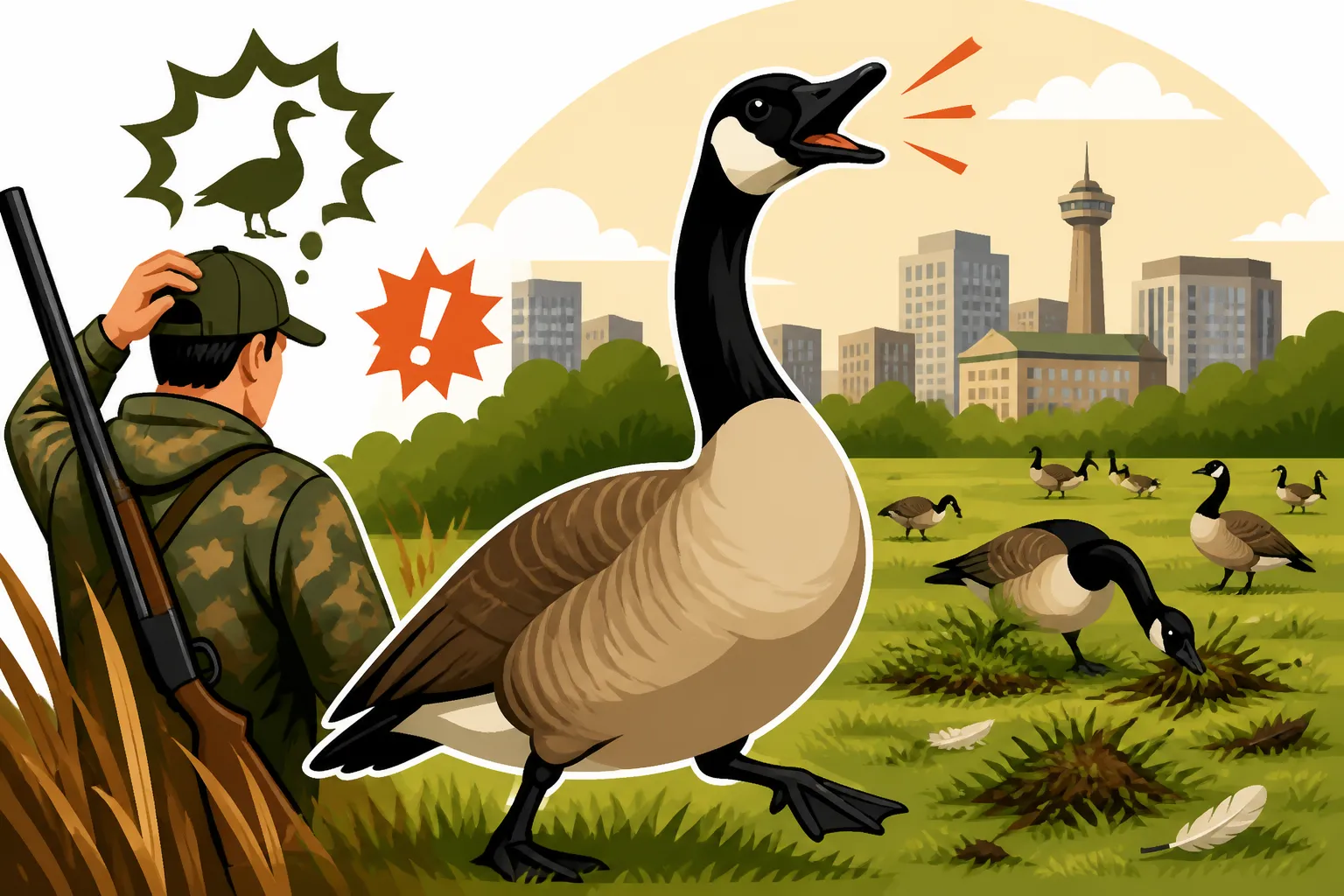
Resident Goose Problems Near Huntsville
If you live anywhere near Huntsville, Alabama, chances are you've encountered them: the ever-present, ever-pooping Canada geese that seem to have set up permanent residence in every park, golf course, and even suburban pond. It’s not just a minor annoyance; these birds can create genuine headaches for homeowners, businesses, and public spaces, from ruined lawns to aggressive encounters. This guide will dive deep into why these geese are such a persistent issue around Huntsville and explore the various strategies available to manage their growing populations.
The Rise of Resident Geese Around Huntsville
It might seem like these big birds just appeared out of nowhere, but the truth is, the conditions in and around Huntsville have become incredibly attractive to Canada geese, leading to a significant increase in what we call "resident" populations. These aren't the geese passing through on their long migrations; these are the ones who've decided Alabama is pretty great year-round.
Why Huntsville is a Goose Magnet
Think about it: Huntsville and the surrounding Madison County area are brimming with exactly what a Canada goose loves. We have an abundance of well-manicured green spaces – golf courses, corporate campuses with retention ponds, city parks, and even large residential lawns. These areas often feature short, nutritious grasses, which are essentially an all-you-can-eat buffet for geese. Add to that the numerous ponds, lakes, and slow-moving streams that provide safe roosting and nesting sites, often with very little in the way of natural predators. Many of these spots are conveniently located away from heavy hunting pressure, giving geese a sense of security they wouldn't find in more rural settings. And let's be honest, sometimes people mean well and feed them, which only reinforces their presence and reliance on human-provided food sources.
Distinguishing Resident Geese from Migratory Birds
It’s important to understand that not all Canada geese are created equal in terms of management. Historically, Canada geese were primarily migratory, breeding in the far north and flying south for the winter. These migratory populations are still a vital part of the annual waterfowl spectacle we enjoy, especially along the Tennessee River. However, resident Canada geese are different. These birds either hatched in Alabama or nearby states and never learned to migrate, or they're descendants of geese that were introduced in various wildlife restoration efforts decades ago and found the living too good to leave.
The key distinction lies in their behavior: migratory geese travel, while resident geese stay put, often year-round, or only move very short distances. This sedentary lifestyle means they put constant pressure on local habitats, leading to localized overpopulation. When we talk about "resident goose problems near Huntsville," we're specifically referring to these non-migratory populations that consistently impact our immediate communities. Their presence impacts not just local aesthetics but can also have ecological implications.
The Real-World Problems Caused by Overpopulation
While a lone goose or a small family might seem quaint, a rapidly growing population of resident geese can quickly become a serious nuisance, causing a cascade of problems that impact everything from public health to property values.
Landscape Damage and Sanitation Headaches
This is probably the most visible and frustrating issue for many Huntsville residents and businesses. Geese are voracious grazers, and their constant feeding on lawns, golf courses, and parks can decimate turfgrass, leaving behind unsightly bare patches and erosion. But that's not even the worst of it. The sheer volume of droppings produced by a flock of geese is staggering. A single goose can produce several pounds of waste per day. Imagine dozens or even hundreds of geese congregating in one area!
These droppings don't just look awful; they create significant sanitation and health concerns. They contaminate public walking trails, playgrounds, and picnic areas, making them unpleasant and potentially unsafe. If you have a backyard pond or a community lake, goose droppings can elevate nutrient levels in the water, leading to algae blooms and a decline in water quality, harming fish and other aquatic life. For homeowners, cleaning up a heavily goose-impacted lawn can feel like a never-ending battle. Businesses with outdoor spaces, like restaurants or corporate parks, often face increased cleaning costs and negative impressions from customers or employees due to soiled grounds.
Aggression and Safety Concerns
It's easy to forget that Canada geese, despite their seemingly docile appearance, are wild animals. During nesting season, typically from March through June in Alabama, both ganders and hens become extremely territorial and protective of their nests and goslings. This can lead to aggressive behavior towards humans and pets that venture too close. I've heard countless stories of people being hissed at, wing-slapped, or even chased by an angry goose just for walking their dog near a pond.
These encounters aren't just startling; they can pose real safety risks, especially for children, the elderly, or small pets. Imagine a child playing in a park being confronted by an aggressive gander; it's a terrifying experience. On golf courses or large corporate campuses, geese crossing pathways or suddenly flying up can be hazards. Ensuring public safety in areas frequented by large goose populations becomes a serious management concern.
Economic Impact on Businesses and Property Owners
The problems caused by resident geese also hit businesses and property owners where it hurts: the wallet. The direct costs associated with cleaning up droppings are substantial, requiring staff time or outsourced services. Beyond cleaning, there's the cost of repairing damaged landscapes – re-seeding lawns, fixing eroded banks, and maintaining water quality in ponds. For a golf course, the pristine greens and fairways are part of their appeal; goose damage and droppings can significantly detract from the playing experience and potentially lead to a loss of membership or patronage.
Property owners, from individual homeowners dealing with a small pond to large commercial entities, bear these ongoing expenses. This constant battle can impact property values in residential areas if the problem becomes severe. Furthermore, the perceived nuisance can deter people from using public parks or recreational areas, impacting local tourism or community well-being. It's not just a minor annoyance; it's a quantifiable burden.
Navigating Management Strategies and Regulations
Dealing with resident geese isn't as simple as shooing them away. Because Canada geese are protected under the Migratory Bird Treaty Act, any intervention beyond simple hazing requires careful consideration of local, state, and federal regulations. You can't just remove eggs or harm geese without proper permits. Understanding these rules is the first step toward effective management.
Non-Lethal Deterrent Methods for Homeowners
For individual homeowners, the first line of defense against nuisance geese usually involves non-lethal deterrents. These methods aim to make your property less attractive or comfortable for geese, encouraging them to find a new home without causing them harm.
- Habitat Modification: This is often the most effective long-term strategy. Geese love short, manicured lawns right up to a body of water. By allowing the grass to grow taller (6-10 inches) along pond banks or property edges, you create an area where geese feel less secure from predators and find it harder to graze. Planting dense shrubs or erecting physical barriers like low fencing (even a simple string fence at knee height) can also make water access less appealing. Think about making your space less of an easy landing strip and more of a fortress.
- Visual and Auditory Deterrents: These can include things like scarecrows, Mylar balloons, reflective tape, or even commercially available "coyote cutouts." Some people try noisemakers, particularly those that mimic predator calls or distress calls. The effectiveness of these methods, however, is often limited. Geese are smart and will quickly habituate to static deterrents once they realize there's no real threat. They might work for a short period, or if moved frequently, but they're rarely a permanent solution for a persistent flock.
- Repellents: There are goose repellents available, typically containing methyl anthranilate, a grape-derived compound that irritates the geese's sensory organs (they dislike the taste and smell), but is harmless to them. These are usually sprayed on grass or other vegetation. While they can be effective, they require reapplication, especially after rain, and can be costly for larger areas. Always read labels carefully and ensure they are safe for your specific environment and other wildlife.
- Egg Addling/Oiling: This method is a critical part of long-term population control, but it requires a federal permit from the U.S. Fish and Wildlife Service, and often coordination with state agencies like the Alabama Department of Conservation and Natural Resources (ADCNR). "Addling" involves shaking eggs vigorously to disrupt embryo development, while "oiling" coats the eggs with corn oil, preventing air exchange and embryo development. The goal is to keep the adults incubating a non-viable clutch for the entire nesting period, preventing them from re-nesting elsewhere. This method doesn't remove the adults, but it significantly reduces the number of new goslings added to the resident population each year. Never attempt this without the proper permits, as it is illegal.
Professional Goose Management Services and Their Role
When DIY methods aren't enough, or the problem is on a larger scale (e.g., a golf course, a large corporate park, or a community lake), professional goose management services become invaluable. These companies specialize in humane and effective methods that comply with all legal requirements. They often have the expertise and equipment to handle large populations.
Professional services can implement a wider range of strategies, including:
- Hazing Programs: Using trained dogs (often Border Collies) to consistently herd and harass geese, making an area feel unsafe. These dogs are specifically trained not to harm the geese but to constantly move them along.
- Round-ups: Under strict federal and state permits, professionals can conduct summer round-ups when geese are molting and temporarily flightless. The geese are humanely captured and relocated to approved sites or, in some cases, harvested for food distribution. This is a highly regulated activity and not something individuals can undertake.
- Nest and Egg Management: Permitted professionals can handle large-scale egg addling or oiling programs across multiple properties, ensuring compliance and maximizing effectiveness for population control.
- Long-term Management Plans: They can develop comprehensive strategies that integrate habitat modification, deterrents, and population control measures tailored to your specific property. When exploring your options, using mapping tools like GoHunt can help you visualize your property's features, potential goose hotspots, and plan out where deterrents or modifications might be most effective.
Understanding Local and State Regulations
This cannot be stressed enough: Canada geese are federally protected migratory birds. This means that any activity that involves disturbing nests, eggs, or harming the birds (beyond simple, non-aggressive hazing) requires specific permits from the U.S. Fish and Wildlife Service and often concurrence from the Alabama Department of Conservation and Natural Resources (ADCNR). Ignoring these regulations can lead to significant fines and legal penalties.
Before you consider any aggressive management techniques like egg removal, addling, or anything that might harm a goose, always consult with the appropriate authorities. Your local ADCNR office or wildlife biologist can provide guidance on what is permissible in Alabama and help you navigate the permitting process for activities like egg addling. They are there to help ensure wildlife is managed ethically and legally. Remember, understanding Alabama Goose Season Rules and Alabama Waterfowl Zones and Seasons is critical if you're considering any form of population control through legal hunting avenues, which primarily apply to migratory birds but can also sometimes involve resident populations on private lands with appropriate licenses and permits. You'll also need to ensure you have the correct Alabama Hunting Licenses and What They Cost and Alabama Migratory Bird Certification.
Long-Term Solutions for Coexistence
While immediate problems often require immediate fixes, truly managing resident goose populations, especially in urbanizing areas like Huntsville, demands a long-term perspective and often a community-wide effort. We're not looking to eliminate geese entirely, but rather to control their numbers to a manageable level where conflicts are minimized and both people and wildlife can thrive.
Community-Wide Efforts and Education
One of the biggest factors contributing to the persistence of resident geese is unintentional human behavior. People, often with good intentions, feed geese in parks, along greenways, and near ponds. This hand-feeding makes geese dependent on humans, lose their natural fear, and encourages them to congregate in areas where they become nuisances. A crucial long-term strategy is widespread public education within the Huntsville community.
Initiatives that encourage "Don't Feed the Wildlife" campaigns, particularly for waterfowl, are incredibly important. When communities understand that feeding geese creates problems, they are more likely to stop, which in turn reduces the attractiveness of certain areas for these birds. Local parks and recreation departments, homeowners associations, and even neighborhood groups can play a vital role in sharing this message. Collaborating on habitat modification projects, like letting shoreline grasses grow taller in community parks, can also have a significant collective impact. Information from the ADCNR about Wheeler National Wildlife Refuge Hunting Rules or Using the Outdoor Alabama Map Tool can help communities understand broader wildlife management strategies that might apply locally.
Strategic Hunting and Population Control
While direct hunting within city limits or highly populated suburban areas is generally not feasible or legal, regulated hunting can be a component of broader regional management plans for resident goose populations, especially on larger private land tracts outside of dense residential zones. For instance, landowners with significant goose problems on their private acreage might consider working with licensed hunters.
This isn't about eradicating geese, but rather about introducing a level of pressure that mimics natural predation, making geese warier and less likely to congregate in large numbers. It's a way to responsibly manage populations where appropriate. However, any hunting activity must adhere strictly to state and federal hunting regulations, including seasons, bag limits, and licensing requirements. Hunters would need an Alabama All-Game Versus Small-Game License, be sure to fulfill Alabama Hunter Education Requirements, and comply with federal and state migratory bird stamping. Finding private land where hunting is possible requires Getting Private Land Permission in Alabama. For those looking at larger land tracts for management, tools like GoHunt can assist in understanding property boundaries and features, helping in discussions with landowners or planning for deterrents. This approach focuses on reducing overall numbers and dispersing problematic flocks, complementing non-lethal deterrents.
Table: Common Non-Lethal Goose Deterrents
| Method | Description | Pros | Cons | Best Use Case |
|---|---|---|---|---|
| Habitat Modification | Altering the environment (e.g., taller grass at water's edge, planting dense shrubs). | Long-term, natural solution; addresses root cause; low maintenance once established. | Can alter aesthetics; takes time to establish; may not be 100% effective on its own. | Homes, parks, golf courses, corporate campuses with water features. |
| Visual Deterrents | Scarecrows, Mylar balloons, reflective tape, predator decoys (e.g., coyote cutouts). | Inexpensive, easy to deploy initially. | Geese habituate quickly; requires frequent movement/change to remain effective. | Short-term relief; small properties; temporary protection (e.g., newly seeded lawn). |
| Auditory Deterrents | Noisemakers, predator calls, distress call recordings, propane cannons (where legal). | Can be effective for initial dispersal. | Geese habituate quickly; can be disruptive to neighbors; legality varies by location. | Agricultural fields; very large, isolated properties; emergency dispersal. |
| Chemical Repellents | Sprays (e.g., methyl anthranilate) that make grass taste/smell unpleasant to geese. | Can deter grazing without harm; safe for other wildlife. | Requires frequent reapplication (especially after rain); can be costly for large areas. | Lawns, golf course greens, specific high-traffic areas. |
| Hazing (non-dog) | Consistently shooing geese away, waving arms, making noise. | Free, immediate short-term effect. | Very time-consuming; geese can become desensitized if not persistent; less effective on large flocks. | Small, localized problems; individuals trying to keep a few geese off their yard. |
| Egg Addling/Oiling | Treating eggs to prevent hatching while keeping adults incubating the nest. (Permit required!) | Highly effective for long-term population control; humane. | Requires federal permit; must be done correctly; doesn't remove adult birds. | Community-wide programs; large properties with persistent nesting issues. |
It's clear that managing resident goose populations around Huntsville requires a multi-faceted approach, combining proactive habitat management, education, and, when necessary, professional intervention and adherence to strict regulations. By working together, we can ensure our beautiful outdoor spaces remain enjoyable for everyone, including responsible wildlife.
Disclaimer
This article is for general informational purposes only and does not constitute professional advice. Laws, prices and regulations vary by location and change over time. Consult a qualified professional for guidance on your specific situation.