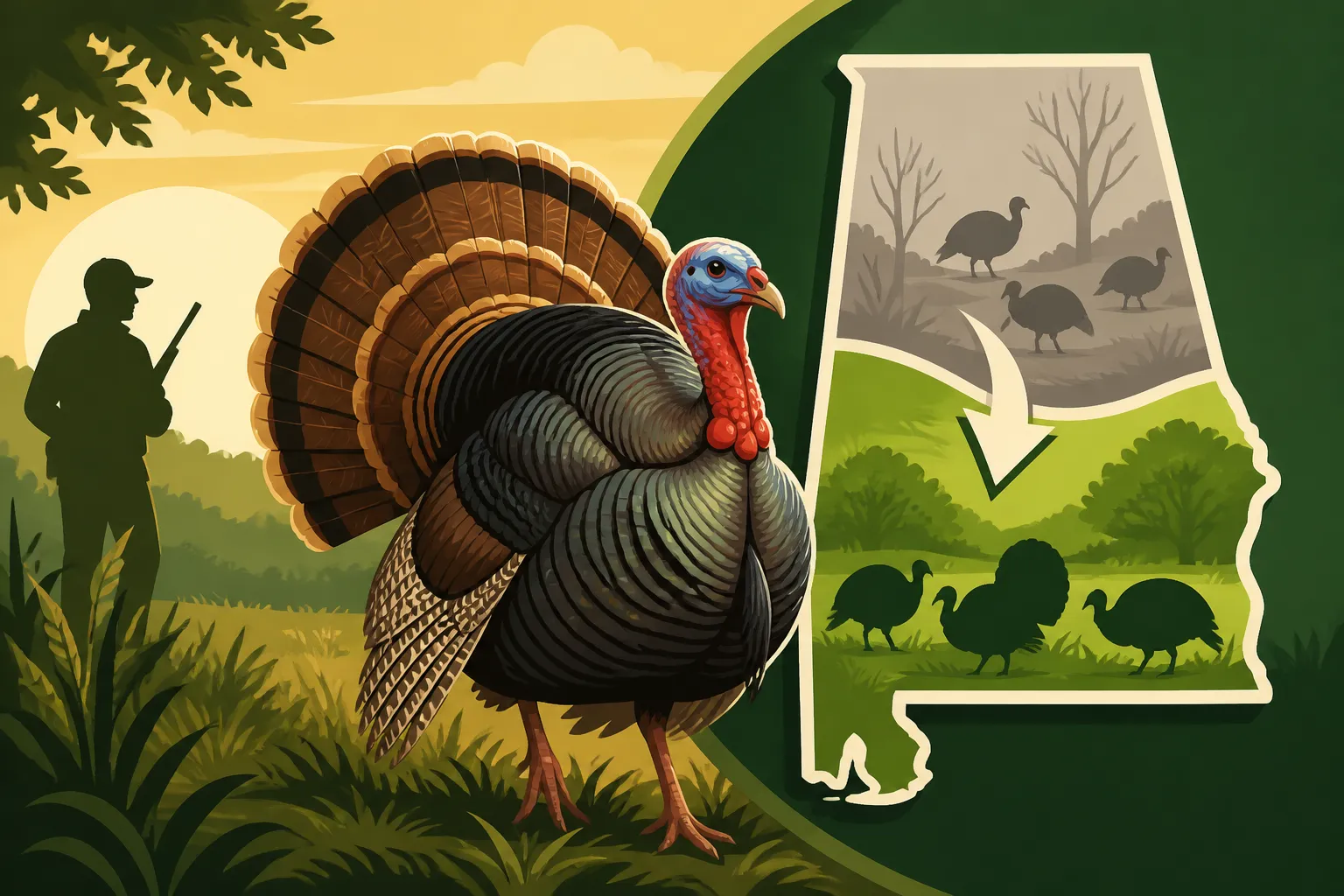
How Turkeys Were Restored to Alabama
It’s truly disheartening to think that a creature as iconic and revered as the wild turkey, a cornerstone of our Southern heritage and hunting tradition, was once teetering on the brink of extinction right here in Alabama. For generations of hunters and outdoor enthusiasts, the possibility of a silent spring with no gobblers echoing through the timber was a terrifying reality. This guide dives deep into the incredible, painstaking journey of how dedicated conservationists, agencies, and ordinary folks came together to bring the wild turkey back from near oblivion across the Yellowhammer State, detailing the methods, challenges, and ongoing commitment that ensures these magnificent birds continue to thrive.
The Dire Situation: Turkeys on the Brink
Imagine a time when the resounding gobble of a wild turkey was a rare sound in the Alabama woods, a relic of tales told by grandfathers rather than a present-day reality. It's almost unfathomable today, given how common these birds are across our landscape, but there was a period, not too long ago, when Alabama's wild turkey population was in serious trouble. The story of their decline is a stark reminder of how quickly even abundant wildlife can disappear without careful management and a strong conservation ethic.
Historical Decline: A Vanishing Icon
By the early 20th century, Alabama's wild turkey numbers had plummeted dramatically. We're talking about an estimated 5,000 birds left across the entire state by the 1940s. That’s a shockingly low number for a state with such vast wild lands. The reasons for this decline were multifaceted, a perfect storm of environmental pressures and human impact. Unregulated market hunting played a huge role in the late 1800s and early 1900s, where turkeys were hunted year-round with no bag limits, often to supply burgeoning city markets with wild game. The sheer volume of birds taken was unsustainable.
Beyond hunting pressure, the widespread destruction of critical habitat was perhaps the biggest culprit. As Alabama grew, vast tracts of mature hardwood forests and longleaf pine ecosystems, vital for turkey roosting, nesting, and foraging, were cleared for agriculture, timber, and urban development. The complex mosaic of open woodlands, dense undergrowth, and reliable water sources that turkeys depend on was fragmented and diminished. This loss of habitat meant fewer places for turkeys to live, breed, and hide from predators, leaving them vulnerable and isolated. The situation was dire, painting a bleak picture for the future of this magnificent game bird.
Why They Vanished from the Landscape
The decline wasn't just about direct hunting or clear-cutting; it was a systemic problem that chipped away at the turkey's ability to survive and reproduce. Forest fires, often uncontrolled and widespread, would decimate nesting sites and young poults. The lack of understanding about wildlife management meant there were no seasons, no bag limits, and no real enforcement for a long time. It was essentially a free-for-all, driven by necessity for some and greed for others. When you combine intense human pressure with an already difficult environment for reproduction (turkeys are notoriously susceptible to nest predation), it's easy to see why populations crashed.
Furthermore, turkey populations are naturally cyclical and can be sensitive to environmental changes. Diseases, unusually harsh winters, or prolonged droughts could have devastating local effects, and without a robust, widely distributed population, these local setbacks could cripple the species statewide. The wild turkey, once an abundant food source and a symbol of the wild, was being systematically erased from much of its historic range. It became clear that without a deliberate, concerted effort, the wild turkey would disappear from Alabama completely, a loss that would have been immeasurable to our natural heritage.
The Restoration Effort: A Bold Vision
Faced with such a bleak outlook, the idea of restoring wild turkeys seemed like an almost impossible dream. But thanks to visionary leaders, dedicated biologists, and the establishment of agencies like the Alabama Department of Conservation and Natural Resources (ADCNR), a bold plan began to take shape. This wasn't just about putting a few birds back in the woods; it was a comprehensive, long-term strategy that required immense effort, patience, and scientific expertise. It stands as one of the greatest conservation success stories in North America.
Trap and Transfer: The Cornerstone Strategy
The primary and most effective method employed in Alabama, and across many other states, was the "trap and transfer" program. This wasn't some haphazard release of pen-raised birds – a method that had largely failed in earlier attempts because pen-raised turkeys lacked the necessary wild instincts to survive. Instead, the strategy involved capturing truly wild turkeys from healthy, established populations and relocating them to suitable, but unoccupied, habitats.
Here’s how it typically worked: biologists and trained personnel would use specialized cannon nets or rocket nets to capture groups of wild turkeys. These nets are incredibly effective, deploying quickly over a flock of feeding birds without harming them. Once captured, the birds were carefully processed – checked for health, banded for identification, and sometimes fitted with small transmitters for monitoring. Then, they were swiftly transported, often by truck or even small aircraft, to predetermined release sites in areas where turkeys had been extirpated but where habitat had since recovered or been improved. These release sites were carefully chosen for their potential to support a new, self-sustaining population, with ample food, water, and cover. This technique was groundbreaking because it introduced genetically strong, wild-adapted birds directly into new areas, giving them the best chance to thrive.
Early Successes and Challenges Along the Way
The trap-and-transfer program started small, but the results were nothing short of miraculous. From those initial releases in the 1940s and 50s, wild turkey populations began to take hold. Biologists watched with bated breath as the released birds established territories, nested, and reproduced, gradually expanding their range. Early successes were often seen in areas with large, contiguous tracts of public or private land where human disturbance was minimal. The success wasn't immediate everywhere, though. Sometimes, a release wouldn't take, requiring multiple attempts in the same location. Weather events, predation, and initial stress from relocation could impact survival rates.
One of the biggest challenges was simply finding enough source populations. Alabama had so few birds that many of the initial transfers had to come from neighboring states, highlighting the regional nature of this conservation effort. As pockets of turkeys grew stronger in Alabama, they in turn became source populations for further transfers within the state, creating a domino effect of restoration. It was a slow, arduous process, often requiring significant funding and public support. The dedication of individuals, from game wardens to private landowners, was absolutely crucial in making this vision a reality. This commitment laid the groundwork for the robust turkey populations we see today, allowing hunters to experience the thrill of Alabama Spring Turkey Zones and Dates across the state.
Habitat is Key: Beyond Just Releasing Birds
Releasing wild turkeys into new areas was a critical first step, but it was far from the only component of Alabama's restoration success. Biologists knew that without suitable, abundant habitat, even the healthiest birds wouldn't be able to establish thriving populations. The sustained effort to manage and improve land across the state, both public and private, was equally important in ensuring the wild turkey's comeback.
Forest Management for Thriving Turkey Populations
Wild turkeys need diverse habitats to meet their seasonal needs. They're not just forest birds; they require a mosaic of mature timber for roosting, open understory for foraging, dense cover for nesting, and areas rich in insects for poult survival. This understanding led to a widespread push for improved forest management practices that benefit turkeys. Longleaf pine ecosystems, once prevalent and then largely clear-cut, were recognized as prime turkey habitat. Efforts to restore these fire-adapted forests, through prescribed burning and specific planting regimes, became a cornerstone of habitat improvement.
Prescribed burning, in particular, proved invaluable. Controlled burns thin out dense undergrowth, allowing sunlight to reach the forest floor, stimulating the growth of herbaceous plants, grasses, and legumes that turkeys feed on. It also creates open areas critical for poults to find insects and for hens to nest. Programs like the National Wild Turkey Federation (NWTF) worked hand-in-hand with state agencies and private landowners to promote these practices, offering expertise and even financial incentives. The goal was to create a patchwork of varied age classes of timber and diverse plant life that provides food, cover, and nesting sites throughout the year, supporting robust turkey populations and making for excellent Roost Hunting Alabama Gobblers.
The Role of Private Landowners in Conservation
While public lands like the Talladega National Forest and various Wildlife Management Areas (WMAs) played a significant role, the vast majority of land in Alabama is privately owned. The buy-in from private landowners was, and continues to be, absolutely essential for the long-term success of turkey restoration. Many landowners, often hunters themselves, recognized the value of healthy turkey populations and were eager to learn how to manage their properties to benefit these birds.
Programs were developed to educate landowners on best practices, from selective timber harvesting that leaves mast-producing trees to planting food plots with turkey-friendly forage like chufa, clover, and oats. The ADCNR and organizations like the NWTF provided guidance on habitat assessment, predator control, and sustainable harvest strategies. Financial assistance and technical advice helped many private landowners implement significant habitat improvements. This collaborative approach, bridging the gap between state efforts and individual land stewardship, created vast expanses of suitable turkey habitat, allowing the populations to expand beyond protected areas and into nearly every corner of the state.
A significant outcome of these efforts is the dramatic increase in Alabama's wild turkey population. Here's a quick look at the estimated growth over the decades:
| Year (Approx.) | Estimated Wild Turkey Population | Key Restoration Phase |
|---|---|---|
| 1940s | 5,000 | Initial Decline / Pre-Restoration |
| 1970s | 75,000 | Early Trap & Transfer Successes |
| 1990s | 300,000 | Widespread Restoration / Habitat Improvement |
| 2000s | 450,000+ | Peak Populations / Mature Habitat |
| Present Day | 350,000 – 400,000 | Stable, Managed Populations |
Note: Population estimates can vary and are often based on surveys and harvest data. The "Present Day" figures reflect a stable, but carefully managed, population often influenced by factors like poult-to-hen ratios and habitat conditions.
Modern Challenges and Ongoing Stewardship
While the restoration of wild turkeys in Alabama is undoubtedly a conservation triumph, the work is never truly done. Modern challenges, from shifting land use patterns to evolving predator dynamics, demand ongoing stewardship and adaptive management strategies. We can't rest on our laurels; ensuring the long-term health of our turkey populations requires constant vigilance and informed decision-making.
Predator Management in a Changed Landscape
One of the persistent challenges for wild turkey populations, especially for nesting hens and vulnerable poults, is predation. As human landscapes change, so do predator populations. Raccoons, opossums, skunks, foxes, and coyotes are all common nest predators, and in many areas, their numbers have increased or their ranges expanded. Nest Predation and Alabama Turkey Hatches can significantly impact annual recruitment of new birds into the population.
Effective predator management isn't about eradicating these animals, which is neither feasible nor desirable, but rather about balancing predator numbers and providing turkeys with enough cover and safe nesting sites to overcome predation pressure. This often involves targeted trapping efforts on private lands, particularly during nesting season, and improving habitat to give turkeys an advantage. Dense nesting cover, for instance, can make it harder for predators to find nests. Hunters, too, play a role; for example, the year-round open season on coyotes allows for management opportunities that can indirectly benefit turkey populations. Understanding the delicate balance of predator-prey relationships is crucial for maintaining healthy turkey numbers in our modern ecosystems.
Sustaining Healthy Turkey Populations
Beyond immediate threats like predation, sustaining healthy turkey populations in the long run involves a more holistic approach. This includes careful monitoring of harvest data, population surveys, and habitat quality assessments. The ADCNR continuously tracks things like annual turkey harvests, poult-to-hen ratios (which tell us how successful breeding seasons are), and the overall health of the flock. Tools like the GoHunt app and website provide valuable insights into game species data, helping hunters understand population trends and regulations, and contributing to informed management decisions.
Hunting regulations themselves are a critical management tool. Season lengths, bag limits, and even specific rules like the Alabama's Ten-Day Decoy Restriction are all designed to ensure sustainable harvest and protect breeding populations. The goal is to allow for recreational hunting while ensuring enough birds survive to reproduce and grow the population for the next year. It's a fine balance, and it requires ongoing research and adaptation based on the latest scientific findings.
Looking Ahead: The Future of Alabama Turkeys
The story of wild turkey restoration in Alabama is a testament to what's possible when conservation is taken seriously. But for future generations to enjoy the thrill of a spring gobble, we must continue to invest in research, adapt our management strategies, and foster a strong conservation ethic among all outdoor enthusiasts.
Research and Monitoring for Long-Term Health
The scientific community plays a vital role in ensuring the long-term health of Alabama's wild turkey populations. Researchers at universities and state agencies are constantly studying turkey behavior, genetics, disease prevalence, and habitat preferences. This ongoing research provides critical data that informs management decisions. For example, understanding how different forest management techniques impact poult survival or how specific agricultural practices affect turkey movement can lead to more effective conservation strategies.
New technologies, like GPS telemetry, allow biologists to track individual birds, gathering invaluable information on their movements, nesting success, and survival rates. This kind of detailed monitoring helps identify potential issues before they become widespread problems and allows managers to fine-tune regulations and habitat projects. It's a continuous learning process, ensuring that management practices are always based on the best available science, keeping a close eye on factors like Alabama Turkey Population Trends.
The Hunter's Role in Ongoing Conservation
Hunters have always been, and remain, one of the strongest advocates and funders for wildlife conservation in North America. In Alabama, turkey hunters contribute directly to conservation through license fees and excise taxes on hunting equipment, which are funneled back into wildlife management and habitat improvement programs. Beyond financial contributions, responsible hunting practices are key. Adhering to bag limits, season dates, and reporting harvests accurately through programs like Game Check provides essential data for biologists. A tool like GoHunt can help hunters easily access and understand these regulations, ensuring they remain compliant and contribute positively to conservation.
Furthermore, hunters often act as the "eyes and ears" on the ground, reporting unusual turkey behavior, disease signs, or poaching incidents to the ADCNR. Their passion for the pursuit of wild turkeys naturally translates into a deep concern for the species' well-being. By staying informed, advocating for sound conservation policies, and participating responsibly, Alabama's hunters ensure that the legacy of wild turkey restoration continues to thrive, allowing future generations to experience the magic of the spring woods and perhaps even pursue a bird in some of the Best Alabama Counties for Turkeys. The journey from near extinction to thriving populations is a story of collective effort, and it’s one we should all be proud to continue.
Disclaimer
The information provided in this guide is for general informational purposes only and is not intended as legal advice. Hunting regulations, seasons, and licensing requirements in Alabama are subject to change. Always consult the latest official regulations from the Alabama Department of Conservation and Natural Resources (ADCNR) before engaging in any hunting activities.