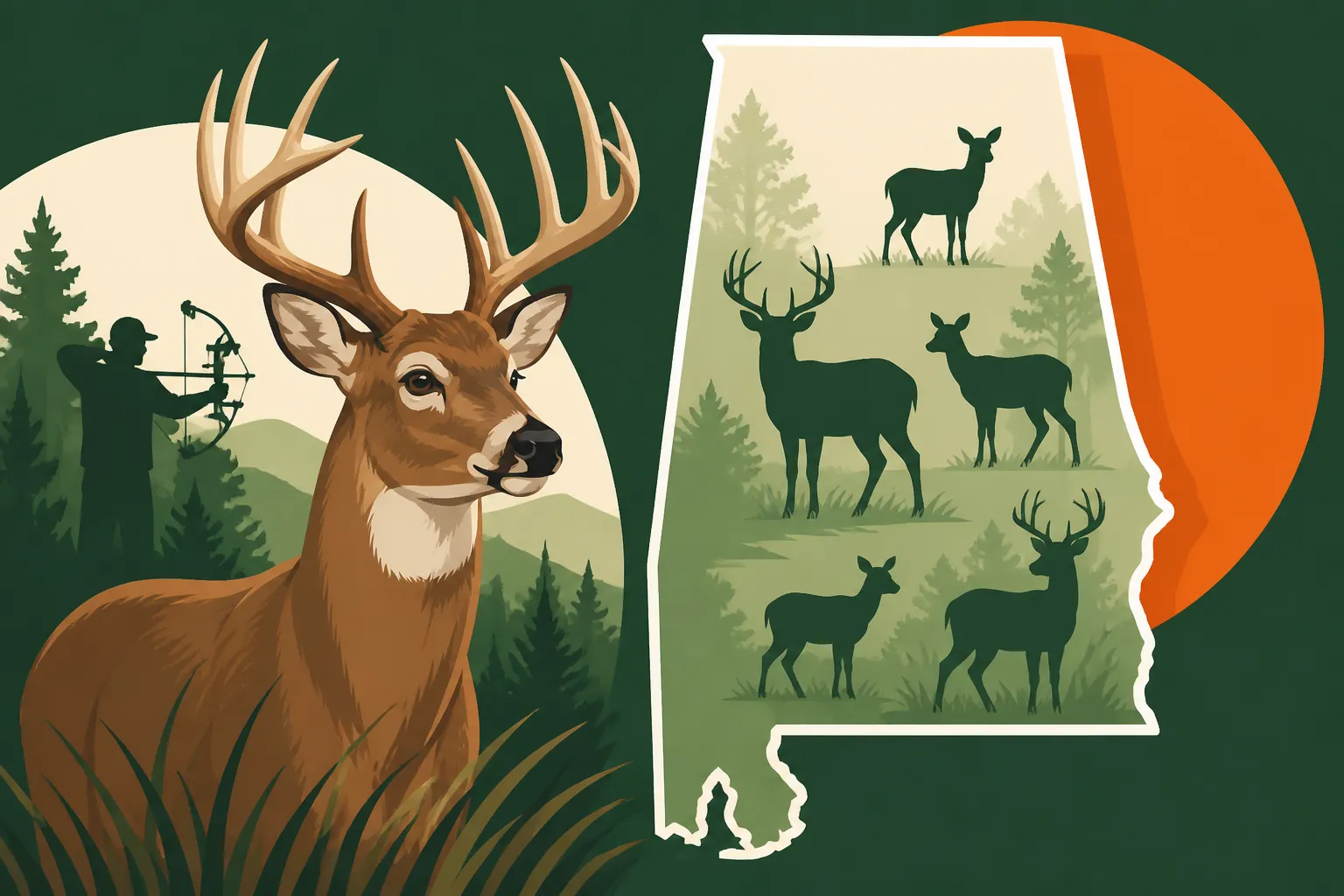
Alabama Deer Population Estimate
It can feel incredibly frustrating when you're out in the woods, doing all the right things – scouting, setting up stands, watching the wind – and the deer just don't seem to be there. You start to wonder if the population has dwindled, or if you're just in the wrong spot. This guide is here to shed some light on the estimated deer population in Alabama, how those numbers are determined, and what it all means for your hunting success. We'll dive deep into the science and the on-the-ground reality, helping you better understand the dynamics of Alabama's whitetail herd.
Understanding Alabama's Deer Population: The Big Picture
Alabama boasts a healthy and robust white-tailed deer population, a testament to decades of careful management and conservation efforts by the Alabama Department of Conservation and Natural Resources (ADCNR). However, saying the population is "healthy" is a broad statement, and as any hunter knows, what that looks like on your back forty versus a national forest can be wildly different. Understanding these population estimates isn't just about raw numbers; it's about discerning trends, identifying high-density areas, and making informed decisions that ultimately boost your chances in the field.
Why Population Estimates Matter to Hunters
For us hunters, population estimates are far more than just dry statistics from a government report. They are a critical tool, a roadmap if you will, that helps us decipher the landscape of our hunting grounds. When you know, generally, whether an area has a high, medium, or low deer density, it fundamentally changes your approach. If you're hunting a public land tract in the Talladega National Forest that historically shows lower densities, you know you might need to hunt harder, cover more ground, or adjust your expectations. Conversely, if you're fortunate enough to hunt a prime piece of private land in the Black Belt, understanding the healthy population there can inform decisions about antlerless harvest to manage the herd effectively.
Think about it: have you ever felt like you're hunting an empty forest, despite all your diligent scouting? Sometimes, it's not you, it's the deer numbers in that specific locality. These estimates help validate those feelings and guide you toward more productive areas or different strategies. They also provide insight into the overall health of the herd. A declining population might signal habitat issues, increased predator pressure, or even disease, which could impact future hunting seasons. Knowing these larger trends helps us all become more responsible stewards of the resource, ensuring future generations can experience the thrill of Alabama deer hunting just as we do. It's about being proactive rather than reactive, adapting your methods to the reality on the ground, and aligning your efforts with the bigger ecological picture.
How Alabama Wildlife Biologists Count Deer
Counting wild, free-ranging deer across an entire state like Alabama, with its diverse habitats from mountains to coastal plains, is no small feat. It's not like counting cattle in a pasture. Wildlife biologists employ a variety of scientific methods, combining direct and indirect observation, to piece together a comprehensive picture of the deer population. One of the most significant tools they have is the mandatory harvest reporting system, often referred to as "Game Check." Every deer harvested in Alabama, whether it's a giant buck or a mature doe, must be reported to the ADCNR within 48 hours. This data, collected diligently by thousands of hunters each season, provides invaluable insight into harvest rates, buck-to-doe ratios, and even general location data, allowing biologists to track localized trends.
Beyond Game Check, biologists also conduct spotlight surveys, where they drive designated routes at night, using powerful spotlights to count deer and observe their age and sex ratios. These surveys are often conducted in consistent areas year after year to establish long-term trends. Trail camera surveys, increasingly popular with hunters, are also utilized in some areas, offering a less intrusive way to estimate density, especially when combined with specific camera placement and timing protocols. Additionally, they analyze herd health through post-mortem examinations of harvested deer, checking for parasites, disease, and overall physical condition. Habitat assessments, which evaluate food availability and cover, also play a crucial role. When all these pieces of data are woven together, from the individual hunter's report to sophisticated aerial surveys, biologists can generate estimates that, while not exact down to the last fawn, provide a remarkably accurate representation of the state's deer population dynamics.
Deer Density Across Alabama's Diverse Regions
Alabama is a wonderfully diverse state, geographically speaking, and that diversity plays a massive role in where deer thrive and how numerous they become. What works for a deer herd in the mountainous terrain of the northeast might be completely different from the swamps of the Mobile-Tensaw Delta or the rich agricultural fields of the Black Belt. Understanding these regional variations in deer density is key to successful hunting, as it informs everything from scouting to stand placement and even your weapon choice.
North Alabama's Piedmont and Mountain Deer
When you think of North Alabama, images of rolling foothills, steep ridges, and vast tracts of national forest land often come to mind. Areas like the Talladega National Forest and William B. Bankhead National Forest, which are part of the larger Appalachian chain, offer a stark contrast to other parts of the state. Here, deer densities can sometimes be lower than in the richer agricultural zones further south. This isn't necessarily a bad thing; it often means a healthier forest ecosystem, but it does mean hunters need to adjust their strategies. Deer in these regions are often harder earned, requiring more effort in scouting and hunting.
The habitat in these northern regions, characterized by mature hardwood forests, pine plantations, and steep topography, provides plenty of cover but can be less productive in terms of consistent, high-quality forage compared to areas with intensive agriculture. Acorn crops are crucial here, and a poor mast year can significantly impact deer movement and health. Hunters often find themselves covering significant ground, scouting for Reading a Ridge for North Alabama Deer or focusing on saddles and creek bottoms where deer might funnel. While densities may be lower, these areas can still produce mature bucks that have grown old navigating challenging terrain and evading pressure. Patience, physical fitness, and a deep understanding of topo maps are your best friends when hunting these beautiful but demanding northern zones.
The Renowned Black Belt Region and its Deer Dynamics
Ah, the Black Belt. If you've spent any time at all talking about deer hunting in Alabama, this region will undoubtedly come up. Stretching across the central part of the state, the Black Belt is famous for its rich, dark, calcareous soils – hence the name – which support incredibly fertile agricultural land. This fertile ground translates directly into superior nutrition for deer, leading to higher deer densities and, perhaps more famously, the consistent production of larger-bodied and bigger-racked bucks. Areas within the Black Belt, such as Dallas, Lowndes, and Wilcox counties, are frequently cited as top spots for both quantity and quality of deer.
The deer dynamics here are a direct result of abundant food sources: corn, soybeans, peanuts, winter wheat, and lush green fields planted specifically for deer. This consistent, high-protein diet allows bucks to express their full genetic potential, often leading to those coveted Boone and Crockett scores that hunters dream about. However, even within the Black Belt, deer density can vary. Large, intensively managed private lands often have the highest densities due to controlled harvest, quality deer management practices, and extensive food plot programs. Public land access, while available, might see more hunting pressure. If you're looking to hunt this legendary region, understanding Hunting Black Belt Prairie Farmland Deer and the local agricultural cycles will be paramount. The challenges here are often less about finding deer and more about navigating private land access, understanding the nuances of field edge hunting, and managing your expectations among such a high-quality herd.
Southern Alabama's Coastal Plain and Wiregrass Deer
Moving further south, Alabama transitions into the Coastal Plain and Wiregrass regions. This landscape is typically flatter, characterized by extensive pine forests, mixed woodlands, and, in some areas, significant agricultural operations. While not as universally renowned as the Black Belt for trophy potential, these regions still hold very healthy deer populations, particularly in counties with a good mix of timber and agricultural land. The hunting experience here often blends elements of both the northern forests and the Black Belt fields.
Deer in the Coastal Plain and Wiregrass regions benefit from a varied diet, including browse from mixed forests, mast from scattered hardwoods, and opportunities to feed in planted fields or timber clear-cuts. Water sources are generally plentiful, and the milder winters mean less stress on the herd. Densities can be quite high, especially in areas adjacent to private timber company lands or smaller farming operations. Hunters might focus on Hunting Longleaf Pine Savanna for Deer or scouting areas with fresh sign near recent logging activity. The challenges often involve navigating dense pine thickets and understanding the influence of timber management practices on deer movement. While you might not consistently find the "giants" of the Black Belt, the opportunity for a productive hunt with a healthy harvest is abundant. It’s a great region for consistent action and filling your freezer, with the added bonus of the occasional surprise buck that might have grown old and wise in the thick southern cover.
| Alabama Deer Density by Region (Estimate) | Typical Habitat | Primary Food Sources | Hunting Challenges | Trophy Potential |
|---|---|---|---|---|
| North Alabama (Piedmont/Mountains) | Mixed hardwoods, pine plantations, steep terrain | Acorns, natural browse | Lower density, steep climbs, pressure on public land | Good, but harder earned |
| Central Alabama (Black Belt) | Fertile agricultural fields, mixed hardwoods | Corn, soybeans, winter wheat, food plots, acorns | Private land access, managing high density | Excellent (quantity & quality) |
| South Alabama (Coastal Plain/Wiregrass) | Pine forests, mixed woodlands, agriculture | Browse, acorns, agricultural crops | Dense cover, timber management impacts | Good, consistent harvest |
Factors Influencing Alabama's Deer Population Trends
Deer populations are dynamic, constantly ebbing and flowing based on a complex interplay of environmental and human factors. It's never as simple as "more deer" or "fewer deer"; the reality is always more nuanced. Understanding these influencing factors can help hunters predict deer movement, identify healthy areas, and even understand the reasoning behind certain hunting regulations. From the quality of their groceries to the presence of predators and diseases, everything plays a role in the numbers you see out in the woods.
Habitat Quality and Food Availability
At the core of any healthy deer population is superior habitat and an abundant, consistent food supply. It's the foundational element. Deer are browsers, meaning they prefer to eat leaves, shoots, and twigs from a variety of plants, supplemented by acorns, fruits, and agricultural crops when available. In Alabama, the quality and type of habitat directly dictate how many deer an area can sustain (its carrying capacity) and how healthy those deer will be. Areas with diverse plant life, early successional growth (like young clear-cuts or prescribed burns), and a good mix of mast-producing trees tend to support denser, healthier herds.
On public lands like national forests, habitat management often includes prescribed burning, which revitalizes the understory, producing tender new growth that deer love. Timber harvesting, when done thoughtfully, can also create beneficial browse opportunities. On private lands, supplemental feeding and extensive food plot programs significantly enhance the natural forage base, often leading to higher deer densities and improved antler growth, particularly in areas like the Black Belt. A bad acorn year, however, can drastically alter deer patterns and stress the herd, forcing them to seek out alternative food sources and making hunting more challenging. Understanding how Hunting After a Poor Acorn Year impacts deer behavior is vital for adjusting your tactics. Essentially, a deer's health and an area's deer density are direct reflections of the dinner table nature provides or humans cultivate.
Predator Impact and Disease Concerns
While habitat and food are essential for growth, predators and diseases act as natural population controls, often impacting the youngest and weakest animals, but sometimes sweeping through even healthy herds. In Alabama, coyotes are the primary predator of deer, particularly fawns. Studies show that coyote predation can significantly impact fawn recruitment, especially in areas with high coyote densities or where does are already stressed. While coyotes rarely take adult, healthy deer, their consistent pressure on fawns can limit population growth in certain regions. Other predators like bobcats and even feral dogs can also contribute to fawn mortality, though generally to a lesser extent than coyotes.
Disease is another critical factor. Chronic Wasting Disease (CWD) is a significant concern for deer management in Alabama, particularly since its confirmation in the state in 2021. CWD is a fatal neurological disease that affects deer, elk, and moose. While the prevalence is currently low and confined to a specific management zone in Northwest Alabama, its potential to spread and decimate deer populations is a serious threat. Hunters in the affected counties, such as Lauderdale, Colbert, and Franklin, must adhere to strict regulations, including mandatory CWD testing weekends, to help monitor and contain its spread. Epizootic Hemorrhagic Disease (EHD) is another disease that periodically affects Alabama deer, often during hot, dry summers. EHD is spread by biting midges and can cause localized, acute die-offs. While EHD outbreaks are usually temporary and do not typically threaten the statewide population, they can certainly impact local deer numbers and hunting success for a season or two in affected areas. Understanding Chronic Wasting Disease Risk in Alabama is crucial for hunters today.
Hunting Pressure and Harvest Management
Human hunting is arguably the most significant factor influencing deer populations, particularly in a state with a long and cherished hunting tradition like Alabama. Through regulated hunting seasons and bag limits, the ADCNR manages the deer herd to maintain healthy populations, provide recreational opportunities, and minimize deer-human conflicts (like agricultural damage or vehicle collisions). Hunting pressure, especially on public lands, can also influence deer behavior, making them more nocturnal or pushing them into thicker cover.
Alabama's deer season structure, with its five distinct deer zones, varied antlerless limits, and the statewide three-buck limit, is designed to manage the herd effectively across diverse regions. In areas with higher densities, hunters are encouraged to harvest antlerless deer to help balance the buck-to-doe ratio and keep the population within the land's carrying capacity. Conversely, in areas where antlerless harvest is restricted, the focus is on allowing the herd to grow. The "four-point rule" in certain zones, which requires a buck to have at least four points on one side to be legal, is another example of management aimed at allowing younger bucks to mature. Every time you submit a Game Check report, you're not just complying with the law; you're contributing vital data that helps biologists refine these management strategies. This intricate system of hunting pressure and careful harvest management ensures that Alabama's deer population remains a sustainable resource for generations to come.
Interpreting Data for Better Hunting Success
Having all this information about deer populations and regional densities is one thing, but knowing how to translate it into tangible hunting success is another. It's about taking the big picture and narrowing it down to your specific hunting spot. This isn't just about luck; it's about making informed decisions based on data and observation. Integrating what we know about the broader herd with our boots-on-the-ground experience can significantly elevate your hunting game.
Using Population Data for Scouting and Stand Placement
Think of population data as a high-level scouting report. If you know a general area, say the Piedmont region of Northeast Alabama, tends to have lower deer densities compared to the Black Belt, your scouting strategy should adapt. You might spend more time looking for concentrated sign – heavier rub lines, multiple scrapes, or well-worn trails – rather than expecting to see deer everywhere. On public lands, this might mean walking further, digging deeper into overlooked pockets, or focusing on areas that offer sanctuary from heavy hunting pressure, which can thin out local numbers. Understanding Scouting Alabama Public Land Before Season becomes even more critical when densities are lower.
Conversely, if you're hunting a high-density area, you might be less concerned with finding any deer sign and more focused on finding quality deer sign – indicators of mature buck activity or primary travel corridors. Stand placement in a high-density area might prioritize ambush points along heavy travel routes or food sources, knowing deer are likely to be moving through. In lower-density areas, your stand might need to be positioned closer to bedding areas or in more remote locations where deer feel safer. For example, if you know a particular county in the Wiregrass region has a strong deer population, you can confidently invest time in finding key pinch points or transition zones within the pine timber, knowing the deer are there; it's just a matter of intercepting them.
Connecting Deer Density to Your Personal Hunting Strategy
Your hunting strategy should be a dynamic thing, always evolving with the conditions, and deer density is a major condition. In high-density areas, you might have more opportunities for still-hunting or even deer drives on private land, as there are simply more deer to push. You might also focus more on culling antlerless deer to maintain herd health, knowing you have a surplus. The season structure, such as How Many Antlerless Deer Zones A and B Allow, guides these decisions. If you're hunting an area known for high numbers but also heavy pressure, adapting your schedule to hunt mid-week or in less accessible spots can be a game-changer.
On the other hand, in areas with lower deer density, your strategy needs to be more patient and precise. You might focus on all-day sits during the rut, knowing that encounters will be fewer but potentially more rewarding. Scent control, quiet entry and exit, and minimizing disturbance become even more paramount. Calling tactics, like Rattling and Grunting in Alabama, might be used more sparingly and strategically, as you want to entice a deer without spooking others in a more spread-out population. Your personal hunting style and how it meshes with the local deer density should always be evaluated. Some hunters prefer the challenge of lower-density public land, reveling in the hard-earned success, while others prefer the higher odds and greater volume of deer found on managed private land. Neither is right or wrong, but knowing the density helps you play to your strengths and manage your expectations.
Leveraging Tools like GoHunt for Regional Insights
In today's hunting world, we have access to incredible technology that can give us a serious edge, and leveraging platforms like GoHunt can be invaluable for understanding regional deer insights. While GoHunt is known for its Western state resources, the principles of data analysis it champions can be applied to Alabama. For instance, an application like GoHunt allows you to analyze public land overlays, identify potential pockets of habitat, and even consider historical harvest data if available through various state sources. While it might not give you an exact deer count for your specific hunting club, it can help you pinpoint areas within a county that might have less pressure, better habitat, or a history of producing quality animals based on publicly available data.
Imagine using a platform like GoHunt to cross-reference ADCNR's deer density maps with land ownership data. You could identify overlooked public parcels adjacent to productive private land, or find areas with a lower density of hunters but decent habitat. These tools help you synthesize the various data points – population estimates, habitat types, and hunting pressure – into a more actionable plan. You can use them to research which counties are consistently reporting higher harvest numbers or better quality bucks, then zoom in on those regions. Think of it as a powerful complement to your boots-on-the-ground scouting, helping you filter through vast amounts of information and focus your efforts where they're most likely to pay off. It empowers you to go beyond just guessing and make data-driven decisions that increase your odds.
Future Outlook and Conservation Efforts for Alabama Deer
The future of Alabama's white-tailed deer population looks promising, but it's not without its challenges. The state has a robust herd, and the ADCNR, alongside dedicated hunters and conservation organizations, works tirelessly to maintain this vital resource. However, ongoing threats like disease, habitat fragmentation, and balancing recreational demand with herd health mean that continuous monitoring and adaptive management are absolutely essential.
Ongoing Research and Monitoring Programs
The Alabama Department of Conservation and Natural Resources (ADCNR) is deeply committed to the long-term health and sustainability of the state's deer herd. This commitment is evidenced by continuous research and monitoring programs designed to track population trends, assess herd health, and identify emerging threats. Mandatory harvest reporting through Game Check provides an enormous dataset that allows biologists to analyze harvest rates, sex ratios, age structures, and even the general health of deer year after year. This data is the backbone of their management decisions, informing bag limits, season dates, and specific regulations in various zones.
Beyond harvest data, ADCNR also conducts scientific surveys, such as spotlight counts and deer camera studies, to estimate population densities and track changes in different regions. They also collaborate with universities on specialized research projects, exploring everything from fawn survival rates and predator impacts to the effects of habitat changes. With the emergence of Chronic Wasting Disease, surveillance and research efforts have intensified, particularly within the CWD Management Zone. This includes mandatory testing weekends and extensive sampling to monitor the disease's spread and prevalence. This proactive, science-based approach ensures that management decisions are grounded in the best available data, safeguarding Alabama's deer for future generations.
The Role of Hunters in Deer Management
Hunters are not just participants in Alabama's deer season; we are absolutely integral partners in deer management and conservation. Our actions, both individually and collectively, have a profound impact on the future of the herd. The most direct way hunters contribute is through mandatory harvest reporting. Every deer you tag and report via Game Check provides crucial data that helps biologists understand population dynamics, harvest pressure, and herd health. Without this information, effective management would be virtually impossible. It's a simple act that makes a huge difference, and yet, sometimes it feels like a hassle. But it’s essential for knowing things like Alabama Deer Population Estimate year to year.
Beyond reporting, hunters contribute in many other ways. Adhering to bag limits and antler point restrictions helps shape the age and sex structure of the herd, often allowing younger bucks to mature and balancing the doe population. On private lands, hunters and landowners who implement quality deer management (QDM) practices, such as habitat improvement, food plots, and selective harvest, directly enhance the health and productivity of local deer populations. Moreover, the purchase of hunting licenses, stamps, and equipment generates significant revenue through the Pittman-Robertson Act, funding wildlife research, habitat acquisition, and conservation programs across the state. This means every time you buy a box of shells or a new scope, you're directly contributing to the very wildlife management efforts that keep Alabama's deer herd thriving. We are the boots on the ground, the eyes and ears of the forest, and our commitment to ethical hunting and conservation is the cornerstone of Alabama's continued deer hunting success.
Disclaimer
Please remember that hunting regulations, seasons, and deer population estimates can change. Always consult the latest official Alabama Department of Conservation and Natural Resources (ADCNR) regulations and resources before planning any hunt. This guide is for informational purposes only and should not be considered legal advice.