Night Hog Hunting Light Rules in Alabama
Hunting feral hogs in Alabama can be an incredibly effective way to manage these destructive animals, but understanding the specific regulations, especially when it comes to hunting at night with lights, can feel like navigating a maze. It’s a common frustration for hunters, as the rules aren't always immediately clear, and what's perfectly legal on private property can land you in serious trouble on public land. This guide aims to demystify those regulations, helping you understand when and how you can legally use lights to pursue wild hogs in the Yellowhammer State, so you can hunt with confidence and avoid any unwelcome surprises.
The Freedom of Private Land: Year-Round Night Hog Hunting in Alabama
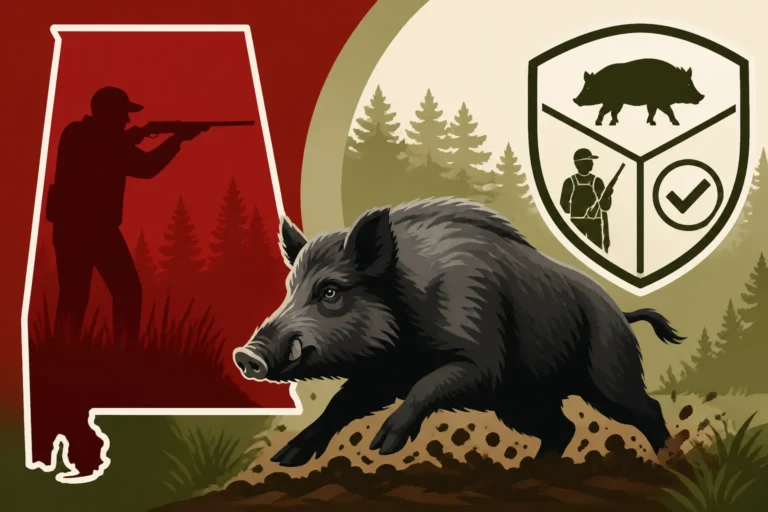
Let's get straight to the point: if you're hunting on private land in Alabama, you have significantly more leeway when it comes to pursuing feral hogs, especially at night and with the aid of lights. This is a huge relief for landowners and hunters alike, given the immense damage these animals cause to crops, timber, and native wildlife habitats. The state recognizes the severe threat feral hogs pose, which is why they've implemented a very liberal approach to their control on private property.
Why Private Land Rules Are So Different
The primary reason for the relaxed regulations on private land compared to public land is simple: property rights and wildlife management objectives. On private land, the landowner has the primary right to protect their property and resources. Feral hogs are classified as a nuisance species, and there are no closed seasons or bag limits for them on private property. This means you can hunt them 365 days a year, 24 hours a day, as long as you have the landowner's explicit permission. This flexibility is essential for effective hog control, as these animals are largely nocturnal and can quickly adapt to hunting pressure, making night operations crucial.
Think about a farmer whose cornfield is being rooted up nightly, or a timber owner watching their newly planted saplings get destroyed. Waiting for daylight just isn't an option. The ability to hunt these animals under the cover of darkness, often when they are most active, provides a critical tool in the ongoing battle against their proliferation. This distinction is one of the most important things to grasp, as trying to apply private land rules to public land is where most hunters run into trouble. Always make sure you have clear, preferably written, permission from the landowner before you even step foot on their property, let alone start night hunting. Remember that Alabama's Year-Round Hog Rule on Private Land offers hunters unparalleled flexibility for control efforts.
The Power of Artificial Light on Private Property
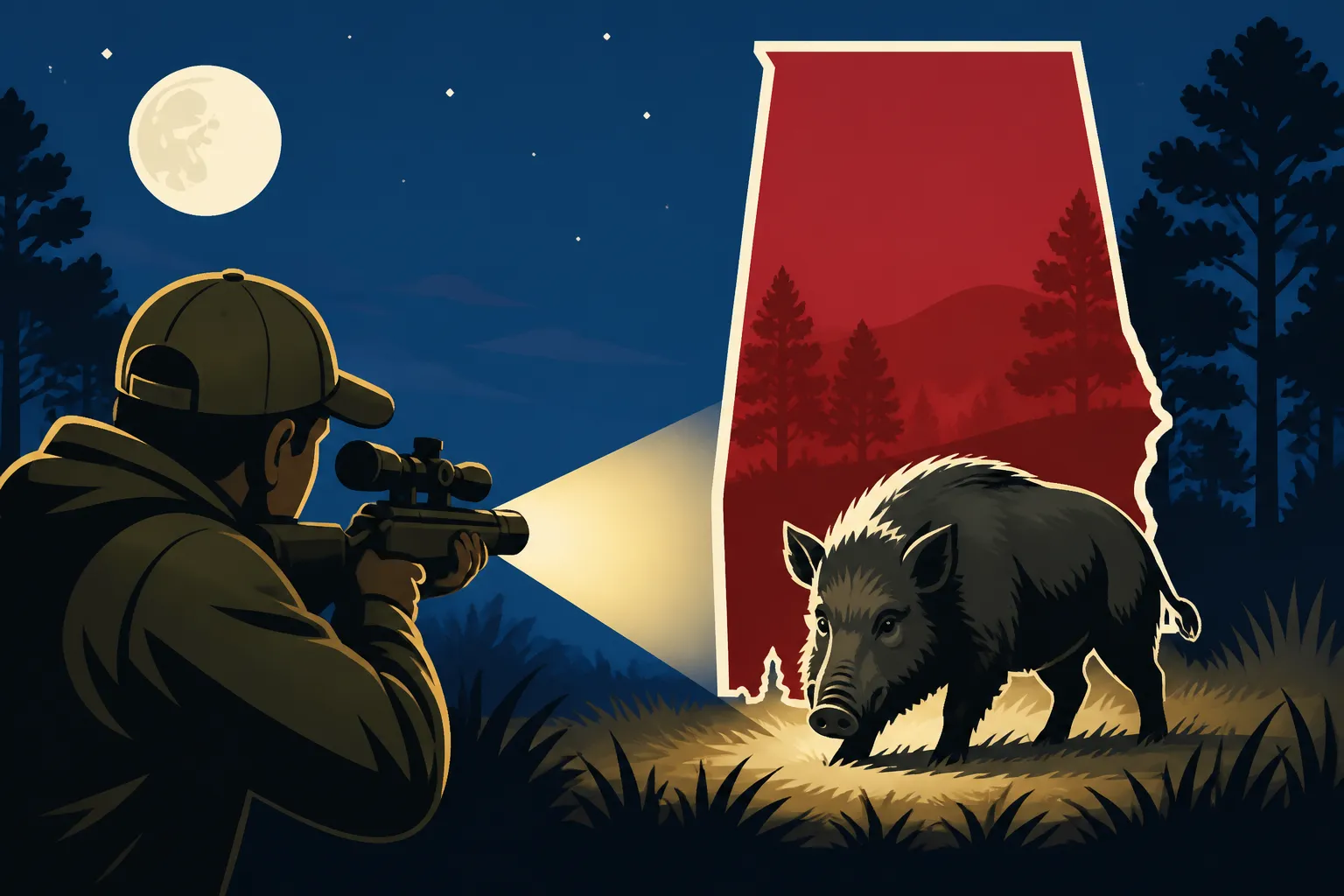
When it comes to using lights specifically, Alabama's regulations are quite permissive on private land. You are absolutely allowed to use artificial lights to hunt feral hogs at night. This isn't just limited to a simple spotlight; it extends to more advanced technologies that have become increasingly popular and effective for nocturnal hunting.
This means you can equip your rifle with a weapon-mounted light, use a headlamp to scan the fields, or even deploy powerful spotlights from a vehicle (though vehicle hunting itself has other safety and legal considerations, so always be careful and check local ordinances). Many hunters have embraced modern optics like thermal imaging and night vision devices, which offer a distinct advantage when targeting wary hogs after dark. These devices, which can be pricey, allow you to see heat signatures or amplify ambient light, making it possible to identify hogs that would otherwise be invisible. The key here is that you're on private land, with permission, targeting a non-game animal. This flexibility is a huge advantage in the fight against these destructive beasts, allowing you to use every tool in your arsenal, including the most advanced Night Hunting Hogs With Lights on Private Land.
Public Land Realities: Why Night Hunting for Hogs is Generally Prohibited
Now, let's address the elephant in the room – or rather, the hog in the dark on public land. While private land offers considerable freedom, public lands in Alabama, including Wildlife Management Areas (WMAs) and National Forests, operate under a much stricter set of rules, and night hunting for any species, including feral hogs, is generally not allowed. This is often the biggest point of confusion and frustration for hunters.
The "No Artificial Light at Night" Rule
The foundational rule to understand is Alabama's prohibition on casting the rays of artificial light on game animals or their associated habitat at night. While feral hogs are not technically "game animals" in the same sense as deer or turkey, this regulation is broadly applied to protect all wildlife and ensure fair chase and safety. Public lands are managed for a multitude of species and recreational activities, and allowing widespread night hunting with lights could lead to increased poaching, accidental shootings, and disturbance to other wildlife.
Imagine trying to find a clear lane for a shot with a spotlight at 2 AM in the Bankhead National Forest. Not only could you accidentally illuminate a deer, but you could also inadvertently shoot into another hunter's camp or a nearby road. Public land managers prioritize safety, ethical hunting practices, and the well-being of the entire ecosystem. Therefore, the general rule is: no hunting at night on public land, and definitely no shining lights to locate or pursue animals. There might be very rare, specific exceptions for managed hunts or areas, but these are few and far between and would be explicitly stated in the WMA or National Forest regulations. You should always consult the official Outdoor Alabama regulations for the specific WMA or National Forest you plan to hunt. Understanding the nuances of Alabama Public Land Hunting Hours is critical for staying within legal boundaries.
Limited Exceptions: Tracking and Retrieval
There are, however, limited exceptions to the "no artificial light" rule on public lands, primarily for tracking and retrieval purposes. If you've legally harvested a deer or other game animal during legal hunting hours and it runs into the darkness, you are typically allowed to use a flashlight or headlamp to track and recover that animal. This is a common-sense provision, as nobody wants to leave a wounded animal in the woods or lose valuable meat.
The key here is intent and timing. The light is used after a legal shot has been made during daylight hours, not to locate an animal for the initial shot at night. You are tracking, not hunting. Always carry a reliable light source, especially if you hunt during late afternoon or evening hours. However, this exception does not extend to using lights to actively hunt or locate feral hogs at night on public land. Even if you spot a hog while tracking a deer, engaging that hog with a light for a shot would likely be a violation. It's a fine line, but one that wildlife officers take very seriously to prevent abuse of the rule. When tracking, it's also a good idea to notify a game warden if you think you might be out past legal hours, just to be on the safe side.
Navigating Legal Light Sources: From Spotlights to Thermal Optics
Understanding what constitutes a "legal light source" and how it can be used is as crucial as knowing where you can use it. The technology available to hunters has exploded in recent years, but not all of it is legal for all situations, particularly when it comes to night hunting.
Traditional Spotlights and Weapon-Mounted Lights
On private land, traditional spotlights are perfectly legal for night hog hunting. These can be handheld units, mounted to your vehicle (though again, be mindful of shooting from or across roads), or even run off a portable power source to illuminate a bait site. Weapon-mounted lights, which attach directly to your rifle and illuminate your target, are also legal and very popular for private land hog control. These offer a significant advantage by pointing light precisely where your rifle is aimed, simplifying the shot.
However, on public land, using a spotlight or weapon-mounted light to hunt at night is generally prohibited. The only common exception, as mentioned, is for tracking a legally harvested animal after dark. This distinction is vital. Don't be tempted to "just check" a field edge on a WMA with your spotlight at night; it's a quick way to a citation. The rule protects against "headlighting" game animals, a practice historically associated with poaching.
Thermal Imaging and Night Vision Devices
These advanced optics represent the cutting edge of night hunting technology and are extremely effective for hog eradication.
- Thermal Imaging: These devices detect heat signatures, allowing you to see animals even in total darkness, through light cover, or camouflaged against the background. They don't emit visible light, which makes them incredibly stealthy.
- Night Vision: These devices amplify ambient light (like moonlight or starlight) to create a visible image. Some also include an infrared (IR) illuminator that emits light invisible to the human eye but visible to the night vision device, essentially creating its own "invisible" spotlight.
On private land, both thermal imaging and night vision devices are legal for hunting feral hogs at night. Many hunters swear by them for their effectiveness in targeting wary, nocturnal hogs. The stealth provided by thermal, in particular, means you can approach or observe hogs without them being alerted by visible light. When using an e-scouting tool like GoHunt, you can identify prime hog areas on private land, then deploy your thermal or night vision gear with confidence.
On public land, however, the situation is different. While thermal and night vision don't necessarily "cast a ray of artificial light" in the traditional sense if they don't have an active IR illuminator, the spirit of the law and the regulations often prohibit their use for active hunting at night. Some regulations specifically mention "electronic devices to locate game at night." It’s safer and generally correct to assume that if you can't use a spotlight to hunt at night on public land, you cannot use thermal or night vision either, unless an explicit exception is made for a specific hunt or species. Always, always check the specific WMA or National Forest rules before even considering bringing these devices onto public property for night hog hunting.
Here's a quick summary table for clarity:
| Light Source / Device | Private Land (Feral Hogs) | Public Land (Feral Hogs) | Notes |
|---|---|---|---|
| Handheld Spotlight | Legal | Generally Prohibited | Legal for tracking legally harvested game after dark. Illegal for active hunting on public land. |
| Weapon-Mounted Light | Legal | Generally Prohibited | Same as handheld spotlight. |
| Headlamp | Legal | Generally Prohibited | Legal for tracking legally harvested game after dark. Also for navigating to/from stand before/after legal hours, but not for actively searching for game on public land. |
| Thermal Imaging | Legal | Generally Prohibited | Highly effective on private land. While not emitting visible light, use for active hunting on public land at night is typically against regulations that prohibit night hunting of any kind. |
| Night Vision (with/w/o IR) | Legal | Generally Prohibited | Legal on private land. If using an IR illuminator, it is an artificial light source. Even without IR, active hunting at night on public land is generally prohibited. |
Remember, these are general guidelines. The Alabama Department of Conservation and Natural Resources (ADCNR) has the final say, and their official regulations are always the definitive source.
Beyond the Lights: Practical Tips and Safety for Night Hog Hunters
Once you've wrapped your head around the legalities of night hunting hogs with lights in Alabama, it's time to think about the practical aspects. Night hunting isn't just daylight hunting in the dark; it presents unique challenges and requires specific preparations to ensure both effectiveness and safety.
Essential Gear and Setup
Beyond your rifle and a legal light source, there's other gear that will make your night hunt safer and more productive. A stable shooting platform is paramount. Whether you're using a bipod, tripod, or shooting sticks, having a solid rest will dramatically improve your accuracy in low light conditions. Hogs are tough, and clean, ethical shots are crucial. Consider using a rangefinder, especially if you don't have a reticle with integrated ranging, as judging distance at night is notoriously difficult.
A comfortable chair or ground blind can make long waits much more bearable. Also, don't forget insect repellent – those mosquitoes and gnats can be brutal, especially in Alabama's humid nights. You'll also want a good knife and gloves for field dressing, as well as a cooler with plenty of ice ready for prompt processing of your harvest. Feral hog meat can spoil quickly in warm Alabama temperatures, so acting fast is key. Having a well-stocked first-aid kit is also a no-brainer, given the remote nature of many hunting spots and the reduced visibility at night. While not directly related to light rules, these practicalities are just as important for a successful and safe hunt.
Scouting, Baiting, and Ethical Shot Placement
Effective night hunting often starts long before you ever step into the woods after dark. Proper scouting is critical. Look for fresh rooting, tracks, and scat, especially near water sources or food plots. Using mapping tools, like those found on GoHunt, can help you identify potential travel corridors, bedding areas, and feeding zones. Setting up a bait site, legally and ethically, can draw hogs into a predictable location. Remember, Building and Freshening a Hog Bait Site strategically positioned for a clear, safe shot is key.
When it comes to shooting, accuracy is king. Feral hogs are incredibly resilient, and a poorly placed shot can lead to a long, difficult, and potentially dangerous tracking job. Aim for the vitals: a shot behind the shoulder or a headshot if conditions allow and you are confident in your marksmanship. With the aid of quality lights or thermal, you should be able to clearly identify your target and ensure a clean shot. Always know what's beyond your target, especially in the dark where visibility is limited. A good understanding of Shot Placement on a Feral Hog will ensure a quick, humane harvest.
Safety Protocols for Hunting After Dark
Safety is paramount when night hunting. Always hunt with at least one other person, and make sure someone knows exactly where you are and when you expect to return. Communication is key; if you're hunting with a partner, use two-way radios or silent hand signals. Define your shooting lanes and zones of fire before it gets dark. Even with powerful lights, obstacles can appear out of nowhere, and depth perception is altered at night.
Be extra cautious when moving through the woods; familiar terrain can feel alien in the dark. Watch your footing, especially around fallen logs, holes, or uneven ground. Remember, you're hunting hogs, which can be dangerous animals, especially if wounded. Never approach a downed hog without extreme caution. Give it time, observe from a distance, and approach from the rear, ensuring it's completely expired before handling it. Alabama Hunter Education Requirements cover many of these fundamental safety principles, but night hunting adds another layer of vigilance.
Reporting Your Harvest
While Alabama doesn't have mandatory harvest reporting for feral hogs, it's still a good practice to keep track of your successful hunts, especially if you're helping a landowner with population control. This information can be valuable for understanding local hog movements and population dynamics. Though not legally required, some hunters choose to use the Game Check system for hogs, or at least keep personal records. It’s a good habit to document your efforts, especially since the state encourages the eradication of this invasive species.
Conclusion
Hunting feral hogs at night with lights in Alabama offers an exciting and effective way to combat these destructive pests, but it's absolutely crucial to understand the distinct rules governing private versus public land. On your own land or with a landowner's permission, you have the freedom to use a wide array of lighting and optical devices to pursue hogs year-round. This flexibility is a powerful tool in protecting Alabama's natural resources and agricultural interests.
However, when it comes to public lands—our WMAs and National Forests—the regulations are much tighter. Generally, night hunting of any kind, especially with the aid of artificial lights, is prohibited to ensure safety, fair chase, and to protect other wildlife. Always check the specific regulations for the area you plan to hunt, as they can vary. Remember, the goal is effective hog control, but always within the bounds of the law, ensuring a safe and ethical hunt for everyone.
Disclaimer
Please remember that hunting regulations can change. While this guide provides a comprehensive overview of Alabama's night hog hunting light rules based on current information, it is your responsibility to consult the latest official Alabama Department of Conservation and Natural Resources (ADCNR) regulations before planning any hunt. This article is for informational purposes only and should not be considered legal advice.