Alabama Turkey Bag Limit Rules
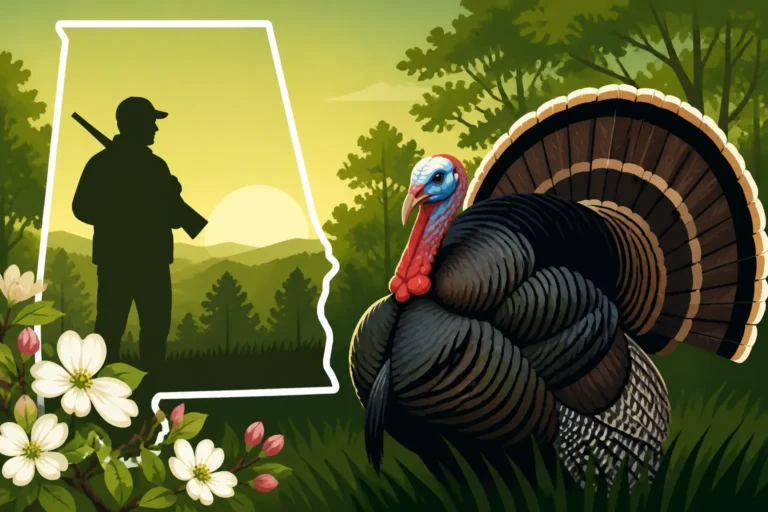
Few things get an Alabama turkey hunter's heart pumping like a gobbler hammering on the limb at first light, but the excitement can quickly turn to confusion when trying to navigate the state's seemingly intricate bag limit rules. It's not as simple as just "one bird," and getting it wrong can lead to serious headaches. This guide will walk you through every aspect of Alabama's turkey bag limits, helping you understand the regulations so you can focus on the hunt, not the rulebook.
Decoding Alabama's Statewide Turkey Bag Limits
Let's be real, the Alabama Department of Conservation and Natural Resources (ADCNR) has a lot to manage, and their turkey regulations reflect that. It's not just about how many birds you can take; it's also about when and how often within certain periods. This layered approach is designed to protect our turkey populations while still offering ample opportunity for hunters.
The "Five Gobblers Total" Rule
The foundational rule for turkey hunting in Alabama is that a hunter may harvest a maximum of five gobblers for the combined fall and spring seasons. This is often where some confusion starts, especially for those who only hunt spring. If you happen to take a gobbler during the limited fall season (which isn't offered statewide every year, so always double-check those regulations!), that bird counts towards your five-gobbler annual limit. It's not five in the fall and five in the spring; it's a cumulative total across both. This approach ensures that individual hunters aren't overharvesting throughout the year, contributing to the overall health of the state's wild turkey populations.
Think of it like this: that five-bird tag applies to your entire year of turkey hunting in Alabama, from the moment the fall season could open, right through the last day of spring. It's critical to keep a mental tally, or better yet, use a hunting app or a dedicated hunting journal to track your harvest. It's easy to lose count after a few successful hunts, especially if you hunt multiple properties or different zones. For more on how seasons are structured, check out our piece on Alabama Spring Turkey Zones and Dates.
Understanding the One-Gobbler-Per-Day Limit
Beyond the seasonal maximum, there's also a one-gobbler-per-day limit. This rule is straightforward: no matter how many birds are gobbling around you, or how many opportunities you get, you can only harvest one male wild turkey within a 24-hour period. This is a fairly standard regulation across many states and serves several purposes. Primarily, it prevents hunters from taking multiple birds during a single outing, which could quickly deplete local populations, especially in high-pressure areas.
It also encourages more deliberate hunting practices. Instead of trying to fill your tag as quickly as possible, you're encouraged to enjoy the experience, pick your shot carefully, and truly appreciate the challenge of luring in a wary gobbler. Imagine having two mature longbeards strutting at 20 yards – it's an incredible sight, but you can only choose one. This limit forces you to make a choice, which can often be the hardest part of a successful hunt! This daily limit applies consistently throughout the entire spring season, regardless of the zone you're hunting in.
The Critical First Ten-Day Weekly Restriction
Now, here's where things can get a little tricky, and it's a rule that often catches new or infrequent turkey hunters off guard: during the first 10 days of the spring season, a hunter is limited to one gobbler per week. This specific regulation is designed to reduce hunting pressure on turkeys during the crucial early stages of breeding season, particularly on the most dominant gobblers.
This "week" isn't necessarily a calendar Monday-Sunday week. It refers to a rolling seven-day period from the day you harvested your first bird within that initial 10-day window. For example, if you harvest a gobbler on opening day (say, March 23rd in Zone 1), you cannot harvest another gobbler until March 30th, even if the general season is open. Once those first 10 days of the season have passed, the weekly restriction lifts, and you revert to the simpler one-gobbler-per-day limit for the remainder of the season, up to your five-gobbler annual total. Understanding this distinction is vital to staying legal, especially if you plan to hunt hard during the opening week. Knowing when to hit the woods again after an early success can make or break your hunt planning. You can learn more about specific opening dates in Alabama Zone 1 Spring Turkey Opening Day and Alabama's Later Spring Turkey Zone Opener.
Navigating Turkey Bag Limits by Hunting Zone
Alabama is a diverse state, and its turkey seasons are structured to reflect that. While the overall annual bag limit of five birds and the daily limit of one gobbler remains consistent statewide, the specific opening and closing dates, and thus the application of the weekly restriction, vary by zone. This zonal approach allows the ADCNR to manage turkey populations based on regional factors like breeding cycles, habitat, and past harvest data.
Zone 1 Specifics: Early Season and Weekly Limits
Zone 1 typically encompasses the majority of central and north Alabama. Hunters in this zone usually see the earliest opening dates for the spring season. This means that if you're hunting in a Zone 1 county, you'll be among the first in the state to experience the thrill of spring turkey hunting. However, this early start also means you'll be subject to that critical one-gobbler-per-week restriction for the first 10 days of your season.
For instance, if Zone 1 opens on March 23rd, and you successfully call in and harvest a bird on that first morning, you'll need to hold off on taking another gobbler until March 30th. This can be tough when the birds are fired up and conditions are perfect, but it's a non-negotiable part of the regulations. After those initial 10 days, you're still limited to one gobbler per day, but you could theoretically harvest a bird on Monday and then another on Tuesday if you were so lucky (and still had tags remaining within your annual limit). Always double-check the exact Zone 1 dates with the ADCNR's official regulations before heading out, as they can shift slightly year to year. You can find detailed information on Alabama Zone 1 Turkey Season Rules.
Zone 2 Nuances: Later Opening and Consistent Limits
Zone 2 primarily covers the southern portion of Alabama. True to its name, this zone generally has a later opening date for the spring turkey season compared to Zone 1. This later start is often due to slightly different climate patterns and turkey breeding cycles in the southern part of the state. Just like in Zone 1, hunters in Zone 2 are also subject to the one-gobbler-per-week rule for the first 10 days of their specific season.
So, if Zone 2 opens, for example, a week later than Zone 1, then your 10-day weekly restriction period would begin on your opening day. The principles remain the same: one gobbler per day, one per week for the first 10 days of the season, and a total of five gobblers for the combined annual seasons. The key is to know which zone your hunting property falls into and to meticulously follow those specific dates. Many hunters use mapping apps like GoHunt to confirm which zone they are in, as property lines can sometimes straddle zone boundaries. This level of detail helps prevent unintentional violations and ensures you're always hunting legally.
Youth Hunting: Same Rules, Different Dates
Alabama is a great state for getting youth involved in hunting, and turkey season is no exception. However, it's important to understand that while the bag limits for youth hunters are generally the same as for adults – one gobbler per day, one per week during the first 10 days of their season, and a five-gobbler annual limit – the season dates often differ.
The ADCNR typically designates special youth turkey hunting weekends that open before the general statewide season. These youth-only weekends are fantastic opportunities for young hunters to get out and experience spring turkey hunting with less pressure from adult hunters. During these special youth weekends, the youth hunter must be accompanied by a licensed adult (who cannot hunt or carry a firearm unless they are also a youth hunter or hunting legally under their own license within the rules for adult hunters, depending on specific age and mentor rules). Any bird harvested during these youth weekends counts towards the youth's individual five-gobbler annual limit. It's crucial for mentors to be aware of both the youth-specific dates and the general bag limits, ensuring a safe and legal hunt. For specific dates, you should always check the official Alabama Zone 1 Youth Turkey Weekend and Alabama's Later Youth Turkey Weekend information.
The Non-Negotiable Requirement: Reporting Your Turkey Harvest
Beyond simply understanding the bag limits, actually reporting your harvest is a critical component of turkey hunting in Alabama. This isn't just a suggestion; it's a mandatory requirement, and it plays a huge role in how wildlife is managed across the state. Skipping this step can lead to penalties, so it's something every hunter needs to take seriously.
Why Game Check Matters for Conservation
The Game Check system is more than just a bureaucratic hoop to jump through; it's a vital tool for wildlife biologists. Every turkey reported provides valuable data points that help the ADCNR assess turkey populations, understand harvest trends, and make informed decisions about future regulations. When you report your gobbler, you're contributing directly to the conservation efforts that ensure healthy turkey populations for generations to come. This data helps answer questions like:
- How many turkeys are being harvested each season? This gives biologists an idea of overall hunting pressure and success rates.
- Where are turkeys being harvested? Geographic data can highlight areas with strong populations or identify regions that might need more conservative management.
- What is the age structure of harvested birds? This can tell us about breeding success and recruitment into the population.
Without accurate harvest reporting, biologists are flying blind, making it much harder to set appropriate season lengths, bag limits, and other regulations that genuinely benefit the turkey resource. Your compliance is a direct investment in the future of Alabama turkey hunting.
A Step-by-Step Guide to Reporting Your Bird
Reporting your turkey through Game Check is designed to be relatively quick and painless, but it's essential to do it correctly and within the specified timeframe. Here's a general step-by-step process:
- Harvest Your Bird: Once you've successfully harvested a gobbler, make sure it's legally taken according to all bag limits and season dates.
- Locate Your Hunter ID: You'll need your personal hunter identification number (or your license number if that's what's typically used for reporting) from your hunting license.
- Access the Game Check System: You can do this in a few ways:
- Online: Visit the ADCNR's Game Check website (usually accessible through the Outdoor Alabama portal). This is often the most convenient method.
- Mobile App: Download the official Outdoor Alabama app, which usually has a Game Check feature. Many hunters prefer this for reporting right from the field, or as soon as they get service. Apps like GoHunt might also integrate with state reporting systems, or at least provide direct links.
- Toll-Free Phone Number: The ADCNR provides a phone number for reporting if internet access isn't available.
- Enter Required Information: You'll be asked for details such as:
- Date of harvest
- County of harvest
- Type of land (private or WMA)
- Whether it was a gobbler or hen (only gobblers are legal in spring)
- Sometimes, specific details about the bird like beard length or spur length might be requested.
- Receive Confirmation: After submitting the information, you'll receive a confirmation number. This number serves as your proof of reporting and should be kept with the harvested bird until it reaches its final destination (e.g., your home, a processor, or a taxidermist).
Remember, you must report your turkey before it is moved from the state or transferred to another person. While you don't necessarily have to report it right at the spot where it fell, it needs to be reported before you drive it across county lines or hand it off to a buddy to take home.
Consequences of Failing to Report
Let's be very clear: failing to report a harvested turkey is a violation of Alabama hunting regulations. It's not something you can just "forget" about. The ADCNR takes harvest reporting seriously because of its importance to wildlife management. The consequences can include:
- Fines: You could face monetary penalties, which can be significant, especially if other violations (like exceeding bag limits) are discovered in conjunction.
- Loss of Hunting Privileges: Repeated or severe violations could lead to the suspension or revocation of your hunting license, meaning you won't be able to hunt in Alabama for a period of time.
- Confiscation of Game and Equipment: In some cases, the harvested animal, and even your hunting equipment (like firearms or bows), could be confiscated.
- Reputational Damage: Beyond the legal ramifications, getting caught violating hunting regulations can severely damage your reputation as a responsible hunter within the community.
It's simply not worth the risk. Make reporting your bird a part of your post-hunt routine, just like field dressing or packing out your gear. It's a small effort with big returns for the future of hunting in Alabama.
Special Situations and Common Pitfalls
While the general bag limit rules are relatively clear, there are always those "what-if" scenarios or specific regulations that can trip hunters up. Alabama offers diverse hunting opportunities, from vast public lands to managed private properties, and each can come with its own set of nuances that impact how you apply the statewide bag limits.
Public Land (WMA) Variations and Quota Hunts
Hunting on Alabama's Wildlife Management Areas (WMAs) and other public lands is a fantastic opportunity, but it often comes with additional rules layered on top of the statewide regulations. While the statewide annual limit of five gobblers and the daily limit of one bird remain consistent, individual WMAs might have:
- Shorter Seasons: Some WMAs might open later or close earlier than the general statewide season, or they might have specific hunting days (e.g., only open on Tuesdays, Thursdays, and Saturdays).
- Quota Hunts: Certain high-demand WMAs or specific areas within them might operate on a quota hunt system for turkeys. This means you have to apply and be drawn to get a permit to hunt there during designated periods. If you are drawn for a quota hunt, any turkey harvested during that hunt still counts towards your statewide five-gobbler limit, but you must also comply with any specific reporting or check-in/check-out procedures for that WMA.
- Restricted Access: Some WMAs have areas that are closed to hunting, or restrict vehicle access, which doesn't directly affect bag limits but influences where you can apply them.
It is absolutely crucial to consult the specific WMA regulations before you hunt. These are typically available in the ADCNR hunting regulations booklet or on the Outdoor Alabama website. Don't assume that just because it's a legal day to hunt in the general zone, it's legal on your chosen WMA. Tools like GoHunt can be invaluable for pinpointing WMA boundaries and checking for area-specific regulations quickly while in the field. For more detailed insights into general public land hunting, consider our guide on Scouting Alabama Public Land Before Season.
Decoy Rules and Their Interaction with Bag Limits
While not directly a bag limit rule, the use of decoys in Alabama turkey hunting is regulated, and awareness of these rules is important, especially when planning your approach to filling your bag limit. Alabama has a ten-day restriction on the use of decoys at the beginning of the spring turkey season in each zone.
This means that for the first 10 days of your zone's season (the same period as the one-gobbler-per-week rule), you are prohibited from using turkey decoys. After this initial 10-day window, decoys become legal for the remainder of the season. This regulation is often in place to promote fair chase and to prevent overharvest during the initial, often most aggressive, period of gobbling activity when birds might be more susceptible to decoys. It forces hunters to rely more on calling and woodsmanship during the season's early days.
It's a common pitfall for hunters unfamiliar with this rule to set up decoys on opening morning, only to realize they're in violation. Always make sure you understand both the bag limits and the associated equipment rules. For a deeper dive into this, see our article on Alabama's Ten-Day Decoy Restriction. This restriction doesn't change your bag limit numbers, but it certainly changes your tactics and opportunities for taking those limited birds.
Planning Around Multi-Day Hunts and the Weekly Limit
For many dedicated turkey hunters, spring means multi-day trips, perhaps hitting different properties or traveling to another zone. This is where understanding the one-gobbler-per-week rule (during the first 10 days) becomes paramount. Let's imagine a scenario:
You're hunting in Zone 1, which opened on a Saturday. You successfully harvest a gobbler on Saturday morning.
- Legal Action: You cannot harvest another gobbler until the following Saturday.
- Common Mistake: Assuming you can hunt Sunday, Monday, etc., and if you drive to a different county or even a different property, that the "week" resets or doesn't apply. It applies to you, the hunter, statewide.
This means if you've planned a three-day weekend hunt for the opener, and tag out on day one, your hunting for additional gobblers is on hold until the weekly restriction expires. You can still hunt for other game (if seasons overlap), scout, or call for friends, but you cannot legally pull the trigger on another gobbler.
After those first 10 days, the rules simplify slightly. You can take one gobbler per day, up to your five-bird total. So, if you're on a multi-day trip in mid-season and manage to tag a bird on Monday, you can be back in the woods Tuesday aiming for another, provided you haven't hit your annual five-gobbler limit. Always keep a clear record of your harvest dates, particularly during those early season weeks, to avoid accidentally exceeding the limit. This meticulous planning is key to successfully Making the Most of a One-Bird-Per-Day Limit without running afoul of the law.
Best Practices for Ethical Hunting and Conservation
Hunting isn't just about filling tags; it's about respecting the animals, the land, and the tradition. Understanding and adhering to bag limits is a crucial part of this, but true ethical hunting goes beyond just the numbers. It involves being a responsible steward of the wildlife resources that Alabama is so lucky to have.
Respecting the Resource Beyond the Numbers
While the regulations provide the framework, ethical hunting encourages us to think beyond the minimum legal requirements. Just because you can take five gobblers in a season doesn't mean you have to, especially if you observe declining populations in your specific hunting area. Responsible hunters often ask themselves:
- Is this bird truly a mature gobbler, or a jake that could benefit from another year? While jakes are legal to harvest, choosing to pass on them can contribute to a healthier population of older, more experienced birds.
- Am I putting undue pressure on a specific flock or area? Repeatedly targeting the same birds can disrupt their breeding patterns.
- Am I wasting any part of the animal? Ethical hunters strive to utilize all edible portions of their harvest.
Empathy for the animal and a long-term perspective on the resource are hallmarks of a truly ethical hunter. It's about being a participant in nature, not just a consumer. This mindset helps ensure the tradition of hunting remains strong and vibrant for future generations in Alabama.
Contributing to Turkey Population Health
Every hunter has a role to play in the health of Alabama's turkey population. Beyond accurate harvest reporting and adhering to bag limits, there are other ways you can contribute:
- Habitat Improvement: Whether it's on private land you manage or through volunteering on public lands, creating and maintaining good turkey habitat (like prescribed burns, planting beneficial food sources, or controlling invasive species) directly supports robust populations.
- Predator Control: Where legal and appropriate, responsible predator control can help fawns and poults survive their vulnerable early weeks.
- Reporting Illegal Activity: If you witness poaching or other violations, reporting it to local conservation officers is crucial. Poachers steal from all of us and undermine conservation efforts.
- Supporting Conservation Organizations: Joining and supporting organizations like the National Wild Turkey Federation (NWTF) or other local conservation groups provides funding and manpower for critical research, habitat projects, and educational initiatives. Alabama's turkey population trends are carefully monitored, and your engagement helps.
These actions go far beyond the moment of the shot; they embody a commitment to the species and the ecosystem.
Utilizing Technology for Compliance and Planning
In today's world, technology can be a powerful ally for responsible hunters. While traditional methods of checking regulations and scouting are still valuable, modern tools offer convenience and accuracy.
Hunting apps and websites, like GoHunt, provide instant access to up-to-date regulations, mapping tools to identify public land boundaries or WMA-specific rules, and features that can help you track your harvests. This eliminates guesswork and reduces the chance of accidental violations. Imagine being deep in the Bankhead National Forest; being able to quickly pull up regulations or check if you're still within your weekly limit on your phone can be a game-changer. These tools also allow you to:
- Verify Season Dates: Quickly confirm opening and closing dates for your specific zone and WMA.
- Track Harvests: Log your successful hunts directly into an app, which can help you stay within your daily, weekly, and annual bag limits.
- Scout Smarter: Use satellite imagery and public land layers to identify promising turkey habitat, potential roosting sites, or challenging terrain before you even step foot in the woods. You can also track your past success, helping you refine your Run-and-Gun Turkey Tactics on Public Land.
Leveraging these resources ensures that you're not just a hunter, but an informed, compliant, and contributing member of the Alabama hunting community. By staying educated, reporting your harvest, and thinking beyond just the numbers, we can all ensure that the thrill of chasing gobblers continues for countless springs to come.
Disclaimer
The information provided in this guide is for general informational purposes only and is subject to change. Hunting regulations are dynamic and can be updated annually or even mid-season by the Alabama Department of Conservation and Natural Resources (ADCNR). It is the sole responsibility of each hunter to review and understand the most current official ADCNR hunting regulations and local ordinances before engaging in any hunting activity. Failure to do so may result in legal penalties.