Alabama Zone 1 Turkey Season Rules
Alright, fellow turkey fanatics! It's that time of year again, and if you're like me, you're probably already dreaming of those crisp spring mornings, the smell of damp earth, and that heart-stopping gobble echoing through the timber. But let's be real, navigating Alabama's turkey season rules, especially when it comes to the different zones, can feel like trying to untangle a mess of decoys after a windy morning. It’s easy to get confused about specific dates, bag limits, and legal methods depending on where you plan to hunt. This guide is here to clear up all the specific regulations for Alabama's Zone 1 turkey season, ensuring you're squared away and ready to hit the woods legally and confidently this spring.
Understanding Alabama's Turkey Zones
Alabama is a diverse state, from its mountainous north to its coastal plains, and that means our wild turkey populations and their breeding cycles can vary quite a bit. To account for these natural differences and ensure responsible wildlife management, the Alabama Wildlife and Freshwater Fisheries Division (ADWFF) has split the state into several turkey hunting zones. It’s not just a random line on a map; these zones are strategically drawn to align with the typical timing of the spring breeding season (the "rut" for turkeys, if you will) in different regions. This approach helps ensure hunters are pursuing birds during appropriate times, maximizing both hunter success and long-term population health.
Why Zones Exist for Turkey Season
The primary reason for separate turkey zones boils down to biology and conservation. Turkeys in the southernmost parts of Alabama, for example, often start their breeding activities, including gobbling and strutting, earlier than those up in the northern counties. This difference, largely influenced by temperature and daylight hours, means a "one-size-fits-all" season wouldn't be ideal. If the season opened too early in the north, hunters might be out before the birds are truly fired up, leading to frustration and potentially targeting birds before they've had a chance to breed. Conversely, if the season opened too late in the south, much of the peak gobbling activity could be missed. By creating zones, the state ensures that hunting seasons align more closely with the peak gobbling and breeding windows in each region, offering prime hunting opportunities while still protecting the breeding cycle. It's a smart system, even if it sometimes requires us to double-check our maps! This careful management is crucial for Alabama's wild turkey population trends.
Identifying Zone 1 Counties
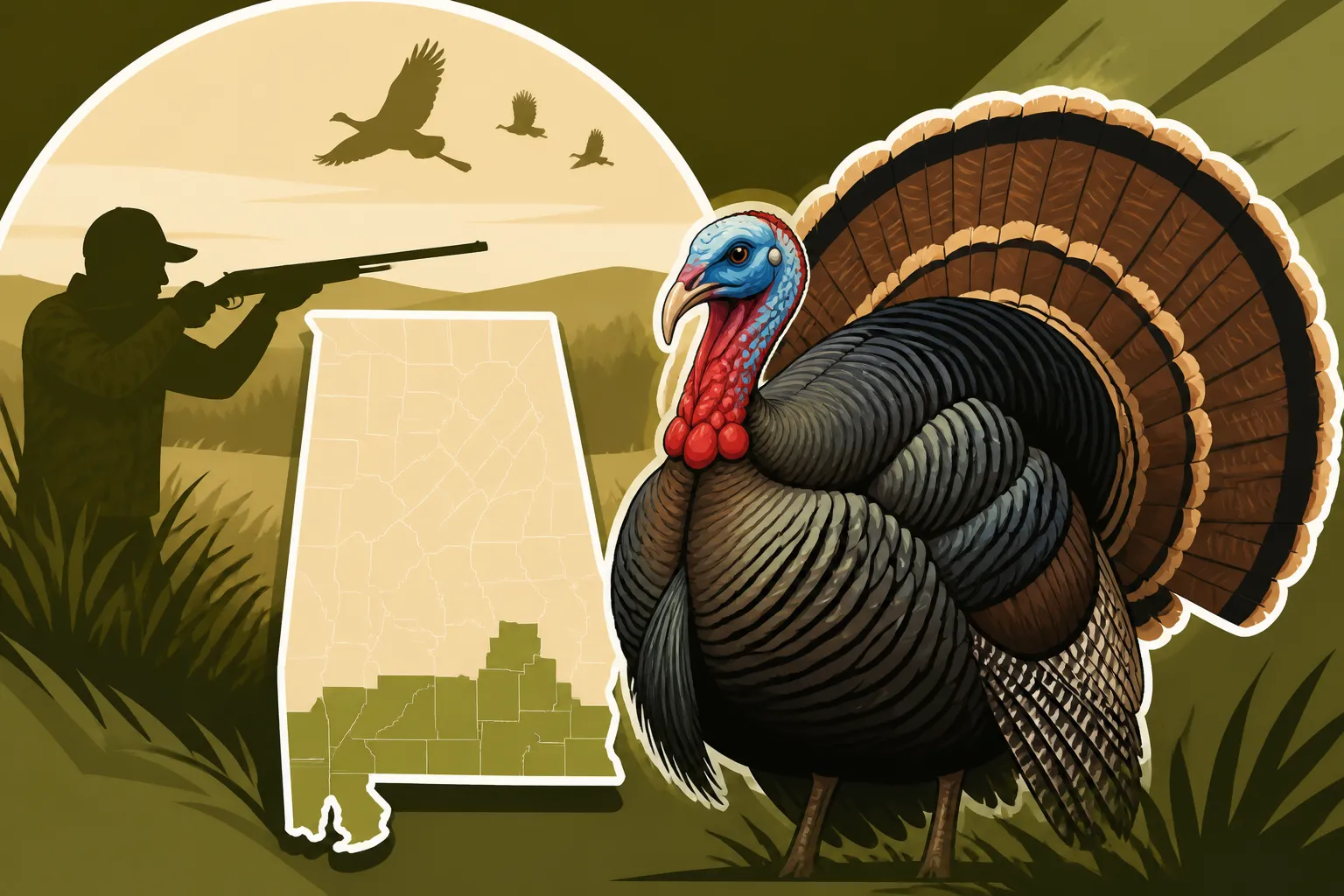
Zone 1 covers a significant portion of central and north Alabama. It's often the zone that opens a bit earlier than Zone 2, making it a highly anticipated start to the spring season for many hunters. Getting this wrong can lead to serious trouble, so it’s always best to consult the official Outdoor Alabama regulations map or app. But generally, Zone 1 includes a large swatch of the state, including counties like Bibb, Blount, Calhoun, Cherokee, Chilton, Clay, Cleburne, Colbert, Coosa, Cullman, DeKalb, Etowah, Fayette, Franklin, Greene, Hale, Jackson, Jefferson, Lamar, Lauderdale, Lawrence, Limestone, Madison, Marion, Marshall, Morgan, Perry, Pickens, Randolph, St. Clair, Shelby, Talladega, Tuscaloosa, Walker, and Winston. If your favorite hunting spot falls within one of these, you're looking at the Zone 1 rules. Knowing your specific county is absolutely vital before you plan your first hunt. A quick check on the Outdoor Alabama app, which many of us rely on, can quickly confirm which zone you're in. This tool is a lifesaver for all sorts of hunting information, including scouting with the Outdoor Alabama App.
General Overview of Zone 1 Season Dates
The Zone 1 turkey season typically opens in mid-March, a little earlier than Zone 2, and runs through early May. This timing is calculated to coincide with the peak of gobbling activity and breeding in these central and northern counties. While the exact dates can shift slightly year-to-year, generally you can expect the regular gun and archery season for adults to kick off around March 15th and conclude around May 1st. These dates are crucial for planning your trips, taking vacation days, and getting your gear ready. Always, always verify the current year's exact dates with the official ADWFF regulations before heading afield, as small changes can occur. For a full breakdown, you can always check the general Alabama Spring Turkey Zones and Dates.
Key Regulations for Zone 1 Adult Season
Once you've confirmed you're in Zone 1, the next step is to get granular with the specific rules that apply to adult hunters. These aren't just suggestions; they are the law, and abiding by them ensures not only your legality but also the sustainability of our turkey resource. From when you can hunt to how many birds you can take, every detail matters.
Opening and Closing Dates Specifics
For the 2024 season, the Zone 1 spring turkey season opens on March 15th and closes on May 1st. These dates provide a generous window, allowing hunters to experience various phases of the spring turkey season, from the early-season madness to the often more challenging late-season birds. Early season can sometimes mean more aggressive gobblers still establishing dominance, while later in the season, the birds might be a bit more wary, having been hunted for weeks. Understanding these windows helps you tailor your tactics. For example, some hunters prefer to focus on Calling an Alabama Gobbler Off the Roost during the opening days, while others might find success by adapting to quieter birds later in the season. These dates apply to both private and public lands within Zone 1.
Daily and Seasonal Bag Limits
Bag limits are perhaps the most critical regulation for hunters to understand. For Zone 1, the daily bag limit is one gobbler per day. This means you can't harvest multiple birds on the same day, even if you see a whole flock of longbeards. The seasonal bag limit for Alabama is a total of four gobblers for the entire spring season, statewide. That means if you hunt in both Zone 1 and Zone 2, or even venture out for a fall turkey hunt (where legal), your total across all seasons and zones cannot exceed four gobblers. Once you hit that four-bird mark, your turkey season is over. It's vital to keep track of your harvest. Many hunters use the GoHunt app or similar tools to log their kills and ensure they stay within legal limits. Remember to check the Alabama Turkey Bag Limit Rules for any specific nuances or changes.
Legal Hunting Hours and Methods
Legal hunting hours for turkey in Alabama are from 30 minutes before sunrise until sunset. This means you can be in your spot and ready to call or listen for the first gobble well before dawn breaks, and you can stay out until the last light fades from the sky. This extended window gives you plenty of time to work birds, but remember that turkeys often roost, or go to bed, around sunset, and you don't want to disturb them on the roost.
As for methods, generally, you can hunt turkeys with shotguns (using legal shot sizes, typically 4, 5, or 6 shot), archery equipment (including compound bows, recurves, and crossbows), and even certain air rifles. However, there are restrictions. It's illegal to hunt turkeys over bait, use live decoys, or employ electronic calls that mimic turkey sounds. You also can't shoot turkeys from a vehicle or public road. For many of us, the traditional method of calling them in with diaphragm or slate calls is part of the challenge and reward. Setting up against a big oak or other substantial cover is always a good strategy when calling.
Special Rules for Youth Hunters in Zone 1
Encouraging the next generation of hunters is incredibly important, and Alabama has provisions to get young folks out into the woods. Youth hunting weekends are a fantastic opportunity for kids to experience the thrill of turkey hunting, often with slightly different rules to make it more accessible and educational.
Zone 1 Youth Turkey Weekend Dates
For Zone 1, there's a special youth-only weekend that typically precedes the regular adult season by a few days. This means young hunters (ages 15 and under) get a head start, often experiencing less pressure and potentially more responsive birds. For the 2024 season, the Zone 1 Youth Turkey Weekend is March 9-10. This is a prime time for parents, grandparents, or mentors to take a young hunter out and focus solely on their experience without the added pressure of a full adult season. It's a wonderful tradition and often creates lifelong memories. Make sure to check the specific dates for Hunting the Zone 1 Youth Turkey Weekend each year.
Mentorship Requirements for Young Hunters
While Alabama offers a mentored youth hunting program, specifically for those under 16, the general rule is that any hunter under 16 years of age must be accompanied by a licensed adult hunter who is 21 years of age or older, or by a person 20 years of age or older who has a hunter education certificate. This adult must stay within "normal voice control" of the youth hunter. This isn't just about legality; it's about safety and teaching. The mentor is responsible for ensuring the youth understands safe firearm handling, ethical hunting practices, and all applicable regulations. This hands-on guidance is invaluable for developing responsible hunters. For those new to hunting or without a hunter education certificate, the Alabama Hunter Education Requirements are a great place to start.
Youth Bag Limits and Special Considerations
During the youth turkey weekend, the bag limit for participating youth hunters remains one gobbler per day, and this bird counts towards their seasonal limit of four. It's the same as the adult bag limit, but the key is that only the youth can harvest a bird during this special weekend. The accompanying adult cannot hunt during this specific period. This ensures the focus remains entirely on the youth's experience. This can be a fantastic way to teach them about patience, calling, and the satisfaction of a successful hunt.
Equipment and Decoy Rules in Zone 1
The gear you use can make or break a hunt, but it's equally important that your equipment complies with state regulations. From the type of shotgun you carry to how you set up your decoys, there are rules to follow in Zone 1.
Legal Firearms and Archery Equipment
When it comes to firearms for turkey hunting in Alabama, shotguns are the most common choice. You're allowed to use shotguns 10 gauge or smaller, and the shot size is restricted to No. 2 or smaller (meaning numbers like 4, 5, 6, 7, 7.5, 8 are legal, but larger shot like BB or buckshot are not). This ensures humane kills at ethical ranges. Many hunters prefer 12 gauge or 20 gauge shotguns, often with specialized turkey chokes and high-density tungsten shot for improved patterns and range.
For archery hunters, compound bows, recurve bows, and crossbows are all legal. There are no minimum draw weight or arrow weight requirements for turkeys, but using equipment capable of a quick, clean kill is always the ethical choice. If you're using a crossbow, it's worth noting the specific Crossbow Rules During Alabama Archery Season, even though for turkey, they're generally permitted throughout the season. Air rifles are also a legal option, provided they are .25 caliber or larger and use a bullet or pellet that is designed to expand upon impact.
The Ten-Day Decoy Restriction Explained
This is a regulation that often catches new or out-of-state hunters by surprise. Alabama has a specific rule regarding turkey decoys: during the first ten days of the season in any zone, it is illegal to hunt with or use a decoy. This rule applies to both private and public lands. So, for Zone 1, from March 15th to March 24th (inclusive, counting March 15th as day one), you cannot use any turkey decoys. After March 24th, decoys become legal. The reasoning behind this rule is often debated, but it's generally aimed at reducing unethical hunting practices and increasing the challenge during the initial peak of gobbling activity. It forces hunters to rely more on calling and woodsmanship. This means your early season tactics need to be decoy-free, focusing on pure calling and hide-and-seek. Understanding Alabama's Ten-Day Decoy Restriction is critical to avoid violations.
Electronic Calls and Other Prohibited Methods
While technology has advanced rapidly in hunting, some methods remain strictly illegal for wild turkeys in Alabama. Electronic calls, which play recorded turkey sounds, are absolutely prohibited. This includes any device that is "digital, electronic, or uses an actual recording of turkey sounds." The challenge and skill of turkey hunting largely revolve around mimicking turkey vocalizations naturally, and electronic calls are seen as giving an unfair advantage. Additionally, it is illegal to "trap or snare" turkeys, use dogs to hunt them (though dogs are often used to find wounded deer, not turkeys), or hunt them from a boat with a motor or sail unless stationary. These restrictions maintain the integrity and fair chase aspects of turkey hunting.
Reporting Your Harvest and Other Responsibilities
Successfully harvesting a turkey is a huge accomplishment, but your responsibility doesn't end there. Alabama has mandatory reporting requirements that are crucial for wildlife management.
Mandatory Game Check for Turkeys
Every turkey harvested in Alabama, whether it's an adult gobbler or a jake, on private or public land, must be reported through the state's Game Check system. This is not optional; it's a legal requirement. You need to report your harvest within 48 hours of killing the bird and before processing it further than gutting or field dressing, or before taking it to a commercial processor, or before crossing state lines. You can report your harvest online via the Outdoor Alabama website, through the Outdoor Alabama mobile app, or by calling a toll-free number. The information collected (date, county, sex, age class) is vital for biologists to monitor turkey populations, assess harvest rates, and make informed management decisions. Keep a record of your confirmation number after reporting! For more details, refer to Alabama Turkey Checking Requirements.
Understanding Alabama's Tagging Requirements
Unlike some states that require physical tags to be affixed to harvested game immediately, Alabama relies primarily on the Game Check system for turkeys. While you don't typically get physical tags for turkeys when you purchase your license, the Game Check confirmation number acts as your official record. It's a good idea to write this number down on a piece of paper or save it on your phone so you have proof of reporting if encountered by a conservation officer. This system streamlines the process and helps ensure accurate data collection without the hassle of physical tags.
Public Land Specifics in Zone 1 Counties
Hunting public land in Zone 1 counties offers incredible opportunities, but it also comes with additional rules that private land hunters might not encounter. Many public lands, especially Wildlife Management Areas (WMAs) like those found within Talladega National Forest or Bankhead National Forest in Zone 1 counties, often require a separate WMA permit in addition to your general hunting license. Some WMAs may also have specific check-in/check-out procedures, designated parking areas, or even special lottery or quota hunts. Always consult the specific WMA regulations for any public land you plan to hunt. For instance, some WMAs might have different legal hunting weapons or hours than the statewide regulations. It's crucial to check for these nuances, perhaps using tools like GoHunt to scout and verify land boundaries and specific WMA rules before you go. Remember to check for Alabama WMA Permit Requirement.
Navigating Common Zone 1 Challenges
Hunting turkeys in Alabama, especially in Zone 1, can present unique challenges. From dealing with other hunters to understanding how weather affects bird behavior, being prepared can make all the difference.
Early Season Pressure and Gobbler Behavior
When the Zone 1 season opens in mid-March, there's often a flurry of activity, both from gobblers and fellow hunters. Early in the season, gobblers are typically aggressive as they establish dominance and seek out hens. This can lead to some incredible calling interactions. However, with more hunters in the woods, especially on public land, birds can become "call-shy" or move to less-pressured areas quickly. A common frustration is when a bird gobbles enthusiastically but hangs up just out of range, or simply disappears after the first few calls. This often happens because they've already encountered other hunters. Adaptability is key: sometimes, a soft, subtle approach works best, while other times, aggressive calling can seal the deal. Remember that understanding poult-to-hen ratios and what they mean can offer clues to population health and bird behavior over time.
Weather Impacts on Zone 1 Hunts
Alabama weather in March and April can be incredibly unpredictable. You might start your day in a heavy frost and end it sweating in 70-degree sunshine, or get caught in a sudden torrential downpour. Weather significantly impacts turkey behavior. Cold fronts can sometimes put a damper on gobbling activity, making birds quieter and less responsive. Rainy or windy days can also make it harder to hear gobblers and can cause them to seek shelter, making them tougher to locate. Conversely, warm, sunny mornings after a cold spell can ignite gobbling activity, making for prime hunting conditions. Always check the forecast and dress in layers. Be prepared for mud, sudden temperature swings, and maybe even a pop-up thunderstorm.
Scouting Strategies for Zone 1 Public and Private Land
Effective scouting is paramount, regardless of whether you're on private land or tackling the challenges of public ground. For private land in Zone 1, pre-season scouting should involve looking for roosting areas (tall pines or hardwoods near water), dusting bowls, strut zones (open fields or logging roads), and fresh tracks or droppings. Setting up trail cameras can also give you invaluable insight into turkey movement patterns. On public land, scouting becomes even more crucial due to potential hunting pressure. Don't be afraid to put in the miles. Look for areas away from easy access points. Consulting topographical maps and aerial photos (often available through apps like GoHunt) can help identify remote ridges, creek bottoms, or thick cover that might hold unpressured birds. Learn how to read the landscape for subtle signs that others might overlook. You might find success with run-and-gun turkey tactics on public land if you're willing to cover ground to find those less-pressured birds.
Disclaimer
The information provided in this guide is for general informational purposes only and is not a substitute for official hunting regulations. Hunters are responsible for knowing and adhering to all current Alabama hunting laws and regulations. Always consult the official Alabama Department of Conservation and Natural Resources (ADCNR) website or the current year's hunting digest for the most up-to-date and complete information. Regulations can change, and it is the hunter's responsibility to stay informed.