Working River Cane Thickets for Deer
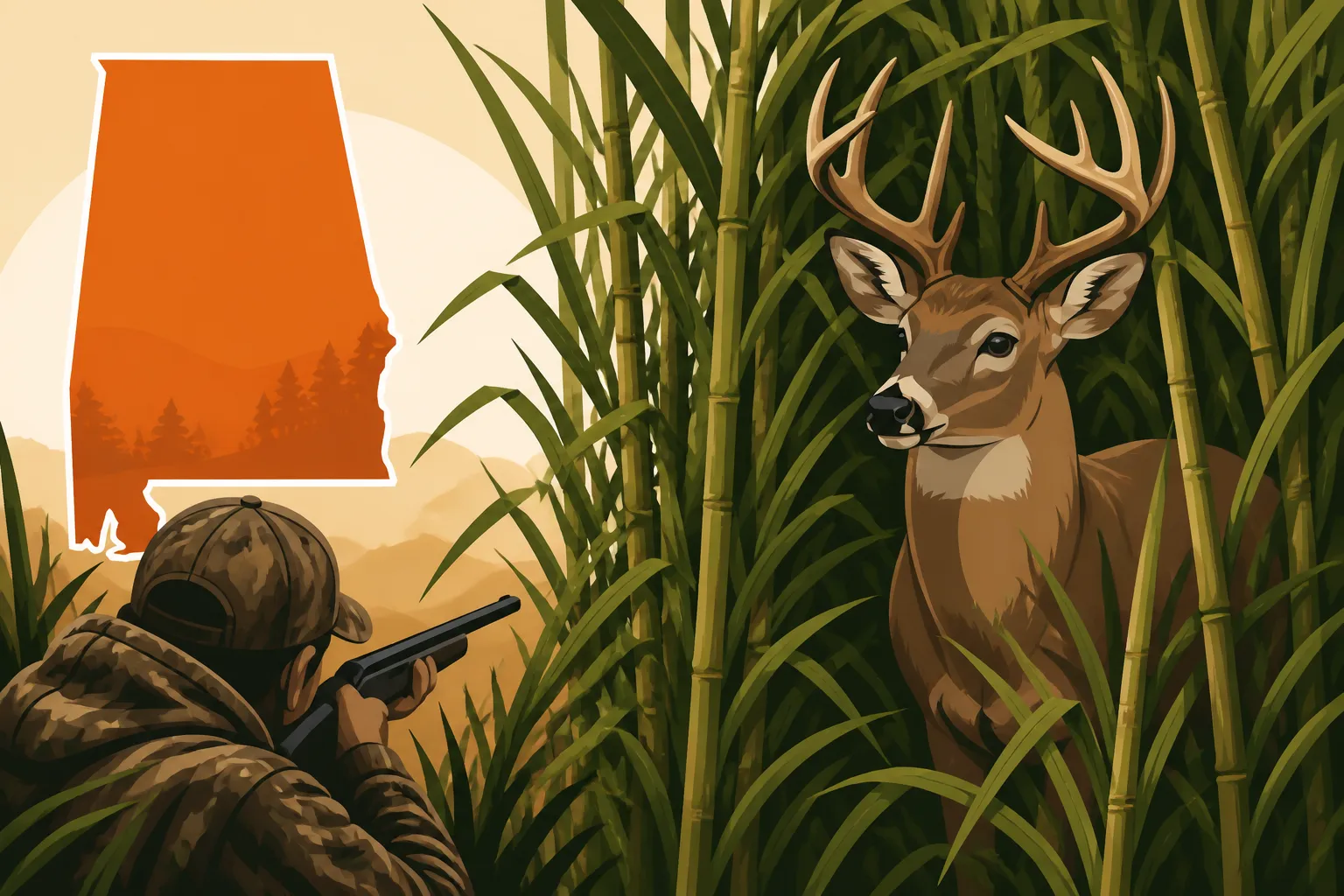
Deer hunters in Alabama often overlook some of the toughest, nastiest cover, thinking it's impenetrable or not worth the effort. But those dense river cane thickets, which feel like a wall of green bamboo, are often holding some of the smartest, oldest bucks in the woods. This guide will walk you through how to successfully scout, strategize, and hunt these challenging but incredibly rewarding habitats for deer.
What Makes River Cane Thickets a Deer Magnet?
Many hunters see a solid wall of river cane and simply pass it by, opting for more open timber or field edges. They might even curse it, thinking it's just a place for deer to escape into where they'll never be seen. But what we perceive as an obstacle, a whitetail deer sees as home—a sanctuary, a cafeteria, and a natural fortress all rolled into one. Understanding why deer utilize these thickets so heavily is the first step to hunting them effectively.
Cover, Food, and Water
River cane, or Arundinaria gigantea, is a native bamboo species that grows incredibly dense, often forming vast, nearly impenetrable stands along Alabama's river bottoms and creek drainages. For a whitetail deer, especially a mature buck that has survived multiple hunting seasons, this isn't just a place to hide; it's a fortress. Imagine being a deer and feeling constant pressure from hunters, dogs, and vehicles. Where do you go to escape? Into the thickest stuff you can find. These cane breaks offer unparalleled sanctuary, making deer feel incredibly secure from human intrusion and even aerial predators.
Beyond just cover, these areas often provide a surprising amount of food and, critically, easy access to water. The young shoots of river cane can be a browse food source, especially early in the growing season before they harden. More importantly, cane thickets are usually found in fertile bottomlands, meaning they are often interspersed with hardwoods that drop acorns or adjacent to agricultural fields. A big buck can bed down deep in the cane, wait until dark, and then slip out to a nearby food source, knowing he can quickly retreat to his impenetrable sanctuary if disturbed. The constant presence of water, whether it's the main river, a slough, or a feeder creek, means deer don't have to travel far for hydration, further reducing their exposure to danger and keeping them comfortable during warm spells.
Thermal Regulation and Seclusion
The sheer density of river cane also provides excellent thermal regulation, making it a comfortable place for deer regardless of the weather conditions. In the brutal heat of an Alabama early season, when temperatures soar and humidity hangs heavy, the dense canopy of cane offers deep shade and helps to keep the air cooler and more humid within the thicket. This provides a crucial refuge from the sweltering sun, allowing deer to conserve energy. Conversely, during bitter cold snaps, which Alabama occasionally experiences, the thick stands act like a natural windbreak, trapping warmth and offering crucial insulation from chilling winds. This makes cane thickets an ideal all-season bedding area, protecting deer from environmental extremes.
Furthermore, the seclusion these thickets offer is paramount. Most hunters shy away from the struggle of pushing through dense cane, and deer are remarkably adept at recognizing patterns of human behavior. The noise, the effort, the limited visibility – it all deters human intrusion. This allows deer to establish undisturbed patterns, moving freely within the thicket during daylight hours, something they'd rarely risk in more open timber where visibility is higher. It's not uncommon for a seasoned hunter to push through what feels like miles of cane, only to jump a mature deer that has been watching them the entire time, having known exactly where to bed and how to escape before the hunter even got close. They learn to feel safe here, leading to older, wiser bucks often calling these places home.
Scouting Strategies for Cane Thickets
Successfully hunting river cane begins long before you ever carry a weapon into the field. It starts with meticulous, patient scouting. You can't just stumble into these areas hoping for the best; you need a plan, and that plan comes from understanding how deer navigate and utilize these dense, almost maze-like environments. Your scouting efforts will drastically reduce frustration and increase your chances of success.
Reading the Edges and Entry Points
Directly plunging into a vast cane thicket without a plan is a recipe for frustration and spooked deer. The key to hunting these areas effectively begins on the periphery. You need to become an expert at "reading the edges." Look for trails that lead into and out of the cane. These will often be deeply worn paths, sometimes almost tunnels, where deer have consistently entered and exited over time. These tunnels are often low to the ground, forcing deer to duck their heads, giving you a clue about the size of the deer using them. Pay close attention to where these trails intersect with more open timber, agricultural fields, food plots, or creek crossings. These transition zones are often high-traffic areas and prime spots for setting up a stand or ground blind.
Don't just look for main trails; also identify smaller, less obvious entry points. Sometimes a solitary, mature buck will use a less defined, almost invisible route to slip in and out, deliberately avoiding the more obvious deer highways where he might encounter other deer or predators. These subtle entry points might be marked by a single rubbed sapling just inside the cane, a few fresh droppings, or a very faint hoof print. Remember, deer entering and exiting the thicket are often at their most vulnerable, making these bottleneck points critical scouting targets. Scouting with a robust mapping app like GoHunt can be invaluable here, helping you mark these specific points and visualize the terrain even if you can't get a clear line of sight on the ground.
Using Aerial Maps and Topography
Before you ever set foot near a cane thicket, spend considerable time poring over aerial maps. High-resolution satellite imagery can reveal subtle changes in cane density, open pockets within the thicket, or even small clearings or old logging roads that might provide easier access or funnel points that are invisible from the ground. Look for fingers of cane that extend out into other cover types or where the cane thins slightly near a creek bend or a dip in the terrain. These variations are often indicators of consistent deer movement within the larger, uniform block of cover.
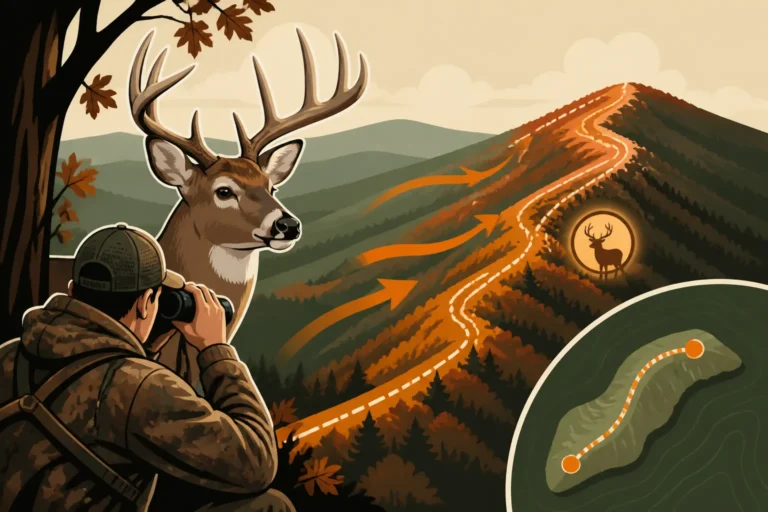
Topographical maps are equally important, especially since cane thickets are often associated with waterways. Understanding the contours of the land can tell you a lot about how water flows and where deer will naturally travel to avoid deeper water or difficult terrain. Steep banks, subtle saddles between higher ground, or small benches within the bottomland can act as natural funnels, directing deer movement along the path of least resistance. For example, a narrow strip of cane along a creek might lead up to a small, isolated ridge within the bottomland. Deer will often use this higher, drier ground for bedding within the security of the cane. Combining aerial views with topo lines on a mobile hunting app like GoHunt can give you an incredible advantage, allowing you to mentally navigate the maze and predict deer movement before you physically enter it. Learning to identify these key features is part of what makes effective Scouting Alabama Public Land Before Season so critical, especially in challenging environments like cane thickets.
Hunting Tactics in Dense Cane
Hunting river cane requires a specific set of tactics that differ significantly from hunting open hardwoods or food plots. Forget long-range shooting; this is up-close, personal hunting where patience, stealth, and a keen eye are paramount. It's not for the faint of heart, but the rewards can be significant when you connect with a buck that lives and dies by the cane.
Still-Hunting and Ground Blinds
Still-hunting through river cane is arguably one of the most challenging but potentially rewarding methods. It requires immense patience, extremely slow movement, and keen situational awareness. You're not "still-hunting" in the traditional sense of walking a few steps and stopping; in cane, it's more like moving inches at a time, picking apart every patch of cover before taking another tiny step. The goal is to move so slowly and deliberately that you detect the deer before it detects you. Focus on looking for horizontal lines in a vertical world – the back, belly, or even an antler tines of a deer breaking up the uniform vertical patterns of the cane. Listen intently for subtle sounds: a rustle of leaves, a twig snap that doesn't sound like your own, or the soft blowing of a deer. Wearing quiet clothing, preferably fleece or wool, is paramount, as every snag will sound like a cannon shot in the stillness of the thicket.
Ground blinds are another highly effective tactic, especially if you can find a natural opening, a small pocket, or a well-used trail within the cane. Rather than trying to fight through the cane, which will announce your presence long before you see a deer, find a strategic pinch point or a primary travel corridor and set up a blind well in advance. Brush it in thoroughly with local vegetation so it blends seamlessly into the dense surroundings. Given the limited visibility, your shot opportunities will likely be close and fast. Practice quick target acquisition and ethical shot placement from your blind at various angles. This strategy is particularly effective for Hunting Into the Late February Either-Sex Window, when deer are often feeling intense pressure and are focused on remaining hidden, making the security of the cane even more appealing.
Utilizing Deer Drives Carefully
Deer drives in river cane can be incredibly effective, but they must be executed with extreme caution and a clear plan, especially on public land. This isn't a casual "kick some brush" type of drive; it requires a coordinated effort with safety as the absolute top priority. The inherent low visibility means that every hunter involved needs to know exactly where every other hunter is located at all times. Communication is absolutely key, whether it's via two-way radios, agreed-upon vocal signals, or pre-planned GPS waypoints marked on a map like GoHunt.
Typically, drivers will push through the thickest part of the cane, attempting to slowly and quietly displace deer towards strategically placed standers on the edges or in natural funnels. The standers should be positioned where they have the best visibility and a safe shooting lane, often overlooking an escape route or a bottleneck where deer are forced to condense their movement. Never push deer blindly. Knowing the terrain, topography, and potential escape routes is vital to predict where deer will try to break out. This tactic can be physically demanding for the drivers, who might be pushing through chest-high cane for hours, but for those willing to put in the work, it can result in success when other methods fail. Remember to always know your target and what is beyond it, and clearly define shooting zones to avoid any accidents. This is particularly important when considering Deer Drives With Three or Four Hunters in such dense, low-visibility cover.
| Tactic | Pros | Cons | Ideal Scenario |
|---|---|---|---|
| Still-Hunting | Highly adaptable, quiet, covers more ground | Extremely slow, low visibility, physically demanding | Solo hunter, patient, excellent woodsman, light wind |
| Ground Blinds | Excellent concealment, allows for long sits, less strenuous | Requires pre-scouting, limited shooting lanes, scent control vital | Known travel corridors, pinch points, near food/water |
| Deer Drives | Can move stubborn deer, effective for large thickets | Requires multiple hunters, safety critical, low visibility | Group hunt, good communication, clear escape routes known |
Safety and Ethics in Cane Country
Hunting in river cane thickets is exhilarating, but the very factors that make it attractive to deer—density and seclusion—also present unique safety and ethical challenges for hunters. It's crucial to prioritize safety, practice responsible hunting, and prepare for the difficulties of this demanding environment.
Navigating the Dense Cover Safely
Navigating dense river cane thickets is challenging, and safety should always be your primary concern. Visibility can be drastically reduced, often to just a few yards, making it incredibly difficult to see other hunters or even your own hunting party. This makes wearing plenty of blaze orange or blaze pink absolutely non-negotiable, even if you’re bowhunting. In Alabama, specific regulations dictate How Much Blaze Orange Alabama Requires, but in thick cover, more is always better. Brightly colored hats, vests, and even backpack covers can help you stand out.
Always carry a fully charged phone with a reliable GPS app (like GoHunt or OnX Hunt) and a physical compass as a backup. It's incredibly easy to become disoriented in the homogenous nature of dense cane where landmarks are scarce. Drop digital breadcrumbs as you go, marking your path in, or use the app's tracking feature. Inform someone of your hunting plans and expected return time. Be mindful of snakes, especially during warmer months, as they also appreciate the dense cover for refuge. Carry a small first-aid kit, a whistle (to signal your location in an emergency), and enough water. Take frequent breaks to conserve energy and reorient yourself, as pushing through thick cane can be surprisingly exhausting.
Retrieving Deer in Thick Stuff
The euphoria of making a good shot on a deer in a river cane thicket can quickly turn into a grueling retrieve. Tracking a deer in dense cane is one of the toughest challenges in hunting. Visibility is so low that blood trails can be incredibly difficult to follow, even with a seemingly good hit. Deer rarely drop in their tracks in such dense cover; they'll often run a short distance, seeking out the very thickest part they can find before expiring, making them even harder to locate.
When tracking, slow down. Mark the last confirmed blood sign with flagging tape or a piece of toilet paper before you take another step. Get on your hands and knees if necessary to find specks of blood or disturbed vegetation. Look for broken cane stalks, scuff marks on the ground, or hairs left behind. If you lose the trail, back out from the last mark and move in widening circles. Having a tracking dog (where legal) can be a game-changer for these situations. If you can't find the deer quickly, especially after a questionable shot, back out and give it time, particularly if the weather is cool. Returning with fresh eyes and possibly more daylight, or with a friend, can greatly increase your chances of recovery. Remember, successfully Tracking a Deer Through Alabama Pine Straw is one thing, but cane presents an entirely different level of difficulty. Ethical hunters commit to recovering their game, no matter how tough the terrain.
River cane thickets in Alabama are far more than just annoying obstacles; they're vital habitats that hold some of the most elusive whitetails. By understanding why deer use them, scouting intelligently, and employing specialized tactics, you can unlock incredible hunting opportunities and experience a truly unique challenge. It’s hard work, no doubt, but the reward of outsmarting a wary buck in his fortress is immense and deeply satisfying.
Disclaimer
Please note that hunting regulations, seasons, and licensing requirements can change. Always consult the Alabama Department of Conservation and Natural Resources (ADCNR) official website or their local offices for the most current and accurate information before planning any hunting activity. This guide is for informational purposes only and should not replace official state resources.