Hunting Coastal Alabama River Swamps
Hunting Alabama's coastal river swamps is an experience unlike any other, often leaving folks feeling overwhelmed by the sheer density of the environment, the challenging terrain, and the notorious insect populations. It’s a totally different ballgame than hunting pine plantations or open hardwoods. This comprehensive guide is here to walk you through everything you need to know, from the specialized gear to the cunning tactics, to successfully navigate and hunt these wild, watery landscapes.
The Unique Challenge of Coastal River Swamp Hunting
If you've ever stepped foot into one of Alabama's coastal river swamps, you know it's a world apart. These aren't your typical easy-access hunting grounds. They are formidable, full of hidden obstacles, and demand a specific kind of preparation and mindset. The frustrations are real – you can feel swallowed whole by the dense vegetation, and the constant battle against the elements can wear you down quickly.
Decoding the Dense Habitat
The first thing you'll notice is the water, or at least the constant presence of damp, squishy ground. Coastal river swamps, particularly those fed by systems like the Mobile-Tensaw Delta, are a complex tapestry of cypress and tupelo stands, choked with thick undergrowth, palmettos, and often impenetrable briar patches. Water levels can fluctuate wildly with rain and tides, turning a dry trail into a knee-deep slough overnight. This means that access is often limited to boats or by slogging through miles of mud and standing water. The constant humidity, combined with the standing water, creates a prime breeding ground for mosquitoes and gnats that can test the patience of even the most seasoned hunter. Sunlight struggles to penetrate the canopy, keeping the forest floor perpetually shaded and often cooler, but the air remains thick and heavy. Understanding this ever-changing, water-dominated environment is your first step to success.
What Game Thrives Here?
Despite the challenging conditions, these swamps are teeming with wildlife, making the effort worthwhile. The sheer remoteness and difficulty of access mean many animals live relatively unpressured.
White-tailed deer in these areas often differ from their upland cousins. They tend to be smaller-bodied, a genetic adaptation to the nutrient-poor, watery diet, but don't let that fool you about their antlers. Given enough age, a swamp buck can still carry an impressive rack. They are masters of stealth, using the thick cover to their advantage, making them incredibly difficult to spot.
Feral hogs are perhaps the most prolific residents, absolutely thriving in the swamp environment. They love to root around in the soft, muddy soil for tubers and invertebrates, and the dense cover provides excellent refuge. These destructive animals are here year-round, and hunting Alabama's Year-Round Feral Hogs is a popular pursuit for many swamp hunters.
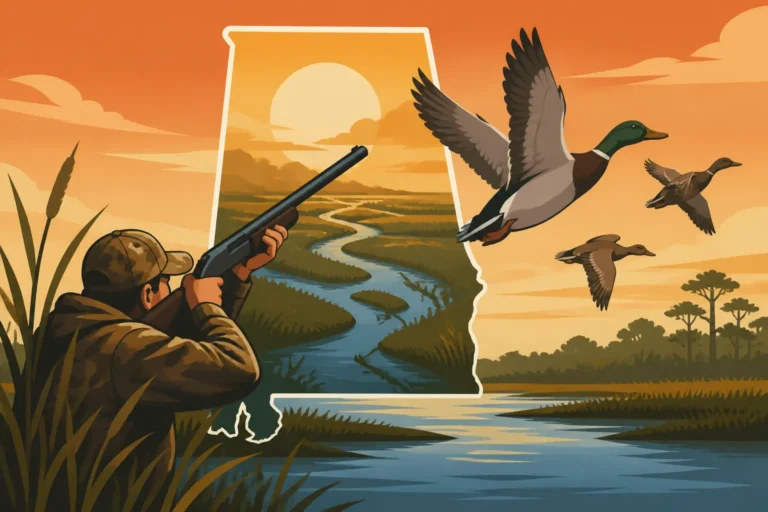
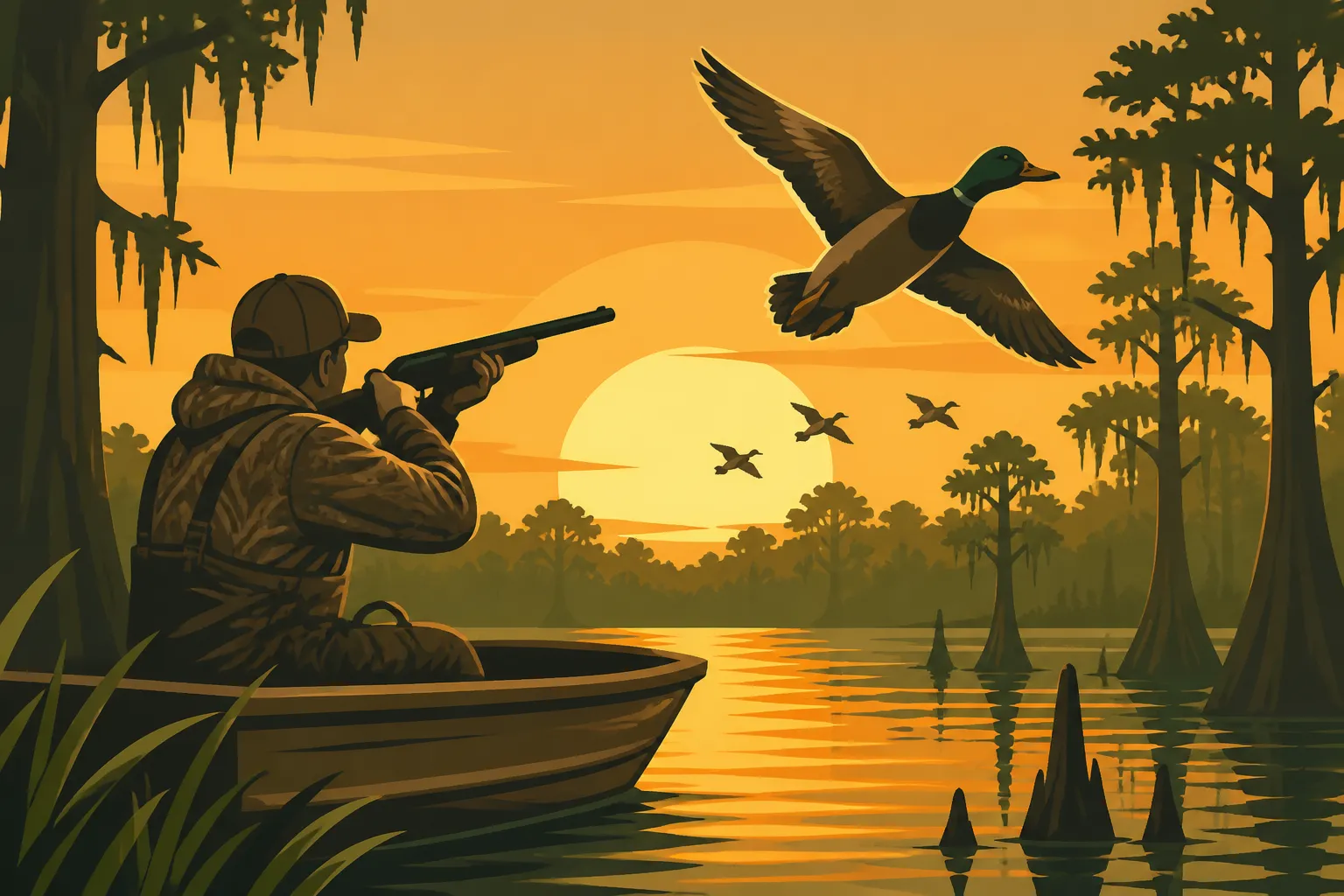
Waterfowl, especially wood ducks and mallards, are drawn to the flooded timber and sloughs that define these ecosystems. The quiet backwaters and abundant natural foods make them ideal wintering grounds. When it comes to Jump-Shooting Alabama Beaver Ponds for Wood Ducks, the swamps offer endless opportunities.
You'll also find an abundance of small game, particularly squirrels and rabbits, which relish the diverse mast crops and thick underbrush. Squirrel Hunting Alabama Bottomland Hardwoods, found throughout these river systems, can be an incredibly rewarding experience, offering both meat for the pot and a chance to truly immerse yourself in the swamp's rhythm.
Essential Gear for Surviving and Thriving in the Swamps
Heading into a coastal river swamp without the right gear isn't just uncomfortable; it can be downright dangerous. The environment itself is a test of your equipment, and being unprepared can quickly turn a hopeful hunt into a miserable ordeal.
Footwear, Clothing, and Personal Protection
Your feet are your most critical assets in the swamp, so investing in good footwear is non-negotiable. Snake boots are an absolute must. Rattlesnakes, cottonmouths, and copperheads are all present, and a bite deep in the swamp could be life-threatening. Choose boots that are truly waterproof and offer excellent ankle support, as you’ll be walking over uneven ground, submerged roots, and slick mud. For deeper water, hip waders or even chest waders might be necessary, depending on the specific area and current water levels.
Clothing should be quick-drying and layered. Even in cooler months, a strenuous walk through the swamp will make you sweat. Opt for synthetic materials that wick moisture away from your skin. Camouflage patterns that break up your outline in dense, shaded environments are effective. Don't forget a sturdy rain suit – sudden downpours are common. Insect repellent is another absolute essential. Look for products with a high DEET concentration or permethrin treatments for your outer clothing to ward off the relentless mosquitoes, ticks, and gnats.
Navigation and Essential Safety Items
Getting lost in the labyrinthine waterways and dense forests of a coastal swamp is a very real concern. A reliable GPS unit or a smartphone with a robust hunting app like GoHunt is your best friend. Download offline maps of the area before you go, as cell service is often nonexistent. Mark your starting point and any key landmarks or game sign. Always carry a physical compass and know how to use it, along with a waterproof map, as a backup.
For safety, a comprehensive first-aid kit is crucial, especially one equipped for snake bites. Carry a water filter or ample bottled water, as dehydration can set in quickly. A whistle can be invaluable for signaling. Consider a personal locator beacon (PLB) or satellite messenger device for emergencies where cell service isn't available. A strong headlamp or flashlight is also necessary, even for daytime hunts, as the thick canopy can make it surprisingly dark. When you're in the deep woods, miles from anywhere, self-sufficiency and redundant safety measures are paramount.
Table: Essential Swamp Hunting Gear Checklist
| Category | Item | Why It's Essential in the Swamp |
|---|---|---|
| Footwear | Waterproof Snake Boots | Protection from venomous snakes and constant wetness |
| Waders (Hip or Chest) | For deeper water crossings and sloughs | |
| Clothing | Quick-drying Base Layers | Manages sweat and prevents chafing |
| Durable, Water-resistant Outerwear | Protection from briars, rain, and cold | |
| Rain Suit | Sudden downpours are common | |
| Navigation | GPS Unit / GoHunt App (Offline Maps) | Prevents getting lost in dense, featureless terrain |
| Physical Compass & Waterproof Map | Essential backup for electronic devices | |
| Safety | Comprehensive First-Aid Kit | Treats minor injuries, includes snake bite kit |
| Water Filter / Bottled Water | Staying hydrated in a hot, humid environment | |
| Whistle / PLB / Satellite Messenger | Emergency signaling and communication beyond cell service | |
| Headlamp / Flashlight | Navigating dark canopies and early/late hunts | |
| Protection | High-DEET Insect Repellent | Wards off relentless mosquitoes, ticks, and gnats |
| Permethrin Treated Clothing | Extra defense against insects |
Weapons and Ammunition Considerations
The type of weapon you choose for coastal swamp hunting needs to be practical for the conditions. Corrosion is a major concern, so proper cleaning and maintenance after each hunt are vital.
Shotguns loaded with slugs or buckshot are excellent for the incredibly thick cover. Shots are often close and fast, and a shotgun can deliver significant knock-down power in a compact package, ideal for quick target acquisition. Many hunters also prefer shotguns for waterfowl, especially if you're targeting wood ducks in flooded timber.
If you prefer a rifle, consider one chambered in a cartridge known for good brush penetration, although in truly dense cover, nothing is completely "brush-proof." A lever-action .30-30 or a .45-70 can be effective, but modern bolt-action rifles with heavy, bonded bullets can also work. Opt for a shorter barrel for easier maneuverability. Optics should be simple – a low-power variable scope or even a red dot sight is often more practical than a high-magnification scope.
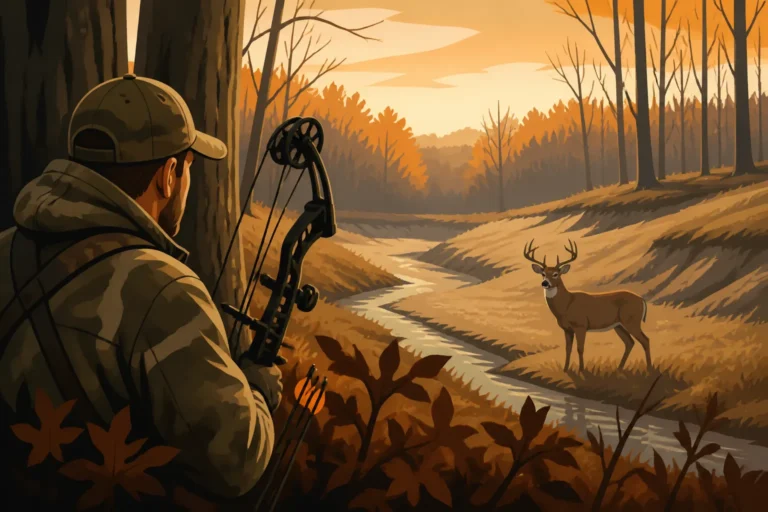
Archery gear is a favorite among many swamp hunters. The close-quarter nature of swamp hunting often lends itself well to bowhunting, allowing for silent stalks and setups. Compact bows are easier to handle in tight spaces, and durable broadheads are a must. Remember, Crossbow Rules During Alabama Archery Season allow for their use, which can be a great option for hunters looking for a bit more stability in a stand.
Regardless of your weapon, practice shooting in conditions that simulate the swamp – dim light, quick shots, and from awkward positions.
Effective Strategies for Hunting Swamp Whitetails, Hogs, and Waterfowl
Hunting these challenging coastal environments demands adaptive strategies. The rules you might follow in an open pine forest simply won't cut it here. Success comes from understanding the unique patterns of swamp game and adjusting your approach accordingly.
Scouting the Hidden Hotspots
Scouting in a coastal river swamp is often more difficult and more physically demanding than in other habitats. Forget glassing vast fields; here, it's about finding subtle clues. Start with aerial maps, possibly using an app like GoHunt, to identify higher ground, old logging roads, creek channels, and areas of slightly different vegetation density. These subtle changes can be highways for deer and hogs. Look for "islands" of dry ground within the swamp, as these will be bedding and feeding areas.
Once on the ground, focus on pinch points where game trails are funneled by water features or thick cover. Look for fresh tracks in the mud, rubs on small saplings, and active scrapes, especially along the edges of higher ground. Reading Alabama Mud for Fresh Deer Movement is an invaluable skill here. For hogs, look for extensive rooting, wallows, and rubs on trees. Pay attention to mast crops like acorns and palmetto berries when they are available, as these will concentrate game. Don't be afraid to put in the miles; the more you explore, the better your chances of finding unpressured areas.
Still-Hunting and Ambush Tactics
Given the dense cover and often limited visibility, still-hunting is an incredibly effective method in the swamp. This involves moving slowly, taking a few steps, and then pausing for several minutes to observe and listen. The sounds of the swamp can be deceptive, so train your ears to pick out distinct animal noises from the background hum of insects and dripping water. Use the thick vegetation to your advantage, breaking up your silhouette as you move. Focus on moving into the wind to keep your scent from spooking game.
For stand placement, look for natural funnels, elevated humps, or the edges of dense thickets. Portable ladder stands or hang-on stands can be challenging to set up in the soft ground or sparse suitable trees, but are often preferred over bulky box blinds. A well-brushed-in ground blind can also be effective, especially if placed near an active game trail or a hog wallow. Just remember, concealment is paramount, as shots will likely be at close range. Consider hunting a funnel between two creek bottoms, where deer and hogs are forced to travel a narrow path, increasing your chances.
Specialized Waterfowl and Hog Approaches
When it comes to waterfowl, especially wood ducks, jump-shooting small sloughs and beaver ponds is a popular and productive tactic. Sneak quietly along the edges of these water bodies, keeping a keen eye out for ducks flushing. You can also set up small decoy spreads in quieter pockets of flooded timber, calling sparingly. Understanding Alabama Waterfowl Zones and Seasons is critical before you head out.
For feral hogs, the swamp is their kingdom. While still-hunting can yield results, baiting can be extremely effective where legal on private land. Building and Freshening a Hog Bait Site can draw in sounders consistently. For public land, focus on areas with fresh rooting and wallows. Night hunting with thermal or night vision equipment (where legal) is another highly effective method for controlling the abundant hog population, especially when they move under the cover of darkness. Remember, Alabama Feral Hog Regulations allow for year-round hunting on private land with no bag limit, making them a prime target.
Navigating Alabama's Regulations and Access in Coastal Zones
Alabama's hunting regulations can feel like a maze, and navigating them for a specialized environment like the coastal swamps adds another layer of complexity. Knowing where you can hunt and what rules apply is just as important as knowing your gear and tactics.
Understanding Your License and Bag Limits
First and foremost, you need to ensure you have the correct Alabama Hunting Licenses and What They Cost. Whether you're a resident or non-resident, the state requires specific permits. Be aware of the varying Alabama Deer Season Structure Explained, as zones can dictate opening and closing dates, as well as antlerless harvest opportunities. The coastal counties generally fall into Zone A, which often has a longer season and more liberal antlerless harvest than some other zones, but always double-check the current regulations published by the Alabama Department of Conservation and Natural Resources (ADCNR). For waterfowl, you’ll need a state duck stamp and federal duck stamp, along with HIP certification. Always report your harvest through the Game Check system, whether it’s a deer or a turkey.
Finding Public and Private Access Points
Alabama offers a significant amount of public hunting land within its coastal river swamps, most notably the Mobile-Tensaw Delta Public Hunting Ground. This vast area provides incredible opportunities, but also comes with specific rules regarding access, vehicle use, and camping. Other nearby state-managed properties, like certain portions of Wildlife Management Areas (WMAs), might also offer swamp hunting opportunities. Familiarize yourself with the regulations for each specific WMA you plan to visit, as they often have unique rules that differ from national forest lands. Using the Outdoor Alabama App can be incredibly helpful for identifying property lines and WMA boundaries.
Gaining access to private land in these regions can be challenging. Many prime swamp tracts are owned by timber companies or large private landowners, often leased by hunting clubs. However, it's always worth a polite inquiry. Sometimes, farmers or smaller landowners are eager to have hunters help control feral hog populations. Always ensure you have explicit, preferably written, permission before stepping onto private property. Respecting land boundaries and leaving no trace are crucial for maintaining positive relationships with landowners and preserving hunting access for everyone.
Disclaimer
The information provided in this guide is for general informational purposes only and is not intended as legal advice. Hunting regulations in Alabama are subject to change, and it is the hunter's responsibility to review and comply with all current laws and regulations set forth by the Alabama Department of Conservation and Natural Resources (ADCNR) before engaging in any hunting activities. Always prioritize safety and ethical hunting practices.