Combining a Deer and Duck Trip in Alabama
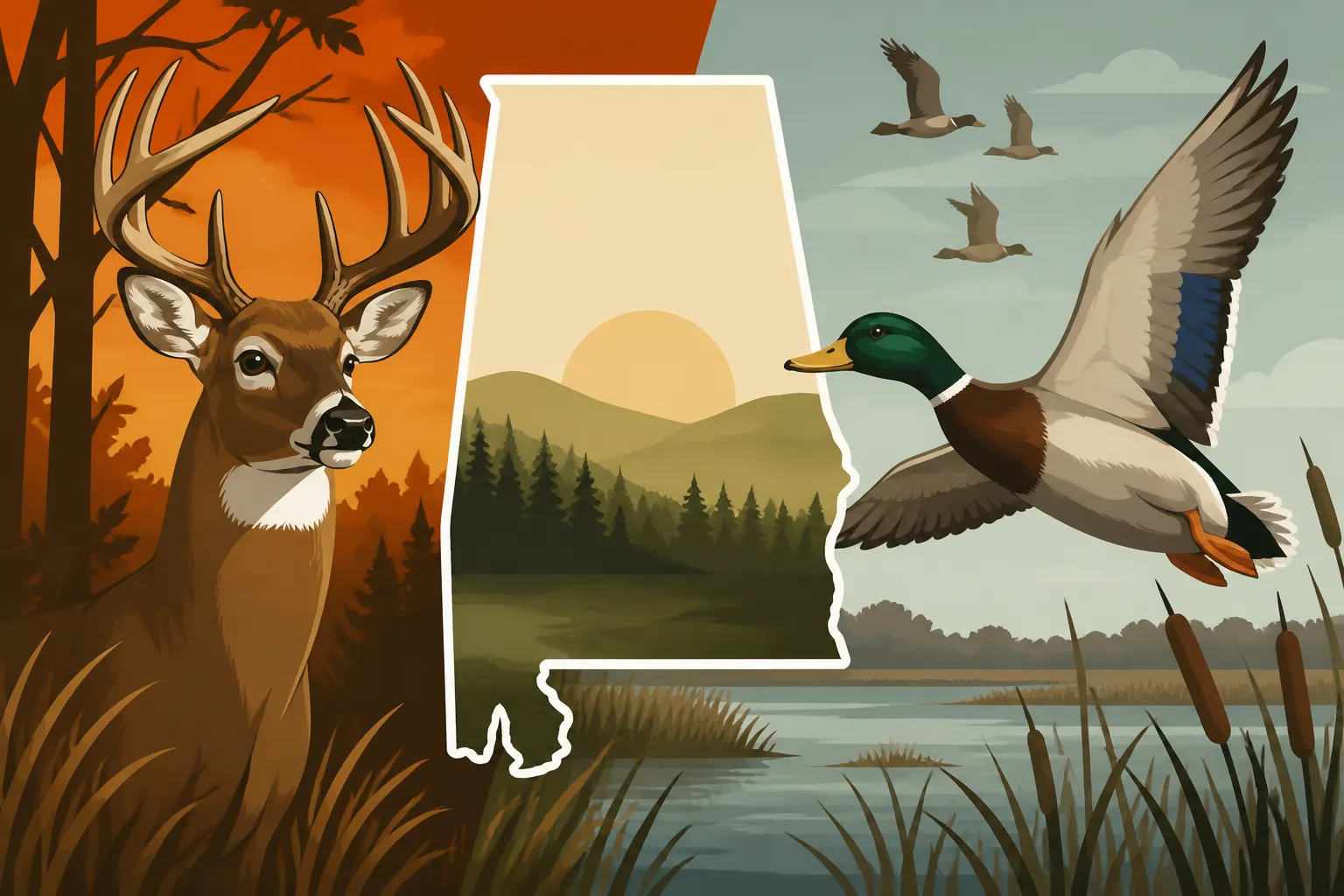
Many Alabama hunters dream of the ultimate trip: a morning spent hunkered down in a duck blind, followed by an afternoon waiting patiently in a deer stand. It’s a fantastic vision of truly maximizing your time in Alabama’s diverse outdoors, but making that dream a reality can feel like trying to solve a Rubik's Cube blindfolded. The logistics, timing, and sheer amount of gear can overwhelm even seasoned outdoorsmen. This guide will walk you through the ins and outs of planning and executing a successful combined deer and duck hunting trip in the Yellowhammer State, helping you navigate the challenges to create an unforgettable dual-species adventure.
The Appeal and the Challenges of a Combo Hunt
There’s something undeniably captivating about the idea of pursuing two completely different game animals within the same hunting trip. It taps into the very essence of what makes hunting in Alabama so special: its incredible diversity. But as exciting as the prospect is, it’s not without its significant hurdles.
Why Hunters Dream of a Deer and Duck Combo
For many of us, the appeal of a deer and duck combo hunt isn't just about filling two different types of tags; it's about the complete immersion in Alabama's wild landscapes. Imagine waking up before dawn, the air crisp and cold, heading to a flooded timber hole or a river slough. The sky begins to lighten, and you hear the whistle of wings as a group of mallards cups up, circling your decoys. The adrenaline rush as you rise and take your shot is unlike anything else. Then, just a few hours later, you're transitioning to the quiet solitude of the deer woods, perhaps overlooking a food plot or a hardwood bottom, hoping for a mature buck to step out.
This kind of trip maximizes your valuable time afield, allowing you to experience the best of both worlds. It showcases the incredible variety of habitats Alabama offers, from the delta swamps to the pine uplands. It’s a chance to use different skills, different gear, and enjoy distinct hunting experiences all rolled into one memorable excursion. For out-of-state hunters, it's particularly attractive, turning one travel investment into two unique hunting opportunities. It’s the ultimate way to truly feel connected to the diverse ecosystem of our state, witnessing both the frantic chaos of a duck flight and the quiet patience required for a whitetail encounter.
The Logistical Hurdles You'll Face
While the dream is vivid, the reality of planning a deer and duck combo hunt often brings hunters back to earth with a thud. The logistical challenges are numerous and can quickly turn excitement into frustration if not addressed head-on. First and foremost are the conflicting seasonal and zone alignments. While there's overlap, hitting the peak of both deer and duck activity simultaneously, especially in the same county, can be tricky. Alabama Deer Season Structure Explained shows you the varied opening and closing dates, and when you factor in Alabama Duck Zone Rules, it's clear you need a precise calendar.
Then there's the gear. Oh, the gear! Deer hunting requires rifles, bows, muzzleloaders, scent control, warm insulated clothing for a quiet sit, and often a treestand or ground blind. Duck hunting demands a shotgun, waders, waterproof outerwear, decoys, calls, and perhaps a boat or layout blind. That's two distinct wardrobes, two sets of firearms, and a whole lot of ancillary equipment. Transporting all of this, especially if you're traveling a distance, can quickly fill a truck bed or overflow a hotel room. Imagine trying to keep your deer hunting clothes scent-free when they're riding alongside muddy waders and wet duck decoys! The sheer volume and specialized nature of the equipment for each pursuit are significant hurdles that require careful planning and often mean making sacrifices or smart packing choices.
Finally, consider the habitat differences. Whitetail deer often prefer dense timber, thickets, agricultural fields, and hardwood bottoms. Ducks, on the other hand, are tied to water – flooded timber, river deltas, large agricultural impoundments, and natural swamps. Finding a single property, or even adjacent properties, that offer prime habitat for both can be incredibly difficult, often leading to significant travel time between your morning duck blind and your afternoon deer stand. This travel eats into precious hunting hours and adds to the physical demands of an already ambitious trip.
Timing Your Alabama Deer and Duck Adventure
The calendar is your best friend and worst enemy when planning a combo hunt. Synchronizing the peak activity for both deer and ducks in Alabama requires a good understanding of both species' seasonal behaviors and the state's regulations.
Overlapping Seasons for Optimal Planning
The sweet spot for an Alabama deer and duck combo hunt typically falls in the colder months, generally from late December through January. This period sees many deer zones still in full swing, often past the primary rut but with deer still actively feeding and moving, especially with good cold fronts. Simultaneously, this is usually the prime window for waterfowl migration in Alabama, as colder weather pushes birds down the flyway.
For example, Zone A's gun season often runs well into February, providing ample opportunity for deer. During this same period, Alabama's duck season is typically in its second or third split, after the initial opening weekend pressure has subsided, and fresh waves of birds are arriving. A look at Alabama Archery Season Dates or Alabama Gun Season Dates by Zone compared with the general waterfowl seasons will reveal these overlaps. You'll want to focus on areas that are known for good late-season deer activity, often near reliable food sources like Late-Season Food Sources for Alabama Whitetails, and also happen to be on a major flyway or have excellent wintering duck habitat.
Counties with significant river systems or deltas, like those bordering the Mobile-Tensaw Delta or the Tennessee River Valley, offer some of the best potential for dual opportunities. The challenge then becomes pinpointing specific properties or public land tracts that cater to both. While hunting on a specific opening weekend like Hunting the Alabama Youth Gun Weekend Dates or Dove Hunting Alabama Opening Weekend can be exciting, these peak times often come with increased pressure that can disrupt both deer and duck patterns, making a mid-season, cold-weather push more productive for a combo trip.
Considering Weather and Migration Patterns
Weather is the undeniable king when it comes to predicting wildlife movement, and it plays a critical role in a combo hunt. For deer, colder temperatures generally mean increased daylight movement as they need to feed more to maintain body heat. A sharp cold front following a warm spell can often turn deer activity on dramatically. However, extreme cold can also make them bed down, only moving minimally.
For ducks, cold weather, particularly strong fronts pushing south from the Midwest, is the primary driver of migration. These fronts push new birds into Alabama's wintering grounds. A sustained period of freezing temperatures up north can concentrate ducks in our open waters and flooded fields. This means that a good duck hunt often hinges on a good cold snap.
The trick is finding that magical balance where the weather benefits both. A moderately cold week with clear skies and light winds might be perfect: cold enough to get ducks moving and comfortable enough for deer to feed actively during daylight. However, what's ideal for one might be detrimental to the other. A torrential downpour, for instance, might make duck hunting fantastic in flooded timber, but it could also send deer into dense cover and make them less visible. You need to be prepared for the full spectrum of Alabama winter weather, from mild, sunny days to frigid, damp ones, with appropriate clothing and a flexible mindset.
Strategies for a Successful Dual-Species Hunt
Making a combined deer and duck trip work requires more than just knowing when the seasons overlap; it demands a strategic approach to finding hunting grounds, managing your gear, and structuring your days.
Finding the Right Property or Outfitter
This is arguably the most critical and often the most challenging aspect of a combo hunt. Finding a single location that offers genuinely good opportunities for both deer and ducks is rare.
Private Land: If you're fortunate enough to have access to a large private tract that borders a major river, delta, or extensive swamp system, you're ahead of the game. Look for properties with diverse habitats: mature hardwoods and agricultural fields for deer, combined with flooded timber, sloughs, or impoundments for ducks. A multi-year lease with a diverse landscape would be ideal. Many serious deer hunters have their own private land, but very few of those tracts also offer prime duck hunting, and vice versa. This often means trying to coordinate access to two separate private properties, which doubles the complexity.
Outfitters: For many, especially non-residents or those without extensive local connections, an outfitter might seem like the easiest path. However, finding an outfitter that specializes in high-quality combo hunts is not as common as you might think. Most outfitters are experts in one species. When searching, be very specific about your goals. Websites like BookYourHunt can be a good starting point to browse options, but you'll need to filter carefully and ask very direct questions about both deer and duck opportunities. Inquire if they have separate guides and properties for each, or if their location truly offers both. Ask about their success rates for each species and What a Guided Alabama Deer Hunt Costs versus a What a Guided Tennessee River Duck Hunt Costs typically entails. Some outfitters might offer a "combo" where one species is significantly weaker than the other.
Public Land: This is where the challenge ratchets up significantly. While Alabama has a fair amount of Public Hunting Land in Alabama, finding specific WMAs or National Forests with truly prime deer and duck hunting in close proximity is incredibly difficult. You might find a WMA with decent deer, but the waterfowl hunting could be limited to jump-shooting beaver ponds or small sloughs. Conversely, a fantastic waterfowl WMA or refuge might have extremely limited deer hunting opportunities, or deer hunting might be heavily restricted. If attempting this, you'll need to do an immense amount of pre-season scouting, utilize detailed mapping tools like those offered by GoHunt, and be prepared to drive significant distances between your morning and afternoon spots. Hunting Alabama's River Deltas outlines areas where water and land meet, which are your best bet for finding potential overlap on public ground. You would also need to carefully review the specific regulations for each WMA or public land tract, as rules for hunting hours, weapon types, and access can vary widely.
Gear, Logistics, and Time Management
Once you've identified your potential hunting grounds, the practicalities of executing the trip come to the forefront.
Gear: This is where you really need to be disciplined. You’ll need a shotgun (usually 12-gauge) for ducks, appropriate ammunition, waders, waterproof blind bags, decoys, and calls. For deer, you'll need your preferred weapon (rifle, shotgun, muzzleloader, or archery equipment – remember Crossbow Rules During Alabama Archery Season), appropriate ammo, scent-control clothing, warm layers, a good hunting pack, and potentially a treestand or ground blind. Footwear is crucial: waterproof, insulated boots for deer and chest waders for ducks. Consider a modular layering system for clothing that can adapt to both cold, wet mornings in the duck blind and drier, quieter movements in the deer woods. Don't forget licenses and permits! You'll need an Alabama Hunting Licenses and What They Cost, potentially state and federal duck stamps, and HIP certification for migratory birds.
Travel and Logistics: Minimize travel time between your deer and duck spots. The ideal scenario is a property where you can hunt ducks in the morning and be in a deer stand within a 30-minute drive. If you're staying in a cabin or lodge, ensure it has ample space for drying wet gear and storing two sets of equipment. A reliable truck or SUV with sufficient cargo space is non-negotiable. You'll likely be hauling muddy waders, wet decoys, and potentially a deer, so plan accordingly.
Daily Schedule: The most common approach is an early morning duck hunt, followed by a transition to a deer hunt in the afternoon. This usually means waking up extra early for ducks, often getting off the water by late morning, then a quick change, a bite to eat, and heading to the deer woods for the afternoon sit. Alternatively, you could dedicate full days to each species, perhaps two days for ducks and three for deer, or vice-versa, depending on your priorities. This strategy can reduce the feeling of being rushed but prolongs the trip. Remember, Alabama Public Land Hunting Hours apply, so you can't be in your duck blind before legal shooting light or stay in your deer stand past legal shooting dark.
Practical Considerations for Planning Your Trip
Beyond the immediate gear and schedule, there are broader aspects to consider for a successful combo hunt.
Budgeting: Combining two distinct hunting trips will naturally increase costs. You'll be looking at potentially two sets of specialized gear, more ammunition, higher license fees, and possibly greater outfitter expenses if you go that route. Factor in extra fuel for travel between locations and more food for longer, more demanding days. Be realistic about what you can afford and prioritize accordingly.
Group Size: A smaller group is often more agile and flexible for a combo hunt. Trying to coordinate multiple hunters with different preferences and skill levels for two species can quickly become chaotic. A solo hunter or a pair will have an easier time moving between spots and adapting to conditions.
Scouting (Self-Guided): If you're going the self-guided route, intensive pre-season scouting is paramount. Use aerial photos, topographical maps, and tools like GoHunt or the Scouting With the Outdoor Alabama App to identify potential deer bedding areas, food sources, travel corridors, and suitable duck habitat. Look for key features like Hunting a Funnel Between Two Creek Bottoms for deer, and areas like Hunting Flooded Timber for Mallards for ducks. Pay attention to water levels for ducks, as conditions can change rapidly.
Harvest Reporting: Don't forget your responsibilities! All harvested deer in Alabama must be reported through Game Check. Make sure you understand Alabama Deer Reporting Rules. For migratory birds, you need to be HIP certified, and follow all bag limits and possession limits strictly. Having a cooler ready for ducks and a plan for processing deer are also critical.
What to Expect: Realities of a Combo Hunt
While the dream of a combo hunt is exhilarating, understanding the realities—both the incredible highs and the potential lows—will help you manage expectations and truly appreciate the experience.
The Highs: Unforgettable Moments
The moments that make a combo hunt truly special are the ones that blend the best of both worlds. Imagine sitting in your duck blind, watching the sunrise paint the sky, then seeing a deer silhouetted on the far bank, peacefully grazing as the ducks begin to fly. Or the feeling of calling in a flock of mallards, followed by the silent, intense vigil as a mature buck walks into your shooting lane later that afternoon. It's about experiencing the fullness of Alabama's wilderness in a compressed, action-packed timeframe.
These trips often lead to unique stories that you wouldn't get from a single-species hunt. You might find yourself marveling at the sheer biodiversity of a specific area—a place where wood ducks nest in trees near deer trails, or where a major river provides both waterfowl refuge and a travel corridor for whitetails. The satisfaction of successfully adapting your tactics from one species to another, from the quick reaction time needed for ducks to the deliberate patience for deer, is incredibly rewarding. A combo trip often feels like getting two vacations in one, doubling the outdoor therapy and the chance to reconnect with nature. It’s an immersion that few other hunting experiences can offer, truly showcasing the richness of the White-Tailed Deer Across Alabama and Alabama Waterfowl on the Mississippi Flyway populations.
The Lows: Challenges Beyond Logistics
It's important to be realistic. A combo hunt, by its very nature, means you're splitting your time and focus. This can sometimes lead to what I call the "master of none" syndrome. Instead of dedicating all your energy and strategic thinking to one species, you're dividing it between two. This can result in coming home with fewer animals than if you had focused exclusively on deer or exclusively on ducks. You might miss a prime deer movement window because you're still chasing ducks, or you might be too physically tired for an effective afternoon deer hunt after an exhausting morning in the marsh.
Physical and mental fatigue is a real concern. Early mornings for ducks, potentially followed by the physical exertion of retrieving birds and decoys, then transitioning to a long, cold sit in a deer stand, can wear you down. The lack of sleep and constant switching of gears can impact your concentration and enjoyment. Weather unpredictability is another major factor. A bluebird day, perfect for a deer hunt, might mean slow duck hunting. Conversely, a blustery, rainy day that has ducks flying might make deer movement minimal during daylight hours and make your deer sit miserable. You might have excellent conditions for one species and terrible conditions for the other, leaving you feeling frustrated.
Finally, the sheer amount of gear can become a burden. Constantly packing, unpacking, changing clothes, and cleaning equipment takes valuable time and energy away from the actual hunting. It can be easy for items to get lost or forgotten in the shuffle, leading to more frustration.
Making the Most of Your Alabama Combo Adventure
To ensure your combo trip is more high than low, consider these strategies:
Prioritize: Before you even leave home, decide which species is your primary focus. If time is tight and you know one opportunity is stronger, lean into it. This allows you to have a fallback and manage expectations. For example, if you know the duck hunting is historically fantastic in a certain area but the deer hunting is just "okay," set your primary goal as ducks and enjoy any deer opportunities as a bonus.
Be Flexible: Alabama weather, like any outdoor pursuit, is unpredictable. If a heavy rain blows in, shift your focus to ducks. If a surprise cold front makes deer move, capitalize on that. Don't be so locked into your plan that you miss opportunities. Having scouted multiple deer and duck spots can give you the flexibility to adapt.
Enjoy the Experience: Even if you don't fill every tag, the true reward of a combo hunt is the unique experience of pursuing two distinct game animals in Alabama’s beautiful outdoors. The variety, the challenge, and the connection to nature are what truly make these trips memorable. The satisfaction of seeing a new corner of the state, hearing a different set of bird calls, or understanding the nuances of varied habitats are just as valuable as the meat in the freezer.
Consider a Longer Trip: If possible, extending your trip by an extra day or two can significantly reduce the pressure. A five-day trip gives you more breathing room to dedicate full days to each species, or to allow for a "recovery" day between intense duck mornings and long deer sits. This extra time allows for flexibility if weather or animal patterns don't cooperate initially, and lessens the constant rush.
| Aspect | Deer Hunting | Duck Hunting | Combo Hunt Challenges |
|---|---|---|---|
| Primary Gear | Rifle/Bow, Scent-free clothing, Treestand | Shotgun, Waders, Decoys, Calls | Transporting/managing two full sets of gear, scent cross-contamination |
| Optimal Weather | Cold, clear, calm (post-front) | Cold, windy, overcast (active migration) | Finding weather that benefits both simultaneously |
| Habitat | Timber, fields, swamps, thickets | Flooded timber, rivers, impoundments, marshes | Locating suitable habitat for both in close proximity |
| Timing | Early morning, late afternoon, mid-day (rut) | Early morning flight, mid-day loafing | Early starts for ducks, quick transitions for deer, potential fatigue |
| Patience Level | High, quiet, still | High for setup, fast action, calling | Shifting mental gears between quiet stillness and active engagement |
| Physical Demands | Walking, climbing, dragging deer | Wading, retrieving, setting decoys, boat handling | Compounded fatigue from diverse physical efforts |
| Outfitters | Common, specialized for deer | Common, specialized for waterfowl | Few outfitters truly specialize in both for a single trip |
Disclaimer
This article is for general informational purposes only and does not constitute professional advice. Laws, prices and regulations vary by location and change over time. Consult a qualified professional for guidance on your specific situation.