Timber Cuts and Where Deer Move After
As Alabama hunters, we've all been there: you spend months scouting a prime piece of timber, identifying those perfect deer trails, rubbing posts, and bedding areas. You might even have a stand hung, dreaming of opening morning. Then, you drive up one day, and it's gone—a fresh timber cut, leaving behind a barren landscape of stumps and debris. It feels like a gut punch, and the immediate question is, "Where did all the deer go?" This guide is here to help you understand how deer react to these drastic habitat changes, where they move, and how you can adapt your hunting strategies to continue finding success in the aftermath of a timber cut.
The Immediate Impact of a Timber Cut on Deer Habitat
When a timber company moves in and fells acres of trees, it’s not just a visual change; it’s a complete overhaul of the deer’s world. Imagine your home being suddenly ripped apart – that’s pretty much what a clear-cut feels like to the local deer herd. They rely on specific conditions for survival, and these conditions are instantly altered.
Sudden Loss of Cover and Food
Deer are creatures of habit and comfort. They thrive in areas that provide reliable food sources and, just as importantly, secure cover for bedding and escaping predators (including us hunters!). When a section of timber is cut, both of these critical elements vanish in an instant. Mature pine plantations, for example, might have offered dense thermal cover in winter and visual security year-round. Hardwood bottoms provided consistent acorn crops. With these trees gone, deer lose their bedding sites, their primary escape routes, and a significant portion of their diet.
This isn't a gradual shift they can adapt to over weeks; it's an immediate, jarring event. A deer that bedded down in a familiar pine thicket one night might wake up the next morning to an open, exposed landscape. Their first instinct is often to get out of sight, to find any remaining pockets of security. This doesn't mean they've vanished from the earth, but they've certainly vanished from that specific spot, and understanding their immediate needs for security is key to relocating them.
Increased Pressure and Vulnerability
Beyond the physical loss of cover, a fresh timber cut introduces a whole new level of psychological pressure on the deer. Suddenly, they are far more exposed. The canopy that once hid them from above is gone, and the dense understory that broke up their silhouette is now just a pile of branches. This increased visibility makes them feel vulnerable, not just to human hunters but also to other predators like coyotes.
When deer are feeling pressured, they become incredibly wary. They'll move more cautiously, often preferring the cover of darkness, and will seek out the densest, most impenetrable cover they can find. This could be an overlooked patch of briars, a deep creek bottom, or simply the very edge of the remaining standing timber. While a clear-cut might initially look like a hunter's dream – "Wow, I can see forever!" – it's often a challenging environment because the deer know they're exposed and are reacting accordingly. You might see more deer, but they’ll be on high alert, making them much tougher to approach and even tougher to get a shot at. This is where your long-term Scouting Alabama Public Land Before Season efforts really pay off.
Where Deer Seek Refuge and New Resources
So, if their prime bedding and feeding areas are gone, where do they go? Deer don't just disappear into thin air. They're survivors, and they'll quickly adapt to find the next best thing, even if it's not ideal. Their survival instincts drive them to seek out two main things: secure cover and new food sources.
Adjacent Mature Timber and Thick Cover
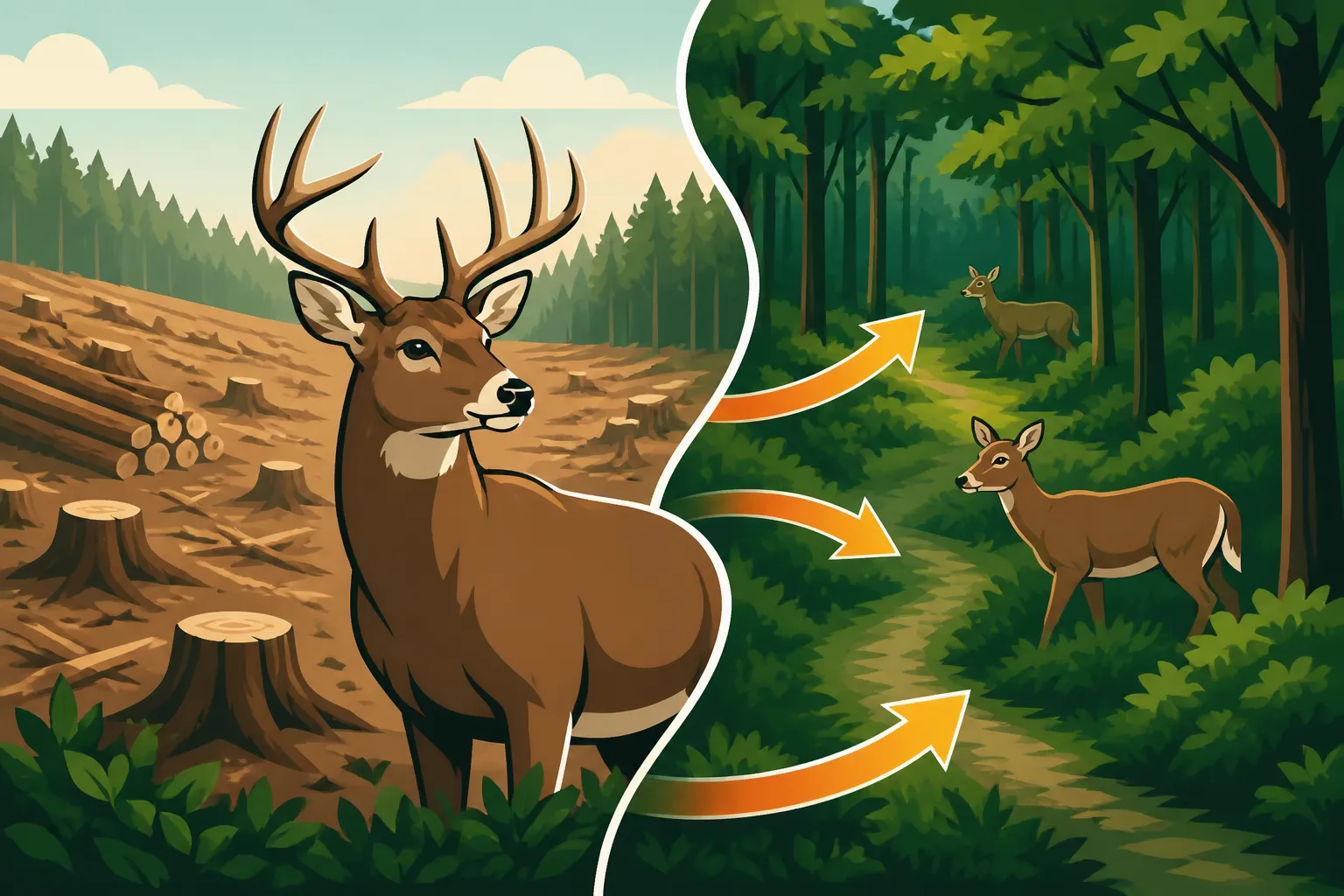
The most common and immediate reaction for deer is to simply shift their core areas to the closest available cover. This often means moving into the adjacent, uncut timber. Think about a timber cut that stops abruptly at a property line or a creek. Those untouched areas suddenly become prime real estate for displaced deer. They're looking for dense hardwood bottoms, thick pine stands that were spared, or any overlooked patch of briars, honeysuckle, or saplings that can offer concealment.
Creek bottoms, in particular, become critical sanctuaries. The topography often provides natural depressions, and the vegetation tends to be thicker and more diverse, offering both cover and some browse. These natural funnels and travel corridors become even more important after a major disturbance. When you're looking at your onX Hunt app after a cut, really zoom in on those boundaries – the edges of standing timber, drainages, and un-harvested plots. Deer will often stack up in these areas, particularly if the cut itself has created new travel routes or exposed old ones. You might find a previously less-used thicket now packed with fresh tracks and sign. This is where a thorough understanding of Reading Aerial Photos for Piedmont Deer can be incredibly beneficial.
New Food Sources and Edge Habitat
While the immediate loss of food is significant, timber cuts also create a different kind of food source over time. Once the sun hits the forest floor, new growth explodes. We're talking about forbs, young sprouts, and tender shoots that deer absolutely love. These are not the acorns or mature browse they were used to, but they represent a fresh buffet that becomes available surprisingly quickly, especially in Alabama's mild climate.
Deer will also heavily utilize the "edge habitat" – the transition zone where the clear-cut meets the standing timber. This edge provides the best of both worlds: quick access to the new, nutritious forage in the cut, combined with the security of the mature timber just a few yards away. They can feed along the edge, constantly checking for danger, and then quickly duck back into the trees if they feel threatened. This makes these edges incredibly productive hunting spots, especially during low-light hours. Look for trails paralleling the cut edge, or leading directly from standing timber into the new growth. Many deer will simply hug the tree line, only venturing into the open at the safest times. Scouting these edges carefully for fresh sign is paramount, and mapping tools like onX Hunt can help you visualize these transitions. The GoHunt platform often provides scouting tips that apply to these dynamic post-cut environments, helping you understand how deer adapt their feeding patterns.
Hunting Strategies for Post-Cut Areas
Relocating deer after a timber cut requires a significant shift in your hunting mindset and strategy. What worked before likely won't work now. It's about adapting, learning, and leveraging the new landscape to your advantage.
Scouting and Adapting Your Approach
Your boots-on-the-ground scouting efforts become ten times more critical after a timber cut. You need to identify new travel corridors, fresh bedding areas, and overlooked pockets of cover. Start by walking the perimeter of the cut, looking for any signs of deer activity where they enter and exit. Focus on those tight funnels that were perhaps less significant before but now serve as pinch points for deer movement. Look for new rubs and scrapes that indicate bucks establishing territories in their new digs.
Don't be afraid to get into the edges of the cut itself, especially where new browse is coming up. You might discover trails leading to these fresh food sources. Your old stand locations might be worthless now, but the cut itself might have opened up new shooting lanes or vantage points that allow you to cover more ground. Using your onX Hunt app to mark every rub, scrape, and fresh track will build a detailed picture of the deer's new movements. Don't forget that Finding Sign in Big Talladega Timber requires perseverance, and a fresh cut demands even more.
Here's a quick comparison of deer behavior:
| Behavior Aspect | Immediately Post-Cut | 1-3 Years Post-Cut | 3-8 Years Post-Cut |
|---|---|---|---|
| Primary Concern | Security, escape routes, immediate cover | Secure bedding, new browse, thermal regulation | Optimal bedding & browse, buck core areas |
| Travel Patterns | Hugging dense cover, nocturnal, quick transitions | Utilizing new trails, edge movement, daylight often | Established trails, interior use, heavy bedding |
| Preferred Cover | Adjacent mature timber, thick creek bottoms, briars | Dense regenerating pines/hardwoods, brush piles | Young timber (2-5' tall), briar thickets |
| Food Sources | Remaining mast, emerging forbs along edges | Abundant forbs, browse, young saplings | Diverse browse, early successional plants |
| Vulnerability | Extremely wary, hard to see | Still wary, but uses cover of new growth for movement | Relies on thick cover for security within cut areas |
Utilizing the New Environment to Your Advantage
While the initial feeling might be one of loss, a timber cut can actually create incredible hunting opportunities if you're willing to adapt. The chaos of a fresh cut can sometimes work in your favor. The piles of logging debris, the stumps, and the irregular terrain can provide excellent cover for your approach, allowing you to get closer to deer without being seen.
Understanding Wind and Thermals on a Piedmont Ridge becomes even more critical in these altered landscapes. New clearings can drastically change air currents, creating swirling winds that can bust you if you're not careful. Spend time observing the wind direction throughout the day in relation to the new openings. A Using a Ground Blind on Alabama Public Land might be more effective in an exposed edge than a traditional Treestand Setups in Talladega National Forest, as it offers more concealment against a stark backdrop.
Focus on those subtle funnels: a narrow strip of uncut timber between two clearings, a drain leading from a thicket into a new browse area, or even a deep ditch or logging road that deer use for quick, concealed travel. These small features become magnified in importance after a large timber operation. Remember, deer will always take the path of least resistance if it also offers security. Consider that the new landscape might offer late-season food sources for Alabama whitetails that you wouldn't have found before. This is especially true as the new growth begins to sprout.
Long-Term Effects and Future Opportunities
While a timber cut can feel like a disaster in the short term, it's actually a vital part of healthy forest management and, over time, creates some of the best deer habitat imaginable.
The Regeneration Cycle and Deer Attraction
Forests are dynamic ecosystems, and timber harvesting, when done properly, can rejuvenate habitat. After a few years, a clear-cut will transform from a barren wasteland into a dense, impenetrable thicket of briars, saplings, and various browse plants. This regrowing timber offers exactly what deer need: incredible bedding cover that's almost impossible for predators to penetrate, and an abundance of highly nutritious forage.
A five-year-old clear-cut, for instance, might be head-high with young pines and hardwoods, creating a deer paradise. Bucks will establish core areas in these thickets, and does will raise their fawns in the security they provide. The challenge for the hunter then shifts from finding deer that are trying to escape the open cut, to finding deer that are hidden within the incredibly dense regrowth. You'll be looking for trails through the thick stuff, not just around it.
Planning for Future Hunts in Regrowing Timber
Savvy Alabama hunters will look at a fresh clear-cut not as a temporary setback, but as an investment in future hunting opportunities. While you might hunt the edges for a couple of years, you'll want to keep an eye on that regrowth. As the cover gets thicker, it gets better for deer, and harder for us. This is where long-term planning and consistent scouting pay off. Use mapping tools like onX Hunt or GoHunt to mark the boundaries of the cut and make notes on its age. You might find some of the best buck hunting in 3-5 years, once those young trees are waist to head high.
Understanding how deer will utilize these areas as they mature is key. A ten-year-old clear-cut will offer different opportunities than a two-year-old one. The two-year-old might be a food source and bedding, while the ten-year-old might be transitioning to more open timber with fewer ground-level browse options, pushing deer back to the edges or adjacent mature timber for food. This cyclical nature of timber management creates a constantly changing landscape, ensuring that Alabama's Alabama Deer Population Estimate remains robust, but also requiring us hunters to remain vigilant and adaptable. Don't be afraid to hang a trail camera at a Where to Hang a Camera on a Logging Road adjacent to a cut to monitor activity as the habitat matures. And be aware of Hunting Pressure on Alabama Public Land in these areas, as other hunters will also catch on to the potential.
Disclaimer
This article is for general informational purposes only and does not constitute professional advice. Laws, prices and regulations vary by location and change over time. Consult a qualified professional for guidance on your specific situation.