Finding Access Near Montgomery
It can feel incredibly daunting trying to find quality hunting land when you live near a bustling city like Montgomery, Alabama. The concrete jungle might seem far removed from prime deer or turkey habitat, leading many hunters to believe they need to drive hours to find a decent spot. But don't despair! While it certainly requires more effort and strategic thinking, there are actually a surprising number of public and private land options within a reasonable drive of Alabama's capital city. This guide will walk you through how to uncover these opportunities, from navigating Wildlife Management Areas to understanding private land access, helping you make the most of your hunting seasons without always needing a long haul.
Public Hunting Land Opportunities Near Montgomery
For many Alabama hunters, especially those starting out or without access to private land, public hunting grounds are the lifeline. Near Montgomery, you're fortunate to have a mix of Wildlife Management Areas (WMAs) and even a National Forest district that offer diverse hunting experiences. It's not always easy, mind you; public land often means more pressure and sometimes less "trophy" potential, but it's where countless memories are made and skills are honed. The key is knowing where to look and understanding the specific rules for each area.
An Overview of Nearby Public Areas
Central Alabama offers a range of public land options, each with its own characteristics. You've got WMAs that are spread across various counties, often representing a mix of habitat types. Some might be timber company lands leased by the state, while others are state-owned or managed through agreements with federal agencies. The beauty of these areas is their accessibility; with the proper license, you can explore hundreds or even thousands of acres. However, this accessibility also means you'll likely encounter other hunters, especially on opening days or during peak rut. Successful public land hunting often comes down to scouting thoroughly, being willing to walk further than most, and adapting to pressure.
Understanding WMA Regulations and Access
Every Wildlife Management Area in Alabama operates under its own specific set of rules, often differing from statewide regulations. This is why it's absolutely crucial to consult the official Outdoor Alabama hunting digest or the individual WMA's regulations before you ever step foot in the woods. These rules can dictate everything from legal hunting days, weapon choices, and bag limits to specific sign-in/sign-out procedures or even mandatory deer checks. Some WMAs might have quota hunts, requiring you to apply and be drawn for a permit, while others are open access on specific days. Don't assume anything; what's legal on one WMA might get you a ticket on another. It's a small price to pay for the privilege of hunting these diverse public lands, and staying informed keeps you in the good graces of the game wardens. Alabama Wildlife Management Areas are a cornerstone of hunting access for many residents.
Navigating Wildlife Management Areas (WMAs) in the Montgomery Region
The WMAs closest to Montgomery offer a fantastic opportunity for hunters willing to put in the legwork. These areas, while sometimes seeing significant pressure, can produce good hunting for deer, turkey, and small game if you know how to approach them. The key is to understand their unique landscapes and management strategies.
Closer WMAs: Barbour, Autauga, and Lowndes
When you're looking for public land without a marathon drive, WMAs like Barbour, Autauga, and Lowndes often come up. Barbour Wildlife Management Area, located east of Montgomery, is renowned for its deer hunting, particularly given its proximity to some of the state's best Black Belt genetics. It’s a large area, offering diverse habitats from mature timber to planted pines, and often has an antler point restriction (APR) in place to help foster older age-class bucks. Hunters here need to be prepared for the rolling terrain and dense cover. Autauga WMA, closer to the city, also offers good deer and turkey hunting, though it might see more local pressure. It's often characterized by mixed pine-hardwood forests and creek bottoms. Lowndes WMA, located south of Montgomery, provides more Black Belt habitat, known for its fertile soils and agricultural influence, which can lead to larger deer. Lowndes County Public Land for Deer offers some fantastic opportunities if you put in the time to scout. Always double-check the specific regulations for each area, as they can have unique season dates or reporting requirements.
Expanding Your WMA Search: Coosa and Other Options
Venturing a bit further, areas like Coosa Wildlife Management Area to the north and east provide even more acreage and different terrain types. Coosa WMA, with its more rugged, Piedmont-like landscape, can be a great option for those who enjoy still-hunting or stalking. The cover can be thicker, and the deer might be a bit smaller-bodied than those in the Black Belt, but the challenge and solitude can be rewarding. The further you're willing to drive, the more options open up, including parts of the Talladega National Forest managed as WMAs (which we’ll cover next). Remember, WMAs are generally well-managed for game, often with food plots, timber cuts, and prescribed burns designed to improve habitat. Understanding these management practices can help you predict game movement. Using mapping tools like onX Hunt can be invaluable for identifying boundaries, roads, and key habitat features within these WMAs, helping you devise a solid hunting strategy before you even arrive.
Here's a quick look at some WMAs within a reasonable drive of Montgomery:
| WMA Name | Approximate Drive Time from Montgomery (hours) | Primary Game Species | Key Habitat Characteristics | Special Notes |
|---|---|---|---|---|
| Barbour WMA | 1.0 – 1.5 | Deer, Turkey | Rolling hills, mixed pine-hardwood, creek bottoms | Antler Point Restrictions often in effect. Check for quota hunts. |
| Autauga WMA | 0.5 – 1.0 | Deer, Turkey, Small Game | Mixed pine-hardwood, agricultural edges, dense cover | Can see significant pressure. Good for quick morning/evening hunts. |
| Lowndes WMA | 0.5 – 1.0 | Deer, Turkey, Small Game | Black Belt prairie, agricultural fields, bottomlands | Fertile soils can produce good deer. Check for specific field regulations. |
| Coosa WMA | 1.0 – 1.5 | Deer, Turkey, Small Game | Rugged Piedmont terrain, thick cover, clear-cuts | More physical hunting, less pressure than closer WMAs. |
| Oakmulgee WMA (Talladega NF) | 1.0 – 1.5 | Deer, Turkey, Small Game | Longleaf pine, mixed hardwoods, creek drains | Part of the National Forest. Check for specific WMA vs. National Forest rules. |
Note: Drive times are approximate and can vary greatly based on traffic and specific access points within the WMA.
Exploring National Forest Lands in Proximity to Montgomery
Beyond the state-managed WMAs, Alabama is blessed with national forest lands that offer a different flavor of public hunting. Near Montgomery, the most relevant district is part of the Talladega National Forest, specifically the Oakmulgee District. While it might require a slightly longer drive than the closest WMAs, it offers a vast, contiguous expanse of land where you can truly get away from the crowds if you're willing to walk.
The Oakmulgee District of Talladega National Forest
The Oakmulgee District Deer Hunting is a gem for hunters near Montgomery, typically just over an hour's drive to its eastern edges. This section of the Talladega National Forest Hunting is characterized by vast tracts of mature pine forests, interspersed with hardwood bottoms along creeks and rivers. What makes it appealing is its sheer size and the opportunity it presents for hunters to explore and find secluded spots. Unlike some WMAs that might be fragmented, Oakmulgee offers miles of unbroken timber. This means less edge habitat, but also fewer roads and more wilderness feel.
Hunting here demands a different strategy. Deer might be less concentrated, but they're often older and wiser, having learned to evade pressure. Focus on finding subtle terrain features, such as saddles between ridges, creek crossings, or areas with diverse mast crops. While the deer density might not be as high as in some fertile Black Belt WMAs, the reward of harvesting a public land buck from a truly wild area is immense. Scouting is paramount, and familiarity with the terrain will pay dividends over time. Reading Aerial Photos for Piedmont Deer can be particularly helpful here, as the varied topography often dictates deer movement.
General National Forest Hunting Strategies
Hunting National Forest lands means you're operating under different rules than WMAs. Typically, general statewide seasons and bag limits apply, but it's always crucial to verify with the latest Outdoor Alabama regulations, as there can be specific quirks or temporary closures. National Forests also permit things like dispersed camping, which can be a huge advantage for multi-day hunts, allowing you to set up a primitive camp near your hunting area. However, vehicle access might be limited to designated roads, and certain areas might be designated as wilderness, prohibiting motorized vehicles entirely.
One of the biggest advantages of National Forest land is the ability to escape pressure. While the main roads and popular access points might see hunters, the sheer scale of the land means that if you're willing to hike a mile or two (or more!) off the beaten path, you can often find solitude. Look for areas away from roads, particularly those with difficult access or rugged terrain. Utilize topo maps or a mapping app like onX Hunt to identify deep draws, isolated ridges, or thick bedding areas that other hunters might overlook. The deer in these areas often follow predictable patterns once you decipher them. Don't forget that Scouting Alabama Public Land Before Season is absolutely critical, as sign can be sparse and hard-won in these bigger woods.
The Quest for Private Land Access: Knocking on Doors and Leases
While public land offers a wealth of opportunities, the dream for many hunters is often private land access. Near Montgomery, finding private land to hunt can be both rewarding and challenging. You're in an area with a mix of agricultural operations, timber companies, and smaller private landowners. Securing private access can lead to less pressure, more consistent hunting, and the chance to implement your own management strategies.
Seeking Permission from Landowners
The oldest and often most effective method for securing private land access is simply asking. "Knocking on doors" might sound old-fashioned, but it still works, especially if you approach landowners with respect and a clear understanding of what you're asking for. In the areas surrounding Montgomery, you'll find plenty of smaller farmsteads and timber tracts. Focus on areas with good habitat, perhaps bordering public land or large tracts of unhunted private ground. When you approach a landowner, be polite, well-groomed, and have a clear proposal. Offer to help with chores, fix fences, or even assist with wildlife management tasks in exchange for hunting privileges. Show them you're responsible, safe, and trustworthy.
Many landowners are tired of trespassers or disrespectful hunters, so demonstrating you're different goes a long way. Having a written permission slip, even for free access, protects both you and the landowner. It might take dozens of "no's" to get one "yes," but that one "yes" can open up incredible opportunities. Remember, good relationships are built on trust and mutual respect. Getting Private Land Permission in Alabama is a skill that pays off.
Joining Hunting Clubs or Leasing Land
For those seeking more consistent private land access without the responsibility of ownership, joining a hunting club or leasing land are excellent options. Around Montgomery, you'll find a wide range of Alabama hunting clubs, from informal groups sharing a small tract to large, well-established organizations with extensive acreage, often including lodge facilities and food plot programs. Club membership typically involves annual dues and adherence to the club's specific rules and traditions. This can be a great way to gain access to managed land and enjoy the camaraderie of fellow hunters.
Leasing land, on the other hand, gives you more control. This is where you, or a small group of hunters, pay a landowner for exclusive hunting rights to a specific tract of land for a set period, usually a year. Alabama Hunting Lease Costs can vary significantly based on location, acreage, habitat quality, and landowner demand. Leasing offers the freedom to implement food plots, stand placement strategies, and habitat improvements without needing to ask permission for every decision. Many of the larger timber companies around Montgomery, such as Weyerhaeuser or Hancock Forest Management, offer recreational leases, as do smaller private landowners. These options require more financial commitment but offer unparalleled access and control over your hunting experience.
Leveraging Technology for Montgomery-Area Hunting Access
In today's world, technology has revolutionized how hunters find and access land, especially around populated areas like Montgomery. From sophisticated mapping applications to online communities, there are numerous digital tools that can give you a significant advantage in your search for hunting grounds.
Mapping Applications and Public Land Identification
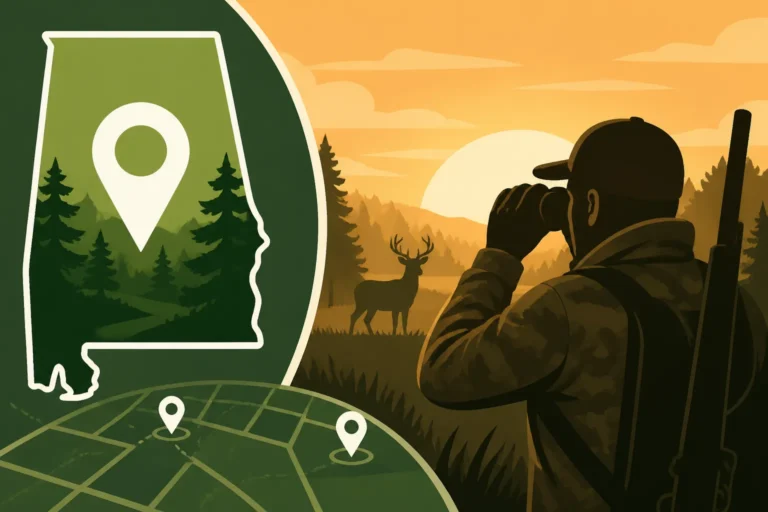
Gone are the days of relying solely on paper maps or vague directions. Mapping applications like onX Hunt and GoHunt have become indispensable tools for modern hunters. These apps provide detailed satellite imagery, topographic maps, and crucial land ownership data right on your smartphone or tablet. For hunters around Montgomery, this means you can:
- Identify Public/Private Boundaries: Instantly see where public land (WMAs, National Forests, state parks that allow hunting) ends and private land begins. This is critical for staying legal and avoiding trespass. The onX Layers for Alabama Land Status can even show you specific WMA boundaries, timber company lands, and federal holdings.
- Scout from Afar: Before you even leave your couch, you can virtually scout potential hunting spots. Look for terrain features like ridge lines, creek bottoms, pinch points, and clear-cuts that funnel deer movement. Identify potential bedding areas, food sources, and travel corridors.
- Navigate with Confidence: Once in the field, these apps use your device's GPS to show your exact location relative to property lines, roads, and trails. This is invaluable for navigating dense cover or unfamiliar terrain, especially on large public tracts like the Oakmulgee District.
- Mark Waypoints: Drop pins for stand locations, rub lines, scrapes, tracks, or promising habitat features. You can even record your tracks to easily find your way back to your vehicle or camp.
These mapping tools empower you to explore areas you might never have considered, giving you the confidence to venture deeper into public land or to identify private tracts that might be good candidates for permission.
Online Resources for Leases and Information
Beyond mapping, the internet offers a wealth of information for hunters seeking access near Montgomery. The official Outdoor Alabama website is your first stop for all regulations, season dates, WMA maps, and contact information. You can use their interactive map tools to find WMAs, check Alabama WMA Quota Hunt Sign-In Process, and review specific rules. Using the Outdoor Alabama Map Tool should be a regular part of your hunting preparation.
For private land opportunities, various online platforms and forums connect landowners with hunters. Websites that list hunting leases or hunting club memberships are increasingly popular. While GoHunt is more known for its western focus, other similar platforms might exist for eastern states, or general real estate sites might list hunting leases. Online forums and social media groups dedicated to Alabama hunting can also be great places to network, ask for advice, and sometimes even find leads on open club spots or landowners looking for respectful hunters. Always exercise caution and perform due diligence when pursuing online leads, as you would with any significant hunting investment. Look for established groups, ask for references, and try to meet in person to verify information before making any commitments.
Practical Tips for Successful Hunting Near Montgomery
Finding hunting access is just the first step; making that access productive requires smart strategies and a dedicated mindset. Hunting near a metropolitan area often means dealing with specific challenges, but also offers unique rewards.
Maximizing Success on Public Lands
Hunting public land near Montgomery demands a strategic approach. Given the potential for higher pressure, you need to think differently.
- Go Deeper: Most hunters don't venture far from roads or easy access points. Be willing to walk further, navigate thicker cover, or cross a creek. Often, the deer you seek are just beyond where others stop.
- Hunt Mid-Week: If your schedule allows, hunting on weekdays can significantly reduce competition, giving you a more relaxed and productive experience.
- Focus on Overlooked Spots: Look for small, unappealing patches of woods, difficult-to-access pockets, or dense thickets. These are often overlooked and can hold pressured deer seeking refuge.
- Utilize Topography: Identify natural funnels created by hills, rivers, or dense cover. Deer will use these to travel, especially when pressured. Hunting a Funnel Between Two Creek Bottoms can be extremely effective.
- Adapt to Pressure: Understand that deer on public land are often nocturnal. Adjust your hunting times, focusing on early mornings and late evenings, and consider all-day sits if the conditions are right, particularly during the rut. Warm-Weather Sitting Strategy in Alabama is also crucial for consistent success through the longer seasons.
Remember that patience and persistence are your greatest assets on public land. Every scouting trip, even if it doesn't yield immediate results, contributes to your understanding of the area.
Building Relationships for Private Land Access
If your goal is private land, building strong, positive relationships is paramount. This isn't just about getting permission once; it's about maintaining that privilege for years to come.
- Be Respectful and Reliable: Always follow the landowner's rules, communicate your hunting plans, and show up when you say you will. This builds trust.
- Offer Assistance: Offer to help with property maintenance, such as fixing fences, clearing brush, or performing light chores. This shows you value their property and are willing to contribute.
- Share the Harvest (Sometimes): While not always expected, offering a portion of your harvest, especially if you get a deer, can be a thoughtful gesture that strengthens your relationship.
- Leave No Trace: Always pack out everything you pack in. Leave the land cleaner than you found it. This simple act speaks volumes about your character.
- Follow Up: A simple thank-you card or a small gift after the season can reinforce your appreciation. Remember to stay in touch, even in the off-season.
Building these relationships takes time and effort, but the rewards of consistent, high-quality private land access are well worth it. You might even find opportunities near your own home by simply Knocking on Doors in Black Belt Farm Country, which also happens to be a key region for Montgomery-area hunters.
Conclusion: Unlocking Your Hunting Potential Near Montgomery
Finding productive hunting access near a city like Montgomery is absolutely achievable, but it's a journey that requires effort, research, and a willingness to explore. Whether you choose to dive deep into the public lands of the WMAs and National Forests, or embark on the quest for private land permission and leases, the opportunities are there for those who seek them. The key is to leverage the resources available, both traditional and technological, and to approach every opportunity with respect and a good attitude.
Don't let the urban sprawl fool you; rich hunting traditions and vibrant wildlife populations thrive just a short drive from Alabama's capital. With the right mindset and tools, you can forge your own path to successful and memorable hunts, proving that even city dwellers can be deeply connected to the wild places of Alabama. Good luck out there, and happy hunting!
Disclaimer
This article is for general informational purposes only and does not constitute professional advice. Laws, prices and regulations vary by location and change over time. Consult a qualified professional for guidance on your specific situation.