Alabama Trespass and Permission Law
Many Alabama hunters, especially those new to an area or relying on finding new spots, grapple with the often confusing and sometimes intimidating world of trespass and permission laws. The fear of inadvertently crossing a property line or misunderstanding what constitutes proper permission can keep folks off promising hunting grounds. This comprehensive guide aims to demystify Alabama's regulations surrounding private land access, helping you navigate the legal landscape with confidence and respect for landowners.
Understanding Alabama's Basic Trespass Laws for Hunters
Alabama's legal framework for trespass can feel like a maze, especially when you're focused on the hunt. For those of us who grew up with a "ask forgiveness later" mentality, or who remember a time when rural areas were more lenient, the current laws can seem strict. But really, they're designed to protect landowner rights and ensure everyone's safety and privacy. It's not about being anti-hunter; it's about clear boundaries and respecting others.
Defining "Posted" and "Unposted" Land
The concept of "posted" land is pretty straightforward, but it's important not to make assumptions about "unposted" land. In Alabama, any land that is clearly marked with signs or purple paint at reasonable intervals is considered posted. These signs usually say "No Trespassing" or "Posted" and often include the landowner's name. They're a visual cue, a clear signal that this isn't public ground. You might see purple paint on trees or fence posts, which serves the same legal purpose as a written sign. This eliminates any doubt about whether a hunter should have known they were on private land without permission. It's a clear warning, and ignorance of these markers is no excuse in the eyes of the law.
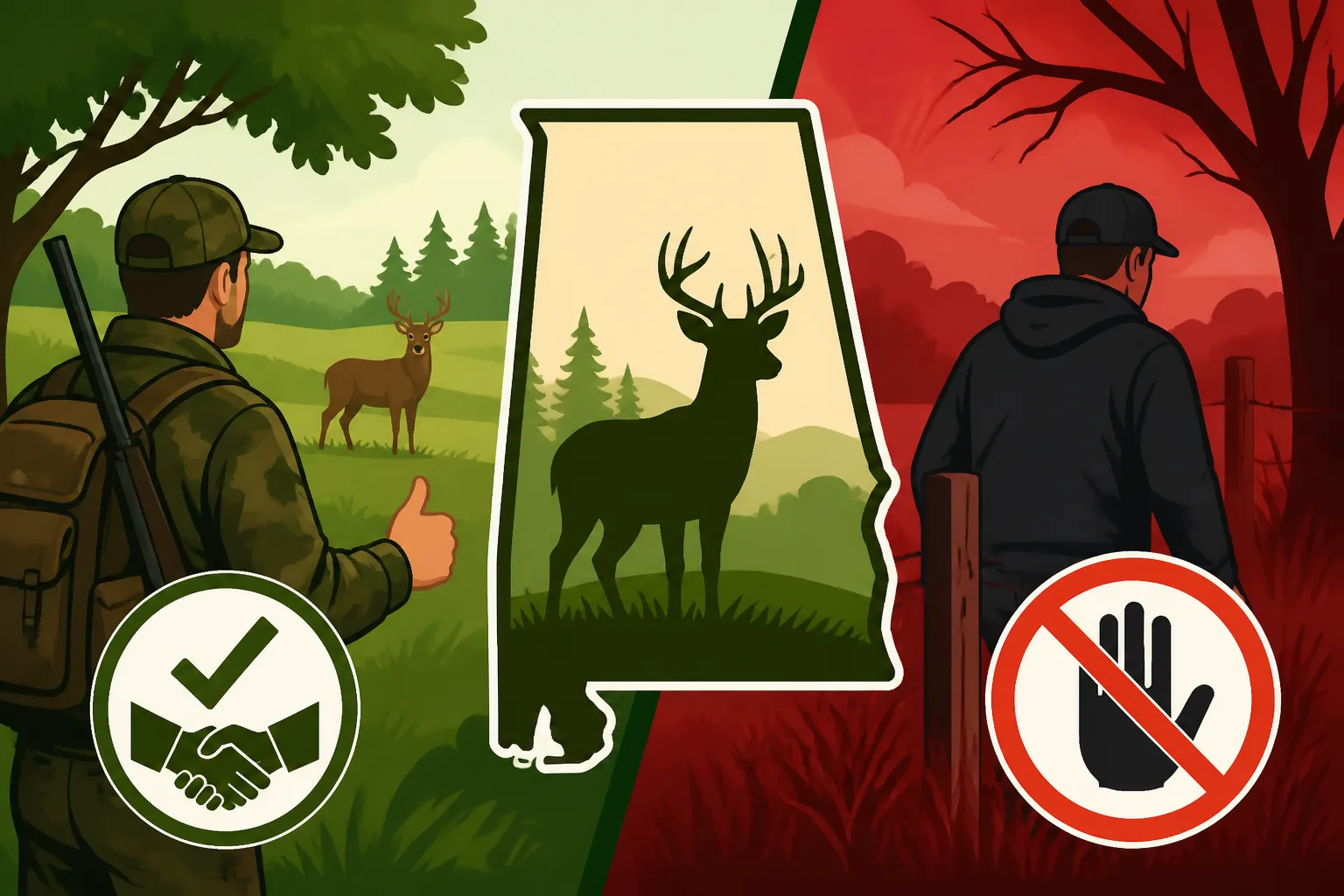
However, here's where it gets tricky for some: all private land in Alabama is considered off-limits for hunting without permission, whether it's posted or not. This is a critical distinction that many new hunters, or even those from states with different laws, sometimes misunderstand. You can't just assume that if there are no signs, it's okay to wander on. The law presumes that private land is private, and you need explicit permission to hunt there. This means that a seemingly abandoned field or a remote timber tract, even if it has no fences or signs, requires you to track down the owner and get their consent before setting foot on it with a weapon. This respect for private property is foundational to responsible hunting in our state.
Legal Implications of Hunting Without Permission
The moment you step onto private land to hunt without the proper authorization, you're not just breaking an unwritten rule of courtesy; you're breaking the law. Hunting without permission falls under trespass laws, and the consequences can be pretty severe. It's not just a slap on the wrist. We're talking about potential fines that can add up quickly, especially if you're found to be a repeat offender. More seriously, your hunting license could be revoked, which means you'd be sitting out future seasons, missing out on those crisp autumn mornings or the thrill of a spring gobbler hunt. Nobody wants that, right?
Beyond the fines and license issues, there's also the possibility of having your hunting equipment confiscated. Imagine losing your favorite rifle, your bow, or even your truck if it was used in the commission of the trespass. That's a huge financial hit on top of everything else. And it's not just the state looking at you. Landowners can pursue civil actions against you for damages, which could lead to even more financial strain. This is why understanding Alabama's Alabama Trespass and Permission Law is so incredibly vital. It's about protecting your right to hunt by respecting the rights of others, ensuring that a simple mistake doesn't turn into a permanent black mark on your hunting career or your wallet.
The Importance of Express Permission
Okay, so we've established that you need permission. But what kind of permission? And how do you get it in a way that truly protects you and respects the landowner? This is where many hunters, even experienced ones, can stumble. Simply nodding your head at the mention of hunting isn't always enough when push comes to shove. You want to make sure the permission is clear, explicit, and ideally, documented.
Verbal vs. Written Consent: What's Best?
The easiest way to get permission is often a quick chat with the landowner, a verbal "Sure, go ahead." And for casual situations or with neighbors you've known for years, that might be perfectly fine. But let's be realistic: memories fade, people move, and sometimes misunderstandings happen. What if a new family member takes over the land and doesn't know about your conversation? What if the landowner has a change of heart or forgets the specifics of your agreement? Verbal consent, while legally valid, can be incredibly difficult to prove if there's ever a dispute. It often boils down to "he said, she said," which is a tough spot to be in if a game warden or sheriff's deputy gets involved.
This is why, as a seasoned hunter, I always advocate for written permission, especially if you're hunting a new property, if you don't know the landowner intimately, or if you plan to hunt there regularly. A simple, signed note or email clearly stating who has permission, for what dates, for what game, and on which specific parcel of land, can save you a world of trouble. It doesn't have to be a legal contract; a handwritten note with signatures and dates works wonders. This kind of documentation acts as your safeguard, providing undeniable proof that you are where you're supposed to be. It shows you're serious about being a responsible hunter and that you respect the landowner's property enough to get things in writing.
Retrieving Game from Adjacent Property
This is a scenario that causes more stress and confusion for hunters than almost anything else: you make a good shot, the deer runs, and you watch it bound onto the adjacent property. What do you do? Your first instinct might be to just follow it, especially with daylight fading. But hold on right there. Just because you shot the animal on legal ground doesn't give you automatic permission to retrieve it from someone else's land. That's still trespassing, plain and simple. It's frustrating, heartbreaking even, to know your game is just over the line, but you have to resist the urge to cross.
The law is clear: you must obtain permission from the adjacent landowner before entering their property, even if it's just to pick up a downed deer. This applies even if their land is unposted. If you can't reach the landowner, or they deny permission, you're in a tough spot. Some states have "right of retrieval" laws, but Alabama isn't one of them. Your best bet is to make a sincere effort to contact the landowner. Go knock on their door, call them, send a text if you have their number. Explain the situation calmly and respectfully. Often, a reasonable landowner will grant you access, especially if you're courteous. If not, it's a bitter pill, but you have to let the deer go. The alternative—trespassing—could cost you far more than that one deer. You might even consider having a conversation with adjacent landowners before the season, just to establish a relationship and discuss these possibilities.
Navigating Public and Private Land Boundaries
One of the biggest challenges for hunters in Alabama is deciphering where public land ends and private land begins. Our state offers some fantastic public hunting opportunities, from national forests like Talladega National Forest Hunting to the numerous Alabama Wildlife Management Areas. But these public tracts are often bordered by private holdings, and those lines can be invisible or poorly marked in the woods. This is where modern technology really shines, helping us stay on the right side of the law and avoid accidental trespass.
Tools for Identifying Property Lines
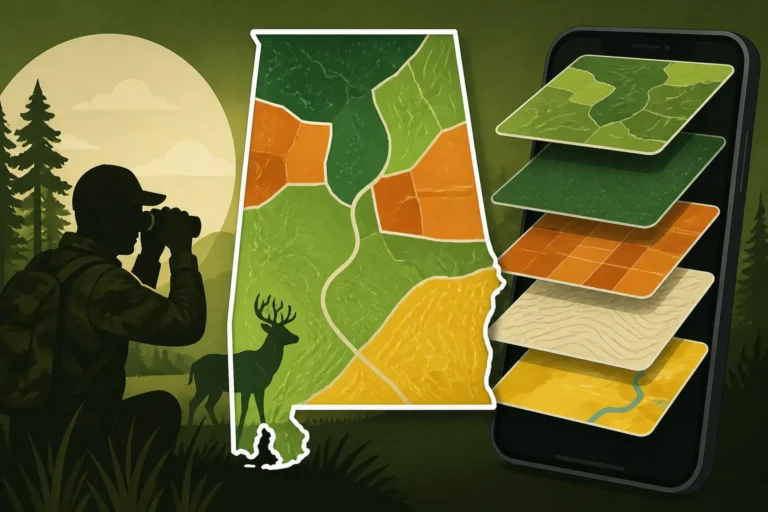
Gone are the days when a paper map and a compass were your only hope for knowing whose land you were on. While those traditional skills are still invaluable for any serious woodsman, technology has given us powerful tools to pinpoint our location and identify property lines with incredible accuracy. Mobile mapping apps have revolutionized how we hunt and scout. When you're trying to figure out if that promising ridge is on public land or part of old Farmer Johnson's back forty, these apps are indispensable.
For example, I can't tell you how many times I've relied on an app like onX Hunt to keep me out of trouble. It layers property ownership data over detailed satellite imagery and topographic maps. You can see parcel lines, landowner names, and often even contact information right on your phone screen. This is crucial when you're deep in the woods, far from any obvious markers. Similarly, other platforms like GoHunt offer robust mapping features that provide similar functionalities, allowing you to clearly see public-private boundaries, often color-coded for easy identification. These tools empower you to hunt confidently, knowing exactly where you stand. Before you even leave the truck, you can pull up your desired hunting area, see the boundaries, and plan your approach to stay on legal ground. Scouting With the Outdoor Alabama App is another great resource that many hunters use in conjunction with these private mapping services.
Accidental Trespass and How to Avoid It
Even with the best intentions and all the modern mapping tools, accidental trespass can happen. Maybe your phone battery died, or the GPS signal dropped in a deep ravine. Perhaps a boundary marker was knocked down, or the surveyor's line was more subtle than you thought. While "I didn't know" isn't a legal defense, actively trying to avoid trespass goes a long long way, both legally and in terms of your reputation as a hunter. The key here is diligence and conservative action.
The best way to avoid accidental trespass is to be overly cautious. If you're unsure about a boundary, err on the side of caution and assume it's private. Give yourself a buffer zone, especially when approaching a known property line. Check your maps frequently, not just once at the trailhead. Pay attention to subtle changes in terrain, old fence lines, or timber cut boundaries that might indicate a property shift. If you do realize you've inadvertently crossed a line, stop immediately, unload your weapon, and exit the property the shortest way possible. Do not continue hunting. If you encounter a landowner or game warden, be honest, apologetic, and explain the situation. Most reasonable people will appreciate your honesty and your effort to correct the mistake. Remember, staying clear of these boundary issues also means understanding the Alabama Public Land Hunting Hours and any specific WMA regulations, as violating those can also lead to trouble.
Table: Common Trespass Scenarios and Best Practices
| Scenario | Description | Best Practice | Potential Consequence of Ignoring |
|---|---|---|---|
| Unmarked Private Land | Property with no "No Trespassing" signs or purple paint. | Always assume private land; obtain explicit permission before entering. | Fines, equipment seizure, license revocation. |
| Retrieving Wounded Game | Deer or turkey crosses property line after being shot on legal ground. | Contact landowner immediately for permission; do NOT cross without it. | Trespass charges, potential loss of game. |
| Boundary Line Confusion | Unsure if you've crossed from public to private land. | Use mapping apps (onX Hunt, GoHunt); create a buffer zone; retreat if unsure. | Accidental trespass charges. |
| Road Hunting | Shooting from or across a public road onto private land. | Never shoot from or across a public road. Ensure clear line of sight on legal ground. | Severe fines, dangerous hunting charges. |
| Waterway Access | Hunting along navigable rivers or streams that border private land. | Understand "wet foot" rule; remain in streambed; avoid banks without permission. | Trespass, potential conflict with landowner. |
| Public Land Encroachment | Setting up a permanent stand or blind on public land that borders private. | Confirm stand/blind is 100% on public land; respect setback rules if applicable. | WMA violation, removal of equipment. |
Penalties and Consequences for Hunting Trespass
Nobody wants to face legal trouble, especially when you're just trying to enjoy a passion like hunting. But it's vital to be aware of the serious penalties that can come with violating Alabama's trespass and permission laws. These aren't just minor inconveniences; they can have lasting impacts on your ability to hunt and even your financial well-being. The Alabama Department of Conservation and Natural Resources (ADCNR) and local law enforcement take these violations seriously, and for good reason. It protects landowners and maintains order in the field.
Fines, License Revocation, and Equipment Seizure
Let's talk brass tacks: what happens if you get caught? First off, you're likely looking at a substantial fine. These aren't parking tickets; they can range from several hundred to over a thousand dollars, depending on the specifics of the offense and whether it's a first-time or repeat violation. The financial hit alone is enough to make anyone think twice. But it doesn't stop there. One of the most devastating consequences for a hunter is the potential for license revocation. The ADCNR has the authority to suspend or completely revoke your hunting privileges for a period of time, which could mean you're out of the woods for several seasons. Imagine looking forward to Alabama's Gun Deer Season by Zone or Spring Turkey Hunting in Alabama only to realize you can't participate because of a past trespass. It's a harsh reality.
On top of fines and license issues, your equipment can be seized. This isn't just a threat; it happens. Your firearms, bows, treestands, vehicles, and even your trusty hunting dog (if used in the commission of the crime) could be confiscated by law enforcement. The cost of replacing these items, if they're not returned, can be astronomical. And the process of trying to get them back, even if you manage to avoid a conviction, is a lengthy, complicated, and often expensive legal battle. This means that a seemingly minor decision to cross a property line could cost you thousands of dollars, your hunting future, and your valuable gear. This is why having a clear understanding of Alabama Hunting Licenses and What They Cost and all associated regulations is so important.
Civil Liability and Restitution to Landowners
Beyond the direct criminal penalties imposed by the state, there's another layer of potential trouble: civil liability. A landowner whose property you've trespassed on can absolutely pursue you in civil court. This means they can sue you for damages caused by your presence. This could include damage to crops, fences, gates, or other property. Even if you didn't intend to cause damage, merely your presence could be considered a violation that they seek compensation for. This often takes the form of restitution, where a court orders you to pay the landowner for their losses.
The cost of civil actions can far exceed any criminal fines. Legal fees for both sides, potential awards for damages, and the sheer time and stress involved can be overwhelming. Imagine having to pay for a damaged gate that you didn't even notice, or being responsible for lost income if your presence disturbed livestock or agricultural operations. This isn't just about avoiding a ticket; it's about avoiding a lengthy and costly legal entanglement that could drag on for months or even years. Respecting property boundaries isn't just good manners; it's essential for avoiding severe financial and legal repercussions.
Building Relationships and Seeking Permission Ethically
So, now that we've covered the pitfalls, let's talk about the right way to go about hunting on private land. It all boils down to building trust and showing respect. Access to private land is a privilege, not a right, and treating it as such is the first step toward opening doors, sometimes literally. Many landowners are receptive to hunters, especially if you approach them with courtesy and a genuine willingness to abide by their rules.
The Art of Knocking on Doors
Asking for permission can feel intimidating. What if they say no? What if they're not home? What if they're just plain grumpy? These are all valid concerns, but if you want access to prime private land, you've got to be willing to put in the effort. The "art" of knocking on doors involves a few key elements. First, timing is everything. Don't show up at 5 AM on a Saturday with your camo on, ready to hunt. Choose a respectable time during the day, perhaps a weekday afternoon or early evening when they're likely to be home and not rushing off somewhere.
When they answer, be polite, introduce yourself clearly, and state your purpose directly. "Hello, my name is [Your Name], and I'm a hunter from [Your Town]. I noticed you have some property bordering [Public Land or other landmark] and I was wondering if you ever allow respectful hunters to access it for deer/turkey hunting?" Be prepared to explain why you want to hunt their land (e.g., you've seen good sign, it's close to home). Dress neatly; don't look like you just crawled out of a swamp. Offer to provide references if you have them. Emphasize that you will treat their land with respect, close all gates, pick up any trash, and report any issues you observe, like downed fences or suspicious activity. Be ready to take "no" gracefully, and always leave a good impression, even if you don't get permission this time. That polite interaction might just pave the way for a "yes" in the future. Knocking on Doors in Black Belt Farm Country can be a rewarding experience if approached correctly.
Maintaining Good Will with Landowners
Getting permission is just the first step; keeping it is the real ongoing effort. Once a landowner has granted you access, you've essentially entered into a silent contract of trust. Break that trust, and you can kiss that hunting spot goodbye, not just for yourself but potentially for other hunters who might ask in the future. So, what does maintaining good will look like? It means always, always honoring the specific terms of your agreement. If they said no ATVs, then no ATVs, even if you think nobody will see you. If they said no hunting near the house, respect that boundary.
Beyond the explicit rules, it means going above and beyond. Offer to help with chores around the property, like fixing a fence, clearing a downed tree, or helping with a small task. Share some of your venison or turkey meat after a successful hunt. Send them a thank-you card or a small gift at Christmas. Check in with them periodically, even when you're not hunting, just to say hello and see how they're doing. Report any unusual activity you see on their property, like illegal dumping or signs of poaching. These small gestures show genuine appreciation and reinforce that you are a responsible, trustworthy individual. Remember, a good relationship with a landowner is more valuable than any fancy gear. It ensures you have a place to pursue your passion year after year.
Specific Scenarios and Common Questions
Even with a good grasp of the basic laws, certain situations can still throw a hunter for a loop. Alabama's landscape, with its mix of rural roads, winding rivers, and diverse property lines, creates unique challenges that sometimes require a deeper understanding of the rules. Let's tackle a couple of these common head-scratchers.
Road Hunting and Right-of-Way Laws
The temptation to road hunt, especially in areas where deer frequently cross roads or feed near ditches, can be strong. However, road hunting is not only highly unethical and dangerous but also largely illegal in Alabama. The general rule is simple: you cannot shoot from, or across, a public road or highway. This means standing on the paved road, the shoulder, or even just inside the right-of-way and taking a shot is against the law. Not only is it illegal to shoot from the road, but it's also illegal to shoot across it if your bullet might impact something on the other side. This is for public safety, plain and simple. Imagine a stray round hitting a vehicle, a house, or an innocent bystander.
Furthermore, even if you're standing off the road on private property where you have permission, you still need to be incredibly careful about the direction of your shot. Your bullet or arrow must remain on land where you have legal permission to hunt and should never cross a public thoroughfare or property where you lack permission. A deer might be standing in the road's right-of-way, but if taking the shot means your projectile will travel over or onto another's property without consent, or across the road itself, you're looking at a serious violation. Always be aware of your surroundings, your background, and the trajectory of your shot. Safety and legality go hand-in-hand here.
Hunting Adjacent to Waterways
Alabama is blessed with an abundance of rivers, creeks, and lakes, and these waterways often form property boundaries or provide access to remote areas. This can lead to confusion about hunting along them. The general principle for navigable waterways (those wide enough to float a boat) is that the streambed itself is often considered public domain, up to the ordinary high water mark. This means you might be able to legally travel and sometimes even hunt from a boat within the streambed.
However, the moment you step out of your boat onto the bank, or shoot at an animal on the bank, you are very likely on private property and need permission. The land immediately adjacent to the water—the banks, the bluffs, the fields, and the timber—is almost always privately owned. So, while you might be able to paddle your canoe down a river, if you want to climb out and hunt the deer browsing on the riverbank, you need explicit permission from the landowner. Don't assume that just because you're on a public waterway, everything within sight is fair game. This distinction is crucial for understanding how to hunt responsibly and legally when water is involved. Always confirm your access rights and property lines using reliable tools like onX Hunt or a detailed county plat map when hunting near water features. Navigating these complexities also requires a grasp of Alabama Public Land Hunting Hours, especially when floating through or setting up on public river sections.
Disclaimer
This article is for general informational purposes only and does not constitute professional advice. Laws, prices and regulations vary by location and change over time. Consult a qualified professional for guidance on your specific situation.