Year-Round Booking for Alabama Hog Hunts
If you've spent any time at all around Alabama's rural landscapes, you know feral hogs are more than just a nuisance; they're a full-blown ecological and agricultural disaster. These resilient critters breed relentlessly, tearing up fields, destroying habitat, and outcompeting native wildlife all year long. This comprehensive guide is here to help you navigate the world of year-round booking for guided hog hunts in Alabama, ensuring you can join the fight against these destructive animals whenever you're ready.
The Constant Battle: Why Alabama Needs Year-Round Hog Hunts
The feral hog population in Alabama isn't just a concern; it's a crisis that demands constant attention. Unlike deer or turkey, there's no closed season for hogs on private land, and for good reason. Understanding the relentless nature of this problem is the first step in appreciating why year-round hunting, especially guided hunts, is so crucial.
Understanding Alabama's Feral Hog Problem
Feral hogs are perhaps the most destructive invasive species in North America, and Alabama certainly bears the brunt of their impact. They root up vast expanses of land, turning lush pastures and pristine forest floors into barren wastelands. Farmers see their corn, peanut, and soybean crops decimated overnight, leading to significant financial losses. Beyond agriculture, this rooting behavior destroys natural plant communities, degrades water quality, and disrupts the delicate ecosystems that support our beloved native wildlife like deer, turkeys, and quail. It's a never-ending cycle of damage.
What makes them such a persistent threat? Their incredible reproductive capacity. A sow can start breeding as young as six months old and have two litters of 4-12 piglets per year. Do the math – that's an exponential growth rate that makes controlling their numbers an uphill battle. Just when you think you've made a dent, a new generation is already on the ground. It’s why trying to estimate How Many Feral Hogs Alabama Has is a constantly moving target; the numbers are always staggering. This constant pressure on the landscape means that any effort to control them is a positive step.
Given this relentless pressure, Alabama's hunting regulations are uniquely structured to encourage their removal. On private land, there's absolutely no closed season and no bag limit for feral hogs. This liberal approach acknowledges the severity of the problem and empowers landowners and hunters to take action whenever and however they can. It's not just about sport; it's a vital component of land management and ecosystem health across the state. This means that if you're looking to hunt, you have options virtually any day of the year.
Advantages of Off-Season Hog Hunting
While many hunters focus their efforts on deer or turkey season, pursuing hogs during the "off-season" offers some distinct advantages. When deer season closes, and the woods empty of most human activity, hogs can become more predictable in their movements. This period often means less pressure on the properties, potentially leading to more visible hog activity during daylight hours, or at least a clearer pattern to exploit. It's a fantastic way to extend your hunting calendar and keep your skills sharp.
Additionally, off-season hog hunting often opens up different hunting experiences and methods that might be less practical during prime deer or turkey times. Night hunting with thermal or night vision optics has become incredibly popular and effective, especially in warmer months when hogs are more nocturnal. Dog drives are another high-energy option, perfectly suited for running through dense cover without worrying about disturbing deer bedding areas or spooking a gobbler. Baiting also becomes a primary tactic, allowing you to draw hogs into specific areas.
The summer months, despite the heat, can also present unique opportunities. While it might sound daunting to be in the Alabama woods in July, hogs are creatures of habit, and during these hot periods, they'll be concentrated around dependable water sources and shaded bedding areas. This concentration can make them easier to pattern and target. Many outfitters specialize in thermal night hunts during the summer, capitalizing on the hogs' nocturnal tendencies to avoid the heat. By adapting your tactics to the season, you can find success with hogs year-round.
Finding the Right Outfitter for Your Alabama Hog Adventure
Deciding to go on a guided hog hunt is a great step, but finding the right outfitter can feel like a hunt in itself. You want someone knowledgeable, ethical, and with access to good ground. There are many options out there, and taking the time to do your homework will make all the difference in having a successful and enjoyable experience.
Where to Start Your Search for a Guide
In today's connected world, the internet is often the first place hunters turn. Online platforms and directories dedicated to hunting trips are a treasure trove of information. Websites like BookYourHunt are excellent resources, allowing you to search specifically for hog hunting opportunities in Alabama. You can often filter by location, hunting method, and even read reviews from previous clients. These platforms connect you with outfitters who specialize in year-round hog control. GoHunt is another valuable resource, offering insights into hunting across various regions and sometimes listing specific outfitter information or reviews.
Beyond digital searches, don't underestimate the power of local knowledge. Chatting with folks at local tackle shops, feed stores, or even community events in rural Alabama can often lead to invaluable recommendations. Many reputable guides rely heavily on word-of-mouth referrals, and these face-to-face interactions can give you a better feel for an outfitter's reputation and local standing. Joining online forums or social media groups dedicated to Alabama hunting can also connect you with experienced hunters who can share their past experiences, both good and bad.
Ultimately, your goal isn't just to find any outfitter, but the right one that aligns with your expectations and preferred hunting style. It's critical to verify an outfitter's experience and, perhaps most importantly, their legitimate access to the land they're hunting. Do they own the land, or do they have a long-term lease? Are they properly permitted? These details ensure a legal and enjoyable hunt. A good outfitter will be transparent about their operations and happy to answer all your questions.
Key Questions to Ask Potential Outfitters
Once you've narrowed down a few potential outfitters, it's time to start asking the tough questions. The more information you gather upfront, the fewer surprises you'll encounter down the road. This conversation isn't just about price; it's about understanding the entire experience.
One of the first things to clarify is the primary method of hunting they employ. Are you hoping for an adrenaline-pumping Dog-Drive Hog Guide Services experience, or would you prefer a more patient stand hunt over bait? Perhaps the thrill of Thermal-Assisted Hog Guide Packages under the cover of darkness is what you're after. Each method offers a vastly different experience, so ensure their approach matches your expectations. Some outfitters might offer a mix, allowing for a varied hunt.
Next, delve into their success rates and, importantly, what they consider a "successful" hunt. Are they referring to the percentage of hunters who see hogs, or those who harvest one? Ask about the average number of hogs seen and harvested per trip, and the typical size of the hogs taken. Be realistic; it's hunting, not shooting fish in a barrel. A reputable outfitter will be honest about the challenges and variability of hog hunting. Don't be swayed by guarantees; hunting always has an element of chance.
Finally, get a clear breakdown of what's included in the package price. Does it cover just the guided hunt, or does it also include lodging, meals, and initial field dressing? What about processing the animal afterward? You'll want to know about options for Do Guided Hunts Include Processing?. Make sure you understand all costs, including potential hidden fees for extra hogs, weapon rentals, or gratuities for guides. Always inquire about their cancellation policies, deposit requirements, and payment schedules. Get everything in writing—a good outfitter will be happy to provide a clear contract. Platforms like GoHunt and BookYourHunt often provide a transparent breakdown of what's included, which can be incredibly helpful for comparing options and ensuring you're covered.
What to Expect on a Year-Round Guided Hog Hunt in Alabama
Alabama hog hunting offers a thrilling and varied experience, largely due to the many methods employed and the flexibility of year-round seasons. Knowing what each method entails and how the seasons can affect your hunt will help you prepare mentally and physically.
Common Hog Hunting Methods and Their Challenges
One of the most common and often effective methods is hunting from stands over bait. Outfitters will maintain bait sites, often with corn, to draw hogs into a predictable location. This is generally a less physically demanding hunt, requiring patience and quiet observation. The challenge here, especially in warmer months, is the heat and the need to sit still for extended periods. Hogs can also be quite wary, often approaching bait sites cautiously, so scent control and minimal movement are critical.
For an adrenaline rush, nothing quite beats night hunting with thermal or night vision optics. This method is particularly effective in Alabama's warmer months when hogs are primarily nocturnal to escape the heat. Outfitters typically provide the specialized thermal equipment, which can spot hogs in complete darkness. The challenge lies in making quick, accurate shots in low light conditions and navigating unfamiliar terrain after dark. It's an incredibly exciting experience, and you'll often see more hogs than during the day. Remember to be aware of Night Hog Hunting Light Rules in Alabama.
Another high-energy option is dog drives. This involves hunters strategically posting around a known hog bedding area or thicket while a team of dogs and handlers pushes the hogs out. This method is physical, often requiring quick reactions and accurate shooting as hogs burst from cover. It's not for everyone, as it can be quite loud and chaotic, but it's incredibly effective for clearing out problem hogs and provides a truly immersive hunting experience. This is where Dog-Drive Hog Guide Services really shine.
Finally, stalking or spot-and-stalk hunting offers a more traditional and often more challenging experience. This involves quietly moving through the terrain, actively looking for hogs, and then attempting to get within shooting range undetected. It demands stealth, keen observation, and a good understanding of hog behavior and the local landscape. This method is highly rewarding but can be the most physically taxing, especially in dense Alabama cover.
Seasonal Considerations and Adaptations
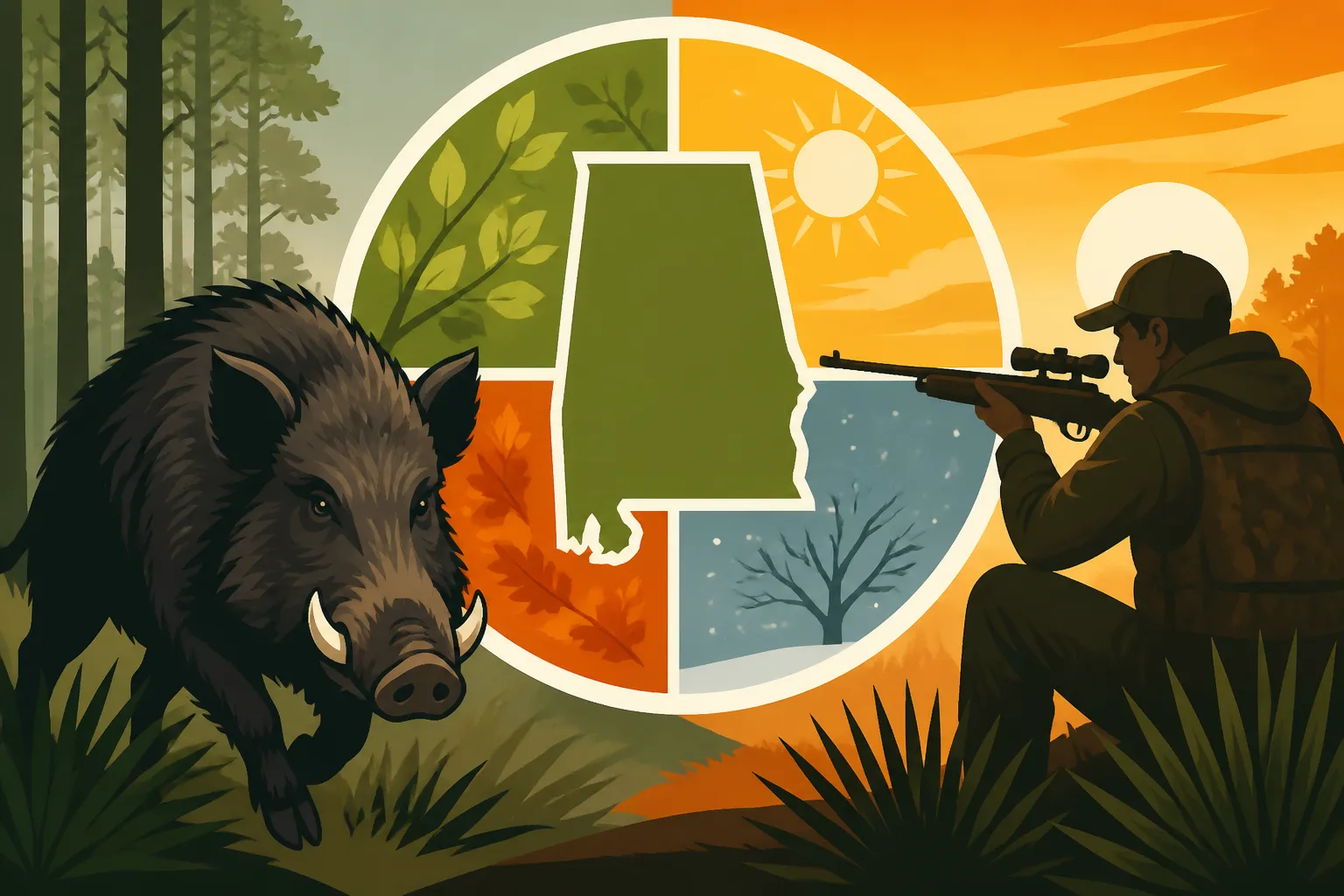
Hunting feral hogs in Alabama can truly be a year-round affair, but each season presents its own set of considerations and demands different tactics.
Summer Hunts (June-August) are defined by the oppressive heat and humidity. During these months, hogs are highly nocturnal. Your best bet will often be night hunts with thermal imaging, or very early morning and late evening sits over bait or near water sources. Think about hunting creek bottoms, shaded swampy areas, or agricultural fields at dusk and dawn. Hydration is key, and dressing in light, breathable clothing is essential.
As we move into Fall Hunts (September-November), the weather begins to cool, and hogs may start competing with deer for natural food sources like acorns. This can be a prime time for combination hunts, where you might pursue deer in the mornings and evenings and hogs during the mid-day lulls or at night. Hogs can be found foraging more actively during daylight hours as temperatures drop, making still-hunting or stand hunting over food sources more productive.
Winter Hunts (December-February) bring the coldest temperatures, which can make hogs more active during daylight hours as they seek food to fuel their metabolism. This is an excellent time for dog drives, as the cooler weather is easier on both hunters and dogs. Stand hunting over green fields or areas with leftover agricultural crops can also be very effective. The bare trees can make spotting hogs easier, but also expose hunters more.
Spring Hunts (March-May) often overlap with Alabama's popular turkey season. Hogs will be found foraging in agricultural fields or in green-up areas, coming out of the leaner winter months. Many hunters combine a spring turkey hunt with a hog hunt, taking advantage of their presence. You might even find yourself contemplating Combining a Turkey and Quail Trip in Alabama with a hog hunt to maximize your time afield. Hogs are still very active, and weather can be unpredictable, ranging from cool mornings to warm afternoons.
Post-Harvest: Handling Your Feral Hog
Successfully harvesting a feral hog is exciting, but the work isn't over. Proper post-harvest care is crucial, especially in Alabama's warm climate, to ensure the meat is good and safe to eat.
Field dressing should be done immediately after the shot. Hogs, especially larger boars, can have a strong scent that can quickly taint the meat if not handled promptly. Removing the entrails helps the carcass cool down rapidly, which is paramount in warm weather. Pay extra attention to hygiene; wear gloves and clean your tools thoroughly.
When it comes to meat processing and transport, discuss options with your outfitter. Many will offer to quarter the hog for you, making it easier to transport. Some outfitters might even have on-site processing facilities or can recommend local butchers who specialize in wild game. If you're planning to take the meat home, bring plenty of coolers and ice. For non-residents, consider how you'll get the meat home—freezing and shipping might be an option, but plan ahead. Handling a Hog After the Shot correctly ensures the best possible table fare.
While not all hog hunters are focused on trophies, some larger boars can have impressive tusks. If you're interested in keeping them, discuss this with your guide upfront. They can often help with caping the head or preparing the skull for a European mount. Just like with the meat, proper care soon after harvest is critical to preserve the integrity of the tusks and skull.
Planning Your Trip: Logistics for an Alabama Hog Hunt
A successful hog hunt, especially if you're traveling from out of state or new to guided hunts, requires a bit of logistical planning. From understanding regulations to packing the right gear, preparing beforehand will ensure a smoother, more enjoyable experience.
Licensing and Legalities
One of the beautiful things about hog hunting in Alabama is the relatively simple regulatory landscape, especially on private land. The state considers feral hogs an exotic nuisance species, so there's no closed season and no bag limit on private land. This is a stark contrast to regulated game species and emphasizes the state's desire to reduce their numbers. However, you still need to possess a valid Alabama hunting license. This will typically be a basic annual hunting license, which you can purchase online through the Outdoor Alabama website or at various license vendors. Consult Alabama Feral Hog Regulations for the most current information.
While most guided hog hunts take place on private land where rules are minimal, it's worth noting that hunting hogs on Alabama's public lands (like Wildlife Management Areas or National Forests) typically adheres to the seasons and rules set for deer or other game. This means that year-round hog hunting is primarily a private land activity. Always confirm the specific regulations with your outfitter to ensure you're compliant. They should be well-versed in Alabama's Year-Round Hog Rule on Private Land.
For specific areas, such as those within the Chronic Wasting Disease (CWD) Management Zone, there might be additional rules regarding carcass movement, even for hogs. While less common for guided hog hunts, always stay informed about any special permits or landowner permissions that might apply, although your outfitter should handle all necessary land access agreements.
Essential Gear and Clothing
Packing appropriately for an Alabama hog hunt is crucial, especially when considering the year-round nature of these hunts. The weather can swing dramatically, so versatility is key.
Clothing needs to be appropriate for the season. In summer, think light, breathable, moisture-wicking fabrics in camouflage patterns. Layers are your friend in fall, winter, and spring, allowing you to adapt to fluctuating temperatures throughout the day. Regardless of the season, durable, comfortable, and waterproof boots are a must, especially if you anticipate walking through thick brush or wet terrain, as often happens on dog drives or stalking hunts. Don't forget rain gear, as Alabama weather can be unpredictable.
When it comes to weapon choice, hogs are tough animals, so a reliable firearm or archery setup is essential. Most hunters opt for centerfire rifles in calibers like .223/5.56, .308, 6.5 Creedmoor, or larger. Shotguns with slugs are also effective at close range. If you prefer archery, a compound bow or crossbow with heavy, sharp broadheads will do the trick. Always confirm any specific caliber or equipment requirements or recommendations with your outfitter, as they know their hunting grounds best.
Beyond clothing and your weapon, there are other essential items that will enhance your hunt. A good headlamp or flashlight (with red light option for minimal disturbance) is indispensable, particularly for night hunts or navigating camp after dark. Quality insect repellent is non-negotiable from spring through fall. Bring a good cooler (or several) and plenty of ice for transporting meat, especially in warmer months. A quality knife for field dressing, binoculars for spotting, and a camera to capture memories round out the list.
Logistics for Non-Resident Hunters
If you're traveling to Alabama from another state to hunt hogs, a few additional logistical considerations come into play.
First and foremost, you'll need to understand Alabama Nonresident Hunting License Options and costs. Alabama offers various licenses, including annual and short-term options (like 3-day or 10-day), which can be convenient for a dedicated hog hunt. Purchase your license well in advance to avoid any last-minute hassles.
Next, consider your travel arrangements. If you're flying, you'll need to adhere to airline regulations for transporting firearms. Plan for airport logistics, car rentals, and driving directions to your outfitter, as many are located in more rural parts of the state. Factor in potential drive times from major airports like Birmingham, Montgomery, or Mobile.
Finally, think about lodging if it's not included in your guided package. Many top-tier outfitters offer Lodge Accommodation and Meals as part of their experience, providing a comfortable place to stay. If your outfitter doesn't, research local hotels, motels, or cabin rentals near your hunting destination. Confirm with your outfitter the closest town for amenities, gas, and supplies. A little homework on the front end will make your trip much smoother and more enjoyable.
Comparison of Hog Hunting Methods
| Method | Description | Pros | Cons | Best Season(s) | Equipment/Considerations |
|---|---|---|---|---|---|
| Stands Over Bait | Sitting in a blind/stand near a baited area | Less physical, predictable hog movement | Can be slow, heat/insects in warm weather, patience required | Year-round | Scent control, quiet clothing, comfortable seat |
| Night Hunting (Thermal) | Using thermal/night vision to hunt after dark | Highly effective in warm weather, thrilling, see more hogs | Specialized (often provided) equipment needed, low-light shooting challenges, can be expensive | Summer, Spring, Fall | Thermal/NV scope, headlamp, accurate rifle |
| Dog Drives | Using trained dogs to push hogs towards posted hunters | High action, effective in thick cover, physical | Very physical, can be chaotic, requires quick shots, less focus on "trophy" | Winter, Fall | Durable clothing, good boots, fast-handling firearm |
| Stalking/Spot & Stalk | Actively moving through terrain to locate and approach hogs | Highly rewarding, natural hunting experience, challenging | Most physical, requires high stealth & woodcraft, low success rate without experience, tough in thick cover | Year-round | Stealthy clothing, binoculars, good boots, patience, scent control |
Disclaimer
This article is for general informational purposes only and does not constitute professional advice. Laws, prices and regulations vary by location and change over time. Consult a qualified professional for guidance on your specific situation.