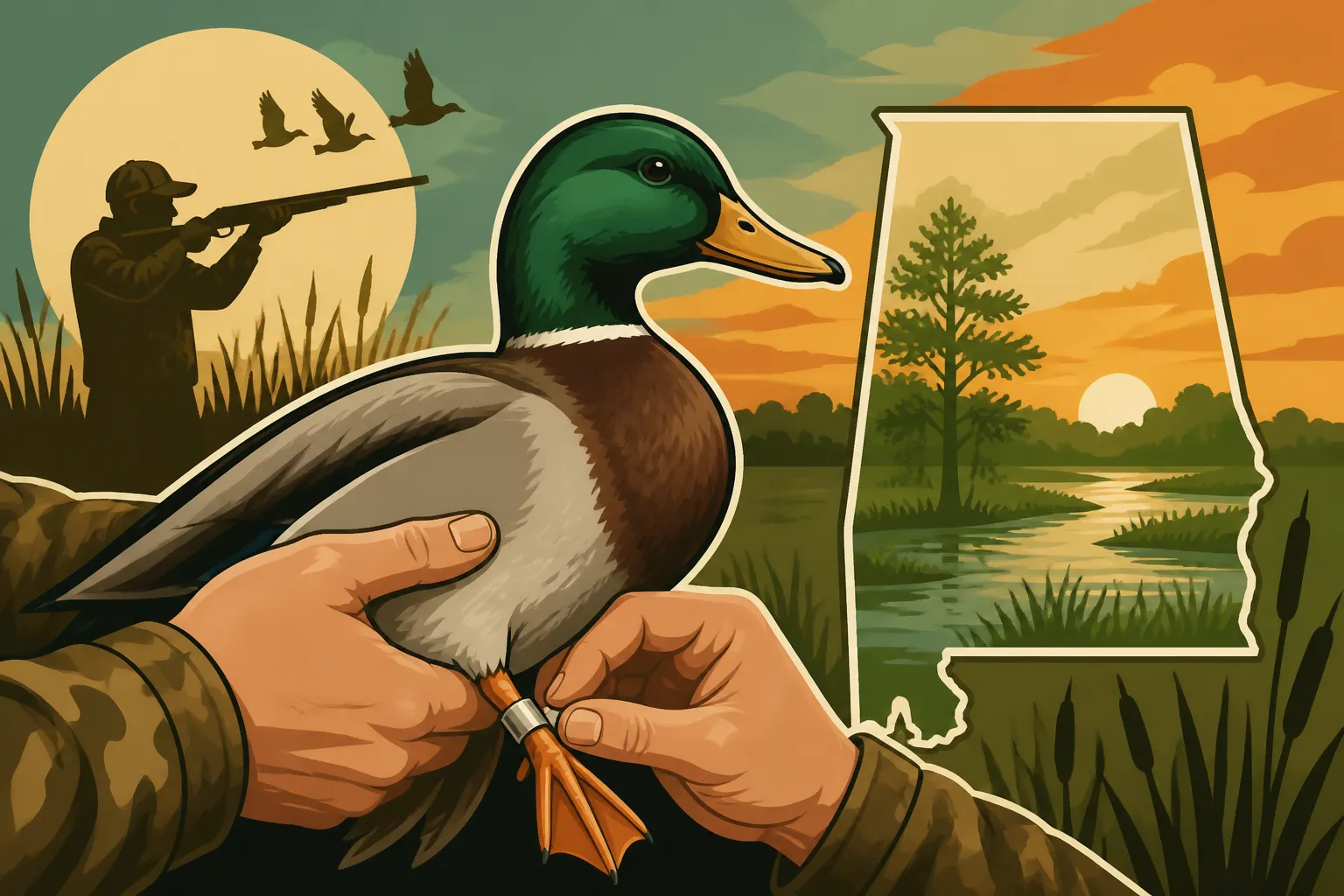
Alabama Waterfowl Banding Programs
For many Alabama waterfowl hunters, the sight of a shiny metal band on a duck or goose leg is like finding a hidden treasure. But beyond the immediate excitement, there's often a lingering question: "What does this actually mean, and what should I do with it?" This guide will pull back the curtain on Alabama's vital waterfowl banding programs, explaining how these tiny pieces of metal unlock critical data for conservation and directly influence the seasons we enjoy.
The Why Behind Waterfowl Banding in Alabama
Waterfowl banding isn't just a quirky tradition; it's a cornerstone of migratory bird management and conservation efforts across North America, including right here in Alabama. Without this detailed, long-term data, wildlife biologists would essentially be flying blind when it comes to understanding and managing our duck and goose populations. It's about more than just numbers; it's about the health, movement, and future of the birds we cherish.
Understanding Migration Patterns
One of the primary goals of banding is to unravel the mysteries of waterfowl migration. Think about it: ducks and geese travel thousands of miles between their breeding grounds in the far north and their wintering havens like Alabama's river deltas. Bands act like tiny, personalized tracking devices, allowing biologists to pinpoint specific migration routes. When a banded bird is recovered in a different location, it paints a clearer picture of how these birds move, where they stop along the way, and how different populations intermingle. This helps us understand if certain flyways are being utilized more or less than others, which is critical for making informed decisions about habitat protection and hunting regulations. For instance, if a large number of ducks banded in Manitoba are consistently recovered in the Tennessee River Valley, it highlights the importance of that Alabama region to that specific population, guiding local conservation efforts.
Assessing Population Health and Survival Rates
Banding also provides invaluable data on the survival rates and overall health of waterfowl populations. By banding a large sample of birds each year and tracking how many are recovered over subsequent seasons, biologists can estimate annual survival rates for different species, age classes, and even sexes. Are pintails surviving better than mallards? Are juvenile birds making it through their first winter? This information helps gauge the impact of various factors, from habitat changes and disease outbreaks to hunting pressure. A sudden drop in recovery rates could signal a problem on the breeding grounds or along a migratory route, prompting further investigation. This continuous monitoring is like taking the pulse of the population, giving us early warnings and allowing managers to respond proactively before a small issue becomes a full-blown crisis.
Guiding Management Decisions and Hunting Regulations
Ultimately, all this collected data funnels into making informed management decisions and setting hunting regulations. The U.S. Fish and Wildlife Service, in cooperation with state agencies like the Alabama Department of Conservation and Natural Resources (ADCNR), uses banding data to model population trends and predict future numbers. This is a complex process, but it's essential for ensuring sustainable harvest levels. For example, if data shows a particular species' population is declining, managers might recommend more restrictive bag limits or shorter seasons to allow that population to rebound. Conversely, if a species is thriving, more liberal seasons might be justified. It’s a delicate balance, and banding provides much of the scientific foundation for these decisions. It ensures that when the Alabama Duck Daily Bag Limit is set, it's not just a guess, but a calculated decision based on decades of scientific research.
How Waterfowl Are Banded in Alabama
The process of banding waterfowl is a highly specialized and coordinated effort, requiring skilled personnel and adherence to strict protocols. It's a hands-on approach to data collection that takes place both on the breeding grounds and in critical wintering areas like Alabama.
The Role of State and Federal Agencies
Waterfowl banding in Alabama is a collaborative undertaking between federal entities, primarily the U.S. Geological Survey's Bird Banding Laboratory (BBL) and the U.S. Fish and Wildlife Service, and state agencies like the ADCNR's Wildlife and Freshwater Fisheries Division. Federal permits are required for all banding activities, ensuring consistency and scientific rigor across North America. State biologists often conduct the actual banding operations in Alabama, focusing on key areas where migratory birds concentrate. They might work on national wildlife refuges like Wheeler National Wildlife Refuge Hunting Rules or Eufaula National Wildlife Refuge Hunting Rules, state wildlife management areas, or even private lands where landowners are cooperative. This partnership is crucial because the data collected here contributes to a continental database, providing a holistic view of migratory bird populations. Every band placed in Alabama is logged into this massive system, ready to contribute its story to the larger conservation narrative.
Common Banding Methods and Species Targeted
Banding typically occurs during specific times of the year, often when birds are molting and temporarily flightless, or during migration when they can be concentrated in specific areas. Here in Alabama, wintering grounds provide excellent opportunities. Biologists use various methods to capture birds safely and efficiently. Rocket nets or cannon nets are frequently deployed to catch large numbers of ducks or geese feeding in open fields. Walk-in traps, baited with corn, are also common for ducks, especially during colder months. Once captured, each bird is carefully processed. This involves recording its species, age, and sex. A small, uniquely numbered aluminum band is then carefully placed on one leg. The entire process is quick, designed to minimize stress on the bird, and the bands are lightweight and durable, not interfering with the bird's ability to fly, swim, or feed. While many species are banded, mallards, pintails, green-winged teal, wood ducks, and various goose species are common targets in Alabama, reflecting their prevalence in the state's waterfowl population.
What Hunters Should Do With a Banded Bird
Stumbling upon a banded bird during a hunt is an exciting moment, a tangible connection to the broader world of waterfowl science. But the band's true value isn't realized until a hunter takes the crucial next step: reporting it. This simple act turns a piece of metal into invaluable data.
The Importance of Reporting Your Band
When you harvest a banded duck or goose in Alabama, that band becomes a direct link to the research efforts. Reporting it is incredibly important because it completes the data loop. Without recovery data, a band is just a number. Every reported band tells biologists where a bird traveled, how long it lived, and where it was harvested. This information contributes to a massive database, helping scientists understand migration routes, survival rates, and overall population health. Ignoring a band means a lost piece of the puzzle, potentially hindering management efforts for the very species you enjoy hunting. So, don't just admire the band; act on it! It's your contribution to the future of waterfowl hunting and conservation. You can find detailed instructions on reporting through the U.S. Geological Survey's Bird Banding Laboratory website or through the toll-free number printed on most bands.
What Information You'll Receive After Reporting
The reward for reporting your band isn't just the satisfaction of contributing to science, though that's certainly a big part of it. After you submit your band information, you'll typically receive a certificate of appreciation or an email that details the fascinating journey of your bird. This certificate usually includes:
- Banding Location: The exact place (county, state, and often specific coordinates) where the bird was originally banded. This can be anywhere from the Canadian prairies to another part of the Alabama coast.
- Banding Date: The specific date the bird was initially caught and banded. This tells you how old the bird was when you harvested it, or at least how long it had been carrying its band.
- Species Information: Confirmation of the species, age class (e.g., adult male, juvenile female), and often the specific bander who handled the bird.
- Type of Band: Sometimes, if it's a special type of band (like a neck collar), that information will also be included.
This personalized feedback loop is a fantastic way to connect with the science and feel a part of the bigger conservation picture. Imagine learning your late-season mallard shot in a flooded timber hole near the Mobile-Tensaw Delta was originally banded two years earlier in Saskatchewan! It truly brings home the incredible journey these birds undertake.
The Impact of Banding Data on Alabama Waterfowl Hunting
The data gathered from waterfowl banding programs isn't just for scientists in labs; it directly influences the hunting seasons and regulations that Alabama waterfowlers experience year after year. It's the engine driving sustainable management.
Shaping Season Dates and Bag Limits
Banding data is a crucial component in determining how long Alabama's duck and goose seasons will be, and how many birds hunters can legally harvest each day. When the U.S. Fish and Wildlife Service sets annual frameworks for migratory bird seasons, they rely heavily on population models that incorporate banding recovery rates. These models help predict how populations will respond to different hunting pressures. For instance, if overall survival rates for mallards are down, due to factors learned from banding data, it might lead to a recommendation for a shorter season or a reduced bag limit across the Mississippi Flyway, which directly impacts Alabama. Conversely, strong populations supported by robust banding data could mean more generous opportunities. It's a dynamic system, constantly adjusted based on the latest scientific findings. This ensures that hunting remains a sustainable activity for generations to come, preventing overharvest and promoting healthy populations.
Connecting Alabama Hunters to a Broader Conservation Effort
Reporting a band does more than just provide data; it connects the individual Alabama hunter to a vast, continental conservation effort. Every time a hunter reports a band, they are directly participating in the scientific process that underpins waterfowl management. This isn't just about federal agencies or state biologists; it's a partnership with hunters at its core. This collaboration highlights the vital role hunters play as conservationists, providing real-time data from the field that no other method can truly replicate. It fosters a deeper appreciation for the resource and reinforces the understanding that hunting privileges come with a responsibility to protect and manage these migratory wonders. The journey of a banded bird, from a remote breeding ground to an Alabama wintering spot and finally to a hunter's game bag, encapsulates the entire conservation cycle, with hunters as essential partners in its perpetuation.
Disclaimer
This article is for general informational purposes only and does not constitute professional advice. Laws, prices and regulations vary by location and change over time. Consult a qualified professional for guidance on your specific situation.