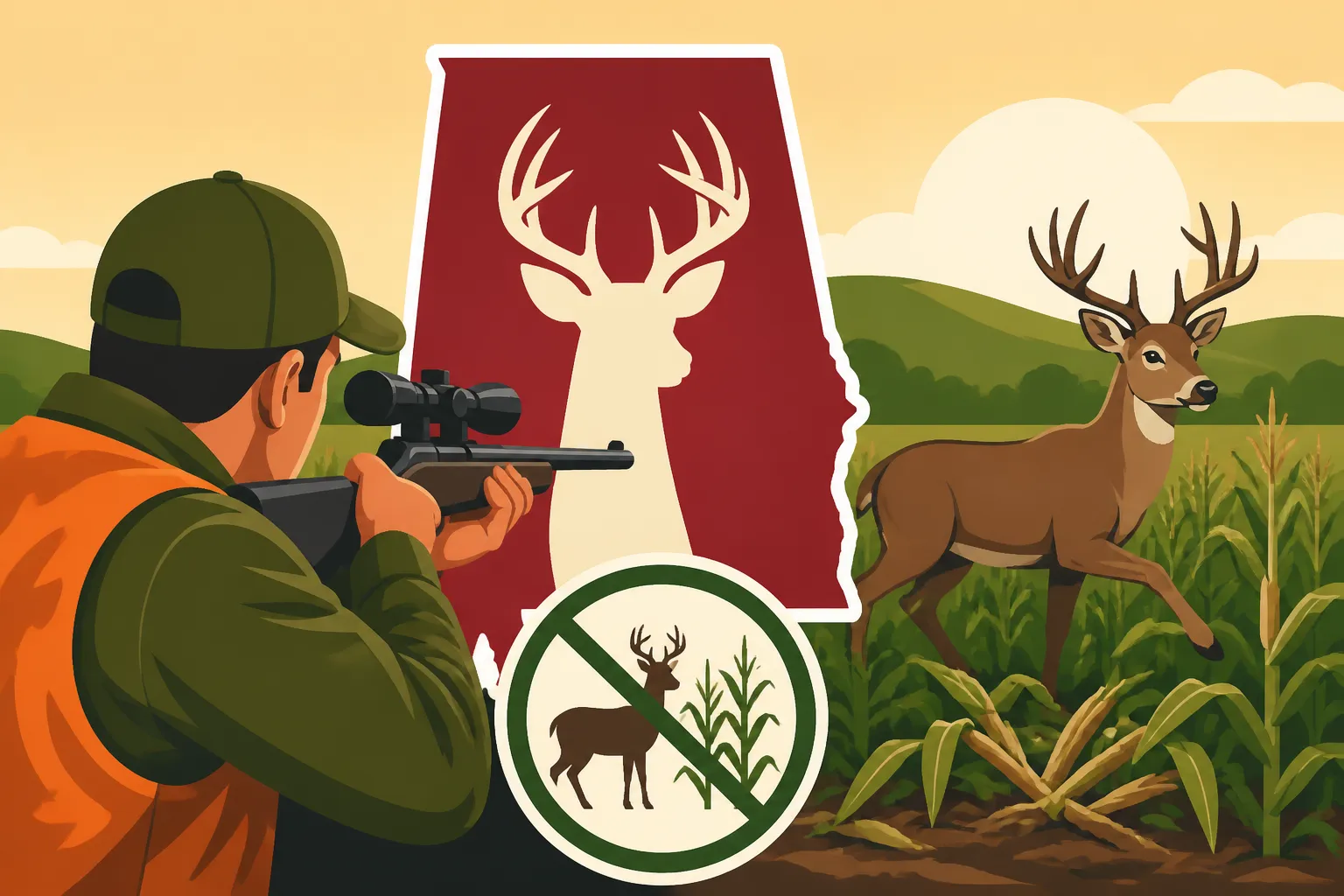
Alabama Deer Damage Permit for Farmers
If you're an Alabama farmer watching your hard work disappear under the relentless appetites of whitetail deer, you know the frustration is real. It's not just about a few missing ears of corn; it can be devastating to your livelihood. This guide is here to walk you through the specifics of the Alabama Deer Damage Permit for farmers, explaining how this vital tool can help mitigate crop depredation and protect your agricultural investments.
Understanding Alabama's Deer Damage Permit Program
The sight of a beautiful deer across your property usually brings joy to hunters, but for many Alabama farmers, it often signals a significant financial headache. Deer populations, while a cherished resource, can exert immense pressure on agricultural fields, leading to substantial crop losses. Recognizing this critical issue, the Alabama Wildlife and Freshwater Fisheries Division (ADCNR) has a specific program designed to help.
What is a Deer Damage Permit?
At its core, a Deer Damage Permit isn't just another hunting license; it's a specialized management tool issued by the ADCNR to landowners and legitimate agricultural leaseholders facing significant economic damage from deer. Think of it as a targeted intervention. This permit allows the permit holder, or designated individuals, to remove deer outside of, or in addition to, the regular hunting seasons and rules that apply to the general public. The goal is not recreational hunting, but direct depredation control, focusing on reducing the specific herd pressure causing crop loss. It's an acknowledgment that the standard harvest methods often aren't enough when deer are literally eating away at a farmer's income.
Why Farmers Need This Specific Permit
The regular Alabama deer seasons, while generous in some areas, simply aren't designed to address intense, localized agricultural damage. Deer can quickly decimate acres of young soybeans, corn, peanuts, cotton, or specialty crops like pecans and fruit trees. Farmers operate on tight margins, and even a 10-15% loss to deer can mean the difference between profit and loss for the entire season. The conventional season might only allow for a limited number of antlerless deer, or the timing might not align with when the most severe damage occurs, such as during planting or early growth stages. For instance, a farmer growing corn needs relief when the corn is young and vulnerable, not necessarily months later when the general gun season opens. This permit bridges that gap, providing a legal and regulated means for farmers to protect their crops when standard methods fall short. It's about preserving agricultural viability and ensuring food production remains sustainable.
Key Differences from Standard Hunting Seasons
It's crucial to understand that a Deer Damage Permit operates under a different set of rules than a typical hunting license. This isn't about filling your freezer or tagging a trophy buck during the normal deer season. Instead, these permits come with very specific stipulations regarding when, where, and how deer can be harvested. For example, permits often allow for night hunting with lights, which is generally prohibited during regular seasons, or allow for the taking of antlerless deer at times when only antlered deer are legal for general hunters. The number of deer that can be removed, the specific individuals authorized to do the shooting, and the reporting requirements are all precisely defined by the ADCNR and outlined in the permit itself. Unlike general hunting, where the focus is often on fair chase and recreational opportunity, this permit is purely about mitigation and control, giving farmers the flexibility needed to address an immediate threat to their livelihood. For more on the specifics of the general season, you can refer to our detailed guide on Alabama Deer Season Structure Explained.
Eligibility and Application Process for the Permit
Getting a Deer Damage Permit isn't as simple as walking into a probate office and buying a license; it's a more involved process because it grants extraordinary privileges outside of regular hunting regulations. The state needs to verify legitimate agricultural damage before issuing such a permit.
Who Qualifies for a Deer Damage Permit?
To qualify for an Alabama Deer Damage Permit, you typically need to demonstrate several key things to the ADCNR. First and foremost, you must be a landowner or a bonafide agricultural leaseholder directly involved in farming activities. This isn't for hobby gardeners with a few deer eating their tomatoes, but for operations where deer depredation poses a significant economic threat. You'll need to show clear evidence of substantial agricultural damage caused by white-tailed deer. This might include photographic evidence of damaged crops, yield loss assessments, or even detailed records of past mitigation efforts that proved insufficient. The ADCNR biologists will want to see which specific crops are being affected (corn, soybeans, peanuts, wheat, horticultural crops, etc.), the extent of the damage, and how it impacts your farming operation. They want to ensure the problem is genuinely deer-related and not, for example, caused primarily by feral hogs, though Alabama Feral Hog Regulations address those issues separately. This isn't a casual request; it's for serious, documented problems.
Step-by-Step Application Guide
The application process typically begins with a phone call or email to your local Alabama Wildlife and Freshwater Fisheries Division district office or the ADCNR's main wildlife section. You'll explain your situation, detailing the damage you're experiencing. They'll likely ask you to fill out an application form, which will require information about your property, the types of crops grown, the estimated extent of damage, and any previous attempts to deter deer. Once the application is submitted, the crucial next step is a site visit by an ADCNR wildlife biologist. This biologist will come to your farm to personally inspect the damage. It's their job to verify the extent of the problem and confirm that deer are indeed the primary culprits. They might also discuss your land management practices and suggest other non-lethal deterrents. After the inspection, if the biologist confirms significant damage, they will recommend whether a permit should be issued, along with specific conditions. This careful approach ensures that these special permits are only granted where genuinely needed.
What to Expect During the Inspection
When an ADCNR biologist comes out to your property, be prepared to walk them through your fields and show them the damage firsthand. They're looking for clear, undeniable evidence. This could mean showing them rows of corn where every stalk has been browsed, soybean plants clipped down to the stem, or young pecan trees stripped of their leaves. They’ll likely ask you:
- How long has this damage been occurring?
- What percentage of your crop do you estimate is lost to deer?
- What non-lethal methods (fencing, repellents, scare devices) have you already tried, and why were they ineffective?
- What specific crops are most affected?
- What is the size of your agricultural operation?
The biologist is there to assess the situation objectively. They're looking for patterns, fresh sign, and the overall impact on your livelihood. It’s also an opportunity to discuss the local deer population, which our guide on Alabama Deer Population Estimate provides context for. Be honest and thorough in your explanations. Their assessment is critical in determining whether a permit is granted and what its specific parameters will be, so clear communication and tangible evidence are key to a successful inspection.
Operating Under an Alabama Deer Damage Permit
Once you've successfully navigated the application and inspection process and received your Deer Damage Permit, the real work of managing depredation begins. However, it's vital to remember that this isn't a blanket authorization for unlimited deer removal. These permits come with strict rules and responsibilities.
Season Dates, Bag Limits, and Methods Allowed
Each Deer Damage Permit is highly individualized, tailored to the specific situation on your farm. This means the permit will explicitly outline the "season dates" – the exact timeframe during which deer can be removed under the permit. This might be outside the regular state hunting calendar, perhaps during crucial planting or growing phases. Crucially, the permit will also specify the bag limits, detailing exactly how many deer, and often what sex (usually antlerless), can be harvested to alleviate the damage. It's not uncommon for these permits to allow for methods typically prohibited during general seasons, such as hunting at night with artificial lights. This is particularly effective for controlling deer that feed primarily after dark. However, every authorized method, be it specific firearms, crossbows, or the use of lights, will be clearly stipulated on your permit. Any deviation can lead to serious legal repercussions, so understanding and adhering to your specific permit's conditions is non-negotiable. Our guide on Night Hunting Hogs With Lights on Private Land can offer some insights into the practicalities of spotlighting, though deer rules will differ.
Reporting Requirements and Compliance
Operating under a Deer Damage Permit carries a significant responsibility for accurate and timely reporting. The ADCNR needs to track the effectiveness of these permits and monitor harvest numbers to ensure responsible wildlife management. Your permit will dictate how and when you must report each deer harvested. This typically involves using the state's Game Check system, similar to how hunters report deer during the regular season, but often with additional codes or processes specific to depredation permits. You might be required to report within 24 or 48 hours, detailing the date, time, sex, and location of the harvest. Failure to comply with these reporting requirements can result in fines, revocation of your permit, and potentially being ineligible for future permits. It’s not just a bureaucratic formality; it’s a critical part of the state’s efforts to manage white-tailed deer populations. Always double-check your permit for the specific reporting instructions, and for more information on general reporting, refer to Reporting a Deer Through Game Check and The Alabama Deer Reporting Deadline.
Best Practices for Effective Damage Control
Simply taking out a few deer under a permit might not be a long-term solution. For truly effective damage control, consider an integrated approach. While the permit allows for direct removal, think about pairing it with other deterrents. Temporary electric fences can be very effective around high-value crops, even if just for critical growth stages. Noise deterrents or certain repellents can also be explored, though their effectiveness varies.
Furthermore, consider timing your permit harvests strategically. Focus on removing deer when damage is most severe, often during the spring and early summer when crops are most vulnerable. Coordinate efforts with any hunters you allow on your property during the regular season to ensure they also target antlerless deer, contributing to overall population control. You might even explore the options outlined in Alabama Landowner Deer Permit Rules for additional tools. Ultimately, utilizing the harvested deer for personal consumption or donation (where legal) can provide a beneficial outcome from a necessary control measure.
Comparing Deer Damage Permit to General Hunting Season
To help clarify the distinctions, here's a quick comparison of Deer Damage Permits and the regular hunting season in Alabama:
| Feature | Deer Damage Permit (DDP) | General Hunting Season |
|---|---|---|
| Purpose | Agricultural depredation control; economic protection | Recreation, population management, food harvest |
| Eligibility | Documented significant agricultural damage by deer | Valid hunting license, hunter education (if applicable) |
| Season Dates | Specific dates outlined on permit, often outside regular season | Set by ADCNR regulations for specific zones/periods |
| Bag Limits | Specific number/sex of deer outlined on permit (e.g., antlerless) | Set by zone, often 3 bucks, specific antlerless rules |
| Hunting Methods | May allow special methods (e.g., night hunting with lights) | Generally daylight only, specific legal firearms/bows |
| Reporting | Mandatory, specific process (often Game Check with DDP codes) | Mandatory Game Check, usually 48 hours for deer |
| Primary Goal | Reduce economic loss | Fair chase, recreational experience |
| Who Can Harvest | Permit holder and designated individuals | Licensed hunters |
| Requires Biologist Visit | Yes, for damage assessment and verification | No, self-regulated within rules |
Beyond the Permit: Long-Term Deer Management Strategies
While an Alabama Deer Damage Permit is a crucial short-term solution for immediate crop protection, effective agricultural deer management often requires a broader, more integrated approach. Thinking long-term can help mitigate future damage and foster a healthier balance between wildlife and agriculture.
Habitat Modification to Reduce Pressure
One proactive strategy is to modify the habitat around your fields to naturally deter deer from vulnerable areas. This doesn't mean clear-cutting everything, but rather thinking about where deer feel safe and where they access your crops. Consider establishing buffer zones of less palatable vegetation between woods and fields. Planting crops that deer prefer, like clover or winter wheat, in designated areas away from your cash crops can sometimes draw them away from more valuable fields. Strategic placement of dense cover or tall grasses can also create visual barriers. Improving native browse in wooded areas adjacent to your fields can offer an alternative food source, potentially reducing the temptation of your cultivated crops. It's about subtle manipulation of the landscape to redirect deer movement, making your valuable crops less appealing or harder to access. For larger landowners, engaging in practices that promote healthy forest and understory growth can also make your natural areas more attractive to deer, spreading out their impact.
Integrated Pest Management Approaches
Just like you manage other agricultural pests, deer can be part of an integrated pest management (IPM) strategy. This involves combining multiple tactics rather than relying solely on one. Your Deer Damage Permit is a key part of this, offering a direct control measure. However, consider it alongside non-lethal methods such as fencing – particularly temporary electric fencing during critical growth stages. Propane cannons or other scare devices, rotated regularly to prevent habituation, can also be effective, especially at night. Chemical repellents, while requiring reapplication after rain, can sometimes provide a deterrent effect on specific crops. The most successful IPM plans for deer involve a rotating combination of these methods, adapted to the specific pressures and times of year. It’s a dynamic process that requires observation and flexibility, but it's often more sustainable than a single-pronged approach. Understanding the broader deer patterns, as discussed in White-Tailed Deer Across Alabama, is key to this integrated thinking.
Working with Neighbors and Local Biologists
Deer don't recognize property lines, so their management often requires a community-wide effort. If your neighbors are also experiencing deer damage, coordinating your efforts can yield much better results than individual actions. Discuss options like synchronized hunting pressure, shared fencing projects, or even a collective approach to securing Deer Damage Permits. Local ADCNR biologists are invaluable resources; they understand the deer populations in your specific area and can offer expert advice tailored to your situation. They can provide insights into local herd dynamics, advise on the best timing for control measures, and even connect you with other landowners facing similar challenges. Building these relationships, both with your neighbors and with state wildlife professionals, is paramount for creating a sustainable long-term strategy to manage deer damage on agricultural lands. Plus, staying informed on larger issues like How Many Deer Have Tested CWD-Positive Since 2022 is important for all landowners in Alabama.
Disclaimer
This guide is for informational purposes only and does not constitute legal advice. While we strive to provide accurate and up-to-date information, hunting regulations and permit requirements in Alabama can change. Always consult the official Alabama Department of Conservation and Natural Resources (ADCNR) website or contact your local wildlife office directly for the most current and specific regulations pertaining to Deer Damage Permits or any hunting activities. Adherence to all state and federal laws is the responsibility of the individual.