Alabama Feral Hog Regulations
The relentless expansion of feral hogs across Alabama is more than just a nuisance; it's a genuine crisis for landowners, farmers, and even our native wildlife. These destructive animals cause millions in damages annually, tearing up fields, polluting water sources, and preying on fawns and turkey poults. Understanding Alabama's specific regulations for hunting and trapping these resilient invaders is absolutely crucial if you want to be part of the solution and protect your property or enjoy ethical hunting. This guide will meticulously break down everything you need to know, from licensing to legal hunting methods, to help you effectively manage feral hog populations.
The Relentless Problem of Feral Hogs in Alabama
Let's be honest, if you've spent any time outdoors in Alabama, you've probably seen the signs of feral hogs, or maybe even seen the hogs themselves. Their impact goes far beyond just a few overturned dirt patches; it's a full-blown ecological and economic assault on our state. They reproduce at an astounding rate, adapt to almost any environment, and have virtually no natural predators here, creating a perfect storm for population explosions.
Devastating Ecological Impact
The ecological damage caused by feral hogs is heartbreaking to witness. These aren't just wild pigs; they're an invasive species with a voracious appetite and an insatiable urge to root. They tear up fragile wetland ecosystems, destroying vital habitats for native species. Imagine a pristine forest floor, rich with native plants and insects, only to find it churned into a muddy, barren wasteland overnight. That's the work of a sounder of hogs. They compete directly with native wildlife like deer, turkeys, and even squirrels for crucial food sources, especially acorns, which are a primary energy source for many species. Beyond just competing for food, they're also opportunistic predators. There are countless documented cases of feral hogs preying on fawns, turkey nests, and even small game like rabbits and quail. This predation hits our native game populations hard, making it tougher for them to thrive. Their wallowing in streams and ponds also degrades water quality, spreading pathogens that can impact fish and other aquatic life, creating a ripple effect through the entire ecosystem.
Massive Economic Burden on Landowners and Farmers
For Alabama's farmers and landowners, feral hogs are an economic nightmare. The damage to agricultural crops is staggering. A single sounder can destroy an entire field of corn, peanuts, or soybeans in a matter of hours, wiping out a season's worth of hard work and investment. We're talking millions of dollars in losses across the state every year. Beyond crop destruction, they also damage infrastructure. Fences are rooted up, irrigation systems are broken, and roads or trails on hunting leases are rendered impassable by their continuous digging. Just the cost of repairing fences alone can be a significant burden for property owners. Ranchers face the added stress of hogs preying on young livestock, especially calves, further eating into their profits. It's a constant, uphill battle for these folks, and it highlights why aggressive management and effective hunting are not just encouraged, but often necessary for survival.
General Regulations for Hunting Feral Hogs in Alabama
Given the widespread destruction, Alabama's approach to feral hog regulations is, thankfully, quite liberal. The state recognizes the urgency of controlling these populations, and the rules reflect a strong encouragement for hunters and landowners to take action. However, "liberal" doesn't mean "no rules," and understanding these baseline regulations is your first step.
Year-Round Season and No Bag Limit
This is perhaps the most significant difference between feral hogs and other game animals in Alabama: there is essentially no closed season and no bag limit on private lands. This means if you have permission to hunt on private property, you can pursue hogs 365 days a year, 24 hours a day, and you can harvest as many as you can ethically take. This flexibility is a direct response to their prolific breeding cycle, which sees sows capable of having multiple litters a year. On public lands, however, the rules are often different and more restrictive. We’ll dive deeper into that distinction shortly, but for now, remember that on your own land or with landowner permission on private land, you have a year-round, open season to hunt these destructive animals. It’s a powerful tool in the fight against them.
Licensing Requirements for Hog Hunting
Just because feral hogs are considered a nuisance doesn't mean you can skip your hunting license. If you're going to hunt hogs, you still need to possess a valid Alabama hunting license, unless you're exempt by law (for instance, certain landowners hunting on their own property, or youth under 16). For residents, this typically means an Alabama All-Game Hunting License. Non-residents will need to purchase the appropriate non-resident license, which could be an annual, 10-day, or 3-day option depending on their trip length. It's essential to check the specific requirements based on your residency and age. Even though hogs aren't "game animals" in the traditional sense, hunting them falls under the general umbrella of hunting activity, and thus, a license is required to ensure you're a legal participant in any hunting pursuit in the state. Always carry proof of your license while afield, whether it's the physical card or proof on your phone. If you're unsure about specific license costs or options, you can find details on "Alabama Hunting Licenses and What They Cost" for a more in-depth look.
Navigating Public Versus Private Land Regulations
The biggest trap (pun intended) hunters often fall into with feral hog regulations is assuming the "year-round, no limit" rule applies everywhere. It absolutely does not. The distinctions between hunting on private land versus public land, especially Wildlife Management Areas (WMAs) and National Forests, are critical and often where people accidentally run afoul of the law.
Private Land Freedoms and Landowner Permission
On private land, with the landowner's explicit permission, you have the most latitude when it comes to hog hunting. Not only is the season year-round with no bag limit, but many of the equipment restrictions that apply to deer hunting seasons (like specific caliber rules or hunting hours) are often relaxed. You can use night vision, thermal imaging, and artificial lights to hunt hogs at night on private land, which is incredibly effective given their nocturnal habits. You can also use various types of bait and trapping methods, which we'll discuss further down. The key, however, is landowner permission. Without it, you are trespassing, which carries serious penalties. It's not enough to assume; you must have clear, documented permission. This often means a signed agreement, especially if you're not a close friend or family member. Remember, private land rules are generally designed to empower the landowner to protect their property from the damage these animals inflict, hence the broad freedoms. This is why you'll often see active hog control efforts on farms, where landowners are often desperate for help.
Wildlife Management Area (WMA) Specifics
Hunting hogs on Alabama's WMAs is a different ballgame entirely. These areas are managed by the Alabama Department of Conservation and Natural Resources (ADCNR) and often have very specific, and sometimes restrictive, regulations for hog hunting. While hogs are still generally considered nuisance animals on WMAs, they are typically only open for harvest during established open hunting seasons for other game, like deer or small game. You cannot just go hog hunting year-round on a WMA whenever you please. Furthermore, specific methods might be restricted. For example, night hunting with lights, thermal, or night vision is usually prohibited on WMAs. Baiting is also almost universally forbidden. Always, and I mean always, check the current regulations for the specific WMA you plan to hunt. The ADCNR website or the Outdoor Alabama app are your best resources. Each WMA has its own unique set of rules, often detailed in pamphlets or online summaries. Failing to check could lead to a citation, loss of hunting privileges, or even confiscation of equipment. It's a huge frustration for many hunters who see hogs on WMAs but can't pursue them outside of specific windows, but these rules are in place to manage all species and user groups effectively.
National Forest Hunting Rules
Hunting in Alabama's National Forests, such as the Talladega, Bankhead, or Conecuh National Forests, also falls under specific rules that differ from private land. While generally more open than WMAs in terms of hog harvest during open seasons, they still carry restrictions. For instance, the use of bait is usually prohibited. Night hunting for hogs is typically not allowed in National Forests. You'll need to adhere to the same firearm and archery regulations as you would for deer or other game during their respective seasons. Like WMAs, you cannot simply hunt hogs year-round with any method. You must be in compliance with general hunting seasons and methods for other game animals for hogs to be legally harvested. The US Forest Service and ADCNR collaborate on these regulations, and it's imperative to consult both the Alabama Hunting & Fishing Digest and any specific National Forest rules or closure notices before heading out. Using tools like the GoHunt app or the Outdoor Alabama app can be incredibly helpful for understanding boundaries and specific regulations when you're planning a trip to these vast public lands. For a deeper dive into hunting these areas, you might find our guide on "Talladega National Forest Hunting" or "William B. Bankhead National Forest Hunting" useful.
Permissible Hunting Methods and Equipment
Once you've nailed down where you're hunting and what season it is, the next question is, "How can I actually hunt these things?" Alabama offers a variety of methods for taking feral hogs, but again, the rules can change dramatically depending on whether you're on private or public land.
Firearms, Archery, and Air Rifles
For most hunters, traditional methods like firearms and archery are the go-to.
- Firearms: On private land, during daylight hours, you can use pretty much any legal firearm to hunt hogs. This includes centerfire rifles, shotguns, and rimfire rifles. The caliber restrictions that apply to deer season in some areas usually don't apply to hogs outside of deer season on private land. This flexibility allows hunters to use whatever they deem most effective for quickly dispatching a hog. On public lands (WMAs, National Forests), you generally must adhere to the legal firearms for the current open season. If it's gun deer season, use legal deer firearms. If it's small game season, you might be limited to rimfire or shotguns, depending on the WMA. Always verify!
- Archery Equipment: Bows and crossbows are highly effective for hog hunting. On private land, archery equipment can be used year-round. On public land, it's typically restricted to open archery seasons for deer or other game. Remember, Alabama does have "Crossbow Rules During Alabama Archery Season" for deer, but for hogs outside of deer season on private land, you generally have more leeway.
- Air Rifles: High-powered air rifles are increasingly popular for hog hunting, especially for those who prefer less noise or are hunting in areas where projectile distance is a concern. Alabama allows the use of air rifles for hunting game species, and this generally extends to feral hogs. Again, on private land, you have more freedom. On public land, ensure that air rifle use is permitted for the current open season you are hunting under.
Night Hunting with Lights and Thermal
This is where private land really shines for hog hunters. Feral hogs are largely nocturnal, especially in areas with hunting pressure.
- Artificial Lights: On private land, you can absolutely use artificial lights (spotlights, weapon-mounted lights) to hunt hogs at night. This is a game-changer for control efforts, as it allows hunters to target hogs when they are most active.
- Night Vision and Thermal Imaging: These advanced optics have revolutionized night hunting. On private land, the use of night vision and thermal imaging equipment is perfectly legal for hunting feral hogs. This technology gives hunters a significant advantage, allowing them to spot hogs that would be invisible to the naked eye, leading to more successful harvests. However, this is almost universally prohibited on public lands. Never assume you can use these tools on WMAs or National Forests at night. For specific tactics, you might want to look into "Night Hunting Hogs With Lights on Private Land".
Using Dogs for Hog Hunting
For many Alabamians, using dogs to hunt hogs is a cherished tradition and an incredibly effective method.
- Catch Dogs and Bay Dogs: The regulations generally permit the use of dogs for hunting feral hogs, both bay dogs (which corner and hold the hog at bay) and catch dogs (which engage and hold the hog for the hunter to dispatch). This is a high-octane form of hunting that requires well-trained dogs and experienced handlers.
- Private Land: On private land, running dogs for hogs is widely accepted and often encouraged by landowners desperate for control.
- Public Land: On WMAs and National Forests, the use of dogs for hog hunting is much more restricted. Some WMAs may allow it during specific open dog-hunting seasons for deer or small game, while others may prohibit it entirely. Again, check the individual WMA regulations carefully. The use of dogs on National Forests might also be restricted to certain areas or times. You'll find more details on this active pursuit in our article "Running Dogs on Alabama Feral Hogs".
| Method | Private Land Legality (Year-Round) | Public Land Legality (During Open Seasons) | Notes |
|---|---|---|---|
| Firearms | Yes | Yes (season-dependent calibers) | Adhere to current open game season rules for caliber/weapon type on public land. |
| Archery | Yes | Yes (during archery seasons) | |
| Air Rifles | Yes | Yes (season-dependent) | Check WMA/NF rules for specific air rifle acceptance. |
| Night Hunting (Lights, Thermal) | Yes (Highly effective) | No (Generally prohibited) | Critical for effective control on private land. |
| Hunting with Dogs | Yes (Traditional & effective) | Limited (check WMA/NF specific rules) | Requires trained dogs and experience. |
| Trapping | Yes | Limited (special permits/scenarios) | One of the most effective long-term control methods. |
| Baiting | Yes | No (Generally prohibited) | Can be highly effective on private land, often used with traps. |
Feral Hog Trapping Regulations
While hunting is exhilarating and effective for individual hogs, trapping is often the most efficient method for reducing large numbers of feral hogs over time, especially when targeting entire sounders. Alabama's regulations reflect this by generally allowing trapping, but with some important caveats, particularly regarding public land.
Legal Trap Types and Placement
For trapping feral hogs on private land in Alabama, you have a lot of flexibility.
- Common Trap Designs: Popular choices include large, sturdy box traps, corral traps with rooter gates, or drop traps. The goal is to capture multiple hogs, ideally an entire sounder, at once. Most commercial and DIY trap designs are legal.
- Baiting Traps: You can absolutely use bait to draw hogs into your traps. Corn is the classic choice, often fermented to make it even more attractive. You can even create a long-term "bait site" to get hogs accustomed to feeding in a certain area before setting up your trap. For tips on attracting hogs, check out "Building and Freshening a Hog Bait Site".
- Placement: Traps should be placed in areas of known hog activity, like rooting areas, travel corridors, or near water sources. Ensure the trap is on your property or property where you have explicit permission.
- Identification: While not always explicitly required for feral hog traps on private land, it's a good practice (and sometimes required for furbearer trapping) to have your name and contact information clearly visible on your traps. This prevents confusion if someone else discovers your trap.
Checking Requirements and Dispatch
Once you've set your traps, what are your responsibilities?
- Checking Frequency: Alabama law generally requires traps (especially for furbearers, which can sometimes incidentally catch hogs) to be checked within a certain timeframe, typically every 24 to 36 hours. While feral hog-specific checking requirements aren't as stringent as for furbearers, it's ethically crucial to check your hog traps frequently. Leaving animals in traps for extended periods, especially in hot Alabama weather, is inhumane and can lead to stress, injury, or death from exposure before you arrive.
- Dispatching Trapped Hogs: Once hogs are trapped, they must be dispatched humanely. This typically means a quick, clean shot with a firearm to the head. Live transport of feral hogs is heavily restricted and generally illegal without special permits due to the risk of spreading disease and establishing new populations. The general rule is: if you catch them, you dispatch them on-site.
- Live Capture and Relocation: This is a big no-no for the average citizen. Alabama has very strict regulations against the live capture and relocation of feral hogs, mainly to prevent the spread of Chronic Wasting Disease (CWD) and other diseases, as well as to avoid introducing hogs to new areas. The only exception would be for licensed trappers or wildlife professionals operating under specific permits from the ADCNR. For more on what is used for trapping, refer to "What Hog Trappers Use in Alabama".
Public Land Trapping Restrictions
Trapping hogs on public lands in Alabama is generally not allowed for the average citizen. WMAs and National Forests typically prohibit individuals from setting traps for hogs. There might be rare exceptions where the ADCNR or Forest Service conducts their own trapping programs, or permits specific cooperators for control, but this is not for general public access. The reasons are primarily safety (avoiding incidental capture of protected species or domestic animals, and preventing tampering), and management control. If you have any doubt, always assume trapping is prohibited on public land unless you have explicit, written permission or a permit from the managing authority.
Post-Harvest Responsibilities and Considerations
So, you've successfully hunted or trapped a feral hog. Congratulations! That's one less destructive animal. But your responsibilities don't end there. Proper handling of the carcass is not only ethical but also increasingly important due to disease concerns like Chronic Wasting Disease (CWD).
No Game Check Requirement for Hogs
Unlike deer and turkeys, which require mandatory harvest reporting through Alabama's Game Check system, there is currently no mandatory "game check" or reporting requirement for harvested feral hogs. This simplifies the process for hunters, reflecting the state's desire to encourage maximum harvest. You don't need to tag them or log them into the system. However, it's always a good idea to keep track of your own harvest numbers, especially if you're managing a property or want to contribute to local data. While there's no official reporting, voluntarily noting your success can help you understand hog activity trends on your hunting grounds.
Proper Carcass Disposal and Disease Prevention
Proper disposal of hog carcasses is critical for preventing the spread of diseases and minimizing environmental impact.
- On-Site Disposal: If you're on private land, the most common and often recommended method is to bury the carcass deeply or move it to an out-of-the-way location where scavengers can access it away from human activity. The key is to get it away from water sources and roads.
- Disease Concerns: Feral hogs can carry a host of diseases, including brucellosis, pseudorabies, and even leptospirosis, some of which can be transmitted to humans, livestock, and other wildlife. When field dressing a hog, always wear gloves and practice good hygiene. Avoid contact with blood and organs if you have open cuts.
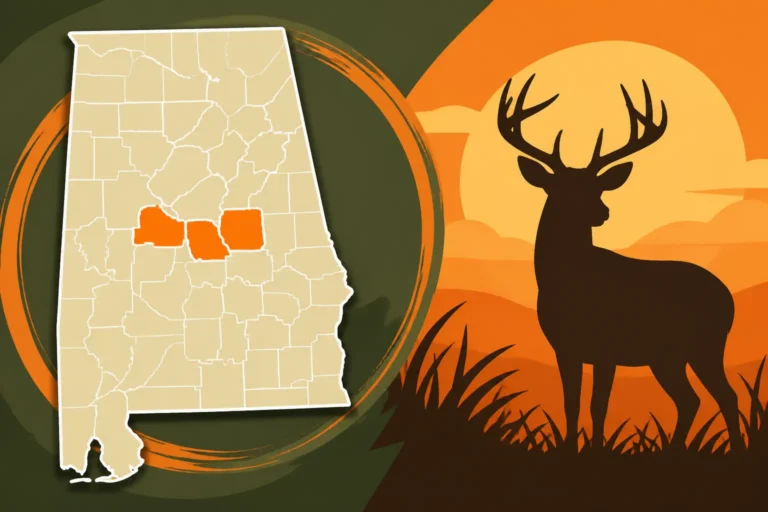
- CWD and Carcass Movement: While CWD is primarily a deer disease, the ADCNR has stringent rules regarding the movement of deer carcasses out of the Chronic Wasting Disease (CWD) Management Zone. While hogs aren't currently considered a primary carrier for CWD, it's always wise to exercise caution, especially if you're hunting in or near counties like Lauderdale, Colbert, and Franklin where CWD has been detected in deer. The safest practice, if you're outside a CWD zone, is to process the animal on-site and only transport boned-out meat, cleaned skull plates, or taxidermy-prepared parts. This significantly reduces the risk of inadvertently spreading diseases or pathogens. You can find more details on "Alabama Carcass Movement Restrictions" for CWD. For general handling, our guide on "Handling a Hog After the Shot" provides good advice.
Processing Your Harvest for Consumption
Many hunters enjoy eating feral hog meat, and it can be absolutely delicious when properly handled.
- Quick Cooling: Just like any game animal, getting the meat cooled quickly after harvest is paramount, especially in Alabama's warm climate. Field dress the hog promptly to allow the body heat to escape.
- Butchering: You can butcher the hog yourself at home or take it to a professional game processor. Given the disease risks, proper hygiene during butchering is crucial. Ensure all surfaces are clean and sanitize everything thoroughly afterward.
- Cooking: Always cook feral hog meat thoroughly to an internal temperature of at least 160°F (71°C) to kill any potential parasites or bacteria. Unlike farmed pork, you should never eat wild hog rare or medium-rare.
- Taste Considerations: The taste of feral hog can vary greatly depending on its diet, age, and sex. Younger, smaller hogs (especially sows) tend to have milder, more palatable meat. Large, old boars, especially during the rut, can have very strong, gamey meat that some find unappetizing. Knowing this beforehand can help manage expectations.
The Future of Feral Hog Management in Alabama
The fight against feral hogs in Alabama is a long-term battle, not a one-and-done solution. Their incredible reproductive rates and adaptability mean that constant, coordinated effort is required. State agencies, researchers, and landowners are continually looking for more effective ways to manage these populations and mitigate their damage.
Ongoing Research and Control Programs
The ADCNR, along with universities like Auburn and other partners, is actively involved in research to better understand feral hog behavior, population dynamics, and the most effective control methods. This includes studying movement patterns, reproductive cycles, and the efficacy of different trapping and baiting strategies. Furthermore, the state often coordinates large-scale control programs, sometimes involving federal agencies like USDA Wildlife Services, especially in critical agricultural areas or sensitive ecological zones. These programs might utilize specialized trapping equipment, aerial gunning, or targeted removal efforts to achieve significant localized population reductions. The goal isn't necessarily eradication, which is largely considered impossible, but rather effective population management to reduce their overall impact.
Coordinated Efforts and Landowner Incentives
Recognizing that individual efforts, while important, often aren't enough, there's a growing emphasis on coordinated control. This means neighboring landowners working together to implement consistent trapping and hunting strategies across larger areas, preventing hogs from simply moving from one property to the next. The ADCNR frequently provides educational resources and workshops to landowners, teaching them the most effective control techniques. There's also discussion around landowner incentives, though they are not widespread, to encourage even greater participation in hog control. These might include cost-share programs for trapping equipment or educational grants. Resources like the GoHunt app are also useful for coordinating with neighbors or finding areas that could benefit from organized efforts due to high hog populations, allowing hunters to contribute to broader management goals.
Potential Changes in Regulations
Given the dynamic nature of feral hog populations and ongoing research, it's always possible that Alabama's regulations could evolve. For example, if new diseases emerge or if certain control methods prove exceptionally effective (or conversely, detrimental), the ADCNR might adjust rules. Hunters and landowners should make it a habit to regularly check the official Outdoor Alabama website or consult the current Alabama Hunting & Fishing Digest each season. Regulatory changes are typically well-publicized, but it's ultimately the individual's responsibility to stay informed to ensure compliance. The state is committed to fighting this invasive species, and that commitment may lead to further adaptations in how we're all allowed to engage in "Alabama Feral Hog Regulations."
Disclaimer
The information provided in this guide is intended for educational purposes only and is based on general Alabama hunting regulations. Hunting laws and regulations can change frequently. It is the sole responsibility of the individual hunter to verify all current regulations with the Alabama Department of Conservation and Natural Resources (ADCNR) or other appropriate governing bodies before engaging in any hunting or trapping activities. Always prioritize safety and ethical hunting practices.