Hunting a Ridge-Top Saddle for Rutting Bucks
There are few things more frustrating than spending hours in a stand, knowing the rut is on, but seeing nothing but squirrels. Those big Alabama bucks are on the move, but they're not just running willy-nilly; they're using specific travel corridors, and understanding how to identify and hunt a ridge-top saddle during the rut can absolutely transform your success. This guide is all about breaking down why these subtle terrain features are so crucial and how you can effectively target them to intercept those lovesick whitetails.
Understanding Ridge-Top Saddles and Their Appeal to Rutting Bucks
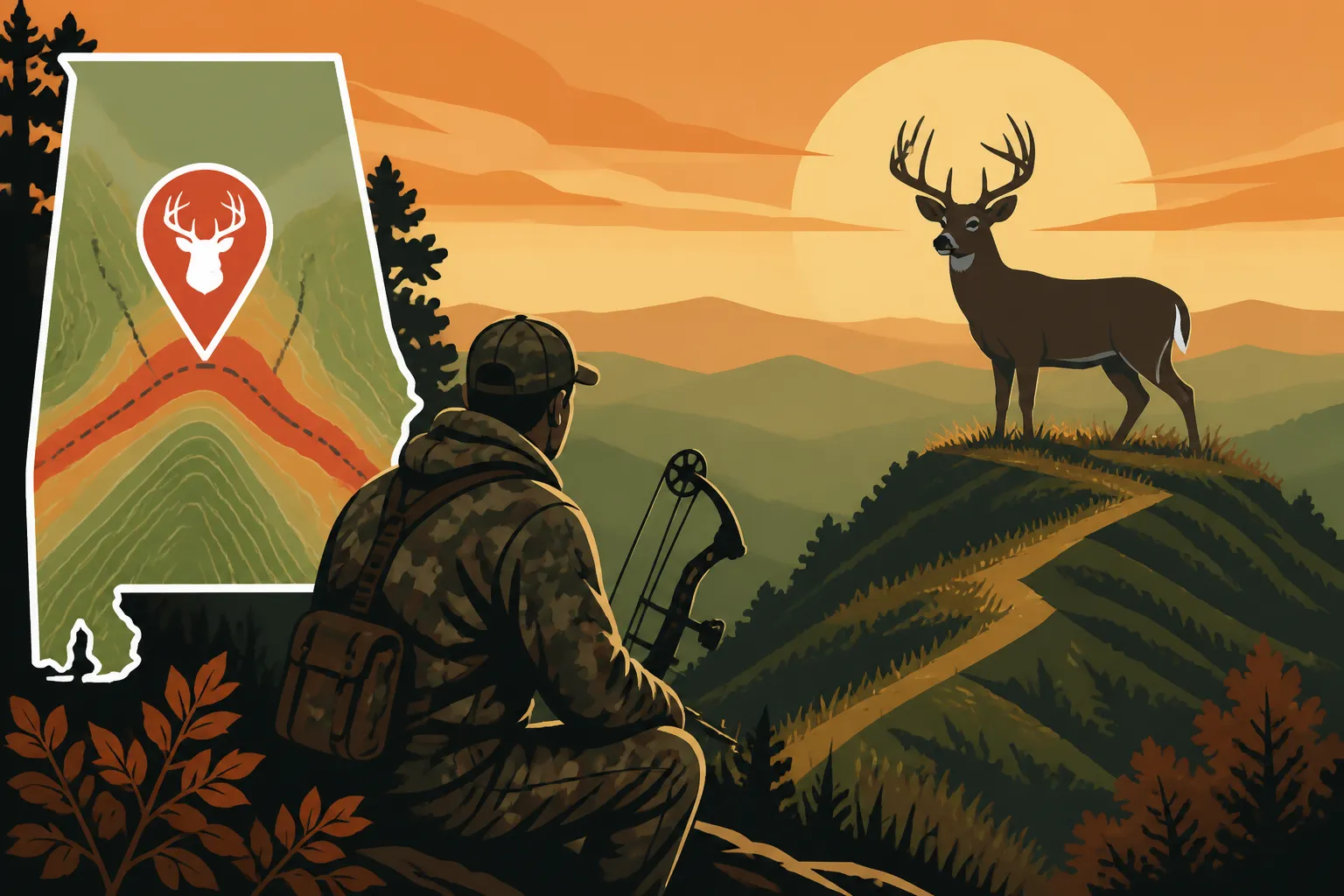
When we talk about a ridge-top saddle, we're describing a low point or depression along the top of a ridge line. Think of it like a subtle dip, or a "sag" in the elevation, that connects two higher points on the same ridge. These aren't always dramatic ravines; sometimes they're just a gentle scoop in the terrain that might go unnoticed if you're not actively looking for it. But to a rutting buck, these seemingly insignificant spots are prime real estate, a veritable highway for courtship and territorial patrols.
Why Bucks Gravitate Towards Saddles During the Rut
The appeal of a ridge-top saddle to a rutting buck boils down to efficiency and strategy. Deer, especially mature bucks, are masters of energy conservation and avoiding detection. During the rut, they're constantly on the move, looking for receptive does or chasing rivals, and they need routes that offer the path of least resistance while still providing security.
Saddles serve as natural funnels that connect different areas of a deer's home range, often linking bedding areas on one side of a ridge to feeding areas, water sources, or other bedding areas on the other. Instead of expending energy climbing up and over the highest points of a ridge, deer instinctively take the lower, easier path through the saddle. This makes them predictable travel corridors, especially when does are present and bucks are trailing. The terrain also often provides denser cover within the saddle itself or immediately adjacent to it, offering a sense of security even during daylight hours. A buck might use a saddle to cross from a deep hardwood bottom on one side to a pine plantation on the other, all while staying out of sight from predators (including hunters).
Different Types of Saddles and Their Tactical Importance
Not all saddles are created equal, and understanding the subtle differences can help you prioritize your scouting and hunting efforts. Some saddles are wide and gradual, offering multiple travel lanes, while others are tight, creating a constricted choke point that forces deer into a very narrow path.
You'll find saddles that are relatively flat and open, perhaps covered in mature timber, and others that are choked with thick briars, saplings, or fallen trees. The latter, while harder to navigate for a human hunter, can be absolute magnets for deer seeking cover as they move. Additionally, some saddles might be "wet," containing a small seep or even connecting two drainage systems, providing a water source that can further concentrate deer activity. The best saddles often have some form of cover, whether it's thick underbrush, a cluster of pines, or even just a dense canopy that provides shade and concealment. On a large property, using mapping tools like GoHunt can help you identify these subtle elevation changes that define saddles, giving you a head start before you ever step foot in the woods. These insights are crucial for understanding how to hunt the rut in the northern zones, or even if you're focusing on hunting the rut in the southern zones where terrain might be less dramatic but saddles are still critical.
| Saddle Type | Characteristics | Rutting Buck Appeal | Hunting Strategy Implications |
|---|---|---|---|
| Narrow & Steep | Pronounced dip, restricted travel lanes. | High traffic concentration, forced movement. | Ideal for ambush; focus on tightest pinch points. |
| Wide & Gradual | Subtle dip, multiple travel paths. | Connects large areas, less predictable crossing spots. | Requires more scouting for specific trails; multiple stand options. |
| Thick Cover | Dense briars, saplings, pines within the saddle. | High security; bucks feel safe moving during day. | Good for ground blinds; often requires closer setups. |
| Open Timber | Mature, open woods with less underbrush. | Visibility for surveillance; easier travel. | Treestands offer good sight lines; focus on wind currents. |
| Wet/Drainage | Contains a seep, connects creek bottoms or drainages. | Water source magnet; often holds sign longer. | Can be productive even when dry; check for fresh tracks. |
Scouting for Active Rutting Buck Sign in Alabama Saddles
Once you've identified potential saddle locations on your topo maps or through satellite imagery using a tool like GoHunt, the real work begins on the ground. Scouting these areas for fresh rutting buck sign is absolutely paramount. You're not just looking for any deer sign; you're looking for evidence that bucks are actively using these saddles, especially during the breeding season.
Identifying Fresh Rubs and Scrapes
The most definitive signs of rutting buck activity are fresh rubs and scrapes. Bucks create rubs by scraping their antlers on trees, usually small saplings or brush, to mark their territory and shed velvet. During the pre-rut and rut, these rubs become more aggressive, often on larger trees, and indicate a buck's presence and travel patterns. Look for rubs on both sides of the saddle and leading into it, as they'll often delineate a buck's preferred travel path.
Scrapes are areas where bucks clear away leaves and debris with their hooves, then often urinate and rub the licking branch above. These are essentially calling cards for does and other bucks, announcing their presence and readiness to breed. Finding a hot scrape line along a logging road or within a saddle is like hitting the jackpot. Pay close attention to the freshness of the scrape; a damp, recently worked scrape with a strong scent is a clear indicator that a buck has been there very recently. During the peak of the rut, bucks might check these scrapes multiple times a day.
Finding Preferred Travel Trails and Tracks
Deer trails are everywhere, but within a saddle, you'll often find concentrated, well-worn paths. These are the superhighways deer use to navigate the terrain. During the rut, bucks will often follow these trails, especially those that skirt the edge of denser cover or take them past prime doe bedding areas. Look for larger tracks within these trails – a good indicator of a mature buck.
Fresh tracks are your best friend. Muddy or sandy sections within a saddle or on the approach can reveal recent deer activity. Pay attention to the direction of travel and the size of the hoof prints. If you find a consistently used trail with fresh buck tracks, especially leading into or through a saddle, you've found a primary travel corridor. Also, consider the terrain: are there small ditches or depressions that funnel deer even further? Deer, particularly bucks seeking to stay hidden, will often favor the lowest or most covered parts of a trail system, especially when considering how to read a ridge for North Alabama deer. Remember, deer are inherently lazy; they will always take the easiest path available, and in a saddle, that path is usually clearly visible once you know what to look for.
Scouting Smart: Time of Day and Non-Invasive Techniques
When you're scouting, try to mimic the times deer are less active, typically midday. This minimizes your disturbance to the area. Use binoculars to scan ahead, and move slowly and deliberately, paying attention to wind direction to avoid contaminating the area with your scent. Consider using game cameras set up near rubs, scrapes, or primary trails within the saddle. These cameras can give you invaluable insight into when bucks are using the area and from which direction they're approaching. For more comprehensive planning, consider scouting Alabama public land before season to familiarize yourself with these terrain features before the pressure is on. This proactive approach, perhaps aided by detailed satellite imagery on GoHunt, allows you to identify these crucial funnels without leaving too much scent closer to hunting season.
Strategic Hunting Tactics for Ridge-Top Saddles
Once you've identified an active ridge-top saddle, the next step is developing a solid hunting strategy. This isn't just about throwing up a stand; it's about understanding wind, thermals, entry/exit routes, and how deer will react to your presence.
Optimal Stand Placement and Concealment
Your stand placement is perhaps the most critical factor. For a ridge-top saddle, you want to be positioned to intercept deer traveling through or along its edges, but also accounting for wind and concealment. Aim for a spot that offers good visibility of the main travel corridors but keeps you hidden. This often means setting up slightly off the main trail, perhaps 20-30 yards downwind, within a clump of pines or a thick hardwood. Being too close can be just as detrimental as being too far.
Consider the sun's position throughout the day – you don't want to be silhouetted or have the sun directly in your eyes during prime hunting hours. Also, think about your shooting lanes. Clear any small branches or leaves that might deflect an arrow or bullet without over-clearing and making your stand obvious. Sometimes, the best stand isn't a traditional treestand; a well-brushed-in ground blind can be incredibly effective in thick saddles, allowing you to move slightly more and remain hidden, especially if you're targeting deer that are using very dense cover. When hanging a stand on a Talladega Ridge, these considerations become even more pronounced due to varying elevations and cover.
Playing the Wind and Thermals
Wind and thermals are paramount when hunting saddles. A saddle, by its very nature, can create tricky wind currents. As the sun rises and warms the earth, thermals tend to rise up the ridges. As it sets and the air cools, thermals drop down into the valleys. However, within a saddle, the wind can swirl and eddy, making it unpredictable.
Always hunt with the wind in your favor, blowing your scent away from where you expect deer to approach. A common strategy is to set up slightly below the saddle on the downwind side, allowing rising thermals in the morning to carry your scent up and away, or sinking thermals in the evening to carry it down and away from the deer's approach. Use a wind checker frequently. If the wind isn't right, or if it's swirling significantly, it's often better to stay home or hunt a different location. One of the biggest mistakes hunters make is hunting a great spot with a bad wind, educating those mature bucks and making them even harder to kill. Learning about wind and thermals on a Piedmont Ridge can give you a significant edge.
Using Calls and Decoys in a Saddle
During the rut, bucks are highly responsive to calls, and a saddle can be an excellent place to deploy them. Grunt calls in mature Alabama timber can simulate a buck tending a doe, or rattling volume in thick pine cover might mimic two bucks fighting over breeding rights. A subtle doe bleat or fawn distress call can also draw in curious bucks.
If you're using a decoy, place it where it's visible but also offers a clear shooting lane. A buck decoy can challenge a dominant buck, while a doe decoy can attract bucks looking for a receptive partner. However, be cautious with decoys on public land, especially during peak rut, as other hunters might mistake your decoy for a live animal. Always place decoys facing away from your stand, as an approaching buck will often circle downwind to get a better read on the "deer," putting him broadside for a shot. Remember, the goal isn't just to attract deer, but to position them for an ethical shot.
Common Mistakes and How to Avoid Them When Hunting Saddles
Even with the best scouting and planning, it's easy to make mistakes that can cost you a shot at a rutting buck. Being aware of these common pitfalls can help you refine your approach and increase your odds of success.
Ignoring Your Entry and Exit Routes
This is a huge one. You can have the perfect stand placement and impeccable wind, but if your entry and exit routes blow deer out of the area, your hunt is over before it begins. When planning your approach to a saddle, use terrain features, ditches, or dense cover to conceal your movement.
Try to avoid walking directly through bedding areas or heavily used feeding spots. Approach your stand in the dark, well before daylight, and leave well after dark. If possible, have multiple entry and exit routes depending on the wind direction. For instance, if you're set up on the west side of a saddle, and the wind is from the north, you might walk in from the south, using a low creek bottom to keep your scent down. If you're hunting pressure on Alabama public land, minimizing your footprint and staying undetected is even more critical, as those mature bucks are already highly educated. A smart hunter plans every step, not just the shot.
Overhunting a Productive Saddle
It's tempting to hunt a hot saddle day after day, especially when you're seeing fresh sign or getting good camera pictures. However, overhunting is a surefire way to educate deer and turn a prime spot into a barren one. Every time you enter and exit, you leave scent, disturb the area, and increase pressure.
Instead, rotate your spots. If you have several active saddles, hunt one for a morning or evening, then let it rest for a few days. The less pressure an area receives, the more comfortable mature bucks will be using it during daylight hours. Think of it like a fishing hole: you can't just keep casting in the same spot all day without spooking the fish. Allow the deer to settle back in, and they'll resume their natural patterns. This patience and strategic rotation are vital, especially during the intense activity of the rut.
Not Adapting to Changing Conditions
The rut isn't a static event; it progresses, and conditions like weather and hunting pressure can change daily. A saddle that was hot on Monday might be quiet on Thursday due to a sudden cold front or increased hunting activity nearby. Successful hunters are those who adapt.
Stay informed about the weather forecast. Cold fronts often trigger increased deer movement, while warm-weather sitting strategy in Alabama might require you to hunt closer to water sources or denser bedding cover. Pay attention to how other hunters might be moving deer, perhaps through deer drives with three or four hunters on nearby public land. Be willing to move your stand or shift your focus if conditions warrant it. The best deer hunters are flexible and always learning from what the deer are telling them through their behavior and the sign they leave behind. Using mapping tools to track changes in weather patterns can also give you an edge, allowing you to predict how deer movement might shift.
Conclusion
Hunting a ridge-top saddle during the rut can be one of the most exciting and rewarding experiences in Alabama deer hunting. These subtle terrain features act as natural funnels, concentrating rutting buck movement and offering prime ambush opportunities. By understanding why bucks use saddles, meticulously scouting for fresh sign, executing smart stand placement and playing the wind, and avoiding common mistakes like overhunting, you significantly increase your chances of intercepting a cruising or chasing buck. Remember, patience, persistence, and a deep understanding of deer behavior, combined with smart land navigation tools like GoHunt, are your best allies in the deer woods.
Disclaimer
Hunting is an inherently dangerous activity. Always prioritize safety, understand and follow all Alabama hunting regulations, and obtain appropriate licenses and permits. Be aware of your surroundings and any potential hazards. This guide is for informational purposes only and does not substitute for personal experience, professional instruction, or official state regulations.