Decoy Placement Once the Ten-Day Rule Lifts
Ah, that initial ten-day period of Alabama's turkey season can be a real head-scratcher, can't it? You've scouted, practiced your calls, and you're just itching to get a gobbler in range, but then you're told no decoys! It feels like you're hunting with one hand tied behind your back sometimes, especially when those early-season birds are henned-up or just plain spooky. But once that restriction lifts, a whole new world of tactics opens up, and understanding exactly how and where to place your decoys can make all the difference between a silent walk out of the woods and a triumphant one. This guide is all about unleashing the full potential of your turkey decoys once that initial ban is over, ensuring you're setting yourself up for success.
Understanding Alabama's Ten-Day Decoy Rule and Its Impact
Before we dive into the nitty-gritty of placement, it’s crucial to understand why Alabama has this rule and what it really means for your hunting strategy, especially as the season progresses. It’s not just an arbitrary regulation; it’s designed to balance opportunity with conservation, particularly during those first crucial days of the season.
What is the Ten-Day Rule?
Alabama's wildlife regulations, managed by the Alabama Department of Conservation and Natural Resources (ADCNR), often include specific rules to manage game populations and hunting pressure. For spring turkey season, there's typically a restriction on using artificial decoys during the first ten days of the season opener in each zone. So, for instance, if you're hunting in Zone 1, you can't use decoys for the first ten days that Zone 1 is open. The same applies to Zone 2, which has a slightly later opener. This rule is in place to give the birds a chance to settle into their breeding patterns naturally without the added pressure or artificial attraction of decoys right out of the gate.
This early season window, where gobblers are often still establishing their pecking order and hens are just starting to lay, can be a challenging time for hunters relying solely on calling. It forces you to really hone your woodsmanship and calling skills, focusing on subtle communication and ambush points. Many hunters find success by
Roost Hunting Alabama Gobblers or employing more aggressive run-and-gun tactics during this time, rather than setting up a static decoy spread. However, once that ten-day window closes, it's like a new phase of the season begins, and your strategic options expand considerably.
The Shift in Turkey Behavior Post-Restriction
When that ten-day rule lifts, it's not just the regulations that change; the turkeys themselves often shift their behavior. In the initial days, gobblers might be more tentative, often staying with their hens or responding to calls from a distance without fully committing. They've heard some pressure, they've been called to, and they might be a bit wary.
However, as the season progresses beyond that initial ten-day period, several factors come into play:
- Hens start nesting: Many hens will begin to spend more time on their nests, leaving gobblers feeling a bit more lonely and actively seeking out companionship. This is when a hen decoy can become incredibly effective, as a solitary gobbler is much more likely to investigate.
- Gobblers become more aggressive: As their testosterone levels remain high and their breeding urges intensify, gobblers become increasingly dominant and less tolerant of other males. This makes jake or full-strut gobbler decoys powerful tools for challenging them and drawing them into close range.
- Increased hunting pressure: The first ten days can be intense, and birds often become more call-shy or wary of open areas. Decoys, when placed correctly, can offer a visual reassurance or a compelling reason to overcome that wariness, drawing a bird into a spot where a pure vocal strategy might fail.
This behavioral shift means that tactics that might have seemed futile during the first ten days suddenly become incredibly potent. You're now hunting a different kind of gobbler—one that might be more desperate, more aggressive, or simply more available.
Strategic Decoy Placement for Post-Restriction Success
Once you can legally deploy your plastic, feather, or foam friends, the real fun begins. But it’s not as simple as just sticking them anywhere. Strategic placement is key to drawing in wary gobblers and sealing the deal.
Selecting the Right Decoy Types
The type of decoy you choose should reflect the current phase of the season and the message you want to send to a potential gobbler. It's not a one-size-fits-all situation.
- Single Hen Decoys: These are your bread and butter, especially as hens start nesting. A lone hen suggests availability and often draws in lonely gobblers looking for companionship. A feeding hen, head down, portrays contentment and can often calm a wary bird, making him feel safer approaching. A standing or breeding hen can be more alluring, signaling immediate receptiveness. The key is realism; a high-quality, realistic hen decoy that moves naturally in the wind can be incredibly convincing.
- Jake Decoys: A jake decoy simulates a young, subordinate male turkey. These are fantastic for challenging mature gobblers, particularly when you're targeting those dominant birds later in the season. A gobbler seeing a smaller, younger rival often can't resist the urge to come in and assert his dominance, sometimes running in aggressively. You might consider using a jake decoy with a slight "strut" pose, showing a bit of challenge but not a full-blown threat.
- Full Strut Gobbler Decoys: These are the most aggressive option. A full-strut gobbler decoy is a direct challenge to any mature tom in the area. Use this when you're confident there's a dominant bird nearby who won't back down. Be warned, though, that a full-strut decoy can intimidate smaller or subordinate gobblers, sending them running the other way. It's a high-reward, high-risk play, but when it works, it's absolutely thrilling. These are best used when you know there are aggressive birds in the area, and you're willing to commit to the tactic.
- Combinations: Don't be afraid to mix it up. A classic and highly effective spread is one jake decoy paired with one or two hen decoys. The jake acts as bait, challenging the gobbler, while the hens provide the ultimate reward. Imagine a big tom seeing a jake with a couple of hens; he’s thinking he can run off the jake and claim the hens for himself. This scenario plays directly into his instincts. When you're scouting with mapping apps like GoHunt, consider how these spreads will look from a gobbler's perspective.
Optimal Field and Opening Setups
Open areas like green fields, agricultural fields, and natural clearings are prime spots for decoy placement because they offer visibility. The trick is making your setup believable and safe.
- Visibility is Key: Place your decoys where they can be seen from a distance by approaching birds, but not so far that they look unnatural or become targets for other hunters (always ensure proper hunter orange is worn when moving around, though generally not needed once set up and concealed). A good rule of thumb is to place them 20-30 yards from your concealed position. This distance ensures that when the gobbler commits to the decoys, he’s well within shotgun range.
- Orientation Matters: Always face your hen decoys slightly away from your position, or broadside, as if they are feeding or casually moving. This presents a more natural appearance to an approaching gobbler and often causes the gobbler to come in facing the decoys, which can give you a clear shot at his head and neck as he struts. If using a jake or full-strut gobbler, face it towards the most likely approach of a dominant gobbler, inviting a confrontation.
- Creating a "Landing Zone": Ensure there's enough clear space around your decoys for a gobbler to strut and display without feeling hampered. Turkeys are visual creatures, and they like to show off. Giving them that space increases their comfort level. Often, if a gobbler is hesitant, it's because he doesn't feel safe approaching, or there isn't enough room to strut. Consider the angle of the sun too; placing decoys so the sun highlights them can make them more visible and appealing.
A common scenario might be setting up on the edge of a winter green field, perhaps a clover plot or a freshly disked food plot. You've scouted this spot using tools like the Scouting With the Outdoor Alabama App and know birds frequent it. Place a feeding hen and a jake about 25 yards out, slightly angled away from your ground blind or camouflaged position along the tree line. This setup screams "easy pickings" to a cruising gobbler.
Woodline and Transition Area Tactics
Not all successful decoy setups are in wide-open fields. Sometimes, the most effective spots are along field edges, logging roads, or in areas where different habitat types meet.
- Edge Placement: When hunting along a woodline or field edge, place your decoys just inside the timber or right on the edge of the opening. This makes them appear to be coming out of the woods or dipping back in, which is a very natural turkey movement. It also provides cover for you to set up a blind or get against a large tree. The goal is to draw the gobbler out of the woods into the opening, or just inside the woods, providing a close shot.
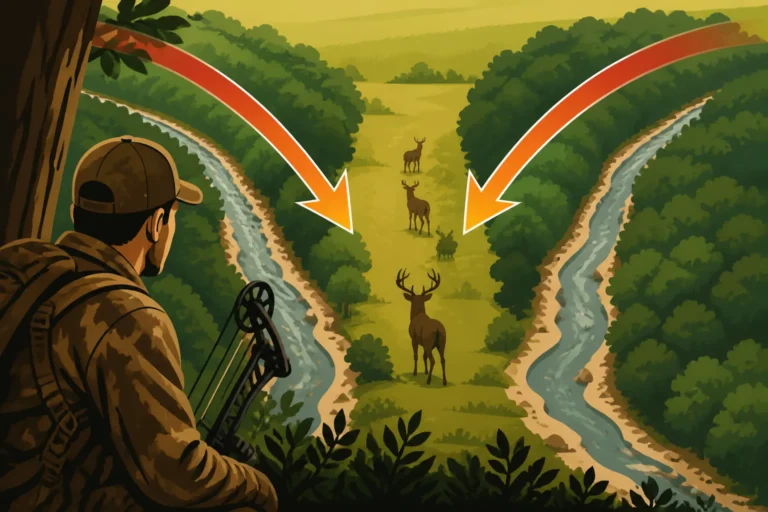
- Funnels and Pinch Points: Look for natural funnels—like a narrow strip of timber between two fields, a creek bottom, or a saddle on a ridge. These are natural travel corridors for turkeys. Placing a decoy spread in or near these pinch points can intercept birds as they move through. For example, you might set a lone hen decoy just inside a logging road that acts as a travel corridor, creating a visual for a gobbler cutting through the woods. This is a great way to use decoys in combination with Still-Hunting Bankhead Forest Ridges or similar public land tactics.
- Safety First: When hunting near woodlines, always be aware of your backdrop. Never place a decoy on a skyline or where another hunter could mistake it for a real bird, especially on public land. Position yourself so you have a solid backstop and a clear shot at the decoy's location.
Imagine you're hunting a property with a good mix of timber and small openings. You've located a prime area where a logging road cuts through a thick pine stand, leading to a small oak flat. You could place a single hen decoy 15 yards off the logging road, slightly hidden by some low brush, facing as if she's about to enter the oak flat. This gives a gobbler cruising the road a visual that looks like an easy encounter, drawing him right into your lap. The key is to make it look like the decoy just happened to be there.
Advanced Decoy Techniques and Real-World Scenarios
Taking your decoy game to the next level means understanding how to manipulate a gobbler's instincts and adapt to changing conditions and specific hunting scenarios.
Playing on Jealousy and Dominance
Once the ten-day rule is over, and especially as the peak of the Alabama rut approaches, gobblers become highly sensitive to perceived threats to their dominance and opportunities for breeding. This is where aggressive decoy strategies shine.
- The "Intruder" Setup: This involves using a jake or full-strut gobbler decoy alongside a hen. The idea is to infuriate a dominant gobbler into charging in to defend his territory and hens. Place the jake/strutter decoy facing your position, with the hen decoy slightly behind and to the side, looking towards the jake. This creates a compelling scene: a brazen young gobbler is trying to move in on his hen. The gobbler will often come in hot, focused on the interloper, giving you a perfect shot opportunity as he tries to run off the competition.
- Timing Aggression: This tactic is most effective when gobblers are actively breeding and feeling their oats. Early in the post-restriction phase, a single hen might be more effective. But as the season progresses into late April and May, particularly when the hens are heavily nesting, a strutting jake can be a magnet for a lonely, aggressive tom. Using GoHunt's historical weather data and mapping features can help you anticipate when these behavioral shifts might be most pronounced in different regions of Alabama, like the fertile grounds of the Black Belt or the mountainous regions of North Alabama.
- Decoy Distance: When trying to provoke a fight, don't place your jake or strutting gobbler too far away. You want the approaching gobbler to feel an immediate, undeniable threat. Twenty yards from your position is a sweet spot, ensuring a close shot. The more realistic the decoy, the more convincing the "intruder" will be.
Consider a hot morning in late April, you're set up on a ridge overlooking a creek bottom where you’ve heard a gobbler sounding off. You've heard him respond to calls but hang up at a distance before. Now, with the decoys legal, you set a full-strut gobbler and a breeding hen decoy about 20 yards out. You hit a series of excited yelps. The gobbler thunders back, and this time, instead of hanging up, he flies down, sees the strutting rival, and charges in, completely abandoning his caution. This is the power of playing on dominance.
Adapting to Pressure and Terrain
Alabama offers a diverse range of hunting environments, from the rolling hills of the Piedmont to the dense river swamps of the Gulf Coast, and each requires a slightly different approach to decoy placement, especially when dealing with pressured birds.
- Pressured Birds: If you're hunting public land, such as a busy WMA or areas like Hunting Pressure on Alabama Public Land, turkeys might be wary of open fields or aggressive calling. In these situations, subtle decoy placement is often more effective. Use a single, submissive hen decoy (like a feeder or a bailing hen) placed in a less obvious spot, perhaps just inside a timber opening or along a seldom-used logging road. The goal is to offer a soft, inviting visual without being too "in your face." Sometimes, just a glimpse of a hen is enough to draw a wary gobbler the last few yards.
- Terrain Considerations:
- Flat, Open Terrain (Black Belt): In areas like the Black Belt, where large agricultural fields are common, you have the advantage of visibility. Here, large spreads of multiple hens and a jake can work wonders, especially if you're trying to attract birds from a distance. The challenge is setting up without being spotted yourself. Use ditches, fencerows, or scattered trees for concealment.
- Hilly, Wooded Terrain (Piedmont, Mountains): In places like Talladega National Forest or the Piedmont, visibility is often limited. Here, decoys should be placed closer to your calling position, often in smaller openings, along logging roads, or in slight saddles on ridges. You need to make sure the decoy is visible as soon as the gobbler crests a rise or comes around a bend. You might only be able to see 50-70 yards, so placing your decoy at 20-25 yards from your position is even more critical. Using elevation to your advantage, perhaps placing a decoy on a slight rise, can help it stand out.
- River Bottoms and Swamps: These areas often feature thick cover and limited clearings. Decoys here should be placed in small natural clearings, along the edges of sloughs, or on slightly elevated hammocks. The focus is less on wide visibility and more on providing a visual at key travel points. A single hen often works best here, as large spreads can look out of place. This can be effective when using Hunting Coastal Alabama River Swamps tactics.
Combining Decoys with Calling Strategies
Decoys and calling are a powerful one-two punch in turkey hunting. Neither should be used in isolation; they complement each other beautifully.
- Visual Confirmation: Your calls act as an auditory beacon, drawing the gobbler's attention. The decoy provides the crucial visual confirmation. When a gobbler hears a hen and then sees her (or a jake challenging him), it removes doubt and greatly increases his willingness to commit.
- Calling to the Decoy: When a gobbler is approaching, try to direct your calls so they seem to be coming from the area of your decoys, not directly from your blind. This further reinforces the illusion. If you’re using a diaphragm call, cup your hands to project the sound towards the decoys.
- Varying Call Intensity: Adjust your calling based on the gobbler's response. If he's hot and charging, soft clucks and purrs might be all you need as he comes into range, letting the decoy do most of the work. If he's hanging up, more aggressive yelps or cutts, perhaps coupled with a wing flap sound, can be used to make the decoy "come alive" in his mind and encourage him to close the distance. Understanding when to be quiet is as important as knowing when to call.
A perfect example: You've heard a gobbler on the roost from afar and set up your decoys in a field he often uses for strutting. You start with some soft tree yelps and fly-down cackles after he pitches down. He sounds off, but seems reluctant to move towards the field. You then hit a series of aggressive cuts and yelps, focusing your calling towards the decoy. He sees the hen decoy, and the visual combined with the aggressive calling, mimicking a hen that isn't coming to him, often seals the deal. The decoy makes him believe the source of the sound is real and waiting.
Remember, the post-restriction phase of Alabama's turkey season is your chance to expand your playbook. Don't be afraid to experiment with different decoy types, setups, and calling strategies. Every hunt is a learning experience, and with thoughtful decoy placement, you'll greatly increase your odds of bringing a big gobbler home.
| Decoy Type | Best Post-Restriction Scenario | Message to Gobbler | Best Timing |
|---|---|---|---|
| Single Hen (Feeder) | Casual fields, food plots, less pressured areas | "I'm just a content hen, come join me." | Mid to late season (hens nesting) |
| Single Hen (Upright) | More visible spots, enticing lonely gobblers | "I'm looking for company." | Mid to late season |
| Jake Decoy | Challenging dominant gobblers, especially when hens are nesting | "I'm a young rival, easy to intimidate. Come show me who's boss." | Mid to late season, when gobblers are aggressive |
| Full Strut Gobbler | Highly aggressive birds, known dominant territories | "I'm the king here. Try and take my hens if you dare!" | Peak rut, when gobblers are most territorial |
| Jake + Hen Combo | Classic, versatile setup, plays on dominance and breeding | "There's a jake with a hen; come run him off and claim her." | Mid to late season, very effective |
Disclaimer
Hunting is an inherently dangerous activity. Always prioritize safety, understand and follow all Alabama hunting regulations, and be aware of your surroundings and other hunters. This guide provides general information and recommendations, but individual hunting situations vary. Always consult the latest ADCNR regulations before heading afield.