Alabama Muzzleloader and Air Rifle Tactics
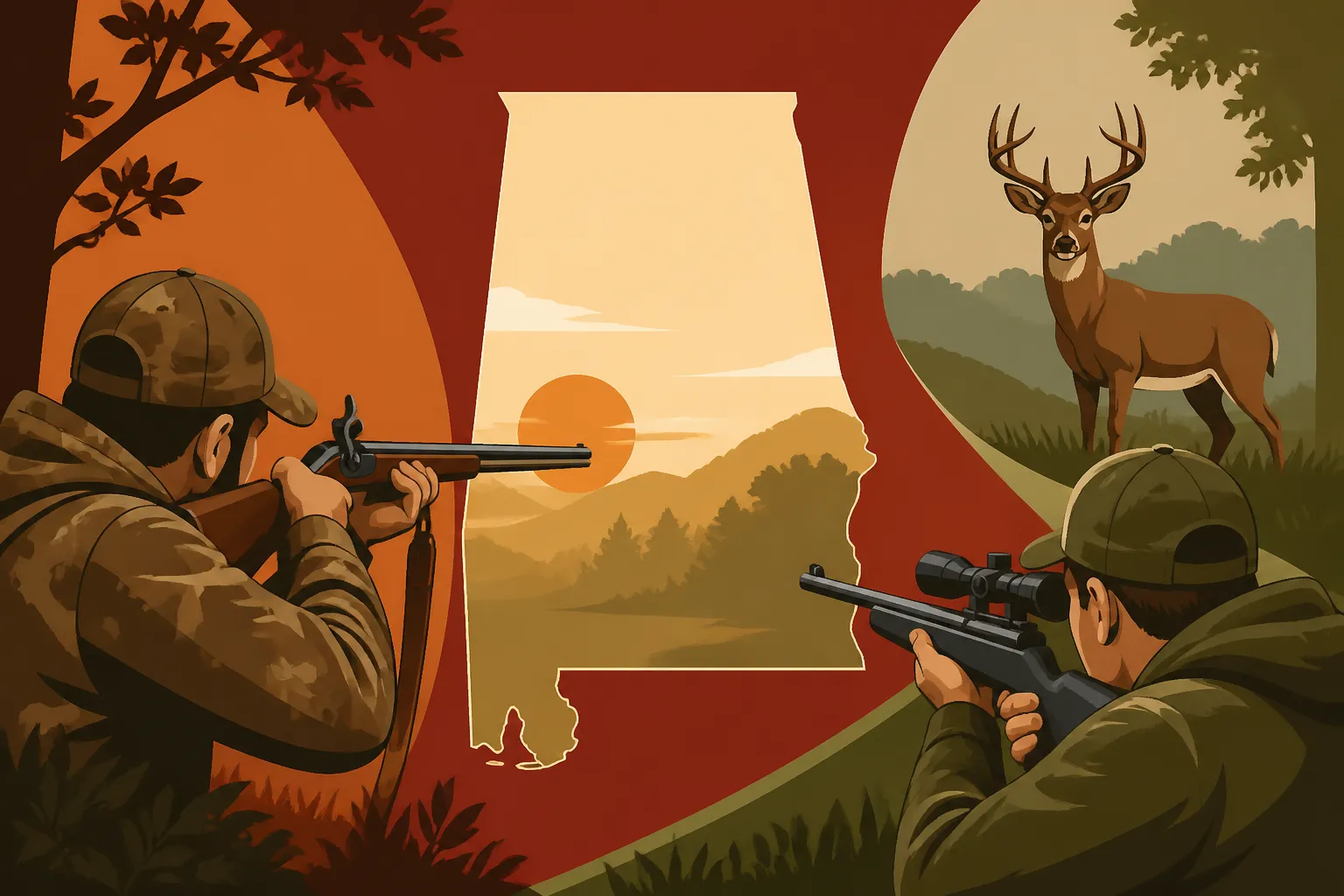
Hunting with a muzzleloader or an air rifle in Alabama offers a unique challenge, often demanding a different approach than your typical centerfire rifle season. Many hunters find themselves drawn to these specialized weapons for the extended season opportunities, the personal satisfaction of a more primitive hunt, or simply the quiet efficiency they offer. However, these tools come with their own set of considerations, from understanding the specific regulations to mastering the nuances of accuracy and ethical shot placement. This guide will walk you through the essential tactics to succeed in Alabama's muzzleloader and air rifle seasons, helping you navigate the regulations, choose the right gear, and effectively hunt deer with these specialized firearms.
Navigating Alabama's Muzzleloader and Air Rifle Seasons
The first step to a successful hunt with any specialized weapon in Alabama is a thorough understanding of the regulations. It’s easy to get caught up in the excitement of new gear, but knowing when and where you can use your muzzleloader or air rifle, and what specific rules apply, is absolutely paramount. These seasons often have unique windows and restrictions that differ from the general gun season, making careful preparation crucial.
Understanding the Season Dates and Zones
Alabama's deer season is structured into five distinct zones (A, B, C, D, and E), and while the general framework for muzzleloader and air rifle hunting often aligns with portions of the statewide gun season, there can be specific opening and closing dates or even special windows. For instance, the Muzzleloader and Air Rifle season in many zones typically overlaps with or extends beyond the early archery season, offering a primitive weapons advantage before the full roar of gun season begins. It’s vital to check the current year’s Alabama Deer Season Structure Explained and the specific hunting guide from the Alabama Department of Conservation and Natural Resources (ADCNR) to confirm the exact dates for your chosen zone. What might be legal in Zone A in November could be different in Zone E in late December, and nobody wants to find themselves on the wrong side of a regulation for simply misremembering a date.
Beyond the general season, it’s worth noting that some public lands, like certain Wildlife Management Areas (WMAs), might have additional restrictions or special primitive weapons hunts. These quota hunts or specific WMA regulations might allow muzzleloaders when other firearms are prohibited, or they might define "primitive weapons" in a way that includes or excludes air rifles. Always consult the WMA-specific regulations if you plan to hunt public ground. A mapping tool like GoHunt can be incredibly helpful for identifying WMA boundaries and cross-referencing with published rules to ensure you're compliant before you even step foot in the woods.
Legal Equipment for Alabama's Primitive Seasons
The term "muzzleloader" itself has some specific definitions in Alabama, and it's not just any old front-stuffer. Typically, these refer to firearms loaded from the muzzle, using black powder or a black powder substitute, and firing a single projectile. While traditional percussion cap or flintlock rifles are certainly included, modern inline muzzleloaders, which are increasingly popular for their accuracy and ease of use, are also permitted. The key here is the loading method and the propellant. If it's loaded from the breech with a cartridge, it's not a muzzleloader for these purposes.
Air rifles, on the other hand, are a relatively newer addition to the list of legal deer hunting weapons in Alabama, and their specific requirements are even more critical. You can't just take any pellet gun out there. For deer, air rifles must be .30 caliber or larger and powered by an external compressed air source, not CO2 cartridges or pump action. They must fire a single projectile, usually a heavy slug or pellet designed for hunting, and be capable of producing sufficient kinetic energy for a humane kill. This typically means powerful pre-charged pneumatic (PCP) air rifles. While it's exciting to see new technologies like air rifles become viable for deer hunting, ensuring your specific model meets the caliber and power requirements is non-negotiable. Don't assume; check the ADCNR guidelines for the exact specifications to avoid any issues afield.
Muzzleloader Hunting Tactics for Whitetails
Muzzleloader hunting is an immersive experience, blending modern technology with a touch of historical hunting tradition. Unlike hunting with a bolt-action rifle, every shot with a muzzleloader is a deliberate commitment. This means your tactics must focus on precision, careful shot selection, and understanding the limitations and unique characteristics of your chosen firearm.
Shot Placement and Range Limitations
When you’re carrying a muzzleloader, your approach to a deer changes significantly compared to using a high-powered centerfire rifle. Most modern muzzleloaders, especially inline models, are surprisingly accurate out to 150-200 yards with proper loads and practice. However, the effective range for a clean, ethical kill often depends heavily on the hunter's skill, the specific load, and conditions. Unlike centerfire rounds that retain energy further, muzzleloader projectiles tend to drop more dramatically and lose velocity faster. This means you need to be acutely aware of your maximum ethical range. For many, that's closer to 100-125 yards, particularly when factoring in real-world hunting scenarios like a moving target or a slight crosswind.
The single-shot nature of a muzzleloader amplifies the importance of shot placement. There's no quick follow-up shot if you flinch or misjudge. Aim for the classic deer vitals: the heart-lung area. This broadside or slightly quartering-away shot offers the largest margin for error and maximizes the chances of a quick, humane kill. Practice is crucial here; don't just sight in at 50 yards and call it good. Spend time at 75, 100, and even 125 yards to understand your rifle's trajectory and your own capabilities under pressure. Consider a rangefinder an essential tool, eliminating guesswork in the field and ensuring you only take shots within your proven ethical range.
Loading and Cleaning Protocols
Muzzleloaders, by their very nature, require a specific loading and cleaning routine that is paramount for both safety and consistent accuracy. For loading, the sequence is critical: powder, then projectile, then primer. Always use the manufacturer-recommended charge of black powder or black powder substitute (like Triple Seven or Pyrodex), measured precisely. Too little powder and your shot will lack energy; too much, and you risk dangerous overpressure and poor accuracy. Seating the projectile correctly is also vital. It needs to be snug against the powder charge with no air gap, which can cause dangerous pressures upon firing. A ramrod with clear markings can help ensure consistent seating depth. Carrying a speed loader with pre-measured charges and saboted bullets can significantly speed up a second shot if needed, though realistically, a follow-up is rare in the heat of the moment.
Cleaning is equally important, especially with corrosive black powder. Black powder residue is hydroscopic, meaning it attracts moisture, leading to rust if not cleaned promptly. After every shooting session, and ideally after every hunt, a thorough cleaning is in order. This involves removing the breech plug, cleaning the bore with a solvent designed for black powder, and scrubbing all components until they are spotless. A simple regimen often involves hot soapy water (or specialized cleaning solvents), followed by drying and a protective coat of oil. Neglecting this crucial step can lead to a rusted barrel, fouled actions, and significantly diminished accuracy over time. Think of it as a ritual that maintains your primitive weapon in peak condition.
Air Rifle Hunting Tactics for Whitetails
Air rifles for deer hunting are a relatively new frontier in Alabama, offering a different kind of quiet precision. While they share the "single shot, close range" philosophy of muzzleloaders, their unique power source and projectile characteristics demand their own set of tactical considerations.
Power, Caliber, and Ethical Considerations
The primary concern with air rifles for deer is sufficient power and appropriate caliber to ensure an ethical harvest. Alabama's regulation of .30 caliber or larger is a good starting point, but just meeting the minimum caliber doesn't guarantee a humane kill. The kinetic energy delivered by the projectile is paramount. A powerful pre-charged pneumatic (PCP) air rifle in calibers like .357, .45, or even .50 is generally recommended for deer. These larger calibers fire heavy slugs or pellets that carry significant energy.
However, even with powerful air rifles, the ethical range is often much more constrained than a muzzleloader. Most air rifles for deer are effective out to 50-75 yards, with some highly tuned setups pushing 100 yards under ideal conditions. Beyond that, projectile energy drops off quickly, and accuracy can be severely impacted by wind drift, especially with lighter projectiles. This means you need to practice extensively at various ranges and become intimately familiar with your air rifle’s ballistic profile. Understanding how factors like temperature and air pressure affect your shot can also be crucial for air rifle performance. If you're using a tool like GoHunt to scout, prioritize finding spots where you can guarantee a close-range shot, ideally within 50 yards, to maximize your chances of an ethical harvest.
Noise, Wind, and Shot Execution
One of the significant advantages of hunting with a PCP air rifle is its relatively low noise signature compared to a firearm. This can be a huge asset in the woods, especially when hunting pressured deer or in areas where minimizing disturbance is important. The report is often more of a muffled thud than a loud bang, which might allow deer to remain calm or even continue feeding after a shot, particularly if you miss or if other deer are nearby. This reduced noise is a great tool, but it doesn't change the need for perfect shot execution.
Wind, however, can be a major adversary for air rifle hunters. The lightweight, low-velocity projectiles fired by air rifles are far more susceptible to wind drift than traditional rifle bullets. Even a slight crosswind can push your shot off target significantly at 50-70 yards. Because of this, practicing in varied wind conditions is just as important as practicing for accuracy. Consider using heavier slugs designed for hunting, as they are less affected by wind than lighter pellets. When hunting, prioritize calm days or set up in areas that offer some windbreak. Every aspect of the shot—from breath control to trigger squeeze—must be flawless, knowing that you have only one chance and external factors like wind can play a larger role.
Scouting and Stand Placement for Precision Shots
Hunting with a muzzleloader or air rifle fundamentally alters how you scout and choose your stand locations. You’re no longer planning for those 200-yard open-field shots; instead, you’re looking for intimate, close-quarters encounters. This requires a much more detailed understanding of deer movement patterns and their preferred travel corridors, focusing on opportunities for high-percentage shots within your weapon's effective range.
Identifying Bottlenecks and Pinch Points
When your effective range is limited to 50-125 yards, finding natural bottlenecks and pinch points becomes critical. These are areas where deer movement is concentrated into a smaller, more predictable space. Think about saddles in ridges, narrow strips of timber between open fields, creek crossings, or funnels created by dense cover and open clearings. Deer naturally use the path of least resistance or the most secure route, and these natural constrictions force them within your desired shooting window. An example could be a small draw that feeds into a larger creek bottom, where deer frequently cross. Setting up on a Hunting a Funnel Between Two Creek Bottoms could be incredibly effective.
Another excellent example is a logging road or old farm road that bisects dense cover. Deer will often use these subtle trails as superhighways. By identifying where a main deer trail crosses one of these narrower passages, you can position your stand for a close shot. Similarly, look for edges: the boundary where a thick pine plantation meets mature hardwoods, or where a clear-cut abuts a stand of standing timber. Deer will often travel these edges for security and easy movement. Using a mapping application on your phone like GoHunt or other tools to study aerial photos can help you identify these features long before you ever step foot on the property.
Optimal Stand Setup for Close Encounters
Your stand setup needs to support the close-range nature of muzzleloader and air rifle hunting. This means prioritizing concealment and entry/exit routes above all else. A ground blind can be an excellent option, especially if you can get it brushed in well in advance. They offer superb concealment and warmth, and you can often get away with more movement inside them, which can be helpful if a deer is approaching from an unexpected angle. For tree stands, focus on setups that provide excellent cover—think thick evergreens or a cluster of hardwoods—rather than simply the highest tree available. You want to be part of the landscape, not an obvious silhouette.
Consider the angle of your shot carefully. A setup that allows for a slight quartering-away shot as deer pass by is often ideal. This maximizes the vital area presentation. Pay close attention to wind direction, ensuring your scent is carried away from the likely approach of deer. You might need multiple stand locations, especially if you’re hunting the Alabama Rut by Zone, to account for changing wind patterns or shifts in deer movement based on food sources or breeding activity. Remember, with a single-shot weapon, you want the deer to be comfortable, close, and presenting the best possible shot before you even think about raising your weapon.
| Feature / Consideration | Muzzleloader (Traditional/Inline) | Air Rifle (PCP .30+ Caliber) |
|---|---|---|
| Typical Effective Range | 75-150 yards (skill dependent) | 30-75 yards (power/caliber dependent) |
| Projectile Type | Lead conical bullets, sabot slugs | Heavy lead slugs/pellets |
| Power Source | Black powder/substitutes | Compressed air (external tank) |
| Noise Level | Loud (similar to centerfire rifle) | Moderate-Low (muffled thud) |
| Wind Drift | Moderate | High (more susceptible) |
| Follow-up Shot | Slow, often impractical | Slow, often impractical |
| Cleaning Needs | Critical (corrosive powder) | Less critical (no powder) |
| Scent Signature | Smoke can add minor scent | Minimal |
| Season Availability | Typically a specific season | Often aligns with muzzleloader/general gun, check specific regs |
Mastering the Shot and Tracking Protocol
The moment of truth with a muzzleloader or air rifle carries a unique weight. With a single shot, every element must align perfectly. Beyond the trigger pull, knowing what to do immediately after the shot and how to approach tracking a deer hit with these specialized weapons is crucial for ensuring a successful recovery.
The Moment of Truth: Breath, Aim, and Follow-Through
When that deer finally steps into your shooting lane, presenting a perfect broadside within your ethical range, every bit of practice and preparation culminates in this singular moment. The key is to control your breathing, steady your aim, and execute a smooth trigger pull. For many hunters, the tendency is to rush. Resist it. Take a deep breath, let half of it out, and hold. Settle your crosshairs on the heart-lung area, typically just behind the shoulder, a third of the way up the body. Squeeze the trigger slowly and deliberately, as if surprising the shot. Don't snatch it.
Equally important is the follow-through. With a muzzleloader or air rifle, the projectile's velocity is often lower, and the recoil profile can be different than a centerfire rifle. Keep your eye in the scope and watch for the deer’s reaction to the shot. Did it kick? Did it flinch? Did it run off hunched up or with its tail tucked? Observing these initial reactions provides invaluable clues for tracking. For example, a deer shot through the lungs might bolt hard for a short distance before crashing, while a gut-shot deer might walk off slowly, often with a hunched posture. Even if it seems like a clean miss, watch where the deer goes and mark the exact spot it was standing. This attention to detail immediately after the shot is your first, best chance at a successful recovery.
Tracking with Specialized Weapons
Tracking a deer hit with a muzzleloader or air rifle can sometimes be more challenging than with a high-velocity rifle. While a well-placed shot with either weapon is devastating, the slower, heavier projectiles may not always produce the dramatic exit wounds and copious blood trails you might expect from a modern rifle. This means your tracking protocol needs to be meticulous and patient.
After the shot, give the deer time. For a suspected heart or lung hit, 30 minutes to an hour is often sufficient, especially in cooler weather. If you suspect a gut shot or a marginal hit, however, extend that time to 4-6 hours, or even longer, before beginning your track. Pushing a marginally hit deer can make recovery nearly impossible. Start at the exact spot where the deer was standing when you shot. Look for hair, blood, bone fragments, or disturbed earth. Mark these spots with flagging tape or reflective tacks as you go. Even small specks of blood are important. If the blood trail is sparse, expand your search outward in concentric circles from the last confirmed sign. Deer hit with a muzzleloader or air rifle might not leave as much external sign, so you need to be observant of overturned leaves, broken twigs, or even the distinct drag mark of a deer’s belly through dew-covered grass. In challenging conditions, knowing how to Tracking a Deer Through Alabama Pine Straw can be the difference between a successful recovery and a lost animal. Consider using a quality blood-trailing light after dark, as it can make sparse blood visible. Remember, patience is your greatest ally when tracking with these specialized weapons.
Final Preparations and Ethical Considerations
Beyond the gear and the tactics, there's a strong ethical component to hunting with muzzleloaders and air rifles. These weapons demand a higher level of hunter responsibility to ensure a humane harvest. Being prepared mentally and physically, and understanding the limits of both yourself and your equipment, are critical for a successful and ethical experience in Alabama's woods.
Practice, Practice, Practice
I can’t stress this enough: consistent practice with your muzzleloader or air rifle is non-negotiable. It’s not enough to sight it in once at the beginning of the season. Muzzleloaders, especially, can be finicky. Changes in humidity, powder lot variations, or even how consistently you ram a bullet down the barrel can affect accuracy. Similarly, air rifles need regular attention to pressure, temperature, and slug consistency. Regularly shoot your hunting load. Practice from realistic field positions – kneeling, sitting, even standing, not just from a bench rest. This will build muscle memory and confidence, which are invaluable when a buck steps out unexpectedly.
Practice your loading sequence for your muzzleloader under pressure. Can you reload cleanly and quickly if you needed to? For air rifles, monitor your air tank pressure and understand how many consistent shots you get before accuracy or power drops. Knowing your equipment intimately, beyond just its basic function, helps you make ethical decisions in the field. When you hunt with a weapon that offers no quick follow-up, your first shot absolutely must count. This commitment to practice isn't just about bagging a deer; it's about respecting the animal and upholding the traditions of fair chase.
Respecting the Hunt and the Animal
Hunting with specialized weapons like muzzleloaders and air rifles often brings you back to a more fundamental connection with the hunt. It forces you to get closer to your quarry, to understand deer movement on a more intimate level, and to become a more patient and skilled hunter. This deeper engagement amplifies the responsibility we have as stewards of the wildlife resource. Always ensure your chosen equipment and your personal skill level are appropriate for the game you are pursuing. Taking an iffy shot with a limited-range weapon is not only unethical but also irresponsible.
Before you head into the woods, double-check all your gear. Is your muzzleloader clean and properly loaded? Is your air rifle charged and zeroed? Do you have all your tracking essentials like flagging tape and a good light? Have you checked the weather for wind or rain that could impact your shot? Being thoroughly prepared, physically and mentally, for the unique demands of these hunts demonstrates respect for the animal and the privilege of hunting. Whether you're hunting Alabama's Long Archery Season or taking advantage of the special muzzleloader and air rifle opportunities, the goal is always a quick, humane harvest and a memorable, ethical hunting experience.
Disclaimer
Please remember that hunting regulations can change frequently. Always consult the most current Alabama Department of Conservation and Natural Resources (ADCNR) official hunting regulations for the current season before planning any hunt. This guide is for informational purposes only and should not be considered a substitute for official legal documentation.