Wagon Hunts Versus Walking Quail Hunts
Deciding on the perfect quail hunting experience in Alabama can feel a bit like choosing between a leisurely scenic tour and a rugged backcountry adventure. Many hunters, especially those new to guided hunts or different styles, often struggle with whether a comfortable wagon hunt or a more physically demanding walking hunt is the right fit for them. This guide aims to demystify both options, helping you understand what each entails so you can book the quail hunt that best suits your style, physical condition, and expectations.
The Classic Appeal of a Wagon Hunt
There's something inherently nostalgic and undeniably comfortable about a wagon hunt. It conjures images of a bygone era, where the pace was a little slower, and the focus was as much on the camaraderie and the beautiful surroundings as it was on the flush of birds. In Alabama, particularly in the sprawling pine plantations and rolling fields of the Black Belt, wagon hunts offer a unique way to experience the hunt.
What Defines a Wagon Hunt Experience
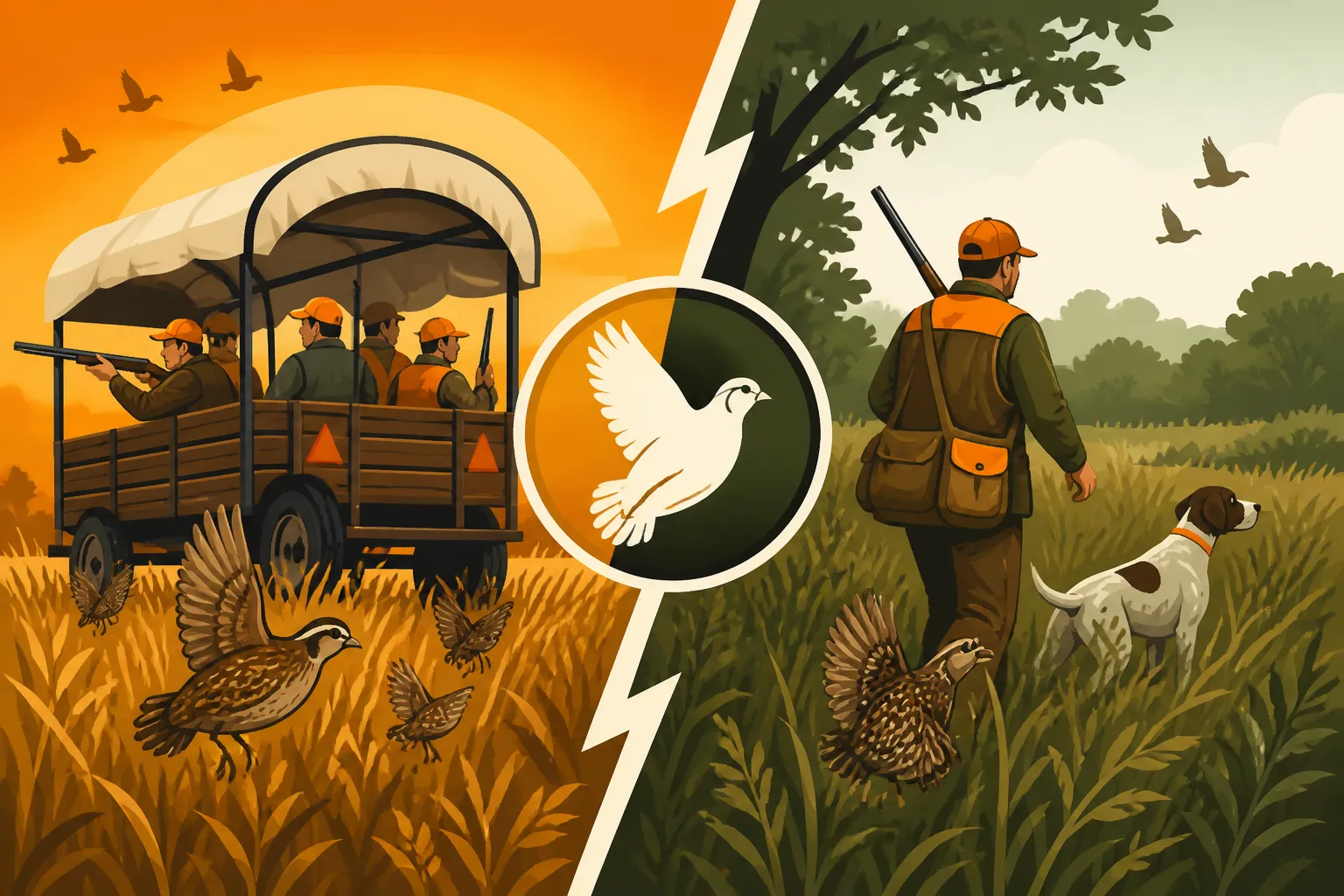
Imagine a crisp Alabama morning, the scent of pine needles in the air, and the gentle rumble of a wagon beneath you. This is the essence of a wagon hunt. Typically, hunters and their gear are transported across the hunting grounds in a comfortable, purpose-built wagon, often pulled by a team of mules or a truck. This allows access to vast areas that might otherwise be too far or difficult to traverse on foot, especially on larger managed plantations where habitat is meticulously cultivated for prime quail populations.
From the vantage point of the wagon, you get to witness the incredible dog work unfold right before your eyes. The pointing dogs, often setters or pointers, quarter the fields with boundless energy, their tails blurring as they search for scent. When a dog locks up on point, the wagon stops, and hunters dismount, walk in behind the dog, and prepare for the covey rise. Once the shots are fired and birds are retrieved by the diligent retrievers, everyone re-boards the wagon, and the journey continues to the next likely cover. It's a fantastic way to cover ground, see a lot of dog work, and enjoy the social aspect of hunting with friends or family without the constant physical exertion of walking miles.
Many operations that specialize in Hunting a Managed Quail Plantation often feature wagon hunts as their premier offering. They understand that for some, the journey is as important as the destination, and the comfort of a well-appointed wagon allows for a truly relaxing and memorable day in the field. This style is particularly popular with groups or those who want to bring multiple generations out to experience the thrill of a covey rise together.
Pros and Cons of Wagon Hunts
Wagon hunts come with a distinct set of advantages that make them a popular choice, but they also have a few considerations worth noting.
First and foremost, comfort and accessibility are huge benefits. If you have any physical limitations, or simply prefer a less strenuous hunt, a wagon hunt is an excellent option. You still get to participate actively in the flush and the shooting, but the travel between coveys is handled for you. This means you can often hunt longer into the day without tiring and enjoy more of the beautiful Alabama landscape. Furthermore, the elevated perspective from the wagon often provides a superb view of the dogs working, allowing you to appreciate their training and instinct firsthand. It’s truly a joy to watch a seasoned pointing dog lock down on a covey from a distance, anticipating the burst of activity to come.
However, a wagon hunt might not appeal to everyone. For hunters who crave constant movement and a more intense physical challenge, being primarily a passenger can feel less engaging. While you do get out to flush and shoot, you're not constantly moving through the cover with the dogs. This can also sometimes translate to a slightly higher cost, as the infrastructure for mules or specialized vehicles, plus a driver in addition to the guide and Dog Handlers on a Quail Plantation Hunt, adds to the operational expense. It's a different kind of experience, one that trades some of the "boots on the ground" immersion for comfort and a broader scope of the hunting grounds.
The Intimate Challenge of a Walking Hunt
For the hunter who wants to earn every covey rise with sweat and effort, the walking quail hunt offers a deeply immersive and physically rewarding experience. It's about connecting with the dogs, the guide, and the terrain on a much more personal level.
Embracing the Stride: What a Walking Hunt Entails
A walking quail hunt in Alabama is a much more active affair. Here, you'll be on your feet, covering ground alongside your guide and the dogs as they work the cover. This means traversing varied terrain – from open pine woods to denser edges and field borders – feeling every step and becoming intimately familiar with the habitat where the quail thrive. The pace is dictated by the dogs and the ground you're covering, but it's generally a steady, deliberate walk.
The reward for this physical exertion is a profound sense of accomplishment and a unique connection to the hunt. When the dogs go on point, you're right there with them, feeling the tension build as you approach the birds. The covey rise feels intensely personal, a direct result of your efforts, the dog's skill, and the guide's expertise all coming together. You're not just observing the dog work; you're actively participating in every moment, from the search to the retrieve. This hands-on approach can be incredibly satisfying for those who enjoy the physical challenge and the deeper immersion into the hunting process.
Many hunters who pursue Quail Hunting Alabama's Black Belt on foot describe it as a purer form of hunting, allowing them to truly "hunt with the dogs" rather than simply watching them. It's about feeling the crunch of pine straw underfoot, navigating through broom sedge, and anticipating the flush with every step. This style really brings you closer to the wild bobwhite quail and their incredible habitat.
Advantages and Disadvantages of Walking Hunts
Just like wagon hunts, walking hunts offer distinct benefits and their own set of challenges.
The primary advantage is the sheer physical engagement and the intimate experience it provides. You are truly "in" the hunt, walking the same ground as the dogs, experiencing the terrain firsthand. This can lead to a much deeper connection with your hunting partners, the guide, and especially the dogs. You get to see their minute reactions, their subtle body language, and fully appreciate the intricate dance between dog and bird. For many, the physical exertion is part of the appeal, a way to truly earn the birds and feel the satisfaction of a hard-hunted day. The memories made on a walking hunt are often tied to the sweat and effort expended, making the successful covey rises all the more cherished.
However, the physical demands are also the main disadvantage. A walking hunt requires a reasonable level of fitness and stamina. You'll be covering several miles over potentially uneven ground, which can be challenging for those not accustomed to it. The pace can be slower than a wagon hunt, meaning you might not cover as much ground or encounter as many coveys in a day, especially if the birds are spread out. It's crucial to be honest about your physical capabilities before committing to a walking hunt. Physical Demands of a Quail Wagon Hunt might give you a sense, but a walking hunt will be significantly more taxing. If you're not prepared, the experience can quickly turn from an enjoyable challenge to an exhausting ordeal.
Choosing Your Alabama Quail Adventure
So, how do you decide between these two distinct quail hunting experiences in Alabama? It really boils down to your personal preferences, physical condition, and what you hope to get out of the hunt.
Factors to Consider When Deciding
When you're looking to book a quail hunt in Alabama, take a moment to honestly assess what you prioritize. Your physical fitness is perhaps the most important factor. If you're in good shape and enjoy a challenging hike, a walking hunt might be right up your alley. You'll love the immersive experience and the feeling of earning your birds. If, however, you have mobility concerns, prefer a more relaxed pace, or simply want to savor the scenery and dog work from a comfortable perch, a wagon hunt is an excellent choice. Don't feel pressured to pick one over the other; the goal is to have an enjoyable and successful outing.
Consider the desired experience. Are you looking for a social gathering with friends and family, where conversation flows easily between coveys? The wagon hunt, with its shared space and less demanding travel, often fosters this atmosphere. Are you seeking a more solitary or focused hunt, where you can deeply connect with the land and the working dogs? Then a walking hunt might be more suitable. Budget also plays a role, as wagon hunts might sometimes carry a slightly higher price tag due to additional staff and equipment. Reputable platforms like BookYourHunt and GoHunt often list details about both types of experiences, allowing you to compare options and pricing before you commit.
Finally, think about the specific terrain. While both types of hunts can take place in similar cover, some properties are better suited for one over the other. Vast, open pine plantations are ideal for wagon hunts, allowing the team to cover immense ground efficiently. Smaller, more varied tracts with thickets and rolling hills might lend themselves better to a focused walking hunt. Always check with the outfitter about the typical terrain for their specific hunt style.
What to Ask Your Outfitter
Before you book, whether you're using a service like BookYourHunt or contacting an outfitter directly, asking the right questions can make all the difference. Don't be shy; a good outfitter wants you to have the best experience possible.
First, clarify the hunting style: "Is this primarily a walking hunt or a wagon hunt?" If it's a mix, ask about the ratio of walking to riding. Then, inquire about the typical physical demands: "How many miles do hunters typically walk in a day?" or "Is the terrain generally flat or hilly?" This will help you gauge if it matches your fitness level.
Ask about the number of birds they typically release, or if it's strictly wild birds, and what a typical covey count might be. "What kind of dogs do you use, and how many are in a brace?" Understanding the Dog Handlers on a Quail Plantation Hunt and the dogs themselves can enhance your appreciation of the hunt. Also, important questions about logistics include: "What does the hunt package include?" and "Are meals and lodging part of the deal, or is it a day hunt?" Finally, don't forget practicalities like "What kind of gear and clothing should I bring?" and "Are there any specific safety protocols I should be aware of?" Knowing what to pack, from footwear to blaze orange, is crucial for a comfortable and safe hunt. What to Pack for a Guided Alabama Hunt will give you a general idea, but always confirm with your specific outfitter.
By gathering this information, you can ensure that the Alabama quail hunt you book, whether a relaxed wagon experience or a challenging walking adventure, is precisely what you've envisioned.
| Feature | Wagon Hunt | Walking Hunt |
|---|---|---|
| Physical Demands | Low to Moderate (walking to flush birds) | Moderate to High (constant walking, varied terrain) |
| Coverage Area | High (can cover vast distances quickly) | Moderate (limited by hunter's pace and stamina) |
| Experience | Relaxed, social, good for groups, scenic | Immersive, active, direct dog interaction, challenging |
| Accessibility | Excellent for varied fitness levels, older hunters | Best for physically fit hunters |
| View of Dog Work | Often from a distance, elevated perspective | Up close, intimate, direct interaction |
| Pace | Variable (riding between points, walking on point) | Steady, consistent walk |
| Typical Cost | Potentially higher (more staff/equipment) | Potentially lower (fewer logistical needs) |
Disclaimer
This article is for general informational purposes only and does not constitute professional advice. Laws, prices and regulations vary by location and change over time. Consult a qualified professional for guidance on your specific situation.