Vehicle Rules on Alabama Public Land
Few things are as frustrating as planning a perfect Alabama hunt, driving miles down a rough forest road, only to be met with a "Road Closed" sign just shy of your intended parking spot, leaving you wondering if you could have driven further or if that ATV trail was legal. The patchwork of rules across our state's public lands can feel like a riddle, but understanding these vehicle regulations is crucial for a legal, respectful, and successful hunting trip. This guide is all about untangling the sometimes confusing rules around vehicle access on Alabama's public hunting lands, helping you understand where you can drive, what types of vehicles are allowed, and how to avoid an unwelcome fine.
Understanding Vehicle Access Fundamentals on Alabama Public Lands
Before you even load up your gear, it's vital to grasp the core principles governing vehicle use on Alabama's public hunting grounds. These aren't just arbitrary rules; they're in place for safety, conservation, and to ensure a quality experience for all users. Ignoring them can lead to hefty fines, damaged habitat, and even the loss of hunting privileges. The first step is always to think about the type of land you're heading to, as regulations can vary significantly from one agency to another.
Differentiating Between Open and Closed Roads
One of the most common points of confusion for hunters is identifying which roads are open to motorized vehicles and which are not. It’s not always as straightforward as a huge "NO ENTRY" sign. Often, these distinctions are marked in subtle ways, or sometimes, not at all, requiring you to consult official maps.
You might drive past a dirt track that looks perfectly passable, only to find a small, faded sign half-hidden by kudzu or a simple chain across the entrance further down. "Road Closed" can mean a variety of things. Sometimes, it means only authorized vehicles are allowed, or it could indicate a seasonal closure due to weather conditions like heavy rain making the road impassable or extremely susceptible to damage. In other instances, it might be a permanent closure to encourage walk-in hunting, reduce pressure, or protect sensitive areas. Always keep an eye out for gates, whether they're locked or simply closed, signs that specify "No Motorized Vehicles," or even painted markers on trees indicating a boundary. If you're unsure, it's always safer to assume the road is closed to your vehicle and proceed on foot. This approach saves you potential headaches and keeps you on the right side of the law.
Common Vehicle Types and Their Restrictions
The type of vehicle you drive also dictates where you can go. Not all motorized vehicles are created equal in the eyes of public land managers. What's perfectly fine on a main gravel road might be strictly prohibited just off the beaten path.
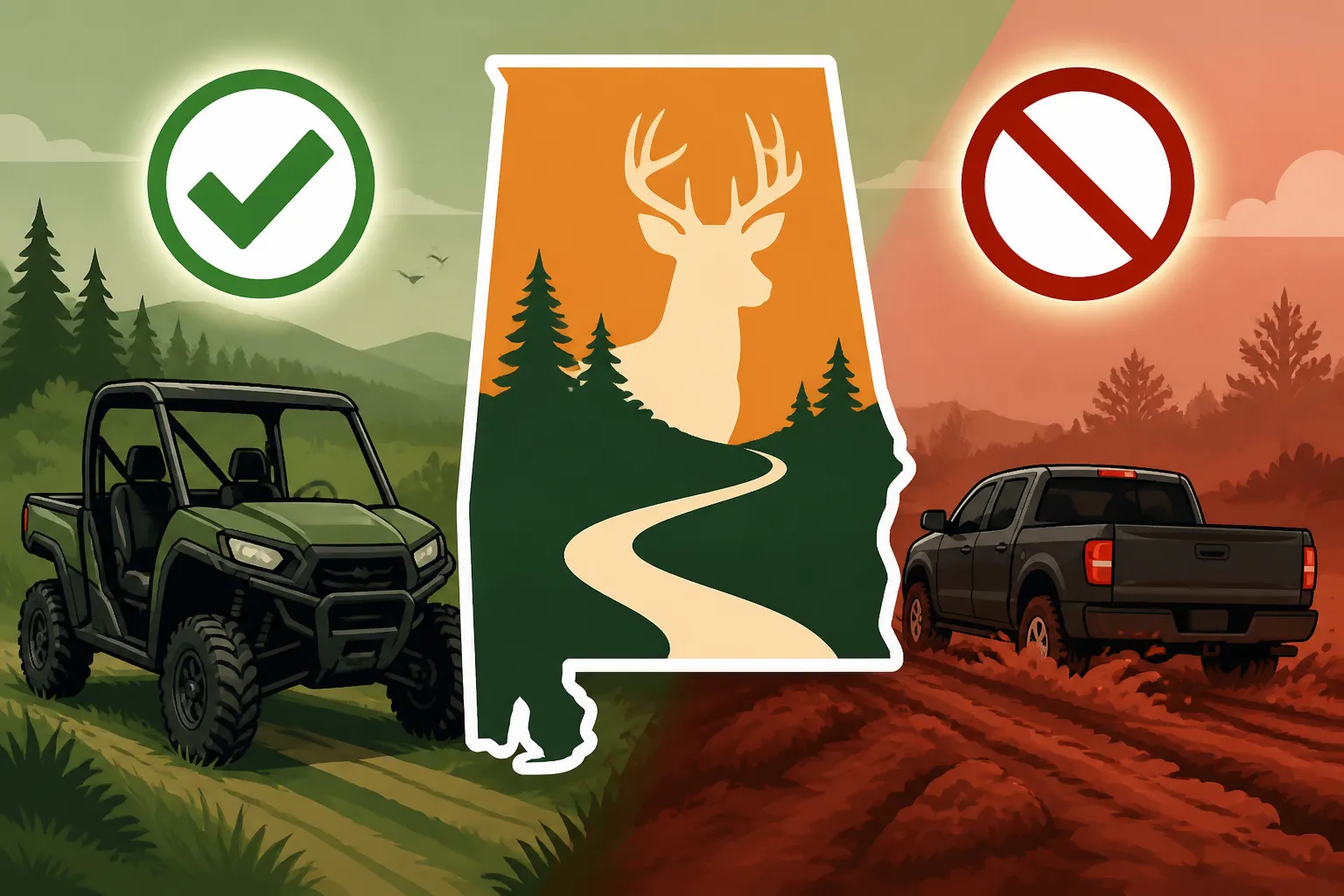
For standard cars and trucks, access is generally limited to paved or well-maintained gravel roads that are clearly marked as open for public vehicle traffic. These are often the main arteries through national forests and larger WMAs. When you park, be mindful of designated parking areas or ensure you're not blocking gates, fire lanes, or other access points. Just pulling off the road into a grassy field might seem harmless, but it can lead to resource damage or impede others. For hunters, the crucial distinction often comes with off-highway vehicles (OHVs) like ATVs (All-Terrain Vehicles) and UTVs (Utility Terrain Vehicles). Many public lands, especially Wildlife Management Areas, have very specific regulations regarding ATV use. They might be restricted to designated trails only, or completely prohibited in certain sections or during specific times of the year. Some areas even require special permits or registration for ATV use. Understanding these rules is critical before you even unload your ATV from the trailer. For instance, you might find that while your truck can get you to a certain parking area, your ATV can take you further down a specifically marked trail to a more remote hunting spot. E-bikes, while growing in popularity, also fall under varying regulations, sometimes treated like traditional bicycles, and other times like motorized vehicles, depending on the land manager's discretion. Always check the specific rules for the area you intend to hunt.
| Vehicle Type | National Forests (NF) | Wildlife Management Areas (WMA) | National Wildlife Refuges (NWR) / State Parks (SP) |
|---|---|---|---|
| Cars/Trucks | Generally restricted to maintained paved/gravel roads. | Restricted to designated main roads and parking areas. | Usually limited to main paved roads and designated parking. |
| ATVs/UTVs | Designated trails often available. Some areas may require permits. | Highly restricted; often limited to specific, marked trails if at all. Special WMA permit may be required. | Generally prohibited off paved roads; very limited exceptions. |
| E-Bikes | Varies; often treated as bicycles, but check power limits. | Varies; specific WMA rules apply, may be motorized vehicle. | Varies; often treated as bicycles, but check local rules. |
| Foot/Bicycle | Generally allowed on all open roads and trails. | Permitted on most roads, trails, and throughout hunting areas. | Generally allowed on most roads and trails. |
Navigating Specific Public Land Types and Their Vehicle Regulations
Alabama is blessed with a variety of public hunting lands, each managed by different agencies with their own sets of rules. What's permitted in a National Forest might get you a citation in a WMA. Doing your homework on the specific area you plan to visit is non-negotiable.
National Forests Talladega, Bankhead, Conecuh
Alabama's National Forests—the Talladega, William B. Bankhead, and Conecuh—offer vast opportunities for hunters, but they also come with a distinct set of vehicle rules. Generally, within these forests, you'll find a network of primary paved and gravel roads that are open to standard vehicles. These roads often lead to trailheads, dispersed camping areas, and access points for hunting blocks. However, many smaller, unpaved logging roads or fire breaks may be gated or marked as closed to motorized vehicles. This means while you can drive your truck to a certain point, you might need to park and proceed on foot or use a bicycle to get deeper into the woods.
When it comes to ATVs and UTVs, the National Forests typically designate specific trails or routes where these vehicles are allowed. These aren't free-for-all areas; they are managed systems, and staying on designated trails is paramount to prevent erosion and habitat damage. You'll need to research the specific National Forest district you're visiting to find out which roads or trails are open to OHVs. For example, some areas might have designated ATV trail systems that require a separate permit, while others prohibit them entirely outside of primary access roads. The U.S. Forest Service often publishes Motor Vehicle Use Maps (MVUMs) that are indispensable for identifying legal routes for different vehicle types. These maps are your best friend for understanding vehicle rules on National Forest land and can save you a lot of grief. For a deeper dive into hunting specific national forests, check out Talladega National Forest Hunting, William B. Bankhead National Forest Hunting, and Conecuh National Forest Hunting. Knowing these distinct rules is key to enjoying your time without legal complications.
Wildlife Management Areas WMAs
Alabama's Wildlife Management Areas, managed by the Alabama Department of Conservation and Natural Resources (ADCNR), often have some of the strictest and most detailed vehicle regulations. This is largely because WMAs are intensively managed for wildlife, and controlling vehicle access is a critical component of that management strategy. It helps reduce hunting pressure in certain zones, protects sensitive wildlife habitat, and minimizes disturbance to game animals.
On WMAs, you can almost always expect vehicle travel for cars and trucks to be limited to designated public roads and specific parking areas. Many WMAs utilize a system of signs and gates to indicate exactly where vehicles are permitted. Parking typically involves pulling off the main road into a designated parking spot, or in some cases, along the shoulder of a clearly marked access road, as long as you're not obstructing traffic or gates. Off-road travel, even just to turn around, is almost universally prohibited on WMAs. When it comes to ATVs and UTVs, the rules become even more stringent. While some WMAs might have limited, clearly marked ATV trails, many prohibit them entirely. The best practice is to assume ATVs are not allowed unless explicitly stated otherwise for that particular WMA. Before heading out, you absolutely must consult the specific regulations for the WMA you intend to hunt. The ADCNR website provides detailed maps and brochures for each WMA, which will outline their unique vehicle rules, season dates, and other pertinent information. It’s also important to remember that most WMAs require a WMA license in addition to your standard hunting license, and these often come with specific stipulations about vehicle use. You can learn more by reading about Alabama Wildlife Management Areas.
National Wildlife Refuges and State Parks
While less extensive in terms of hunting opportunities compared to National Forests or WMAs, National Wildlife Refuges (NWRs) and Alabama State Parks that permit hunting often have the most restrictive vehicle policies. These areas prioritize conservation and recreation broadly, with hunting sometimes being a secondary, highly controlled activity.
On National Wildlife Refuges, you will almost certainly be restricted to paved or primary gravel roads. Off-road vehicle travel of any kind is typically prohibited, and even parking can be limited to designated lots. Many NWRs that offer hunting are often walk-in only, meaning you park your vehicle at a specified entry point and proceed entirely on foot. This is especially true for waterfowl hunting areas, where vehicle disturbance could easily spook birds. Before planning a hunt on an NWR, it's critical to visit the specific refuge's website or contact their office directly for their current hunting plan and vehicle access rules. These plans often detail exact entry points, parking restrictions, and areas where even bicycles might be restricted. Similarly, Alabama State Parks, which occasionally offer managed hunts, will have very strict vehicle guidelines. These hunts are often highly controlled, sometimes by quota, and vehicle access is usually limited to what is absolutely necessary for the hunt's logistics, such as designated check-in points or retrieval roads. Dispersed parking or off-road driving is almost always forbidden in State Parks. Always consult the specific park's hunt regulations well in advance.
Essential Strategies for Legal and Effective Vehicle Use
Knowing the rules is one thing; putting that knowledge into practice effectively is another. There are practical steps you can take to ensure you're always legal and making the most of your vehicle access, without running afoul of regulations.
Pre-Trip Planning and Mapping Tools
The days of just grabbing a worn paper map and hoping for the best are largely behind us. Modern technology, combined with a good dose of old-fashioned common sense, can save you a world of trouble and dramatically improve your hunting experience. Before you even leave the driveway, pulling up an app like onX Layers for Alabama Land Status or GoHunt can be a game-changer. These digital mapping platforms allow you to overlay public land boundaries, road networks, and even private land ownership right on your phone or tablet. You can clearly see what's designated as an open road versus a closed trail, and identify specific parking areas.
Beyond just looking at the lines, you can use these tools to scout potential access points, identify areas where you'll need to transition from vehicle to foot, and even mark potential stand locations relative to legal parking. Always cross-reference what you see on an app with the official maps and regulations from the managing agency (e.g., U.S. Forest Service Motor Vehicle Use Maps, ADCNR WMA brochures). Sometimes, temporary closures due to weather, timber operations, or special events might not be immediately updated on third-party apps, so a quick check of the official website is always a good idea. Even without cell service, you can often save maps offline with tools like onX Hunt or GoHunt, ensuring you always know where you stand, literally, in relation to those critical property and vehicle access lines. This preparation is key to avoiding an unintentional trespass or violation.
On-the-Ground Awareness and Signage
Even with the best pre-trip planning, things can change or be subtly marked on the ground. That's why constant vigilance and awareness once you're on public land are so important. Always keep your eyes peeled for signs, gates, and markers that indicate vehicle access rules. A simple "Road Closed" sign, a chain across a dirt path, or even posts painted a specific color can all be indicators of restricted access. Sometimes, these signs can be old, faded, or partially obscured, so you really have to be looking for them.
It's also crucial to understand the "spirit" of the rules. Even if a road isn't explicitly gated, if it's clearly overgrown, deeply rutted, or looks like it hasn't seen vehicle traffic in years, it's likely not intended for public vehicle use. The "if in doubt, walk it out" mentality is excellent advice here. Parking your vehicle in a way that blocks gates, fire lanes, or access roads is not only illegal but also incredibly inconsiderate to other land users and emergency personnel. Remember, violating vehicle rules on public land can lead to more than just a stern talking-to. Fines can be substantial, and repeated offenses could lead to a loss of hunting privileges. Respecting these rules shows respect for the land, wildlife, and fellow hunters, ensuring that these precious public resources remain accessible and enjoyable for everyone. For more details on what signs to look for, you might find useful information in Reading Alabama Public Land Boundary Signs.
Consequences of Vehicle Violations
It's tempting to think that a quick drive down a restricted trail won't hurt, but the consequences of violating vehicle rules on Alabama public lands can be significant and far-reaching. Beyond the immediate impact on the environment, such as creating new unauthorized trails, soil erosion, and disturbing wildlife, there are legal ramifications that can quickly turn a hunting trip into a costly ordeal.
Fines for off-road vehicle use in prohibited areas, driving on closed roads, or parking improperly can range from hundreds to thousands of dollars, depending on the severity of the violation and the agency involved. These aren't just minor tickets; they can put a serious dent in your wallet. In addition to monetary penalties, you might face court appearances, and in some cases, your vehicle could even be impounded. More importantly for hunters, violations can lead to the suspension or revocation of your hunting license. Imagine being banned from hunting for a season or longer because you chose to ignore a "Road Closed" sign. This could mean missing out on Alabama Deer Season Structure Explained or Spring Turkey Hunting in Alabama, hunts you've looked forward to all year. Enforcement officers regularly patrol public lands, and they are well-versed in the regulations. They also rely on reports from other responsible land users. It's simply not worth the risk. Adhering to vehicle rules protects the resource, respects other users, and safeguards your ability to continue enjoying Alabama's incredible hunting opportunities for years to come.
Disclaimer
This article is for general informational purposes only and does not constitute professional advice. Laws, prices and regulations vary by location and change over time. Consult a qualified professional for guidance on your specific situation.