Tennessee River Public Boat Access for Hunters
Navigating Alabama's vast public lands can sometimes feel like solving a complicated puzzle, especially when you're trying to reach those prime hunting spots that are just a little off the beaten path. For hunters looking to access hidden river bottom pockets for deer, or those elusive flooded timber spots for waterfowl, the Tennessee River offers a unique, often underutilized gateway. This guide will walk you through leveraging public boat access points along this mighty river, opening up new hunting opportunities you might not have considered.
Understanding the Tennessee River's Appeal for Hunters
The Tennessee River system, winding its way through North Alabama, isn't just a scenic waterway for recreation; it's a vital artery for wildlife and an incredible resource for hunters. Its vastness, combined with the often-dense riparian habitats, creates incredible hunting potential that's distinctly different from upland or farmland hunting.
A Waterfowl Paradise
For many, the Tennessee River immediately conjures images of duck blinds and cold mornings. And for good reason! This river system lies squarely within the Mississippi Flyway, a major migratory route for waterfowl heading south for the winter. From the broad main channel to the countless sloughs, oxbows, and backwaters, the river provides diverse habitats that attract a huge variety of ducks and geese.
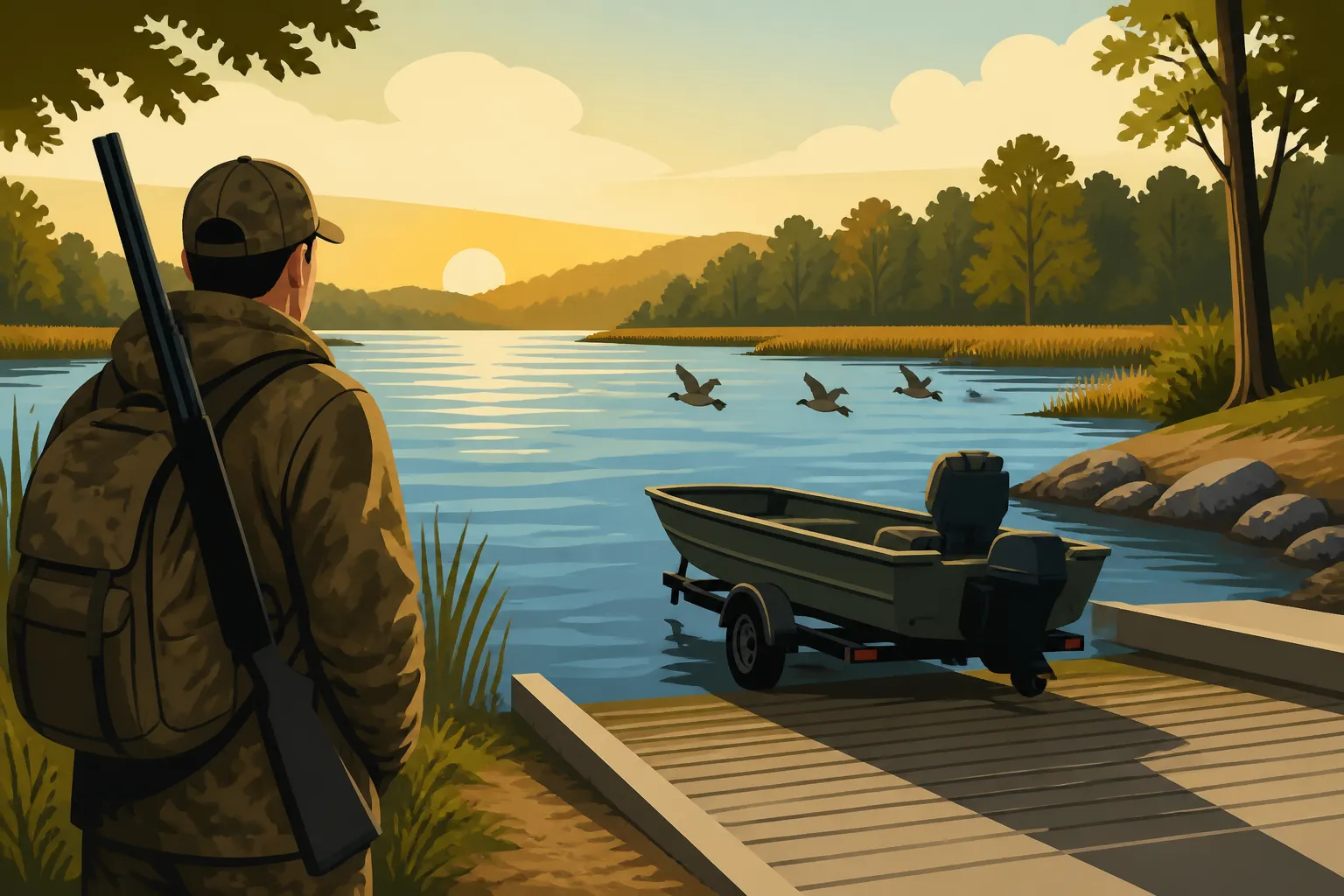
Picture this: You're pushing off before dawn, the air crisp and carrying the scent of damp earth and river water. Your destination is a hidden pocket of flooded timber or a quiet backwater slough that's inaccessible by foot or vehicle. These spots hold mallards, gadwalls, wigeon, and even pintails that are seeking refuge and food. The sheer size of the river system means there are always new areas to explore, and with boat access, you can reach places that receive far less pressure than road-accessible public lands. Understanding Alabama Waterfowl Migration Timing and knowing the key species that utilize the Tennessee River will greatly enhance your success.
River Bottom Deer and Small Game
While waterfowl often take center stage, the Tennessee River's influence on deer and small game hunting is equally significant. The river bottomlands are often rich with diverse vegetation, from mature hardwoods dropping acorns to dense undergrowth providing cover. These areas act as natural travel corridors, feeding grounds, and bedding areas for white-tailed deer.
Imagine using your boat to slip silently into a remote river island or a secluded stretch of timber along the bank that's cut off by a slough. Deer often use these water features as natural barriers, feeling safer in areas less frequented by human traffic. You might find well-worn trails, fresh rubs, and scrapes along these remote banks. Beyond deer, these bottomlands are a haven for small game like squirrels and rabbits. Mature hardwoods, especially those along waterways, are squirrel magnets. Squirrel Hunting Alabama Bottomland Hardwoods can be incredibly productive when accessed by boat, allowing you to reach groves that are otherwise untouched. The dense brush and fencerows along the riverbanks also provide excellent habitat for cottontails.
Navigating Public Access Points and Ramps
Finding the right spot to launch your boat is the crucial first step to unlocking these river hunting opportunities. Alabama has a decent network of public access, but knowing how to identify and utilize it effectively is key.
Identifying Official Boat Ramps
Official public boat ramps are your most reliable and safest bet for accessing the Tennessee River. These are typically managed by entities like the Alabama Department of Conservation and Natural Resources (ADCNR), local counties, or the Tennessee Valley Authority (TVA). They offer paved ramps, parking areas (sometimes with a fee), and a relatively clear path to open water.
When you're planning a trip, start by looking at a reliable mapping tool. The ADCNR website often has an interactive map showing public boat ramps. Alternatively, digital mapping platforms like onX Hunt are invaluable. You can zoom in on the Tennessee River and toggle layers that show public land boundaries, boat ramps, and even satellite imagery to get a good feel for the terrain around the launch. This helps you identify ramps that are strategically located near public hunting lands or areas known for good waterfowl or deer habitat. For example, if you're targeting specific areas like the Tennessee River Delta, checking maps for ramps within or adjacent to public hunting areas there is a must. Knowing Using the Outdoor Alabama Map Tool can save you a lot of time in scouting.
Unofficial Access and Riverbank Landings
Sometimes, the best hunting spots are a little further from the established ramps, requiring a more adventurous approach to access. Along the Tennessee River, you might find unofficial access points or natural riverbank landings that aren't paved or maintained but are legally accessible through public land. These can be overgrown dirt paths leading to the water's edge, or simply stretches of public river frontage where you can slide a smaller boat or kayak into the water.
These less formal spots often require more careful scouting. Before heading out, use satellite imagery on platforms like onX Hunt or GoHunt to scrutinize potential launch areas. Look for clearings in the vegetation near public land boundaries, or small, natural indentations in the bank that could serve as a rudimentary launch. It's absolutely critical to confirm land ownership in these areas. While the river itself is navigable, the land immediately adjacent to the water could be private. Platforms like onX Hunt are excellent for showing property lines, helping you avoid accidental trespass. Always err on the side of caution; if there's any doubt about land ownership, stick to official ramps. For more on this, check out Reading Alabama Public Land Boundary Signs and Alabama Trespass and Permission Law.
Essential Gear and Safety for River Access Hunting
Hunting from a boat on the Tennessee River brings a whole new set of considerations. It's not just about what gun or bow you bring; it's about reliable watercraft, navigation, and rigorous safety practices.
Boat Selection and Setup
Choosing the right boat for river hunting can make or break your trip. You're not just fishing calm lakes; you'll be dealing with currents, shallow spots, submerged hazards, and potentially dense cover.
For general river access, especially if you're covering long distances or need to carry a lot of gear, a sturdy jon boat or a flat-bottomed boat is often preferred. Their stability and relatively shallow draft are a huge advantage. If you're specifically targeting flooded timber or extremely shallow backwaters for waterfowl, a mud motor on a smaller jon boat can be a game-changer, allowing you to traverse areas where outboards would get stuck. For quieter, stealthier approaches to deer or small game, a kayak or canoe can be ideal, allowing you to paddle silently into secluded coves. Whatever your choice, ensure it's camouflaged to blend into the natural surroundings, especially for waterfowl hunting. Don't forget ample dry storage for your gear, spare anchors, and a paddle or push pole for getting out of sticky situations.
Safety Protocols and Emergency Preparedness
Safety on the water is paramount, especially when you're hunting in potentially remote areas, often during colder months or in low-light conditions. The Tennessee River is a large body of water, and it demands respect.
Always wear a U.S. Coast Guard-approved personal flotation device (PFD), even if you're a strong swimmer. The sudden shock of cold water can incapacitate anyone. Your boat should be equipped with all required safety gear: distress signals (flares, whistle), navigation lights (especially if you're out before dawn or after dusk), fire extinguisher, and a first-aid kit. Communication is vital; carry a fully charged cell phone in a waterproof case, and consider a satellite messenger or VHF radio for areas with spotty cell service. Always check the weather forecast before heading out, paying close attention to wind, temperature, and any potential for storms. River currents can be surprisingly strong, even in seemingly calm backwaters, so be aware of how they might affect your boat. Knowing Hunting Flooded Timber for Mallards will often mean dealing with very specific water conditions and submerged obstacles, so a keen eye and cautious approach are critical.
Strategic Hunting Approaches Using Boat Access
Once you've safely accessed the river, how do you maximize your hunting success? It's about combining your waterborne access with smart, species-specific tactics.
Waterfowl Decoy Spreads and Blind Placement
Boat access fundamentally changes your waterfowl hunting strategy. Instead of being limited to shoreline blinds, you can get into the heart of the action. Scouting from your boat beforehand is crucial for identifying where the ducks are loafing, feeding, and flying. Look for areas with natural food sources like smartweed or millet, or where open water transitions into flooded timber.
When setting up your spread, consider the wind direction and how it will position birds for your shot. Many hunters use large numbers of decoys, often 50 or more, to create a welcoming sight for passing birds. Motion decoys, like spinning wing models or jerk cords, can add vital realism. For concealment, you can construct natural blinds from available brush on river islands or along remote banks. For larger, open water areas, specialized layout blinds designed for boats or even simple boat blinds built into your jon boat can be effective. This is where you might find yourself employing tactics similar to Layout Blind Hunting Delta Farm Fields, adapting them to the river's unique environment.
Still-Hunting River Bottoms and Scouting
For deer and small game, boat access allows for incredibly stealthy entry into areas that receive minimal pressure. Instead of driving up to a trailhead, you can drift silently into a secluded cove or tie off your boat and slip ashore.
Once on land, the key is to still-hunt these river bottoms. Walk slowly, stop frequently, and listen. Deer often move along the high ground within these bottomlands, using slight elevations to stay dry and offering good visibility. Look for pinch points created by the river or sloughs that funnel deer movement. Early season scouting, ideally with your boat, can reveal these travel corridors, bedding areas, and overlooked food sources. Reading Aerial Photos for Piedmont Deer can give you an excellent overhead perspective, even for river bottoms, to identify potential travel routes before you ever step foot on the ground. Once you identify promising areas, you can return during the season, anchoring your boat discreetly and making a quiet approach.
Legalities, Regulations, and Ethical Considerations
While the Tennessee River offers unique opportunities, it's not a free-for-all. All state and federal hunting regulations still apply, and ethical conduct is paramount.
Understanding Waterfowl and Deer Zone Rules
Alabama's hunting regulations can be complex, especially with different zones for deer and waterfowl. It’s absolutely critical to know which zone you are hunting in along the Tennessee River. For waterfowl, federal frameworks dictate season dates and bag limits, which are then implemented by the state. These regulations often divide the state into specific duck zones, and the Tennessee River will fall into one of these. You must also have your state hunting license, a federal duck stamp, and be HIP certified to hunt migratory birds. Refer to Alabama Waterfowl Zones and Seasons for the most current information.
For deer, Alabama is divided into five different zones, each with its own season dates for archery, gun, and muzzleloader, as well as specific antlerless deer limits. The Tennessee River stretches across several counties, meaning you might traverse different deer zones. Always verify the specific regulations for the county you are hunting in on any given day. You'll need to understand Alabama Deer Season Structure Explained and comply with all reporting requirements, such as Game Check, for harvested deer.
Respecting Property Lines and Other Users
Even on public waters, property lines can become ambiguous near the shore, and you're likely to encounter other users. Always operate with respect and a strong ethical compass.
While you might be able to legally float down a river past private land, anchoring, wading, or stepping ashore onto private property without permission is trespassing. Use mapping apps like onX Hunt or GoHunt to clearly delineate public and private land boundaries. Be vigilant about property markers and fences. Additionally, the Tennessee River is heavily used by anglers, pleasure boaters, and other outdoor enthusiasts. Give other users ample space, especially when setting up decoys or blinds. Avoid making excessive noise or interfering with their activities. A good rule of thumb is to leave an area better than you found it, packing out all trash and being mindful of your impact on the environment. Understanding Alabama Trespass and Permission Law is not just a legal necessity but a cornerstone of ethical hunting.
| Boat Type | Primary Use Case | Key Advantages | Considerations |
|---|---|---|---|
| Jon Boat | Versatile for general hunting, gear | Stable, spacious, handles some chop, good for motors | Can be noisy, may struggle in very shallow water |
| Mud Boat | Flooded timber, shallow backwaters | Navigates extremely shallow and vegetated areas | Louder engine, less maneuverable in open water |
| Kayak/Canoe | Stealthy deer/small game, scouting | Quiet, lightweight, highly maneuverable, low cost | Limited gear capacity, less stable, susceptible to current |
| Airboat | Large, open marsh/swamp areas (limited) | Accesses vast, extremely shallow, vegetated areas | Very noisy, high cost, limited utility outside specific terrain |
| Duck Boat | Dedicated waterfowl hunting | Camouflaged, stable, often low profile | Specialized, sometimes less versatile for other hunting |
Disclaimer
This article is for general informational purposes only and does not constitute professional advice. Laws, prices and regulations vary by location and change over time. Consult a qualified professional for guidance on your specific situation.