Run-and-Gun on Alabama Public Land
Hunting Alabama's public lands can feel like a daunting task, especially when you're up against crowded areas and deer that seem to vanish into thin air. Many hunters find themselves setting up a stand in a promising spot, only to sit for hours without seeing anything, then repeating the same frustrating process day after day. This guide is all about equipping you with the "run-and-gun" strategy – a highly mobile and adaptive approach that helps you actively find and hunt deer on public land, rather than passively waiting for them to come to you.
Understanding the "Run-and-Gun" Philosophy on Public Land
The traditional image of deer hunting often involves a fixed stand, quietly waiting for hours in a pre-scouted location. While that absolutely has its place, particularly on private, low-pressure ground, public land hunting in Alabama is a different beast entirely. Deer on public land are often far more sensitive to pressure, their patterns are less predictable, and their preferred bedding and feeding areas can shift based on hunter activity, changing food sources, or even just the weather. That's where the run-and-gun approach shines – it's about being proactive, mobile, and willing to adapt.
Why Run-and-Gun Works for Alabama Public Land
Think about it: public land deer aren't going to stick to a routine if they're constantly being bumped or hearing hunters. They become nocturnal, they move to thick, nasty cover, and they'll skirt around established stand locations. A run-and-gun strategy counters this by making you the mobile element. Instead of waiting in a single spot hoping a deer wanders by, you're actively seeking out fresh sign, observing the landscape, and getting into areas that other hunters might overlook or deem too difficult to access. This means you’re constantly evaluating, moving, and setting up quickly where the action is, not just where you hoped it would be. This is particularly effective during the peak of the rut when bucks are cruising for does, making them more susceptible to an encounter with a mobile hunter.
Consider a scenario in a heavily hunted area like the Talladega National Forest. A fixed stand hunter might commit to a spot near a known travel corridor, but if other hunters push deer off that corridor, their day is done. A run-and-gun hunter, however, would be able to quickly pick up on this shift, perhaps seeing fresh tracks leading into a thick pine plantation or a secluded creek bottom, and then move to intercept those deer. It's about flexibility and responsiveness, turning what might be a bust for a static hunter into an opportunity for a dynamic one. This method allows you to cover more ground and react to real-time information rather than just historical data.
Gear Considerations for Mobile Hunting
To hunt effectively using a run-and-gun method, your gear needs to support your mobility. Heavy, bulky equipment will slow you down, make you tired, and ultimately make the strategy less feasible. The goal is a light pack that contains only the essentials. This means a lightweight treestand or a comfortable ground blind, minimal calling equipment, and necessary safety gear. Every ounce counts when you're covering miles of rugged Alabama public land.
For example, a lightweight climbing stand or a compact hang-on stand paired with a set of ultralight climbing sticks is often ideal. Some hunters opt for a saddle hunting setup, which offers unparalleled mobility and allows you to hunt virtually any tree. Your backpack should be small but efficient, holding things like a water bottle, a small first-aid kit, a headlamp, a rangefinder, binoculars, and perhaps a small GPS unit or your phone with a reliable mapping app. Forget the coolers, bulky thermoses, or extra clothing layers you might bring to a stationary blind. The idea is to be able to pick up your entire setup and move silently to a new location within minutes, not hours. The less you carry, the faster and quieter you'll be, increasing your chances of finding unpressured deer.
The Mindset of a Mobile Hunter
The run-and-gun approach isn't just about gear; it's about a complete shift in mindset. You need to be patient, yes, but also incredibly adaptable and resilient. There will be days when you walk miles, set up three different times, and still don't see a deer. The key is not to get discouraged but to learn from each move. Each "unsuccessful" setup provides information: perhaps the wind was wrong, or the sign wasn't as fresh as you thought, or you encountered unexpected pressure.
A mobile hunter views the entire landscape as their potential hunting ground, not just a single spot. They are constantly reading the terrain, looking for subtle clues like fresh rubs, scrapes, tracks, or droppings. They understand that deer movement changes daily, sometimes hourly, and their strategy must change with it. This mindset means being comfortable with being uncomfortable, often hunting in areas that are thicker, steeper, or further from the beaten path than most hunters dare to venture. It means being proactive and constantly asking, "Where are the deer right now?" rather than "Will a deer eventually walk past my stand?"
Scouting and Locating Key Areas for Quick Setups
Successfully executing a run-and-gun hunt starts long before you ever step foot in the woods with your stand. It begins with meticulous scouting, both from your computer and with boots on the ground. Public land deer are masters of evasion, so you need to understand their potential hideouts and travel patterns intimately.
Pre-Season Digital Scouting
Your phone or computer can be one of your most powerful scouting tools. Using mapping apps like GoHunt is crucial for identifying potential hotspots without leaving your living room. Start by looking for topographical features that funnel deer: saddles, ridge lines, creek bottoms, and pinch points where thick cover meets more open timber. Water sources are also critical, especially in the early season or during dry spells. You'll want to identify areas with diverse habitat, too – think about where mature hardwoods transition into thick pine regeneration, or where small clear-cuts offer browse.
Pay close attention to public land boundaries. Often, deer will stage or bed on private land and only venture onto public land to feed or during the rut. Identifying these transition zones digitally can give you a significant advantage. Tools like onX Hunt, for example, allow you to see property lines clearly, helping you pinpoint where deer might be crossing onto public ground. Look for areas deep inside public land, far from roads and trailheads, where hunting pressure might be lower. These remote pockets often hold older, wiser deer that have learned to avoid easy access points. Scouting Alabama Public Land Before Season isn't just a suggestion, it's a necessity for this style of hunting.
Boots-on-the-Ground Reconnaissance
Digital scouting is a great starting point, but there's no substitute for actually walking the ground. Once you've identified potential areas on a map, it's time to hit the woods. During the off-season or even a few weeks before the opener, walk those areas. Look for old sign, but more importantly, fresh sign. What kind of acorns are dropping? Are there any soft mast trees like persimmons or muscadines? Are there rubs and scrapes from previous seasons, indicating historical buck activity?
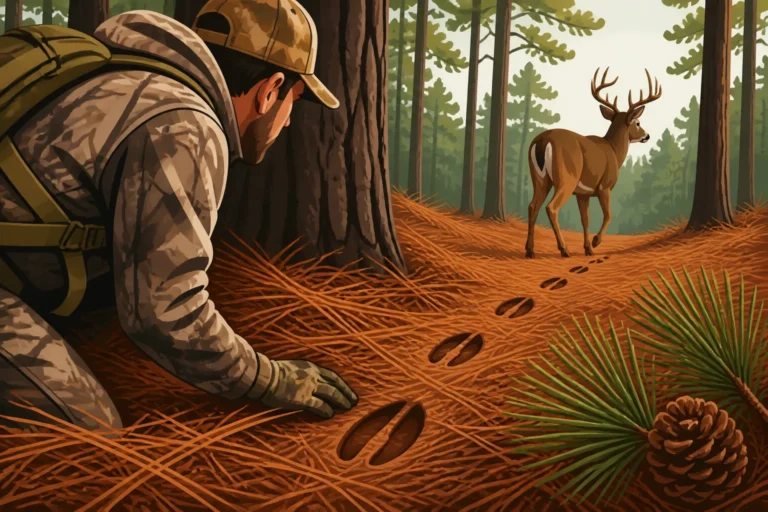
When the season approaches, or even on the day of your hunt, look for fresh tracks, droppings, and active rubs or scrapes. These are your real-time clues. If you find a hot scrape line along a logging road or a trail littered with fresh tracks, you know deer are actively using that area now. Don't be afraid to put on the miles. This kind of active reconnaissance is what distinguishes a successful run-and-gun hunter from someone just hoping for luck. When you're in the field, learn to differentiate between old sign and new; this is vital for deciding where to make your move. If you're hunting in areas with big timber, knowing how to Find Sign in Big Talladega Timber can make all the difference.
Reading the Landscape for Deer Movement
Deer are creatures of habit, but also opportunists. They use the landscape to their advantage for security, food, and breeding. Understanding how they interact with different terrain features is crucial. For instance, deer often travel along ridgelines, especially during the rut, as it provides an elevated vantage point and easier travel. Creek bottoms, with their dense cover and access to water, serve as excellent travel corridors and bedding areas, particularly in warmer weather.
Consider transition zones – where one type of cover meets another. A field edge where pines meet hardwoods, or a thick clear-cut bordering mature timber, can be prime spots. Deer will often skirt these edges, using the security of the thick stuff while still accessing food in the more open areas. Learning to read these nuances, like how Wind and Thermals on a Piedmont Ridge affect deer movement, will inform your setup location. If you’re hunting early in the season, late-season food sources like remaining acorns or green browse planted for deer might still draw them in. The more you understand how deer use the specific topography of Alabama's public lands, the better you'll be at predicting their movements and quickly setting up for a shot.
Executing the Run-and-Gun Hunt Strategy
Once your scouting is done and you've got a game plan, it's time to put the run-and-gun strategy into action. This phase demands discipline, precision, and an almost intuitive understanding of your surroundings. It's about being efficient with your time and movements to maximize your chances.
Stealth and Speed
The very essence of run-and-gun is moving with stealth and setting up with speed. You're not going to sneak up on a mature buck if you're crashing through the woods like a freight train. Every step needs to be deliberate, every branch avoided. Wear quiet clothing, and pack your gear so nothing rattles or clanks. Move slowly and deliberately, especially when you're getting close to an area you suspect holds deer. Use natural cover to conceal your approach.
Once you find fresh sign or spot a deer you want to intercept, you need to set up quickly. This is where practice with your lightweight stand or saddle comes in. Get into your tree or brush in your ground blind with minimal noise and movement. The less time you spend exposed and making noise, the better. Often, these setups are temporary – just an hour or two – so don't overcomplicate it. The goal is to get into a position to take a shot, not to build a five-star hotel in the woods. This rapid deployment allows you to capitalize on fresh information before the deer move on or become aware of your presence. Remember, on public land, speed often beats perfection.
Adapting to Conditions
Alabama weather and deer behavior can change on a dime, and a run-and-gun hunter must be ready to adapt instantly. The wind is perhaps the most critical factor. If the wind shifts and blows your scent into a bedding area or down a trail, you're busted. Don't be afraid to move if the wind isn't right for your current setup. Similarly, thermals in hilly or mountainous terrain will shift as the day warms up or cools down. Understanding these subtle air currents is vital, especially when hunting the ridges and hollows common in much of Alabama's public land.
Beyond weather, observe deer activity. Are they moving earlier or later than expected? Are they using a different trail than you anticipated? If you're not seeing anything, but you're finding fresh sign nearby, it's a clear signal to adjust. Maybe they're hitting a different food source, or maybe the pressure from other hunters has pushed them into a thicket you hadn't considered. Being able to change your plans, abandon a spot, and relocate based on what the deer are telling you is a hallmark of an effective run-and-gun hunter. This adaptability is key to success on pressured ground.
Deciding When to Move On
One of the hardest parts of run-and-gun hunting is knowing when to call it quits on a spot and move to the next. There's no hard and fast rule, but several factors should influence your decision. Generally, if you've been in a spot for an hour or two and haven't seen any deer, heard any deer moving, or found any fresh sign since your setup, it's probably time to relocate. Trust your gut, but also trust the signs.
If you find fresh tracks leading away from your current area, follow them. If you hear a distant shot, consider that deer might be on the move in your direction or being pushed elsewhere. Don't fall into the trap of "just five more minutes" for hours on end. The whole point of run-and-gun is to be active. Make a mental note of why a spot didn't work, and use that information for future hunts. Perhaps the sun exposed your stand too much, or the approach was too noisy. The willingness to move, even when it means packing up and hiking again, is what separates this method from static hunting. Remember, if you're not seeing deer, it's almost always because the deer aren't there, or they know you are.
Common Challenges and How to Overcome Them
Hunting public land in Alabama, especially with a highly mobile strategy, presents its own unique set of hurdles. From navigating crowded woods to understanding complex regulations, being prepared for these challenges is as important as knowing where to set up your stand.
Dealing with Hunting Pressure
Public land in Alabama, particularly during opening weekend or peak season, can feel like a carnival. You'll hear other hunters, see their vehicles, and sometimes even bump into them in the woods. This pressure pushes deer into tighter, nastier cover, and often makes them more nocturnal. The run-and-gun strategy is inherently designed to mitigate this, but you still need tactics.
Firstly, go deeper than most. The vast majority of hunters won't venture more than a mile or so from their vehicle. If you're willing to put in the extra half-mile or mile, you can find pockets of less pressured deer. This often means facing tougher terrain or thicker brush, but the reward is often worth it. Secondly, hunt during weekdays when possible. The woods are significantly quieter from Monday through Thursday. Thirdly, focus on areas that are naturally difficult to access – steep ridges, thick swamps, or dense clear-cuts. Deer will use these as sanctuaries, and a mobile hunter with a light setup can often get into these spots where others can't or won't. Lastly, be aware of others. If you stumble upon another hunter's setup, respectfully back out and move on. There's plenty of public land to share, and avoiding conflict keeps everyone safe and happy. Understanding Hunting Pressure on Alabama Public Land is essential for success.
Navigating Unfamiliar Terrain
Alabama's public lands offer a huge variety of terrain, from the rolling hills of the Piedmont to the dense river bottoms of the Delta. Navigating these areas, especially when you're moving frequently, requires solid navigational skills. Relying solely on your memory or a paper map can be risky, particularly if you're pushing deep into unfamiliar territory.
A reliable GPS unit or a smartphone with a robust mapping app (like GoHunt or onX Hunt) is absolutely non-negotiable. Download offline maps before you go, as cell service can be spotty in remote areas. Use these tools to mark your vehicle, potential bedding areas, food sources, and especially public land boundaries. It’s too easy to inadvertently cross onto private land, which can lead to legal issues. Familiarize yourself with topographical lines and how they translate to real-world terrain. For instance, tightly packed contour lines mean a steep climb, something you'll need to account for when planning your routes. Always carry a compass as a backup, and know how to use it, even if you rely mostly on digital tools. Knowing Where to Get an Alabama Public Land Map can also be very helpful.
Ethical Considerations for Mobile Hunting
While the run-and-gun method emphasizes covering ground and being aggressive, it's critical to maintain ethical hunting practices. Safety should always be your top priority. Always know your target and what's beyond it, especially in areas where other hunters might be present. Wear blaze orange if required or if you deem it appropriate for safety, even if it's not strictly mandated for your specific weapon or season.
Shot placement is paramount, particularly when you're setting up quickly. Don't rush a shot you're not confident in. It's far better to let a deer walk than to make a poor shot and risk losing an animal or causing unnecessary suffering. If you do take a shot, be prepared to track the animal, even if it means staying past dark or coming back in the morning. Being a mobile hunter doesn't mean you cut corners on recovery efforts. Lastly, always respect other hunters. If you encounter someone, a friendly nod or brief, quiet conversation is fine, but avoid disrupting their hunt. We're all out there for the same reason, and mutual respect ensures a positive experience for everyone.
Here's a quick comparison of the two hunting styles:
| Feature | Fixed Stand Hunting | Run-and-Gun Hunting |
|---|---|---|
| Mobility | Low; commitment to one or two primary locations. | High; frequent relocation based on fresh sign/activity. |
| Gear Weight | Can be heavier; comfort items often prioritized. | Lightweight; essentials only to facilitate movement. |
| Approach | Passive; waiting for deer to come to you. | Proactive; actively seeking out deer and their patterns. |
| Time per Spot | Long sits (half-day to full-day). | Shorter sits (1-3 hours) before relocating. |
| Pressure Response | Less adaptable; relies on deer ignoring pressure. | Highly adaptable; seeks out unpressured areas. |
| Scouting Emphasis | Historical data, long-term patterns, food plots. | Real-time sign, current movement, immediate opportunities. |
| Physical Demands | Moderate (approach/exit to stand). | High (covering miles, multiple setups). |
Disclaimer
Hunting is an inherently dangerous activity. Always prioritize safety, understand and follow all local and state regulations, and obtain proper landowner permissions when hunting private land. The advice provided in this article is for informational purposes only and should not replace professional guidance or certified hunter education. Always practice ethical hunting and good sportsmanship.