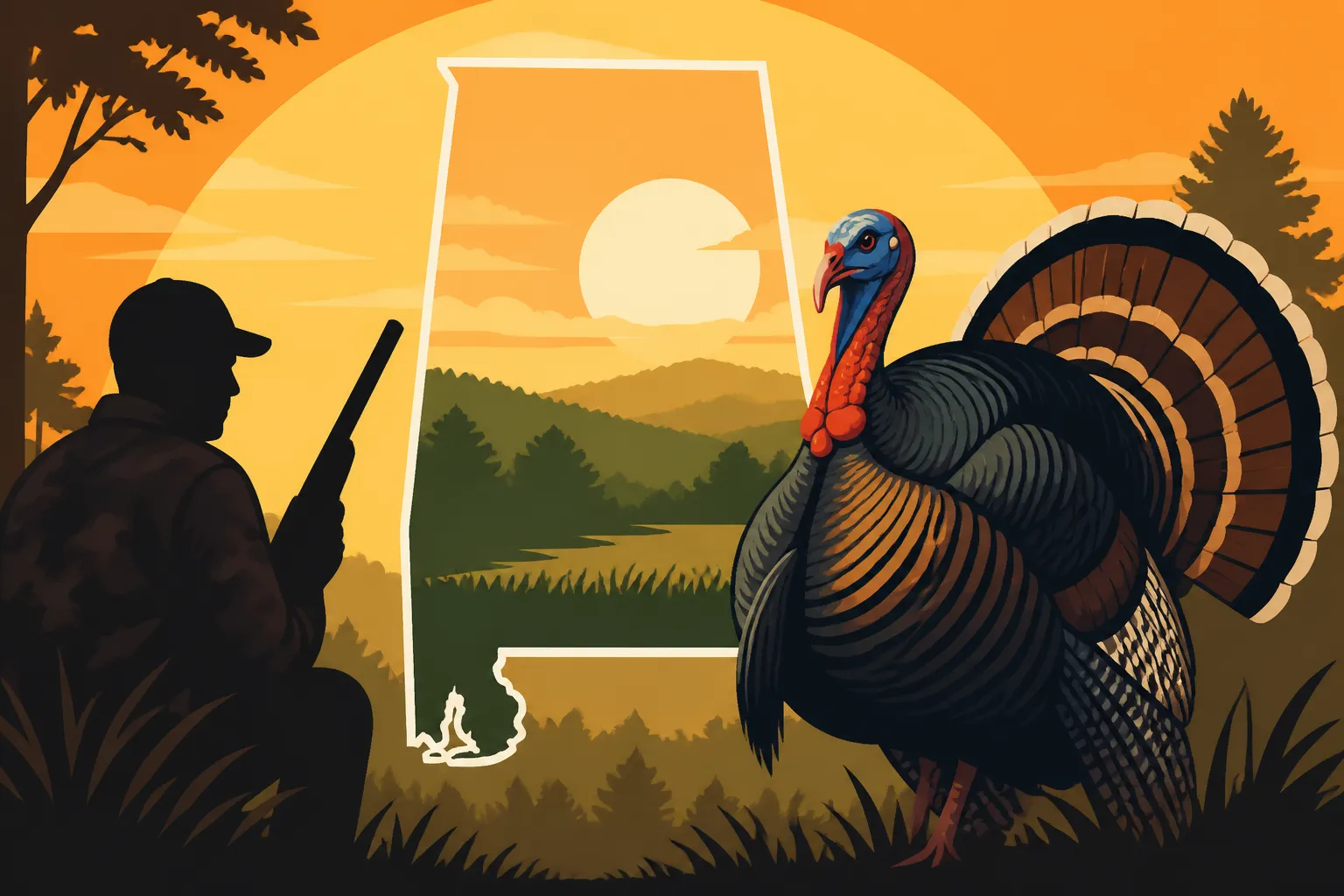
Hunting Alabama’s Later Youth Turkey Weekend
It can feel like a mad dash to get everything ready for turkey season, especially when you're trying to introduce a young hunter to the sport. Between school, sports, and life's general chaos, those early youth weekends often slip by before you can even load the truck. But don't despair! Alabama offers a later youth turkey hunting weekend, providing a fantastic second chance for mentored young hunters to get out there and experience the thrill of a spring gobbler hunt. This guide will walk you through everything you need to know to make that later weekend a roaring success.
Understanding Alabama's Later Youth Turkey Weekend Dates and Zones
Alabama’s youth turkey season isn't a one-size-fits-all affair, and that's often where the confusion sets in. The state is divided into two turkey zones, Zone 1 and Zone 2, each with slightly different opening dates for both the regular and youth seasons. If you missed the very first opportunity, the "later" youth weekend we're talking about typically aligns with the Zone 2 opener, extending the chance for youth hunters in a significant portion of the state.
For most youth hunters, this means keeping a close eye on the Alabama Department of Conservation and Natural Resources (ADCNR) calendar each year. The general idea is that Zone 1 opens first, and about a week later, Zone 2 follows. The youth weekend mirrors this, giving Zone 2 a later start that can be a real blessing for families with packed schedules. It’s crucial to know which zone your hunting spot falls into. A quick check on the Outdoor Alabama website or a reliable hunting app can confirm this for you. Knowing your zone is the first, non-negotiable step to ensuring you're legal and ready for the right dates. This staggered approach helps manage hunting pressure and gives birds in different regions time to start their breeding cycles.
Distinguishing Zone 1 and Zone 2 Youth Openers
The primary difference between Alabama's turkey zones, as it pertains to youth hunting, is the opening date. Zone 1, generally the northern and central parts of the state, typically opens first for youth hunters. Then, roughly a week later, Zone 2, which covers much of south Alabama, opens its doors. This means if you're hunting in a Zone 2 county, your "later youth weekend" is actually just your county's first youth weekend. For those in Zone 1, however, it's a completely missed boat. So, when people talk about the "later" youth weekend, they are almost exclusively referring to the Zone 2 opener.
This distinction is more than just a calendar quirk; it impacts bird behavior and hunting pressure. If you're in Zone 2, your youth weekend is often the first real crack at these birds, which can mean more active gobblers that haven't been pressured yet. If you're looking for more details on these specific dates and how they break down by county, check out our guide on Alabama's Later Spring Turkey Zone Opener. It’s vital to double-check the exact dates published by the ADCNR annually, as they can shift slightly. You don't want to get everything ready only to find out you're either a week early or a week late!
Navigating Regulations Specific to Youth Hunters
Beyond the dates, there are specific regulations unique to youth hunters that every parent or mentor needs to be intimately familiar with. First and foremost is the requirement for adult supervision. Generally, a licensed adult, at least 21 years old, must accompany youth hunters under the age of 16. This adult cannot hunt or attempt to harvest game during the youth weekend unless explicitly stated otherwise by ADCNR, meaning their role is purely supervisory and instructional. They're there to guide, call, and ensure safety, not to pull the trigger.
Another crucial aspect is the bag limit. Youth hunters are still subject to the statewide bag limits, which typically dictate a maximum number of gobblers per season, and often a one-bird-per-day limit. For instance, Alabama's combined spring and fall turkey limit is usually specific, and it's important to understand how youth harvests factor into that. Make sure your young hunter knows what constitutes a legal bird – typically a gobbler or a bearded hen (though bearded hens are rare and usually best left for conservation reasons unless specific regulations allow for their harvest without counting against the gobbler limit). These rules are designed to give young hunters a fantastic experience while still respecting conservation efforts.
Alabama Youth Turkey Weekend Overview by Zone (Illustrative, always check current ADCNR dates)
| Feature | Zone 1 Youth Weekend | Zone 2 Youth Weekend |
|---|---|---|
| Typical Timing | Earlier in the season (e.g., last weekend of Feb) | Later in the season (e.g., first weekend of March) |
| Counties Covered | Mostly North/Central Alabama | Mostly South Alabama |
| Hunting Pressure | First opportunity for youth in Zone 1 | First opportunity for youth in Zone 2 (later overall) |
| Bird Activity | Often pre-peak breeding | Often aligning with start of peak breeding |
| Mentored Hunting | Required for youth under 16 | Required for youth under 16 |
| Decoy Restriction | Yes, until the statewide 10-day rule lifts | Yes, until the statewide 10-day rule lifts |
| Legal Birds | Gobblers, bearded hens | Gobblers, bearded hens |
Note: This table provides general guidance. Always consult the current Alabama Hunting & Fishing Digest for exact dates and regulations.
Pre-Hunt Scouting and Setup for Youth Hunters
You wouldn't head out on a road trip without checking your GPS, and turkey hunting with a young person is no different. Proper scouting isn't just about finding birds; it's about minimizing frustration and maximizing success, especially when you have a squirmy, easily bored kid with you. The "later" youth weekend, falling when it does, means birds might already be into their spring routines, but they haven't faced the full onslaught of hunting pressure that comes with the regular season. This can be a huge advantage if you put in the legwork beforehand.
Think about it from a young hunter's perspective: a cold, silent morning with no action is a fast track to disappointment. But if you’ve done your homework, you can set them up in a prime spot where a gobble is almost guaranteed. This builds excitement and engagement, which is half the battle when hunting with kids. Digital mapping tools, like those you might find on GoHunt, are invaluable for pinpointing potential roost sites, identifying terrain features like creek bottoms or ridges, and figuring out optimal approach routes.
Locating Gobblers and Key Activity Areas
The foundation of any successful turkey hunt is knowing where the birds are, and for the later youth weekend, this means hitting the woods a few times before opening day. Start by listening for gobblers at dawn from different access points on your property or public land. Drive quiet roads, stop, listen, and mark down any gobblers you hear on your map. This "roost hunting" can tell you exactly where birds are spending their nights. Once you have a general area, you can then focus your daytime scouting.
Look for fresh sign: turkey tracks in soft dirt, dusting bowls (shallow depressions where birds clean their feathers), and strut marks (wing drag marks in open areas). Also, pay attention to food sources. While acorns are usually gone by spring, tender green shoots in clear-cuts, fields, or openings can attract turkeys. Identifying these high-traffic areas allows you to strategize your setup. You don't want to just randomly walk into the woods; you want to have a good idea of where a gobbler is likely to be or where he's likely to go once he flies down from the roost. Remember, the goal is to reduce the amount of blind sitting for your young hunter.
Strategic Blind and Decoy Setups
When hunting with youth, mobility can be limited, and comfort is paramount. This is where a ground blind really shines. Setting up a pop-up blind a few days or even a week before the hunt allows birds to get accustomed to it. Choose a location with good visibility, ideally overlooking a known strut zone, field edge, or travel corridor. Make sure the blind offers enough space for you and your young hunter to move comfortably, and crucially, to safely mount the shotgun for a shot.
Decoy placement is another critical piece of the puzzle, especially for the later youth weekend. While there's an Alabama's Ten-Day Decoy Restriction early in the season, by the time the later youth weekend rolls around, that restriction is often lifted. This means you can use decoys to your advantage. A single hen decoy or a jake/hen combination can draw in a curious gobbler. Place your decoys 20-25 yards from your blind, giving the gobbler a target and putting him in ideal shotgun range. Angle the decoys so the gobbler approaches them, giving you a broadside or slightly quartering-away shot opportunity. Remember to brush in your blind well, breaking up its outline with natural foliage so it blends seamlessly into the environment.
Tactics for a Successful Youth Turkey Hunt on the Later Weekend
Successfully hunting turkeys with a young person is often less about complicated calling sequences and more about patience, comfort, and adapting to the bird's mood. The later youth weekend offers a unique window where birds are active, but perhaps not yet "call-shy" from weeks of intense pressure. This can make them more responsive, but you still need a solid plan.
The biggest challenge with youth hunters is typically maintaining their attention and enthusiasm. Sitting still for long periods can be agonizing for kids, so your tactics need to account for this. Don't be afraid to adjust your approach based on their comfort level. A shorter, more active hunt that results in a sighting, even without a shot, can be more rewarding than a long, silent sit that ends in boredom.
Effective Calling Strategies for Engaged Youth Hunters
When it comes to calling, simplicity is key, especially with a young hunter present. Overcalling can quickly put off a wary gobbler. Focus on basic hen yelps and clucks. A soft tree yelp right at fly-down can grab attention, followed by a few soft clucks once the bird is on the ground. A good locator call, like an owl hoot or crow call, can help you pinpoint gobblers without directly calling to them initially, allowing you to gauge their location before committing.
Encourage your young hunter to try a simple pot call or box call. Even if their calls aren't perfect, the act of participating makes the hunt more engaging. Let them experiment a bit when birds aren't close, explaining what each call means and why you're using it. This turns the calling into an interactive lesson. If a gobbler hangs up, a few soft purrs or a light cluck might be enough to coax him the last few yards. Remember, less is often more with spring gobblers. If you want to refine your calling, check out our guide on Calling an Alabama Gobbler Off the Roost.
Patience and Understanding Bird Behavior
Patience is a virtue in turkey hunting, but it’s a difficult one to teach a restless child. This is where pre-scouting and a comfortable setup really pay off. If you know a gobbler is roosted nearby, or if you've seen turkeys frequenting a certain field, the waiting becomes less about "waiting for nothing" and more about "waiting for what we know is coming."
Birds on the later youth weekend might be a bit more focused on hens, so they might not come charging in to every call. Be prepared for a gobbler to hang up at 60 or 70 yards, strutting and drumming, trying to lure a hen to him. In these scenarios, resist the urge to immediately call aggressively. Sometimes, going silent for 15-20 minutes, letting the gobbler wonder where his "hen" went, can be the best tactic. It's tough, but it often works. Explain this behavior to your young hunter – why the bird is doing what it's doing, and what your strategy is. It turns a frustrating moment into a learning opportunity. If you're on public land, consider Run-and-Gun Turkey Tactics on Public Land as a secondary option if your initial setup is quiet, allowing for some movement to keep interest high.
Essential Gear and Safety for Young Hunters
Taking a young hunter into the woods means you're carrying a double load of responsibility: their safety and their enjoyment. The right gear not only makes the hunt more comfortable but also significantly enhances safety. Don't skimp on essentials, and always prioritize equipment that fits them properly. An ill-fitting shotgun or uncomfortable clothes can quickly sour the experience.
It's not just about the gun; it's about making sure they have everything they need to be successful and safe. From head to toe, every piece of gear plays a role in keeping them protected and engaged. Remember, a youth hunt is an investment in their future as outdoorsmen and women, so make it a positive one. GoHunt often has great resources and checklists for specific hunts, which can be helpful in ensuring you haven't forgotten anything critical.
Proper Shotgun Fit and Ammunition Selection
Perhaps the most critical piece of gear is the shotgun itself. A shotgun that is too long, too heavy, or has too much recoil will be uncomfortable, difficult to manage safely, and can lead to flinching, missing, or even developing a fear of shooting. Many manufacturers offer youth model shotguns with shorter stocks, lighter frames, and sometimes even recoil-reducing pads. A 20-gauge shotgun is often an excellent choice for youth hunters, offering less recoil than a 12-gauge but still providing plenty of stopping power with modern turkey loads.
Patterning the shotgun with the specific ammunition you intend to use is non-negotiable. Spend time at the range with your young hunter, getting them comfortable with the gun, practicing mounting it, and understanding how it patterns at different distances (20, 30, 40 yards). This builds confidence and ensures ethical shots in the field. Choose turkey-specific loads with heavy shot (like #5 or #6) for dense patterns. Ensure they wear hearing and eye protection every single time they shoot, even during practice.
Camouflage, Comfort, and Safety Protocols
Comfortable and appropriate clothing is key. Alabama spring weather can be notoriously unpredictable – chilly mornings turning into warm afternoons, or sudden rain showers. Layering is essential. Ensure your young hunter has full camouflage, including a face mask or face paint, and gloves. Breaking up their human outline is crucial for not spooking wary gobblers. Good waterproof boots are also a must, especially if you're navigating dewy fields or creek bottoms.
Safety protocols must be reviewed constantly. Reinforce the four primary rules of firearm safety:
- Treat every firearm as if it were loaded.
- Always point the muzzle in a safe direction.
- Be sure of your target and what is beyond it.
- Keep your finger off the trigger until ready to shoot.
Discuss shot placement on a turkey (head and neck) and the importance of only shooting at a bird with a clear, ethical shot. Ensure your young hunter understands when not to shoot. Carrying a small first-aid kit, a fully charged phone, and knowing basic emergency procedures are also critical. Remember, you, the mentor, are responsible for their safety, and sometimes this includes knowing when to say "no" to a shot or an unsafe situation. For those considering their first hunt, reviewing Alabama Hunter Education Requirements can be very helpful. It's about instilling good habits for a lifetime in the outdoors.
Making the Most of Public Land Opportunities
Finding a place to hunt is often one of the biggest hurdles, and Alabama's public lands offer incredible opportunities for youth turkey hunting, especially on the later youth weekend. While private land with established turkey populations is always a bonus, many young hunters get their start on Alabama's vast Wildlife Management Areas (WMAs) and National Forests.
The key to success on public land is scouting and understanding pressure. While the later youth weekend might see slightly less pressure than the regular season opener, popular WMAs can still attract a crowd. However, by putting in some effort and being willing to walk a bit further, you can often find unpressured birds.
Researching WMAs and National Forests
Alabama boasts over 750,000 acres of public hunting land across its WMAs and National Forests. Each area has its own unique terrain and turkey populations. For instance, areas like the Talladega National Forest or the William B. Bankhead National Forest offer vast tracts of timber where birds can be found, but they require diligent scouting. Smaller WMAs, often with a mix of timber and agricultural fields, might concentrate birds more.
Before you go, hit the Outdoor Alabama website. They provide maps, specific WMA regulations (which can sometimes differ from statewide rules), and contact information for local biologists. Look for areas with good timber, water sources, and varied topography. Consider using an app with public land overlays to identify boundaries and potential access points. For a deeper dive into scouting specific public lands, our Scouting Alabama Public Land Before Season article is a great resource. Pay attention to any special draw hunts or quota rules that might apply to certain WMAs, though youth weekends are generally open access.
Dealing with Hunting Pressure and Finding Unpressured Birds
Public land, by its nature, means shared space. You're likely to encounter other hunters, especially on popular areas during youth weekends. The trick is to learn how to deal with this pressure or, better yet, avoid it. One common strategy is to simply walk further. Most hunters stick close to roads and parking areas. If you can put a mile or two between yourself and the nearest access point, your chances of finding unpressured birds increase significantly.
Another tactic is to use terrain to your advantage. Hunt ridges, deep creek bottoms, or thick clear-cuts that other hunters might avoid. Turkeys will often gravitate to these harder-to-reach areas when pressure is high. Consider a mid-morning hunt. Many hunters pack up after the initial fly-down period, leaving the woods quieter for a few hours before the afternoon lull. Don't be afraid to try different areas if your initial spot is too crowded or silent. With a young hunter, patience and adapting to changing conditions are paramount, and sometimes that means moving to a new spot rather than sitting in a crowded, unproductive area.
Disclaimer
Hunting is an inherently dangerous activity. This guide provides general information for educational purposes only. Always consult the most current Alabama Department of Conservation and Natural Resources (ADCNR) regulations and local laws before hunting. It is your responsibility to ensure you are properly licensed, educated, and adhere to all safety guidelines. The author and publisher are not responsible for any accidents, injuries, or legal infractions that may occur. Always prioritize safety and ethical hunting practices.