Alabama Deer Camps and Hunting Clubs
For many Alabama hunters, the dream of a private piece of land to pursue whitetails feels increasingly out of reach. Public land can be crowded, and knocking on doors for permission often leads to polite rejections. This is where the enduring traditions of Alabama deer camps and the structured opportunities of hunting clubs step in, offering a communal path to access, camaraderie, and successful hunting experiences. This guide will help you understand the dynamics, benefits, and challenges of these quintessential Alabama hunting institutions.
Understanding the Alabama Deer Camp Culture
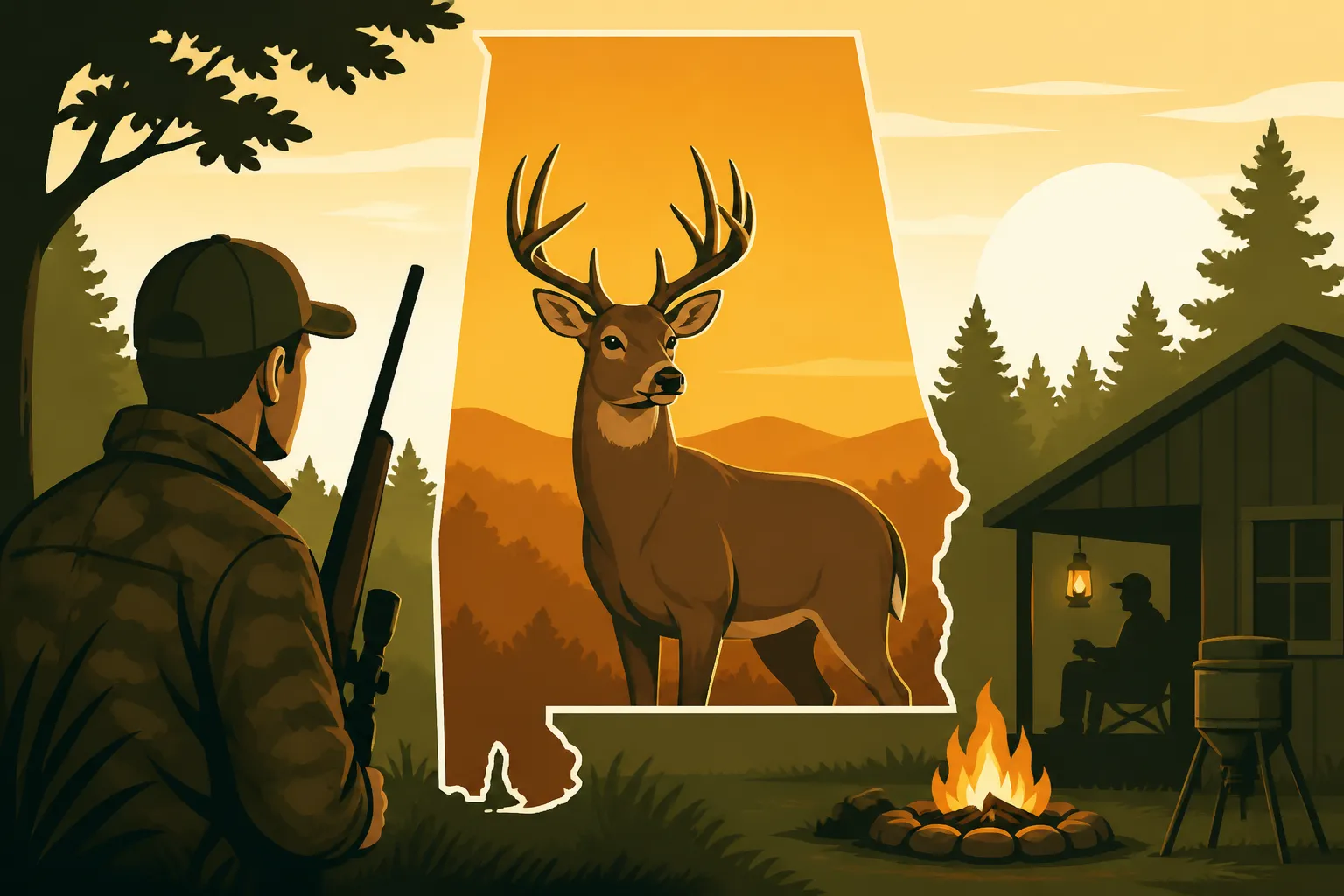
The term "deer camp" conjures up images of rustic cabins, crackling fires, and stories shared long after the sun goes down. In Alabama, deer camps are more than just a place to sleep; they are cultural hubs that embody generations of hunting tradition. While modern hunting clubs might seem like a more formal evolution, the spirit of the deer camp still thrives within many of them.
More Than Just Hunting: The Social Aspect
Picture this: a group of friends or family, gathered around a worn kitchen table, plotting the next morning's deer drive or discussing the big buck that got away. That's the heart of the Alabama deer camp. It’s where bonds are forged over shared meals, where kids learn responsibility by helping process game, and where the wisdom of older hunters is passed down through anecdotes and practical lessons. The hunting itself is often just one part of the experience; the camaraderie, the shared labor, and the mutual respect among camp members are equally, if not more, important.
These camps are often steeped in personal histories, with stories tied to specific stands, ridges, or creek bottoms. For many, it’s an annual pilgrimage, a time to reconnect with loved ones and escape the demands of daily life. The communal atmosphere fosters a sense of belonging, and the shared passion for hunting creates a unique brotherhood (or sisterhood!) that extends beyond the season. Whether it’s helping a buddy track a deer or celebrating a successful hunt, the social fabric of a deer camp is what makes it so special and enduring.
Evolution from Traditional Camps to Modern Clubs
Historically, a deer camp might have been a simple shack built on leased land or even just a collection of tents. Members were often close friends or relatives, and rules were usually informal, based on trust and unspoken understandings. As hunting pressure increased and land became more expensive, the need for more structured organizations arose, leading to the proliferation of modern hunting clubs. These clubs often formalize the lease arrangements, implement clear rules, and manage the land more actively for game habitat and hunter safety.
While many traditional camps still exist, especially on family-owned properties, the trend has largely shifted towards formalized clubs. These modern clubs often have written bylaws, annual dues, and a designated leadership structure to ensure smooth operation and fair access for all members. This evolution reflects the changing landscape of hunting, where careful management and shared resources are often necessary to sustain quality hunting opportunities. Despite the shift, the core values of shared responsibility and fellowship often remain, striving to keep the spirit of the old deer camp alive within a more organized framework.
The Mechanics of Hunting Clubs and Leases
Understanding how hunting clubs operate, particularly their relationship with land leases, is crucial for anyone considering joining one. It's a system designed to pool resources, secure access to private land, and manage hunting opportunities for a group of individuals.
How Hunting Leases Work in Alabama
The foundation of most hunting clubs is the land lease. In Alabama, a hunting lease is a formal agreement, typically between a landowner (often a timber company, large private estate, or farmer) and an individual or a hunting club. This agreement grants the club exclusive hunting rights to a specific tract of land for a set period, usually one year, with options for renewal. The cost of these leases can vary wildly depending on the location, habitat quality, size of the tract, and local demand. Alabama Hunting Lease Costs can be a significant factor in a club's annual dues.
Landowners benefit by receiving income from their property, which might otherwise be idle or used for other purposes, while also often getting a measure of control over who is on their land. For clubs, it's a way to secure consistent access to prime hunting ground, often larger and better managed than what an individual hunter could afford on their own. Many leases will specify what activities are permitted, such as planting food plots, erecting stands, or managing timber, and what is prohibited, like cutting trees or building permanent structures without permission. It’s a symbiotic relationship that provides exclusive hunting grounds for members while generating revenue for the landowner.
Membership Structures and Dues
Hunting clubs in Alabama typically have a clear membership structure. This usually involves a set number of members, often determined by the size and capacity of the leased land, to prevent overcrowding and ensure quality hunting experiences. Prospective members usually apply, sometimes go through an interview process, and if accepted, pay an initiation fee along with annual dues. Alabama Hunting Club Dues and Costs are designed to cover the lease payment, insurance, food plot expenses, road maintenance, and any other shared costs of managing the property.
Dues can range from relatively modest to substantial, depending on the club's amenities, location, and the quality of the land. Some clubs might have different tiers of membership, perhaps offering discounted rates for youth or non-hunting spouses. The financial commitment ensures that all members have a vested interest in the club's success and are contributing fairly to the shared expenses. It’s also common for clubs to have a waiting list, especially for highly sought-after properties, as established members often have priority for renewal.
Managing the Land and Resources
Once a club secures a lease, the real work of land and resource management begins. This often involves collective effort and careful planning to enhance the property for deer and other game. Common activities include planting food plots, maintaining access roads, setting up deer stands, and potentially implementing timber management practices in cooperation with the landowner. Many clubs utilize mapping technologies, like those offered by onX Hunt or GoHunt, to plan out food plot locations, mark stand sites, and manage property boundaries, which is crucial for efficient land use and avoiding trespass.
Members often share responsibilities for these tasks, with work days organized throughout the year. For instance, before deer season begins, a club might schedule a weekend to disc and plant winter food plots, repair blinds, and clear shooting lanes. This shared labor not only improves the hunting experience but also strengthens the bonds between members, echoing the communal spirit of traditional deer camps. Effective land management directly contributes to the club's long-term success, helping to ensure healthy game populations and quality hunting opportunities year after year.
Benefits and Drawbacks of Club Membership
Joining a hunting club is a significant commitment, and like any group endeavor, it comes with its own set of advantages and potential challenges. Weighing these carefully is crucial before you decide to jump in.
The Perks: Access, Companionship, and Shared Workload
Perhaps the most obvious benefit of club membership is consistent access to private hunting land. Instead of scrambling for public land spots or constantly seeking Getting Private Land Permission in Alabama, you have a dedicated property that is managed for hunting. These lands are often larger and less pressured than public options, potentially leading to better quality animals and a more enjoyable hunting experience. Many clubs focus on quality deer management, striving for older, healthier bucks, which can be a huge draw.
Beyond access, the social aspect is a massive perk. You'll join a community of like-minded individuals, sharing experiences, knowledge, and sometimes even venison. This camaraderie can enrich your hunting life immeasurably, turning solitary pursuits into shared adventures. Furthermore, the workload associated with land management—planting, stand maintenance, trail clearing—is distributed among members. This means fewer hours for any one individual and more time for actual hunting or relaxation at the Alabama Deer Camp Traditions lodge. You'll likely also have access to shared equipment, such as tractors for food plots or ATVs for hauling gear, reducing the need for individual investment.
The Pitfalls: Personalities, Rules, and Cost
While camaraderie is a major draw, differing personalities and opinions can also be a significant challenge within a hunting club. Everyone has their own ideas about how the land should be managed, where stands should be placed, or how strict harvest rules should be. Conflicts can arise over everything from stand usage rotations to who cleaned the communal kitchen last. Navigating these interpersonal dynamics requires patience, compromise, and strong leadership within the club.
Another potential drawback is the extensive set of rules and bylaws that most modern clubs implement. While necessary for order, these rules can sometimes feel restrictive. They might dictate everything from hunting hours and guest policies (Guest Day Rules at an Alabama Hunting Club) to harvest limits and food plot planting schedules. If you prefer a completely free-form hunting style, a highly structured club might feel constraining. Finally, there's the cost. While the shared expense can make private land accessible, the annual dues can still be a substantial financial commitment. Factor in gas, gear, and potentially long drives to the lease, and it adds up. It's important to assess if the benefits truly outweigh the financial and personal investment for your hunting style.
Finding the Right Hunting Club for You
Embarking on the journey to find the perfect hunting club in Alabama requires a bit of detective work and a clear understanding of your own hunting preferences. It's not just about finding an open spot; it's about finding a good fit.
Where to Look for Openings
The first step in finding a club is knowing where to look. Word-of-mouth is still a powerful tool; talk to friends, family, and acquaintances who hunt. They might know of clubs with openings or upcoming leases. Hunting forums and social media groups dedicated to Alabama hunting are also excellent resources, as clubs often post membership opportunities there. Checking with local feed stores, gun shops, or sporting goods retailers can sometimes yield leads, as these places are often central hubs for hunters.
Don't overlook online resources dedicated to Finding an Alabama Hunting Lease or club openings. Websites specializing in hunting land leases sometimes list clubs seeking members. Additionally, attending local hunting expos or sportsmen's shows can connect you directly with club representatives. While public lands offer a different experience, even hunters familiar with Scouting Alabama Public Land Before Season often look to clubs for consistent, managed access. Cast a wide net, and be persistent—the right club might not appear immediately, but it's out there.
What Questions to Ask Prospective Clubs
Once you find a potential club, it’s crucial to ask a lot of questions. Don't be shy; this is a significant investment of time and money. Start with the basics: What are the annual dues and any initiation fees? What is the size of the leased property, and how many members does the club have? This helps understand the hunter density and potential pressure. Inquire about the club's game management goals – are they focused on trophy deer, or is it more about meat hunting? Ask to see the club's bylaws or rules, including those for Alabama Deer Reporting Rules and any antler point restrictions.
Delve into the specifics of hunting practices: Are guests allowed, and if so, what are the Guest Day Rules at an Alabama Hunting Club? Are Family Membership Rules at Alabama Clubs in place? Is stand placement free-for-all, or are there designated areas? What kind of communal work is expected, and how often are workdays scheduled? How are disputes handled? You’ll also want to understand the current success rates, not just in terms of deer harvested but also member satisfaction. Don't forget to inquire about the physical camp facilities, if any, and what amenities are provided. A reputable club will be transparent and willing to answer all your questions.
Leveraging Technology for Scouting and Research
In today's hunting world, technology can be a game-changer when vetting potential club properties. Tools like onX Hunt have revolutionized how hunters understand land, showing property lines, landowner names, and topography. Before even visiting a potential lease, you can use these apps to study the terrain, identify potential bedding areas, food sources, and travel corridors. This gives you a powerful advantage in assessing the quality of a property and whether it aligns with your hunting style.
Similarly, other platforms and resources, like GoHunt, offer valuable insights into game populations, habitat types, and even historical harvest data in certain regions. By cross-referencing information from the club with what you can research online, you can gain a much clearer picture of what you'd be getting into. Looking at aerial imagery can reveal existing food plots, clear-cuts, or natural funnels. This digital reconnaissance helps you ask more informed questions and make a more confident decision when choosing a club. It also ensures you’re not just relying on the club’s sales pitch but doing your own due diligence.
Legality and Responsibilities in Club Membership
Joining a hunting club isn't just about paying dues and hunting. It involves legal obligations, safety protocols, and a shared responsibility for game management that every member must understand and uphold.
Understanding Club Rules and Bylaws
Every organized hunting club operates under a set of rules and bylaws. These documents are the lifeblood of the club, outlining everything from membership requirements and financial obligations to hunting regulations and dispute resolution processes. It's absolutely critical to obtain and thoroughly read these bylaws before committing to membership. They often specify things like minimum antler restrictions for bucks, daily bag limits beyond state regulations, areas that are off-limits, and how communal facilities are to be used.
For example, a club might have stricter rules on antlered deer, such as requiring a minimum of 8 points or a certain spread, even if state law allows Alabama Antler Point Restriction Rules. They might also have specific days for still-hunting versus deer drives, or rules about when and where ATVs can be used. These rules are put in place to ensure fair access, promote game management, and maintain harmony among members. Understanding and agreeing to abide by them is a non-negotiable part of becoming a member. Failure to follow these rules can result in penalties, loss of privileges, or even expulsion from the club, so take them seriously.
Liability and Safety Considerations
Safety is paramount in any hunting environment, and hunting clubs often have specific protocols to minimize risks. This can include mandatory use of blaze orange (How Much Blaze Orange Alabama Requires), strict rules about elevated stand safety, designated shooting zones, and clear communication procedures for when members are entering or exiting the woods. Clubs typically carry liability insurance to protect both the club and its members in case of accidents, but it's wise to understand the extent of that coverage and your own personal responsibility.
Club leaders often stress firearm safety, especially during group activities like deer drives. There might be specific areas designated as "no-shoot zones" for safety, or requirements for checking in and out of the property to account for all hunters. Beyond hunting, general camp safety, such as fire prevention, proper storage of ATVs, and maintenance of communal structures, is also a shared responsibility. Adhering to these safety measures not only protects you but also safeguards your fellow club members and the integrity of the club as a whole.
Game Management and Reporting Duties
Being part of a hunting club often means actively participating in game management efforts beyond just harvesting animals. Many clubs implement their own detailed Alabama Deer Season Structure Explained plans, including specific harvest quotas for antlered and unantlered deer, sometimes even tracking individual deer on camera throughout the year. Members are usually required to accurately report all harvested game, sometimes in addition to the state's Alabama Deer Reporting Rules, so the club can monitor its deer herd health and make informed management decisions.
This collective data allows the club to understand population trends, buck-to-doe ratios, and the age structure of their deer, helping them adjust future harvest strategies. Members might also be involved in creating and maintaining food plots, performing habitat improvement projects, or monitoring trail cameras to gather intelligence on the local deer herd. This active role in management fosters a deeper connection to the land and a greater appreciation for sustainable hunting practices, ensuring that quality hunting opportunities continue for years to come.
Choosing the Right Fit: Traditional Camp vs. Modern Club
Deciding whether a traditional deer camp or a more structured hunting club is right for you often comes down to your individual hunting philosophy, desired level of involvement, and budget. Both offer unique advantages for Alabama hunters seeking private land access and camaraderie.
Traditional Deer Camp Experience
For many, the idea of a traditional deer camp evokes a sense of nostalgia, simplicity, and deep personal connection. These camps are often less formal, centered around close-knit groups of family or lifelong friends. The rules might be unwritten, based on mutual understanding and shared history. The emphasis is heavily on the social experience, the storytelling, and the generational passing down of hunting knowledge. It's a place where tradition often outweighs strict management protocols.
If you value intimate relationships, a relaxed atmosphere, and a strong sense of personal ownership and contribution, a traditional deer camp might be your ideal. The costs can sometimes be lower, as expenses are typically split informally rather than through formal dues and fees. However, finding an opening in an established traditional camp can be challenging, as membership often stays within family lines or very tight circles. The success of these camps relies heavily on the character and compatibility of each member, as there's less formal structure to resolve disputes.
Modern Hunting Club Advantages
Modern hunting clubs offer a more structured, organized approach to private land hunting. They typically operate on leased lands, with formal bylaws, clear membership agreements, and a designated leadership. This structure often translates to better-managed properties, with dedicated efforts towards food plots, habitat improvement, and strict game management strategies. These clubs are often better equipped to handle the complexities of large land leases, insurance, and long-term planning.
If you prefer clear expectations, a formal decision-making process, and a focus on quality game management, a modern hunting club is likely a better fit. They often provide access to larger tracts of land and amenities that might be beyond the scope of a small, informal camp. While the annual dues can be higher, they cover expenses like professional land management advice, extensive food plot programs, and comprehensive liability insurance. These clubs are generally easier to find openings in, making them a more accessible option for new hunters or those looking for established infrastructure.
Making Your Decision
The table below provides a quick comparison to help you weigh the pros and cons of each option:
| Feature | Traditional Deer Camp | Modern Hunting Club |
|---|---|---|
| Structure | Informal, family/friend-based | Formal, structured, bylaws |
| Membership | Close-knit, often generational | Broader, managed member limits |
| Land Access | Often family-owned or long-term informal lease | Formal, often large-scale land leases |
| Cost | Informal splitting of expenses, generally lower | Annual dues, initiation fees, generally higher |
| Management Focus | Social experience, personal tradition | Game management, habitat improvement, quality hunting |
| Rule Enforcement | Unwritten rules, social pressure | Written bylaws, formal enforcement |
| Workload | Shared informally, often voluntary | Scheduled workdays, expected participation |
| Finding Openings | Difficult, typically by invitation only | More accessible, advertised openings |
| Conflict Resolution | Informal discussions, personal dynamics | Formal processes outlined in bylaws |
Ultimately, your choice depends on what you seek from your Alabama hunting experience. Are you looking for a quiet, intimate retreat with lifelong companions, or do you prefer a well-managed, results-oriented operation with a broader community? Both deer camps and hunting clubs offer fantastic opportunities to enjoy the outdoors and pursue game in Alabama.
Disclaimer
This article is for general informational purposes only and does not constitute professional advice. Laws, prices and regulations vary by location and change over time. Consult a qualified professional for guidance on your specific situation.