What Alabama Trespass Law Requires
One of the biggest anxieties for any hunter, especially when you're exploring new ground, is the constant worry about where property lines actually fall and whether you're legally allowed to be there. Nobody wants to deal with an angry landowner, let alone face legal trouble. This guide is all about demystifying Alabama's trespass laws, particularly as they pertain to hunting, so you can hunt with confidence and respect for private property.
Understanding Alabama's Core Trespass Laws
Let's cut right to it: knowing the ins and outs of Alabama's trespass laws is foundational to being a responsible hunter. It's not just about avoiding a fine; it's about respecting the rights of property owners and maintaining a positive image for all hunters. The law is designed to protect private property, and understanding its nuances can save you a lot of headache in the field.
Defining Legal Trespass for Hunters
In Alabama, simply being on someone else's property without their permission is generally considered trespass. When it comes to hunting, this definition becomes even more critical because you're typically carrying a firearm or bow, and often have the intent to harvest game. The law doesn't care if you thought you were on public land or if you accidentally crossed a boundary. The onus is on you, the hunter, to know exactly where you are and to have explicit permission if you are on private land. This is why tools like detailed property maps and good scouting are so crucial. It’s not enough to just assume; you need to verify. Alabama Trespass and Permission Law goes hand-in-hand with understanding these definitions.
Consider a scenario: you're tracking a wounded deer that crosses from public land onto what appears to be an unposted private parcel. Without prior permission, continuing that pursuit onto the private land immediately constitutes trespass, even if your intentions are noble. The deer is now on someone else's property, and your right to pursue ends at that property line unless you have consent. This can be one of the most frustrating aspects of hunting, but it's a hard line in the sand that hunters must respect.
Posted Versus Unposted Land Rules
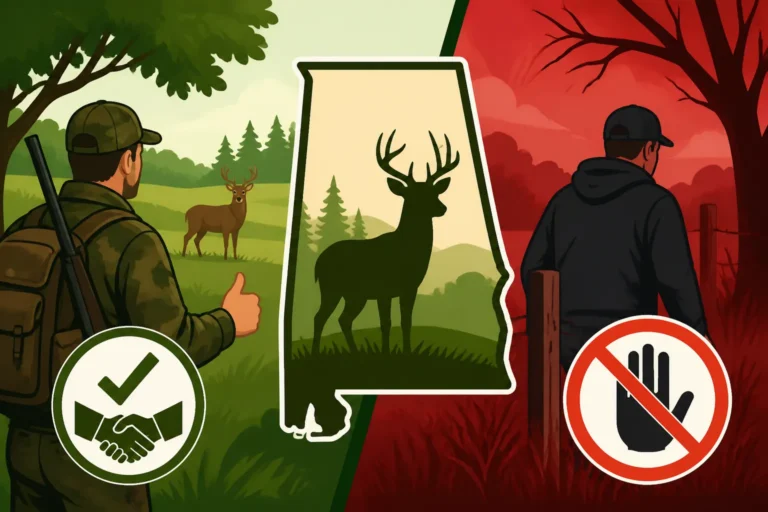
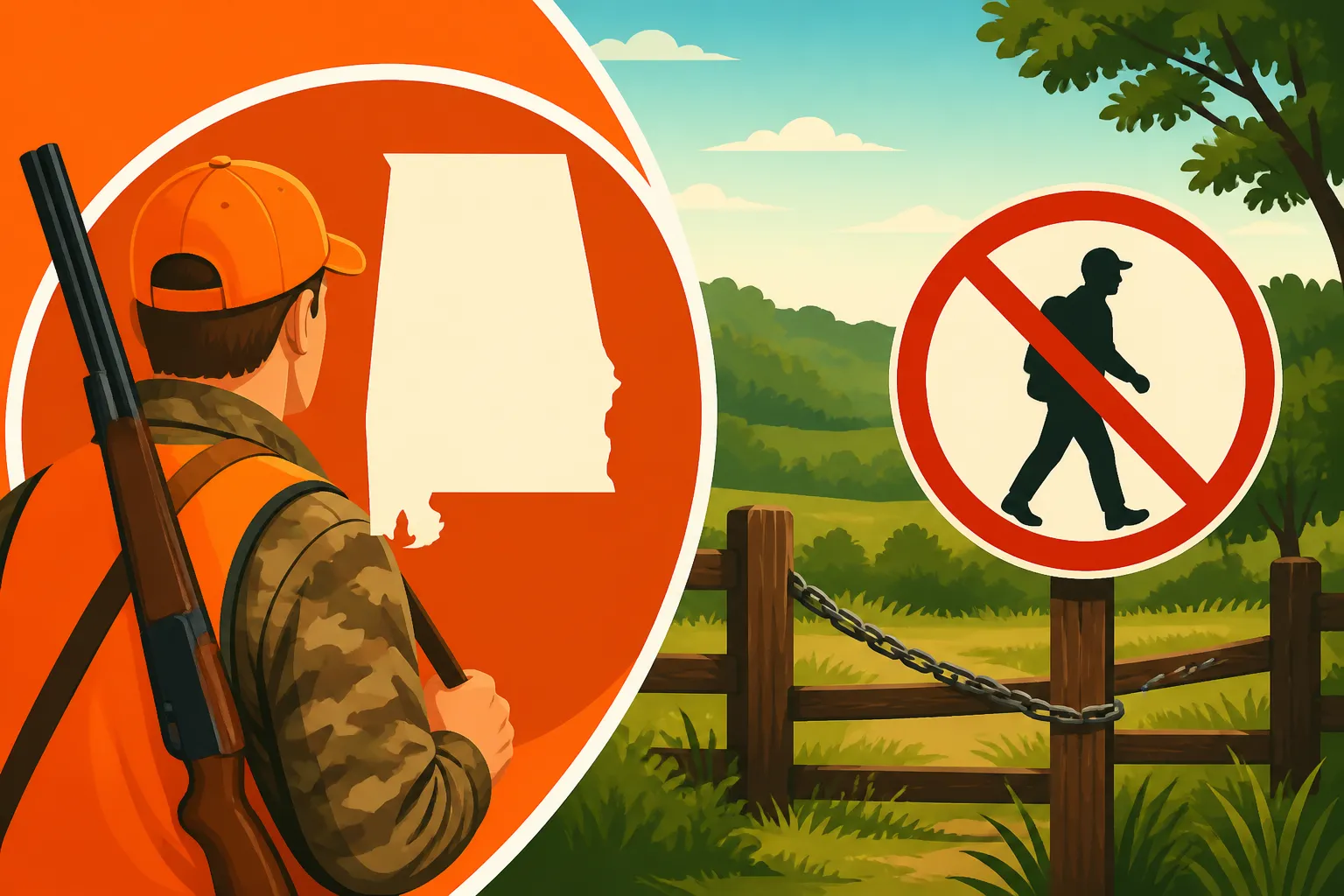
Now, this is where things can sometimes get a little fuzzy for folks, but Alabama's law is actually pretty clear. Unlike some states where land has to be explicitly "posted" with signs for it to be considered private, in Alabama, all privately owned land is considered posted, whether there are signs or not. This means that if it's not publicly owned land, you need permission to be on it. Period. The absence of "No Trespassing" signs does not grant you implied consent to hunt, fish, or even walk on private property. This is a huge distinction that many hunters, especially those new to the state or coming from areas with different regulations, often misunderstand.
Imagine you're driving down a county road and see a beautiful woodlot that looks like prime deer habitat. There are no fences, no signs, nothing overtly indicating it's private. Your gut might tell you, "Hey, maybe it's okay to just walk in there." But under Alabama law, that woodlot is still private, and you still need to obtain permission from the landowner before stepping foot on it. It’s a common misconception that unposted land is fair game, but that's simply not true here. Always assume it's private unless you have definitive proof otherwise, like a clear public land boundary marker or a map explicitly showing public access.
Securing Legal Permission for Hunting
Since all private land in Alabama requires permission, the next big question is: how do you get it, and what kind of permission is considered legally sound? This isn't just about being polite; it's about protecting yourself and the landowner from misunderstandings and legal issues down the road.
Verbal Versus Written Permission
While verbal permission is often extended in good faith, and can be legally binding in some contexts, when it comes to hunting in Alabama, written permission is always, always, always the gold standard. Verbal permission can lead to "he said, she said" disputes. Maybe the landowner vaguely agreed last year but forgot, or a new family member now owns the land. Perhaps you misunderstood the boundaries they described. A verbal agreement can easily be forgotten, misconstrued, or denied.
Having something in writing – a simple signed note, an email exchange, or a formal lease agreement – provides undeniable proof of permission. This written document should clearly state who has permission, what activities are allowed (e.g., deer hunting, turkey hunting), the specific dates or season for which permission is granted, and the exact parcel of land involved (e.g., by address, tax parcel number, or clear boundary description). If you're asking an Alabama farmer for permission, a quick conversation followed by a confirmation text or email where they explicitly state "yes, you can hunt my back 40 for deer this season" can go a long way, but a signed paper still beats it all.
What to Ask For and Confirm with Landowners
When you approach a landowner to ask for permission, be prepared to be clear, concise, and respectful. Don't just ask, "Can I hunt your land?" Instead, specify what you'd like to hunt (deer, turkey, hogs), when (bow season, gun season, specific dates), and how (still-hunting, with dogs, archery only). Be ready to discuss your hunting ethics, your commitment to safety, and your plans for tracking and recovering game. Many landowners are wary of hunters they don't know, so presenting yourself as responsible and considerate is key.
A good practice is to bring your own map (perhaps from onX Hunt or GoHunt) and ask the landowner to mark the exact boundaries you are allowed to hunt. Confirm any no-go zones, like around their house, barns, or sensitive areas. Ask about specific access points, parking instructions, and if they have any other rules (e.g., no driving trucks into certain fields, closing gates, avoiding certain times of day). It's also wise to ask if anyone else has permission to hunt there so you can avoid conflicts or safety issues. This level of detail and proactive communication builds trust and prevents misunderstandings later on.
Retrieving Game From Private Land
This is a common dilemma: you shoot a deer on public land, and it runs onto adjoining private property where you do not have prior permission. Under Alabama law, your permission to hunt extends only to the land you are authorized to be on. If your game crosses onto private land, you still need permission from the landowner to retrieve it. You cannot simply cross that fence or property line without consent, even if you can clearly see your deer lying just on the other side.
This situation can be incredibly stressful, especially if it's late in the day or the weather is warm. The best course of action is to immediately try to contact the landowner. Explain the situation calmly and respectfully, and ask for permission to enter their property solely for the purpose of retrieving your animal. Offer to leave your weapon behind, and assure them you will only go directly to the animal and leave. Most landowners, when approached respectfully, will grant permission, especially if you offer to show them your license and tags. However, they are under no legal obligation to do so, and if they refuse, you must respect their decision, as difficult as that may be. Never, ever, assume it’s okay to just slip in and out; that’s a quick way to lose hunting privileges or face legal consequences.
| Type of Permission | Legally Required in AL | Best Practice | Key Considerations |
|---|---|---|---|
| Verbal | Yes, but tricky | Risky | "He said, she said" disputes, easily forgotten, hard to prove boundaries. |
| Written | Recommended | Essential | Clear boundaries, specific dates/activities, undeniable proof. |
| Implied | No, for hunting | Avoid | No "unposted is fair game" rule in AL. Always assume private. |
| Lease Agreement | For long-term access | Formal & Clear | Comprehensive terms, mutual protection, often involves payment. |
What Happens if You Trespass
Nobody wants to find themselves on the wrong side of the law, especially when it involves something as enjoyable as hunting. Understanding the potential repercussions of trespassing in Alabama can serve as a strong deterrent and reinforce the importance of always securing proper permission.
Legal Penalties for Trespassing While Hunting
In Alabama, trespassing is generally a misdemeanor offense. However, when you add hunting into the mix, especially with a firearm, the penalties can become more severe. Simple trespass might result in a warning or a minor fine, but hunting trespass often carries stiffer consequences. You could face significant fines, potentially hundreds of dollars, and even jail time, depending on the circumstances and whether it's a first offense or repeated behavior. The judge might also order you to pay restitution to the landowner for any damages caused.
Beyond the immediate legal penalties, a trespassing conviction can also impact your hunting privileges. The Alabama Department of Conservation and Natural Resources (ADCNR) takes these offenses seriously. A conviction could lead to the revocation of your hunting license for a period, making it impossible to legally hunt in the state. Imagine losing your right to participate in the sport you love, all because you didn't take the time to confirm property lines or secure explicit permission. It's simply not worth the risk. Alabama Wildlife Violation Penalties outlines many of these concerns.
Civil Repercussions and Reputation Damage
Beyond the immediate legal framework, there are significant civil and reputational consequences to trespassing. A landowner could pursue civil charges against you, seeking damages for any actual harm to their property, emotional distress, or simply for the invasion of their privacy. This can lead to costly legal battles, regardless of the outcome, racking up attorney fees and court costs. Even if you're not found guilty of a crime, a civil judgment could still mean you owe the landowner a substantial amount of money.
Furthermore, your reputation as a hunter is invaluable, both within the local community and the broader hunting fraternity. News travels fast, especially in rural areas. If you're known as someone who trespasses, landowners will be much less likely to grant you permission in the future, and other hunters might distance themselves. This can effectively shut you out of local hunting opportunities for good. Our sport relies on respect for the land and for landowners. Violating that trust not only harms you but also casts a shadow on all ethical hunters.
Avoiding Accidental Trespass
The best defense against trespassing is a good offense: proactive measures to ensure you're always on legal ground. With modern tools and good habits, accidental trespass should be a rare occurrence.
Using GPS and Mapping Apps Effectively
In today's hunting world, there's no excuse for not knowing where you stand. GPS devices and smartphone mapping apps have revolutionized property line awareness. Tools like onX Hunt and GoHunt provide detailed satellite imagery overlaid with property lines, landowner names, and public land boundaries. These apps can show you exactly where you are in real-time, even marking your position relative to specific property corners. Before you ever step foot in the woods, use these apps to study the area. Identify public and private parcels, note any tricky boundary lines, and plan your entry and exit routes carefully. Scouting With the Outdoor Alabama App can also integrate with these tools.
While these tools are incredibly powerful, they aren't foolproof. Always download offline maps before heading into areas with poor cell service. Double-check your device's accuracy calibration. Don't rely solely on a single line on a screen; visually confirm boundaries if possible, looking for fences, old survey markers, or changes in timber type that might indicate a line. Treat your mapping app as an essential piece of safety equipment, right up there with your firearm and treestand harness.
Scouting and Marking Boundaries on the Ground
There's no substitute for boots on the ground. Before hunting any new private parcel, even with a map, walk the boundaries. Look for existing survey markers, flagging tape, painted trees, or fences that delineate the property line. If a landowner has given you permission, ask them to walk the boundaries with you, or at least point out key landmarks. This personal reconnaissance helps solidify your understanding of the area and any nuances not visible on a map.
If you have permission to hunt a specific area, consider marking the boundaries yourself, perhaps with non-invasive flagging tape (that you remove after the season) or by noting prominent trees or geological features. This creates a clear visual reminder in the field, especially during low light conditions or when you're focused on a game animal. It’s also crucial to identify any "no-go" areas that the landowner specified, marking them clearly in your mind or on your physical map. This attention to detail demonstrates your commitment to the landowner's trust and helps prevent any honest mistakes when game movement takes your focus.
Communicating with Adjoining Landowners and Clubs
Sometimes, property lines are complex, or you might find yourself hunting a parcel that's surrounded by other private landowners or hunting clubs. It's incredibly beneficial, where possible, to introduce yourself to adjoining landowners or the leaders of neighboring hunting clubs. A friendly face and a brief conversation can prevent a lot of potential friction. Let them know you'll be hunting next door, share your name, and offer to exchange contact information. This creates an open line of communication, making it much easier to handle situations like a wounded animal crossing a line or a lost dog.
Many hunters fail to do this, leading to suspicion and sometimes confrontation when hunters are seen near property lines. A simple handshake and a promise to respect boundaries can go a long way in building goodwill and ensuring a more harmonious hunting experience for everyone in the area. Remember, Alabama's hunting community is built on relationships, and a little neighborly courtesy can make a big difference in avoiding any "What Alabama Trespass Law Requires" situations.
Disclaimer
This article is for general informational purposes only and does not constitute professional advice. Laws, prices and regulations vary by location and change over time. Consult a qualified professional for guidance on your specific situation.