Retrieving Game From Private Land in Alabama
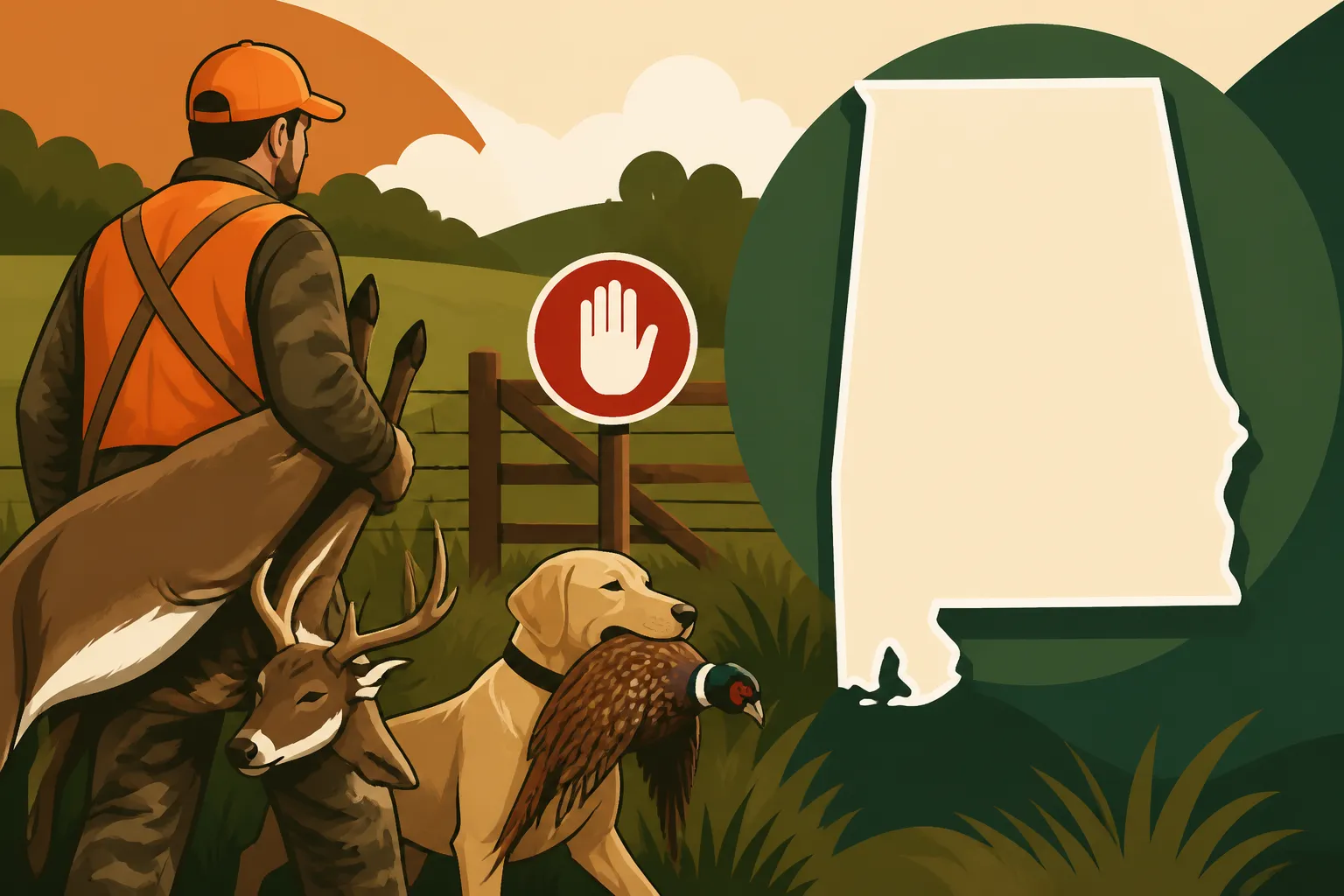
There are few moments in hunting more frustrating and gut-wrenching than making a good shot on a deer, only to watch it run off and cross a property line onto land where you don't have permission to be. That immediate rush of adrenaline quickly turns to anxiety and a sinking feeling in your stomach. This guide will walk you through the complexities of retrieving game from private land in Alabama, covering the legal aspects, ethical considerations, and practical steps you can take to (hopefully) recover your animal, all while staying on the right side of the law and respecting your fellow landowners.
The Legal Landscape: Understanding Alabama's Trespass Laws
Before you even think about stepping foot on someone else's property, it’s absolutely critical to understand Alabama's laws regarding trespass. Ignorance of the law is never an excuse, and violating these statutes can lead to fines, loss of hunting privileges, and even criminal charges, not to mention a damaged reputation within the hunting community. It’s a tightrope walk between your ethical obligation to recover game and your legal obligation to respect private property.
What Constitutes Trespassing in Alabama?
In Alabama, trespass isn't always about a "No Trespassing" sign, though those certainly make it clear. Generally, you are trespassing if you enter or remain on someone else's property without their express permission. This includes land that is fenced, cultivated, or posted with signs or markings. But even if there are no signs, if you know or reasonably should know that the land is private and you don't have permission, you're trespassing. It's not just about hunting; it's about being on the land itself. The moment your boot crosses that property line, legally, you are on private land, and without permission, you're in violation. This can feel incredibly unfair when you're just trying to recover an animal, but the law is quite clear.
Hunter's Responsibility: Knowing Your Boundaries
As hunters, we bear the primary responsibility for knowing exactly where we are hunting and where property lines lie. This isn't just good practice; it’s a legal imperative. Modern technology has made this easier than ever. Tools like onX Layers for Alabama Land Status or the capabilities within the Outdoor Alabama app, which helps with Scouting With the Outdoor Alabama App, allow you to pinpoint your location relative to property boundaries with incredible accuracy. Relying on old paper maps or just "knowing the area" by memory can lead to costly mistakes. Imagine being deep in a thick pine block, tracking a deer, and thinking you're still on your leased land, only to discover later you crossed onto a neighboring timber company's property that's strictly off-limits. It happens more often than you’d think, especially in areas with irregular property lines or recent timber sales that change the landscape.
The Importance of Written Permission
While verbal permission is legally binding in many situations, for hunting and especially for retrieving game, written permission is always the gold standard in Alabama. Verbal permission can lead to "he said, she said" arguments, misunderstandings, or even outright denial if a landowner changes their mind or forgets the conversation. A simple signed note, even on a scrap of paper, stating that you, [Your Name], have permission to retrieve game (or hunt) on their property, including a date and the landowner's signature, can save you immense grief. This is especially true if you are hunting adjacent to property owned by someone you don't know well. Many experienced hunters carry blank permission slips specifically for this purpose. If you're wondering Do You Need Written Permission in Alabama?, the answer is almost always a resounding "yes" for peace of mind, even if the letter of the law in some scenarios might not strictly require it for mere retrieval. It provides a clear, undeniable record.
The "What If" Scenario: Your Deer Crosses the Fence
It's the moment every hunter dreads: a good shot, a clear hit, but the deer, instead of dropping in sight or running onto your property, veers sharply and disappears over the property line. Your heart sinks. What now? This situation calls for a calm head, quick thinking, and a plan that respects both the animal and the law.
The Ethical Obligation to Recover Game
First and foremost, you have an ethical obligation to recover any animal you shoot. This is a fundamental tenet of responsible hunting. You owe it to the animal to ensure its life wasn't taken in vain and its meat isn't wasted. This ethical drive is powerful, often making hunters feel compelled to cross boundaries without permission. However, this is where the conflict arises. Your ethical responsibility does not supersede your legal obligation to respect private property. The goal is to fulfill your ethical duty within the confines of the law. This means that while you absolutely must try to recover that animal, you must also be patient and methodical in your approach, which might mean a delay in recovery.
Why a Fresh Track Matters
When you suspect a deer has crossed onto neighboring private land, your immediate priority, after confirming the hit, is to find the freshest, clearest sign of the deer's path. This might be a blood trail, disturbed leaves, or tracks in the mud. Knowing the exact point where the deer crossed, and its general direction of travel, is crucial for two reasons:
- For the Landowner: When you approach a landowner for permission, being able to say, "My deer crossed right here, at this fenceline, heading north into that pine thicket," is much more credible and helpful than a vague "I think my deer is somewhere over there." It shows you've done your homework and aren't just looking to wander aimlessly across their land.
- For Recovery: The fresher the sign, the better your chances of a successful recovery, especially if you get permission quickly. A cold trail from hours ago, or even the next day, can be incredibly difficult to follow, even with a strong blood trail. This is why many hunters will mark the crossing point, back out, and then seek permission immediately. Sometimes, time is of the essence, especially if Blood Trailing After Dark in Alabama becomes a possibility.
Safety First: Before You Approach
Before you even think about approaching a neighboring landowner, always unload your firearm or un-nock your arrow. Make sure your weapon is cased or secured in your vehicle. Approaching someone's home, or even them in their yard, with a rifle slung over your shoulder or a bow in hand, can be incredibly intimidating and immediately put them on the defensive. You want to appear respectful, non-threatening, and sincere. Leave your hunting gear, including knives and calls, in your vehicle. Wear casual clothes if possible, or at least ensure your hunting attire isn't caked in mud or blood, which might seem aggressive or careless. Your goal is to be a polite neighbor seeking assistance, not an armed intruder.
Best Practices for Seeking Permission
Seeking permission to retrieve game is more art than science. It requires humility, respect, and a genuine understanding of the landowner's perspective. They don't owe you anything, and their property is their sanctuary. Your approach can make all the difference between a successful recovery and a firm denial.
The Art of the Knock on the Door
This is often the most nerve-wracking part. When you knock on a landowner's door, be prepared for anything. They might be friendly and helpful, or they might be wary, busy, or even hostile. Always introduce yourself clearly, state your purpose directly but politely, and be brief. "Hello, my name is [Your Name], and I was just hunting next door on [Neighbor's Name/Your Property Name]. I shot a deer, and I believe it ran onto your property right near [describe location, e.g., the old barn, the creek bottom]. I would be incredibly grateful if you would allow me to quickly retrieve it. I promise to be respectful of your land and leave no trace."
Offer to show them exactly where the deer went. Don't press for details about their hunting or their land use unless they volunteer the information. Just stick to your request. Remember, you're asking for a favor, not asserting a right. This is especially important when you're Asking an Alabama Farmer for Permission, as they often deal with various issues on their land and value direct, respectful communication.
Respectful Communication Is Key
Your tone, body language, and willingness to listen are paramount. If they say no, accept it gracefully. Do not argue, plead, or become defensive. A simple, "I understand completely, thank you for your time," is far better than escalating the situation. Remember, you might need to approach them again in the future, or they might be related to other landowners in the area. Burning bridges over one deer is never worth it.
If they grant permission, clarify any specific requests they might have:
- "Please stay on the main trail."
- "Don't go near my cows/horses."
- "Just go straight to the deer and come right back out."
- "Can you call me on my cell when you find it, or if you can't?"
It's also a good idea to offer them a piece of the recovered game, not as a bribe, but as a gesture of goodwill and appreciation. A simple, "Would you like some backstrap?" can go a long way in building positive relationships.
Offering to Help and Build Relationships
Sometimes, the best way to gain permission, or ensure future permission, is to build a relationship. If the landowner seems open, you might offer to help them with something in return. "If you ever need an extra hand with anything on the property, like mending a fence or moving something heavy, please don't hesitate to ask." This is about fostering a sense of community, not just a transactional exchange. Many landowners appreciate knowing who is hunting nearby and that those individuals are responsible. If you frequently hunt next to a specific property, consider stopping by before the season starts to introduce yourself and establish a friendly rapport. This can turn a "stranger asking for a favor" into "the polite hunter from next door."
| Scenario | Recommended Action | Why It Works |
|---|---|---|
| Deer Crosses Line | Secure weapon, mark entry point, back out, immediately seek permission. | Minimizes threat, maintains clear trail, demonstrates respect for boundaries. |
| Approaching Landowner | Polite, direct, brief introduction. State purpose clearly, offer exact crossing point. | Shows respect for their time, provides concrete information, avoids intimidating them. |
| Landowner Grants Access | Confirm any conditions (e.g., stay on trail), offer to share game, express gratitude. | Reinforces respect, builds goodwill, ensures compliance with their rules. |
| Landowner Denies Access | Thank them for their time, accept gracefully, do not argue. | Preserves future chances, avoids legal trouble, maintains a positive public image for hunters. |
| No Contact with Landowner | Leave a note with your contact info and a brief explanation. Return later or contact local law enforcement. | Establishes intent, allows landowner to respond at their convenience, avoids outright trespass. |
What to Do if Permission is Denied
This is the hardest part. You’ve done everything right: you made a good shot, tracked the deer, unloaded your weapon, and politely asked for permission. But the landowner, for whatever reason, says no. This happens. It’s frustrating, heartbreaking, and often feels unjust. But how you react in this moment is crucial.
Accepting "No" Gracefully
As difficult as it may be, you must accept a denial gracefully. If a landowner says no, that is their right. Their reasons might be valid (they hunt the area, they have guests, they're worried about liability, they simply don't like hunters, or they've had bad experiences in the past), or they might seem arbitrary to you. Regardless, their word is final on their property. Do not argue. Do not try to guilt-trip them. Do not try to sneak onto the property later. Doing so could lead to a confrontation, involve law enforcement, and potentially result in legal charges for trespass. A calm, "I understand, thank you for your time anyway," is the only acceptable response. This is a tough pill to swallow, especially when you know an animal is potentially suffering or meat is going to waste, but you have exhausted your legal and ethical avenues once permission is denied. It's a hard lesson in the reality of hunting on private land.
Alternative Recovery Options (Law Enforcement, Wardens)
In some very specific circumstances, contacting local law enforcement or an Alabama Game Warden might be an option, but it's not a guarantee. Some wardens might be willing to act as an intermediary, particularly if the deer is clearly visible just over the property line or if the landowner is being overtly unreasonable. However, wardens are typically busy and do not have the legal authority to force a landowner to grant access for game retrieval. Their primary role is to enforce game laws, not to mediate private land disputes.
It's important to understand that a game warden cannot grant you permission to trespass. They might, in rare cases, accompany you if they deem it necessary for game management or law enforcement purposes, but this is entirely at their discretion and should not be expected. Always check with the Alabama Department of Conservation and Natural Resources (ADCNR) directly for their current policy on these situations. Don't rely on anecdotes from other hunters; verify the official stance. Keep in mind that the Alabama Trespass and Permission Law doesn't provide special exemptions for game retrieval without landowner consent.
The Harsh Reality: Losing Your Game
The unfortunate reality is that if a landowner denies you permission, and no other legal avenues are available, you will likely lose your game. This is a tough consequence of hunting in a state where property rights are taken very seriously. It’s a bitter pill, but it’s a situation that every hunter who hunts near property lines needs to be prepared for. While your ethical obligation to recover game is strong, it does not give you license to violate trespass laws. The best defense against this scenario is proactive planning: get permission before you hunt, or hunt far enough from property lines to minimize the chance of a deer crossing onto inaccessible land. When you're Hunting Small Private Tracts in Alabama, this risk is even higher due to the limited space. Sometimes, despite your best efforts, you have to accept that some deer simply cannot be recovered.
Technology's Role in Boundary Awareness and Communication
In today's world, technology has become an indispensable tool for responsible hunters, especially when it comes to understanding and respecting property boundaries. Leveraging these tools can help prevent many of the frustrating scenarios discussed above.
GPS Mapping Apps for Hunters
GPS mapping applications have revolutionized how hunters navigate and understand the landscape. Brands like onX Hunt and GoHunt offer detailed mapping solutions that display property lines, landowner names (where available publicly), and various terrain features. These apps allow you to:
- Pinpoint Your Location: Know exactly where you are standing in relation to property lines at all times. This is invaluable when stalking or still-hunting, especially in dense cover.
- Identify Landowners: If a deer crosses, these apps can often provide the landowner's name and sometimes even contact information, which can make the process of Asking an Alabama Farmer for Permission much more efficient. Instead of knocking on a random door, you can identify the correct landowner upfront.
- Mark Boundary Crossings: You can drop a pin exactly where your deer crossed, providing precise information when you speak to the landowner. This specific data can often make a positive impression, showing you're organized and serious.
Having an app like onX Hunt on your phone can be a game-changer. Imagine being able to see a clear line on your screen indicating the precise boundary, and knowing that you're just 10 yards from crossing onto a different tract. This allows you to adjust your hunt plan in real-time and make more informed decisions about shot placement, minimizing the chance of an animal crossing onto off-limits land. For detailed guidance, check out articles like Finding Alabama Property Lines or onX Layers for Alabama Land Status to get the most out of these powerful tools.
Documenting Attempts to Gain Permission
While getting written permission is ideal, sometimes the timing or situation makes it impossible. In such cases, documenting your attempts to gain permission can be helpful, especially if you later need to consult with a game warden or law enforcement. This isn't about creating evidence to argue, but rather to show good faith and due diligence.
Consider these methods:
- Time-Stamped Photos: Take a photo of the blood trail leading to the property line, or a picture of the landowner's house (from a respectful distance) with a time stamp.
- Call Logs: Keep a record of phone calls, including the date, time, and outcome, if you were able to find contact information for the landowner.
- Written Notes: Immediately after a conversation, jot down the key points: who you spoke to, what was said, and the decision made.
This documentation isn't a substitute for actual permission, but it supports your narrative that you acted responsibly and made a genuine effort to respect private property while fulfilling your ethical duty.
Preventative Measures: Hunting the Edges Smartly
Ultimately, the best way to handle game crossing onto private land is to prevent it from happening in the first place. This requires strategic thinking when you're in the woods.
- Shot Placement: Prioritize shots that anchor a deer quickly. While always the goal, it becomes even more critical near property lines. A deer shot through both lungs might run 50-100 yards; a deer gut-shot could go much further.
- Proximity to Boundaries: When setting up a stand or still-hunting, be acutely aware of how close you are to property lines. If you're 20 yards from a fence, and you know the property beyond is strictly off-limits, consider if that's the best place to take a shot, or if you should shift your position to encourage a deer to run onto your side.
- Consider Terrain and Cover: Deer often follow paths of least resistance or dense cover. If there’s a thick briar patch or a steep creek bottom just over the property line, a wounded deer might naturally head there. Use your knowledge of the land to predict a deer’s escape route and position yourself accordingly.
- Talk to Neighbors Before Season: The absolute best proactive measure is to establish relationships with neighboring landowners before hunting season even begins. A simple, "Hey, I'm hunting next door, just wanted to introduce myself. If a deer ever runs over, would it be okay if I retrieved it?" can open doors and build trust. This kind of communication can prevent a lot of headaches later. For example, if you're hunting in the Black Belt, you might often find yourself adjacent to large tracts of Hunting Black Belt Prairie Farmland Deer, where direct communication with the farmers can be invaluable.
By understanding the laws, approaching landowners with respect, and using modern tools to stay informed, you can navigate the complex issue of retrieving game from private land in Alabama with greater confidence and responsibility.
Disclaimer
This article is for general informational purposes only and does not constitute professional advice. Laws, prices and regulations vary by location and change over time. Consult a qualified professional for guidance on your specific situation.