Hunting the Second Dove Split in October
If you're like many Alabama hunters, the opening weekend of dove season can feel like a mad scramble—hot weather, crowded fields, and birds that wise up quickly after a few days of pressure. But don't despair if you missed out or felt overwhelmed by the early rush. The second dove split in October offers a completely different, often more rewarding, experience for those willing to adapt their strategy. This guide will walk you through everything you need to know to find success when the doves return to our skies later in the fall.
Understanding the Second Dove Split and Regulations
The Alabama dove season isn't one continuous stretch; it's broken into several "splits" to account for changing bird patterns and hunter interest. The second split, typically beginning in early to mid-October, is a fantastic opportunity that many hunters overlook, often still focused on deer season prep. But these later birds, often migrants, present unique challenges and rewards.
Key Dates and Zone Information
Alabama's dove season dates are set annually by the U.S. Fish and Wildlife Service, in cooperation with the Alabama Department of Conservation and Natural Resources (ADCNR). While the specific dates can shift slightly year to year, the second split reliably falls within October, sometimes extending into early November. Unlike deer or turkey, dove season doesn't have complex zone divisions across Alabama, which simplifies planning. However, it’s crucial to double-check the exact dates each year through the official Outdoor Alabama hunting regulations. You'll find these easily accessible online or in print wherever licenses are sold.
The daily bag limit for mourning doves remains consistent across all splits. Historically, this has been 15 birds per day, with a possession limit of 45. While these numbers are generous, hitting them often requires skill, good scouting, and a bit of luck, especially in the later season. It's also important to remember that all migratory bird hunters, including dove hunters, must have a valid hunting license, a state harvest information program (HIP) certification, and a federal duck stamp, even if you’re not specifically targeting ducks. The HIP certification is free but mandatory and helps biologists gather critical data on migratory bird harvest. To learn more about specific regulatory requirements for migratory birds, you might want to check out the details on Alabama Migratory Bird Certification.
Adapting to Later Season Rules
One significant rule change that often confuses new dove hunters is the "Alabama's Ten-Day Decoy Restriction" which prohibits the use of artificial decoys for the first ten days of the entire season. By the time the second split rolls around in October, this restriction has long since lifted, meaning you are free to deploy your full spread of Mojo doves, dove trees, and static decoys. This can be a game-changer, as later season doves, especially migratory ones, can respond well to decoys. However, the fundamental rules against baiting fields remain strictly in place. You absolutely cannot hunt over a field where grain has been scattered or manipulated to attract doves. This is considered baiting and carries severe penalties. Always ensure your chosen field complies with Alabama Dove Field Baiting Rules to avoid any legal trouble. Hunters also need to be aware of safety regulations, such as how far you must be from occupied dwellings or roads before discharging a firearm.
Scouting and Field Selection for October Doves
The doves you encounter in October might be different birds than those present on opening day. Many resident birds have been heavily pressured or have moved on, and new migratory doves are starting to filter through. This means your scouting strategy needs to change dramatically from what worked in early September. You can't just rely on the same cut cornfield.
Identifying New Food Sources
By October, many of the prime early-season food sources, like standing wheat, sunflowers, and early-harvested corn, are often depleted or overgrown. Doves shift their feeding habits to whatever waste grain remains from later harvests or natural seeds. Look for fields that were recently harvested for soybeans, peanuts, or late corn. These fields can offer a fresh bounty of dropped grain that doves will readily exploit. Additionally, natural food sources become increasingly important. Think about areas with mature pokeberries, ragweed, or croton (also known as dove weed). These native plants produce seeds that are highly attractive to doves and can often be found in disturbed areas, field edges, or even along logging roads.
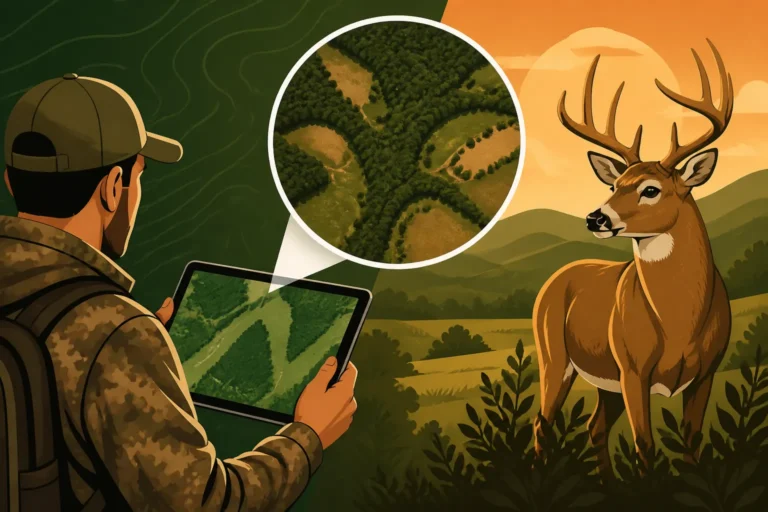
A great way to scout these areas is to drive rural roads during the late afternoon, scanning power lines and dead trees for doves perched in groups. If you see birds, pull over and glass the surrounding fields to determine what they're feeding on. Using mapping tools like GoHunt, or even the free Outdoor Alabama app, can help you identify agricultural fields, power lines, and potential water sources in areas you're scouting. While GoHunt is primarily known for big game, its detailed satellite imagery and property line overlays can be surprisingly useful for finding potential dove hotspots on private or accessible public land. Understanding the local agricultural cycles is also key; knowing when specific crops are harvested in your area will give you a leg up on where the freshest food sources might be.
Locating Water and Grit Sources
Just like any other time of year, doves need water and grit to aid digestion. In October, cooler temperatures might mean they don't hit water sources with the same frantic urgency as in the sweltering heat of September, but they still need it daily. Look for ponds, creeks, or even muddy puddles in or near feeding fields. Doves prefer open edges around water where they can easily fly in and out without obstruction, and where they can find small pebbles for grit.
When scouting, pay close attention to the flight paths of doves you observe. If they're flying from a feeding field towards a particular patch of timber or a distant pond, that's a clue. Setting up between a strong food source and an active water hole, or even a popular roosting area, can be extremely effective. Remember, doves will often fly considerable distances for both food and water, sometimes traveling several miles between them. Don't limit your scouting to just the immediate vicinity of a feeding field; broaden your search to include nearby natural areas with water.
Tactics and Gear for Later Season Dove Hunting
Hunting doves in October requires a slightly different approach than the opening day frenzy. Cooler weather, wiser birds, and different field conditions all play a role. Your gear choices and hunting tactics should reflect these changes to maximize your success.
Concealment and Setup
By October, doves have likely seen a fair bit of hunting pressure, making them warier than the young, naive birds of early season. Excellent concealment becomes paramount. Ditch the bright shirts and opt for full camouflage, even if it's just a simple hunting jacket and hat. A ground blind brushed in with natural vegetation or set against a thick fencerow can be incredibly effective. If you're hunting a field edge, consider taking the time to build a natural blind from corn stalks, weeds, or branches. Remember, these birds have good eyesight, and even small movements can spook them.
When choosing your setup location, think about their flight patterns. Doves typically fly into fields with the wind, using it to slow down for landing. Position yourself so incoming birds are flying into the wind towards you, giving you a better shot opportunity. Also, identify natural funnels in the landscape, like a break in a tree line, a dip in a ridge, or a narrow strip of timber connecting two fields. These are often high-traffic areas for doves. If you're on public land, consider how other hunters might affect bird movement. Sometimes, finding ground others walk past can lead to less pressured birds. You can gain more insight into setting up effectively by reading about topics like Setting Up a Dove Field Before Opening Day or Pass-Shooting Doves Over a Water Hole.
Decoys, Calling, and Ammunition
As mentioned, by the second split, you can legally use decoys. A couple of spinning-wing decoys (like Mojos) can be incredibly effective, especially on windy days, as their movement mimics feeding doves and grabs attention from a distance. Pair them with a few static decoys strategically placed in front of your blind, simulating a small flock on the ground. Place your spinners about 15-20 yards out from your position, perhaps 5-10 yards apart, making sure they're visible but not directly in your shooting lane.
While not as critical as for turkeys or ducks, a dove call can sometimes help get the attention of distant birds or turn a high flyer. A simple coo call can add to the realism of your decoy spread.
For ammunition, stick with lighter loads. Many hunters favor 12- or 20-gauge shotguns with 7 ½ or 8 shot. These small shot sizes create a dense pattern perfect for doves and are less expensive than heavier loads, which is good because you'll likely be shooting a lot! Consider using a modified or improved cylinder choke for doves. If you’re consistently missing, try a more open choke, as it provides a wider pattern, especially for closer shots. Carrying a good supply of shells is always wise; 2-3 boxes per hunter is a good starting point for a productive afternoon.
Dealing with Changing Weather and Dove Behavior
October weather in Alabama can be notoriously unpredictable. One day it's summer-like, the next a cold front sweeps through. These weather changes significantly impact dove behavior, and a successful hunter knows how to adjust.
Impact of Cold Fronts and Wind
A strong cold front rolling through Alabama can completely change dove patterns. Before a front, doves might feed heavily, trying to "fuel up" before the weather turns. After a front, especially if temperatures drop significantly, doves might become less active, flying later in the morning or earlier in the afternoon. They'll also seek out protected feeding areas, perhaps on the lee side of a timber block or in sheltered creek bottoms where waste grain or natural seeds are still available.
Wind, regardless of temperature, is a huge factor in dove hunting. Doves dislike flying directly into a strong headwind and will often skirt around it. They also use the wind to their advantage when landing, typically approaching a field or roosting area from upwind. If the wind is howling, look for fields or clearings that offer some protection or find the upwind edge where birds might be approaching low. A strong wind can also make shooting more challenging, so practice your lead and follow-through. Knowing the wind direction and how it influences bird movement is crucial for selecting your setup location.
Adapting to Later Season Pressure and Bird Cunning
By October, any doves that have been in Alabama since September have likely been shot at. These are not the naive birds of opening day. They've learned to avoid obvious setups, fly higher, and approach fields cautiously. This is where your concealment and patience truly pay off. Don't rush your shots; wait for birds to commit to your decoy spread or fly within comfortable range.
You might find that birds come in smaller groups or singles, rather than the large flocks seen early in the season. Adjust your expectations and enjoy the challenge of outsmarting these more cunning birds. If a field seems "burned out" or empty, don't be afraid to move. Sometimes just a mile or two down the road, you'll find a different pocket of birds that haven't faced as much pressure. This is where using your mapping tools, like GoHunt, to identify alternative spots nearby can be incredibly useful. Remember, a good dove hunter is rarely static; they're constantly observing, learning, and adapting to the birds and the conditions. It's a fantastic opportunity to test your scouting skills and field craft against some truly smart game birds. For a broader look at small game seasons, consider reading about Alabama Small Game Season Rules.
| Season Split | Typical Weather | Primary Food Sources | Decoy Use | Bird Pressure | Flight Patterns |
|---|---|---|---|---|---|
| First Split (Sept) | Hot, humid | Wheat, sunflowers, early corn | Restricted (first 10 days) | High | Large, less wary |
| Second Split (Oct) | Cooler, variable | Late corn, soybeans, peanuts, natural seeds | Permitted | Moderate to high | Smaller groups, warier |
| Third Split (Nov/Dec) | Cold | Natural seeds, waste grain | Permitted | Variable | Often concentrated |
Disclaimer
The information provided in this guide is for general informational purposes only. Hunting regulations, seasons, and bag limits are subject to change. Always consult the latest official Alabama Department of Conservation and Natural Resources (ADCNR) regulations and local ordinances before engaging in any hunting activities. It is your responsibility to know and follow all applicable laws.